
Michael Anderson
Audio Engineer/ Editor
Chose Asana
Asana is simpler and easier to manage than Teamwork Projects and Wrike for smaller teams, but still offers more features than Basecamp and requires a lot less customization than monday.com.

| Product | Rating | Most Used By | Product Summary | Starting Price |
|---|---|---|---|---|
 Asana | N/A | Asana is a web and mobile project management app. With tasks, projects, conversations, and dashboards, Asana lets an entire team know who's doing what by when, enabling workload balancing. Users can also add integrations for GANTT charts, time tracking and more. | $13.49 per month per user | |
 Microsoft Project | N/A | Microsoft Project is a project management software. It provides core PM functionality, including agile workflow support and resource management. Project can be deployed in the cloud or on-premise. | $120 per year per user | |
 Teamwork.com | N/A | Teamwork.com is a project management platform built specifically for client work. The platform helps users deliver work on time and on budget, eliminate client chaos, and understand profitability. Teamwork.com’s customers track and manage their projects with a suite of integrated solutions such as helpdesk, collaboration, knowledge sharing and customer relationship management add-ons, enabling Teamwork.com to be the ‘one-stop shop’ solution for business owners. Headquartered in Cork,… | $13.99 per month per user |
| Asana | Microsoft Project | Teamwork.com | ||||||||||||||||||||||
|---|---|---|---|---|---|---|---|---|---|---|---|---|---|---|---|---|---|---|---|---|---|---|---|---|
| Editions & Modules |
|
|
| |||||||||||||||||||||
| Offerings |
| |||||||||||||||||||||||
| Entry-level Setup Fee | Optional | No setup fee | Optional | |||||||||||||||||||||
| Additional Details | A discount is offered for annual billing. | Plans are billed annually. | A discount is offered for annual billing. | |||||||||||||||||||||
| More Pricing Information | ||||||||||||||||||||||||
| Asana | Microsoft Project | Teamwork.com | |
|---|---|---|---|
| Considered Multiple Products |  Asana Michael Anderson Audio Engineer/ Editor Chose Asana Asana is simpler and easier to manage than Teamwork Projects and Wrike for smaller teams, but still offers more features than Basecamp and requires a lot less customization than monday.com.  Barbara Carneiro Disciple & Head Honcho Chose Asana |  Microsoft Project  Juan Felipe Patarroyo Montenegro Laboratory coordinator Chose Microsoft Project MS project stands up over Asana because it is more formal. When you realize that you need to submit a proposal to a huge company or federal organization, you must use the most complete software to do that. In addition, MS Project helps to integrate costs and human resources in …  Joshua Melder Process Optimization Analyst Chose Microsoft Project While many of the above tools are extremely well-versed, Microsoft Project's largest advantage comes from it being related to the largest business productivity company in the world. Project does have its sharing limitations - but regardless, offers one of the most robust tools …  Felix Maximiliano Obes Project Manager Chose Microsoft Project The strength it has is that it's the best complete solution for project planning. I would choose Microsoft Project over cloud solutions only if the requirements specify self-hosted solutions or that it allows integration with the AD and other corporate tools. But be prepared to … |  Teamwork.com  Kyle Crocker Online Marketing Analyst Chose Teamwork.com  Collin Berg Senior Web Developer Chose Teamwork.com Asana's UX is somewhat more intuitive, but that's the only thing that really holds better. Teamwork has chat, a media library, tasks, and teams that are much more intuitive to use.  Chris Hecox Business Owner Chose Teamwork.com  Daniela Belevan Marketing Coordinator Chose Teamwork.com  Marc Herschberger Director of Operations Chose Teamwork.com Teamwork is a more robust tool compared to Asana and was our "growing up" tool purchase. It made it easier to see all working Projects in a clearly separate environment from one another. Chose Teamwork.com  Miles Baltrusaitis Marketing Operations Manager Chose Teamwork.com  Nick Marsh IT Manager Chose Teamwork.com Teamwork is everything Project Online should be. It's not straddled with legacy bloat like Microsoft Project, and it is designed from the group up to be a cloud SaaS platform, where MS Project has bolted on the web support and it doesn't offer the same streamlined experience …  Mate Kovacs CEO (Chief Executive Officer) Chose Teamwork.com Teamwork was the choice for us during the first few years, as it was accessible and affordable. Later on, Asana and monday.com delivered superior features and functionality.  Luciano Gardesani Marques Account Executive Chose Teamwork.com We have tested other products but according to our context of use, Teamwork suited as the best option due to functionality (complete and easy-to-use) and fair pricing. We found and tested other tools that had the same features but they were not so intuitive. Basically, Teamwork …  Mudssar Adrees Asst. Manager Porcurement Quality Control Chose Teamwork.com Recommended by consultant, while also tested it so decide to implement it in a project.  Blake Calson Technical Leader Chose Teamwork.com The tools that Teamwork Projects offer are advanced yet not as confusing when compared to other platforms used in project management. It is compatible with the web and all mobile devices to enable users to go mobile when organizing projects, teams, and resources.  Sergey Gvozdetskiy Sales Manager Chose Teamwork.com We chose it because it gives us an excellent experience and quality in each internal work process; we perform all our activities in one place and together.  Aquinov Mathappan Systems Administrator (Business Intelligence) Chose Teamwork.com Teamwork is designed for collaboration and project management. This application does exactly what it is designed to do without any unwanted/complication features that would confuse a normal (non-technical) user. Very easy to the user interface when compared to other …  Jason Willis Marketer/Business Owner Chose Teamwork.com So much easier to use and nicer interface.  Mirzet Kadric Vice President Chose Teamwork.com The size of our organization (75 employees) and the type of projects we manage, we selected the least robust platform that could still allow us to perform project management well. We are really proud of what we have accomplished with Teamwork and we can recommend it to anyone …  Jose A Garcia Sales Representative Chose Teamwork.com Because of the size of the organization and the projects running over here, we selected the less robust platform that could still allow us to perform project management well. We have accomplished great results in the use of Teamwork and we can recommend it to anyone with small …  Kinga Odziemek Head of Social Media Chose Teamwork.com Teamwork Projects stacks up against them with one feature and it is tracking time. It is intuitive, but you need to give it some time - at first it may be a bit of an overwhelming tool, simply too difficult to use and enjoy.  Bil Thompson C.O.O. / Project Leader Chose Teamwork.com We started with Basecamp and switched to Teamwork Projects because of it's greater flexibility with tasks especially. After using both I do prefer Teamwork Projects because of the many features. However, we aren't completely happy with it and are looking into other software … |
| Asana | Microsoft Project | Teamwork.com | |||||||||||||||||||||||||||||||||||||||||||||||||||||||||||
|---|---|---|---|---|---|---|---|---|---|---|---|---|---|---|---|---|---|---|---|---|---|---|---|---|---|---|---|---|---|---|---|---|---|---|---|---|---|---|---|---|---|---|---|---|---|---|---|---|---|---|---|---|---|---|---|---|---|---|---|---|---|
| Project Management |
| ||||||||||||||||||||||||||||||||||||||||||||||||||||||||||||
| Professional Services Automation |
|
| Asana | Microsoft Project | Teamwork.com | |
|---|---|---|---|
| Small Businesses |  Stackby Score 8.9 out of 10 | Stackby Score 8.9 out of 10 | Stackby Score 8.9 out of 10 |
| Medium-sized Companies |  InEight Score 8.3 out of 10 | InEight Score 8.3 out of 10 | InEight Score 8.3 out of 10 |
| Enterprises | InEight Score 8.3 out of 10 | InEight Score 8.3 out of 10 | InEight Score 8.3 out of 10 |
| All Alternatives | View all alternatives | View all alternatives | View all alternatives |
| Asana | Microsoft Project | Teamwork.com | |
|---|---|---|---|
| Likelihood to Recommend | 9.0 (208 ratings) | 8.1 (111 ratings) | 10.0 (82 ratings) |
| Likelihood to Renew | 9.6 (34 ratings) | 10.0 (3 ratings) | 10.0 (2 ratings) |
| Usability | 8.3 (36 ratings) | 8.7 (9 ratings) | 10.0 (21 ratings) |
| Availability | 8.4 (2 ratings) | - (0 ratings) | - (0 ratings) |
| Support Rating | 5.0 (42 ratings) | 8.2 (34 ratings) | 8.8 (27 ratings) |
| Implementation Rating | - (0 ratings) | 5.0 (1 ratings) | - (0 ratings) |
| Product Scalability | 8.2 (1 ratings) | - (0 ratings) | - (0 ratings) |
| Asana | Microsoft Project | Teamwork.com | |
|---|---|---|---|
| Likelihood to Recommend | Asana
 Marina Torttoli Marketing Director | Microsoft
| Teamwork
|
| Pros | Asana
 Ammar Aboalrub Freelancer | Microsoft
 Sasha Brito Marketing Director | Teamwork
 Maria Bereziuk Account Manager |
| Cons | Asana
| Microsoft
| Teamwork
Mudssar Adrees Asst. Manager Porcurement Quality Control |
| Likelihood to Renew | Asana
 page V CEO (Chief Executive Officer) | Microsoft
| Teamwork
 Jose Quintero IT Support Manager |
| Usability | Asana
| Microsoft
| Teamwork
 Amber Callan Inbound Marketing Strategist |
| Reliability and Availability | Asana
 Ronen Soreq Project Manager | Microsoft No answers on this topic | Teamwork No answers on this topic |
| Support Rating | Asana
 Adam Lumley Director of Marketing & Communications | Microsoft
 Shiva Krishna Oracle Cloud Procure to Pay Consultant | Teamwork
Miles Baltrusaitis Marketing Operations Manager |
| Implementation Rating | Asana No answers on this topic | Microsoft
| Teamwork No answers on this topic |
| Alternatives Considered | Asana
 Rafiqul Islam Full-stack Software Engineer | Microsoft
Joshua Melder Process Optimization Analyst | Teamwork
|
| Scalability | Asana
Ronen Soreq Project Manager | Microsoft No answers on this topic | Teamwork No answers on this topic |
| Return on Investment | Asana
 Kristi Porter Chief Do-Gooder | Microsoft
 Robert Paul Project Manager | Teamwork
|
| ScreenShots | Asana Screenshots 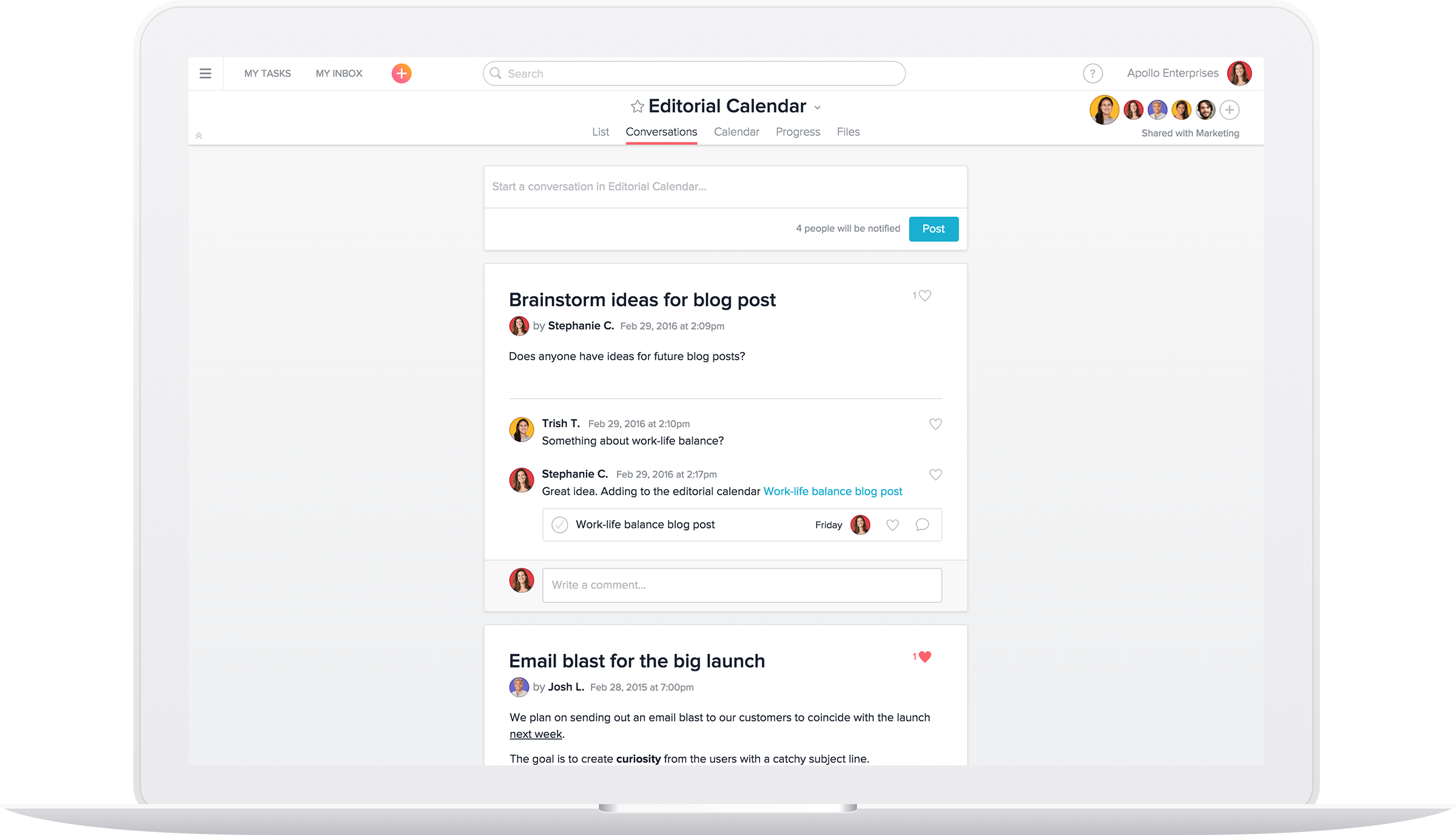     | Teamwork.com Screenshots     |
