Atera is presented as an Agentic AI platform for IT management, that offers a digital workforce of AI agents that proactively and autonomously support entire IT operations. Atera’s all-in-one IT management platform consolidates RMM, helpdesk, ticketing, and automation, so IT teams and MSPs can manage and protect infrastructure, automate tasks, and boost service quality by reducing downtime and improving SLAs. Atera has shifted focus from automation to AI-powered autonomy in IT. With…
$139
per month per user
ConnectWise Automate
Score 8.4 out of 10
N/A
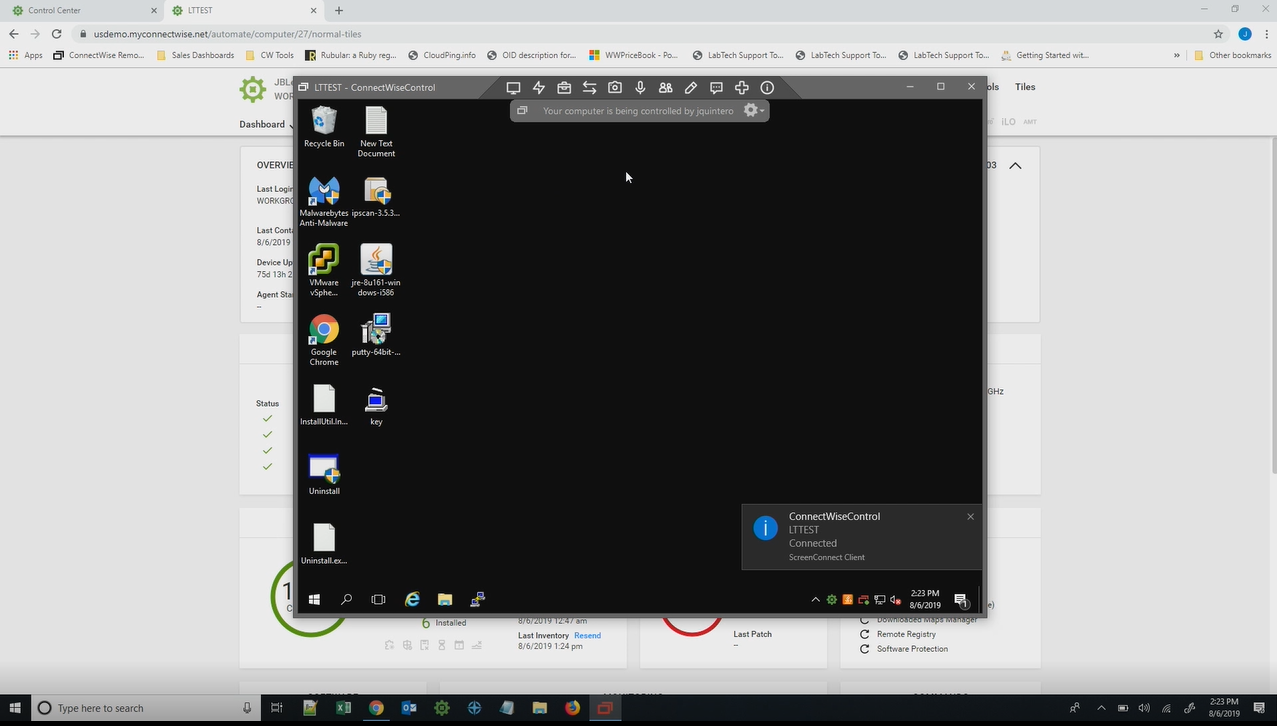
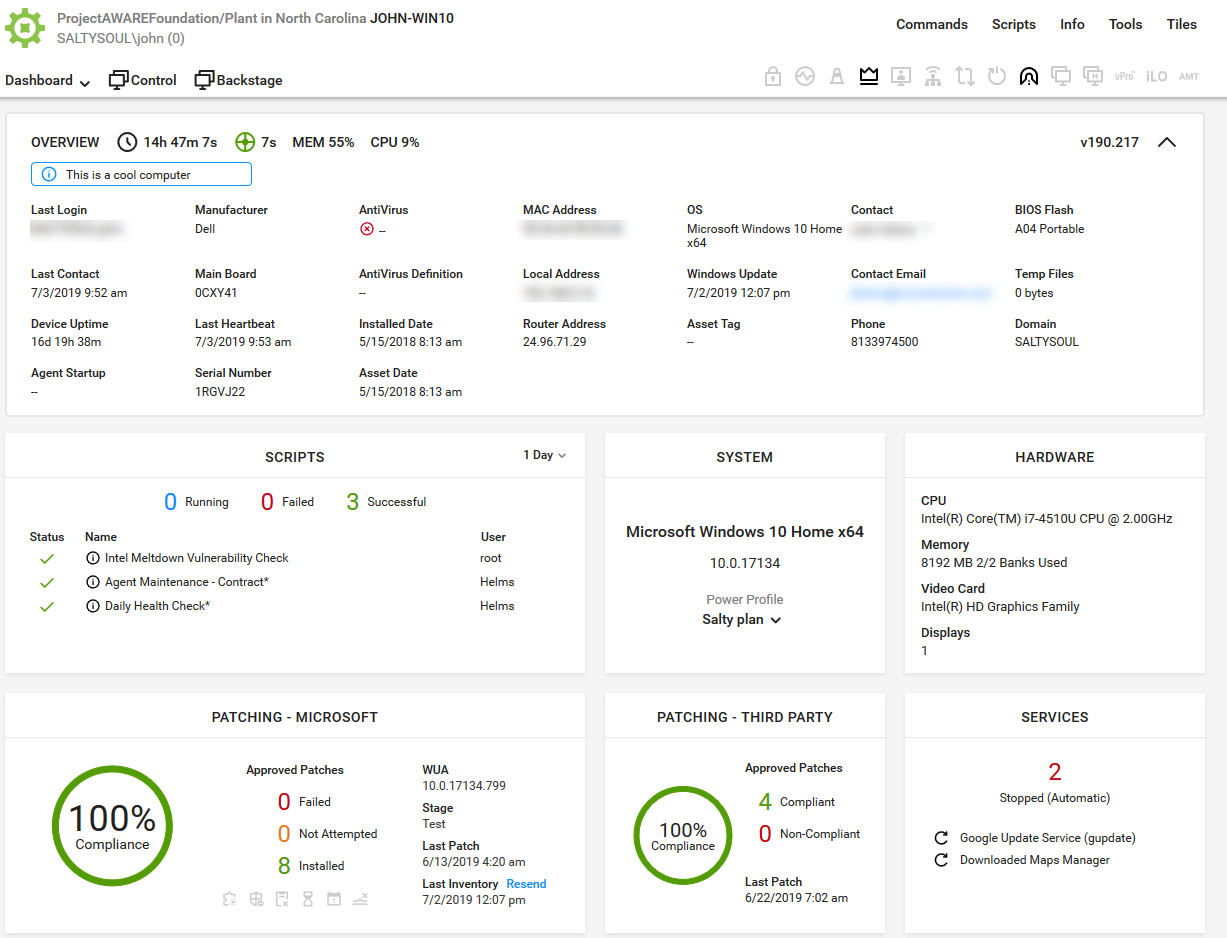
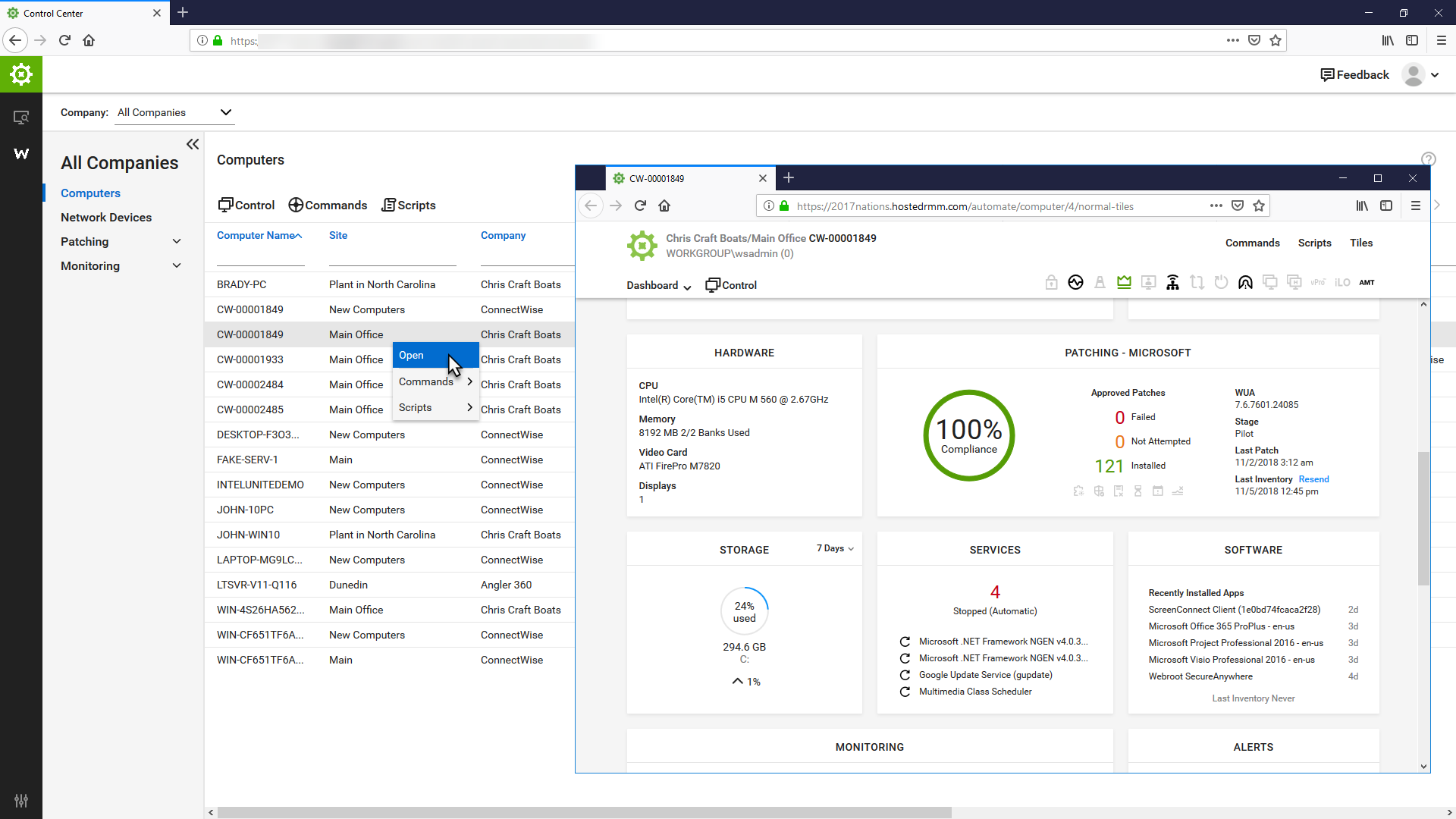
ConnectWise Automate, formerly LabTech, is a remote monitoring and management (RMM) platform. It provides powerful automation to discover and manage devices, monitor for problems, and scripts repetitive action.
$700
Kaseya VSA
Score 7.1 out of 10
N/A
Kaseya Virtual System Administrator (VSA) is a cloud-based Remote Monitoring and Management software. VSA unifies the monitoring of system infrastructure and endpoints and is designed for use by IT teams and MSP’s. It offers a robust crowd-source automation scripts library, as well as antivirus and malware capabilities with real-time threat alerts.
LabTech is a more comprehensive remote monitoring and management tool but costs considerably more. We switched to Atera from LabTech for a number of reasons. First and foremost, cost. Atera's per user licensing structure is much better suited for startups than LabTech. The …
We ran into significant issues with the support from Connectwise. Their documentation was not correct, an issue they admitted after several weeks of reviewing the problem, which cause a very serious server issue for us. Unfortunately, they were unwilling or unable to help us. …
We looked at NinjaOne and ConnectWise Automate which are both fantastic tools. Those options definitely have their strengths over Atera, but Atera was the one we chose in the end. The thing that drew us to Atera was the lack of complicated contracts and simple tech based …
Atera is very similar to Syncro in feature set and pricing, but we liked Atera just a bit better. (We switched from Atera to Syncro and then back to Atera, and have stuck with Atera for several years now.) Kaseya gave us bad vibes from their sales department and we ultimately …
Atera pulls the best features from the above systems I have previous experience in and unites them in an All-in-one solution that simplifies and improves everyone's experience.
Atera was the clear winner for us. The interface and tools were very easy to learn and setup. Atera's licensing incorporates good feature sets and value levels.
Some of the other products were difficult to setup and lacked good flow between tools. The value proposition was …
Connectwise is great, no question. But for smaller companies like us, having a technician cost vs a per device cost was the tipping point. We can add as many devices as we want without having to pay for each one. Sometimes when onboarding a new client this can be a huge perk, …
Any RMM that supports licensing around agents / technicians rather than devices is always a win in my mind. Primarily Atera was chosen due to the specific features it provides (we didn't need a lot of bells and whistles) and did what it needed to do, well. Remote access, patch …
I have a love hate relationship with Kaseya in two different companies. Kaseya is clunky, unreliable, and feels like trying to navigate my customers systems through an excel sheet, with most of its functionality not being reliable. Also, the way they managed the breach was …
Atera has many of the same features as the other products we've tested. The selling point for us was the pricing model for Atera. Most other providers charged a fee per endpoint which could quickly add up. With Atera's pricing model, we have a fixed annual cost which is …
The main major competitor I have experience with is Kaseya. Comparing my experience between the 2 the most important difference is the pricing. whilst Kaseya charges per device, Atera charges per technician, and a technician can handle as many devices as he wants. I also found …
Atera is able to do everything ConnectWise can do for a Windows/Mac environment. Atera's unlimited seats for one price is a game-changer for startup MSPs. ConnectWise is unaffordable for startups looking to grow their customer base. Constantly having to shore up pricing for …
Having used multiple system for RMM and support, we found that Atera checked the boxes for our needs in both the simplicity/ease of use, and a good tool set. While ConnectWise has more features and integrations currently, it is also very hard to manage and with each iteration …
Atera is a lightweight cloud application that handles most every need of small and large IT Firms alike. It closely resembles Ninja, N-Able, and Syncro in performance and scale. The biggest difference is the pricing models as Atera and Syncro charge per user as opposed by …
Basically the billing model by technician instead of agent. The all included solution for remote moniroting, remote access, automation, ticketing system and reporting.
IT Generalist at Mechanical Products & iCONN Systems, LLC
Chose Atera
Compared to Connectwise and Kaseya I would say the cost is much better from Atera, much easier to use, the agent footprint is much better and uses less resources on any given agent. Setup was so much easier overall and the couple of times I did need to use Atera support they …
Atera pricing is per technician and not per device which can literally save thousands of dollars annually. Atera is not as complicated and time-consuming to learn and use. Atera does not have a bunch of features that a small MSP business would not use and yet has to pay for.
We selected ConnectWise Automate over Kaseya as it provided many of the same features but less of the headache. Often times, scripts would not work in Kaseya or updates would not push. We have not had this experience with Automate, scripts and such just run when scheduled. …
If we have to do it again, we would not choose to Automate due to the number of efforts and monetary investment (3rd party consultants) to implement it as well on going managing it. But, in comparison to the other RMM products we used in the past, Automate offers more …
Automate is by far the best of all RMM solutions we have tried. The overall ease of use and support is much better than we have experienced with other RMM vendors.
I touched on this in the previous section some. Kaseya's choice of managed antivirus was very poor (KAV, a tweaked version of Kaspersky) when it first started. It took them a long time to fix anything, and the fixes usually produced new and different issues. Kaseya kept …
Automate is one of the best when it comes to RMM-applications in terms of features and ability to execute, however, where it is weak is in the necessity for an SME to run and maintain it and while it is quick and gets the job done, it is difficult to stack it up to a full …
We switched from Kaseya to Automate 7-8 years ago - it was no contest at the time and Kaseya wasn't cutting it in a number of areas at that time that was really hurting us. I'm sure it's improved since then.
We selected LabTech because we already had a very good ongoing customer support experience with ConnectWise. We had LabTech before ConnectWise acquired it, and had Kaseya, but gave LabTech another try and we are very glad that we did. We did not have a good experience with …
Prior to using LabTech, we used Kaseya. While Kaseya and LabTech have much of the same functionality, LabTech does things better and more consistently. Also, we rely on ConnectWise as our ticketing system and PSA. LabTech has two way ticket synchronization with ConnectWise that …
We used to use Kaseya VSA and liked it a lot. The primary reason we switched was the oppressive licensing costs. They've since changed their licensing but it was too late for us as we'd already made the switch. LabTech compares well with Kaseya VSA and neither are bad products …
We were previously using Kaseya and were frustrated by the difficulties we had in a number of areas. We were unable to use Kaseya's remote control reliably and experienced other problems. When we asked for help, the answer was usually one of two things:
Labtech has been around for a while and they actually listen to their community. The product is robust and is built for IT service providers. I have used a previous product for a long time and can tell you that Labtech is slightly more difficult to implement, but far more …
The way LabTech integrates with ScreenConnect and TeamViewer is just SO much better than Kaseya. I feel like Kaseya is a bit more intuitive though as opposed to LabTech that you should probably get some real training for. Scripting in LabTech is more reliable. I've never had a …
VSA is easily on par with SolarWinds N-central but ConnectWise Automate is the best tool out there for RMM. Automate shares some of the clunky interface that VSA has, but it is extremely fast and reliable. N-Central has the best organization of the three, it is very easy to …
While Atera and NinjaRMM are both solid products, they seemed to be more oriented to MSPs which we aren't. There were more features associated with costs per user/system, etc. that we would never utilize.
We looked at several options besides Kaseya in the beginning of our research process. We preferred the layout, support, and overall feature rich platform of Kaseya to some of their competitors. We also liked the ability to grow with Kaseya as needed and the ability to add …
What's Up Gold is more of a monitoring application and very good at that, but doesn't have the management tools that VSA provides. It requires additional applications and you lose the "single pane of glass" concept.
ConnectWise, at the time we looked at the product, did not have …
Automate is by far more customizable and affordable, a lot of our pain points in Kaseya are addressed with Automate. In our case, we have used Kaseya since 2012-2013 and have started migrating our customers to Automate in the past year.
Atera is doing well in the monitoring part as it is informing the real time ping of running devices and if any device goes down, it is informing us on the real time. It is helping us to monitor the last reboot status, current logged in users, time zone, IP addresses and other things so that we can track our end devices status. In the patching part Atera is pathing our all devices with the notification stating user to restart device at their convenient time. It is also patching our third party applications. It is good in installing and uninstalling of the third party application but limited to availability in the Atera inventory. Atera is not good in some parts such as in the patching part of applications, sometime it fails to update all 3rd party applications that were not installed via Atera. It is not good if you have to transfer a file to multiple systems at the same time.
I recommend it to all IT colleagues; regardless of the size of the PCs with which you work most of the time, the application allows connection stability between computers that make it possible to continue working or taking care of the infrastructure from afar.
If the software functioned as it was intended, it would be probably a 7 out of 10. It lacks the majority of customization that SolarWinds N-central supplies, but also supports some customization that other solutions we have tried do not. Again, if the software didn't consistently break, the ability to implement automated scripting via PowerShell and the capacity to manage 10+ endpoints at once in different windows is great.
Atera is very helpful in monitoring the servers and end-user devices for high CPU, memory, hard disk uses, and temperature monitoring.
Atera is good at installing third-party applications and also helps to remove it from the end systems.
Atera is perfect for patching as you can select the patches as per your need and reject those that are not required for you or going to disturb any of your internal applications.
Atera is good for managing software inventory as it provides you with the complete software list that is used in your infrastructure.
Being able to see systems that are not within the local network allows us to be able to troubleshoot and work with the end users no matter where they are or where we are as it is cloud based.
Several functions can be "automated" so staff do not have to keep going back and scanning for updates, push Windows updates and or push sensor updates.
VSA offers a variety of system information about all of the assets that have the endpoints installed on them so we can easily see the system specs without having to actually connect to them and pull up the SysInfo on each unit.
Atera does not yet have a MDM system, but I have been told that it is in the works!
Sometimes getting around the admin section of the IT side of Atera can be tricky, but the webinars and chat support help.
Many of the demo and onboarding agents are based in Israel, so it can be a challenge to find available times during the day while living in the United States.
They have conflicting scheduling paradigms. When scheduling patching for clients, the 1st Friday is interpreted as the very first Friday of the month, even if this is the 1st of the month. For scripting, the 1st Friday of the month is interpreted as the 1st Friday of the 1st FULL WEEK of the month. This makes no sense to have two different interpretations, and makes it unreliable to schedule recurring scripts to fall when recurring maintenance does. The scripts need to be done manually because of this.
There is no way to dictate reboot orders for patch policies. This tied directly in with my first point. We have some clients that require reboot orders. This is not possible without having different patch policies for each server and specifying a time this way. But, there aren't small enough increments of time to make this reliable, plus patching duration might vary. Excluding reboots with patching and scheduling reboot scripts fixes this. However, this can't be done once on a recurring schedule due to the different scheduling paradigms already discussed. We have to schedule these manually each month.
Support - Like all other competitors support is OK but the product is robust enough to reduce support requirements.
Customer Service - another team that is a bit poor especially when the issue involves multiple departments. Otherwise, the direct rep is very friendly and professional.
As of right now, we have found nothing that can offer as many features as Atera does along with the affordability. They are doing monthly releases each month and not just making small changes (shared scripting library, chocolatey support, Install packages, Splashtop SOS support, Scheduled tickets to name a few). The uptimes are great and accessibility to the dashboard has yet to be limited. We are a happy customer and bordering on fanboy status now
The primary reason for this rating is that ConnectWise Automate is currently so integral to our operations that moving away would involve more man hours than we would realistically have to invest. However, ConnectWise Automate is also completely capable of meeting all of our business needs and customizable to the point where if something is not meeting those needs out of the box, it can be modified to do what we want. From only installing software on machines if a different software package exists, to push a new version of that software is available, to check if credentials for user/machine have been updated to our new standards and then updating them if they have not, ConnectWise Automate is capable of doing everything we ask of it.
Atera's remote monitoring feature is one of it's best features. The laptops and servers we used it on responded quickly to our administrative task requests and made our work light. We were able to increase the resources, manage patches, windows updates and quite a few other tasks remotely and that too 24×7.
Basic use of the product is fairly easy. Information about the machines you manage can be found in customizable dashboards, which can be unique for each user, and, therefore, properly suited to the users' needs/job function. This is not a 10 because some of the interfaces are very clunky (Patch Management), and some features are not intuitive and not well documented (reporting). Scripting and Patch Management have a fairly steep learning curve (For structure in patch management and syntax in scripting), but once learned, they work well.
I think this is a solid tool for enterprise IT, however it would be higher if Kaseya VSA addresses the areas raised around recent stability, their support team, multiple session & screen support etc. It does do it's main job and allows an easy way for IT to operate and is mostly fine.
It used to be great, but then they broke reporting, speed and responsiveness with version 11 and the new Patch Manager. It's really bad and their support people are way behind on fixing so many bugs. They have really gone downhill. If they don't get it together soon, we'll start looking around.
Atera support provides answers to my questions lightning fast. They have never left me feeling like I'm out there on my own. I can ask questions by email, or by chat, or by opening a ticket with them and they are always on it quickly. They also have a forum where other Atera users can help you if you need it, and you can also add feature requests via the forum.
ConnectWise Automate lets you manage more endpoints, with enhanced productivity and improved service, all without increasing expenses. It can manage patches and updates across thousands of computers. We also use it for customized monitoring and alerting on workstations and servers. Monitoring is really robust and granular. It does a great job of gathering a TON of data about the network, and that data is searchable. There are a bunch of different reports built in. Integrates with Manage, Control, and other applications. It does a ton of stuff out of the box, and has endless customization options.
It was lots of back and forth email communication whenever I tried to solve my connection issues. I would send them detailed logs of the date, time, computer, and more of when I was experiencing connection issues. All I would get is an email back a few days later saying that they didn't find an issue in the service
The Online training has been re-done and needs a lot more work. When you look at training in different roles, it shows a lot of the same topics but no explanation to what is different about them. Several times that topics are the exact same, but they make you re-take the same information for a different topic, instead of marking that you have already completed that portion of training.
Start small and learn the in's and out's before making policies and rolling things out company wide. Ask the questions of why if you don't agree with something or your company does things a different way. Usually they are done a certain way for a reason. Start simple with roll out and slowly enable or add on the functionality that is needed.
Because Atera is a much more effective and efficient solution to manage all our IT operations, it automates each of our business processes. It offers us the best support to respond to any problem that may arise. I think Atera is much more cost-effective and reliable; its value is justified with each function and satisfies all our business needs and requirements.
I believe the monitoring and alerts in Continuum command is better, but [ConnectWise Automate (formerly LabTech)] does have stronger scripting, and perhaps a better interface. N-Central is inferior on all fronts to both. I did not make the purchasing decision. I would myself likely pick Continuum if I had to make a on the spot choice.
There are other products that do some of what Kaseya does, but I've not personally worked with another product that does everything Kaseya does. Sure there are plenty of remote control products, but products that do as much as Kaseya are few and far between. Hard to go wrong with the sheer scope of functionality!
The intuitive user interface has enabled both users and support technicians to familiarize themselves quickly with the functionality, and the learning curve is less.
Some features need to be accessed through documentation; they're not available directly on the dashboard.
Sometimes, internet access plays a significant role, whereas low connectivity is a hindrance.
We found we were able to provide good monitoring of our customers sites which was an objective. However, that came at a significant time investment that never seemed to be finished.
We were able to negotiate a price that worked for us for an up-front purchase which was nice.
We found the pricing to be very competitive.
Bottom line for us was despite the pros of the product, we found other RMM solutions to be a better overall "value" due to not having to dedicate technicians to maintaining the product.