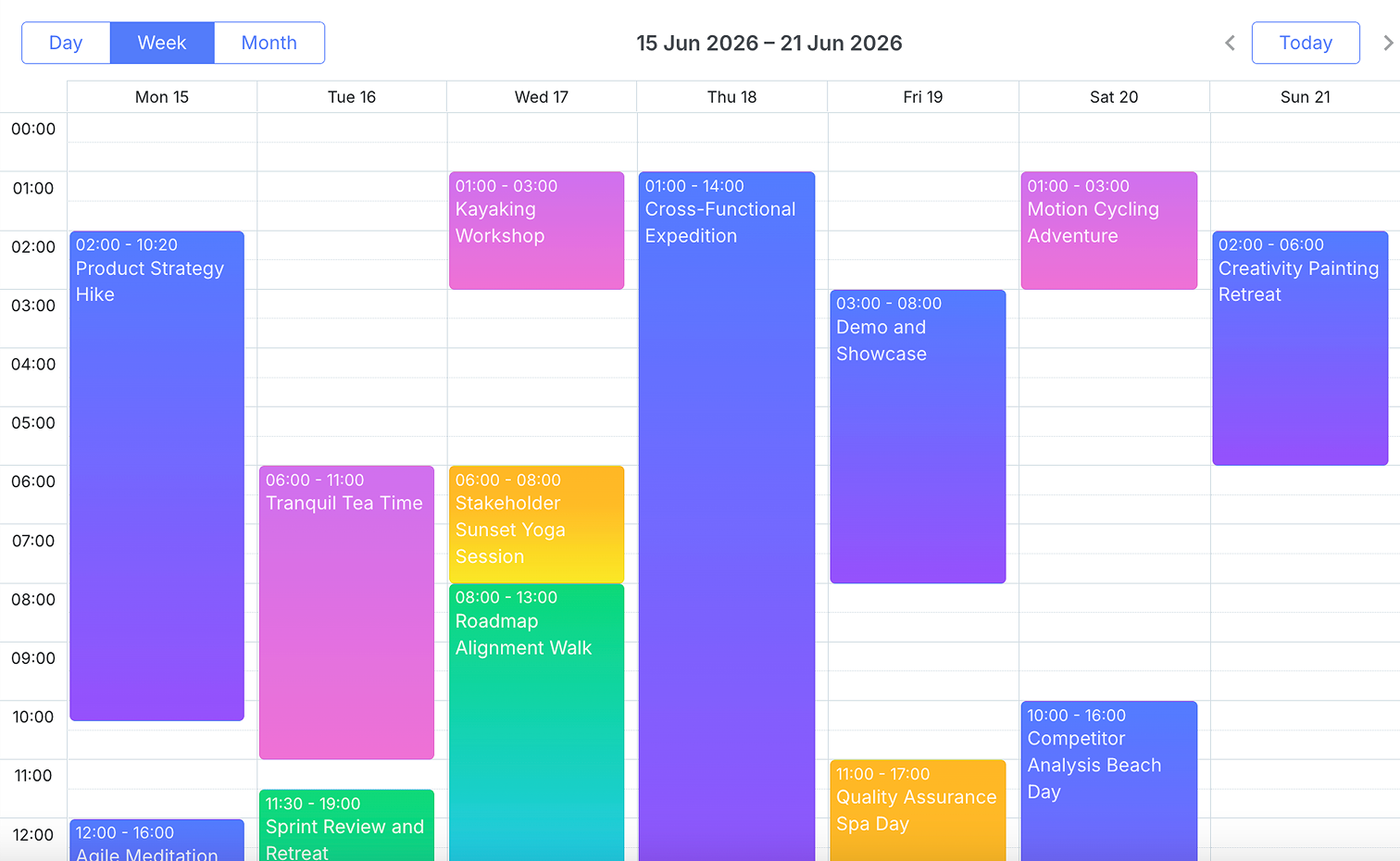
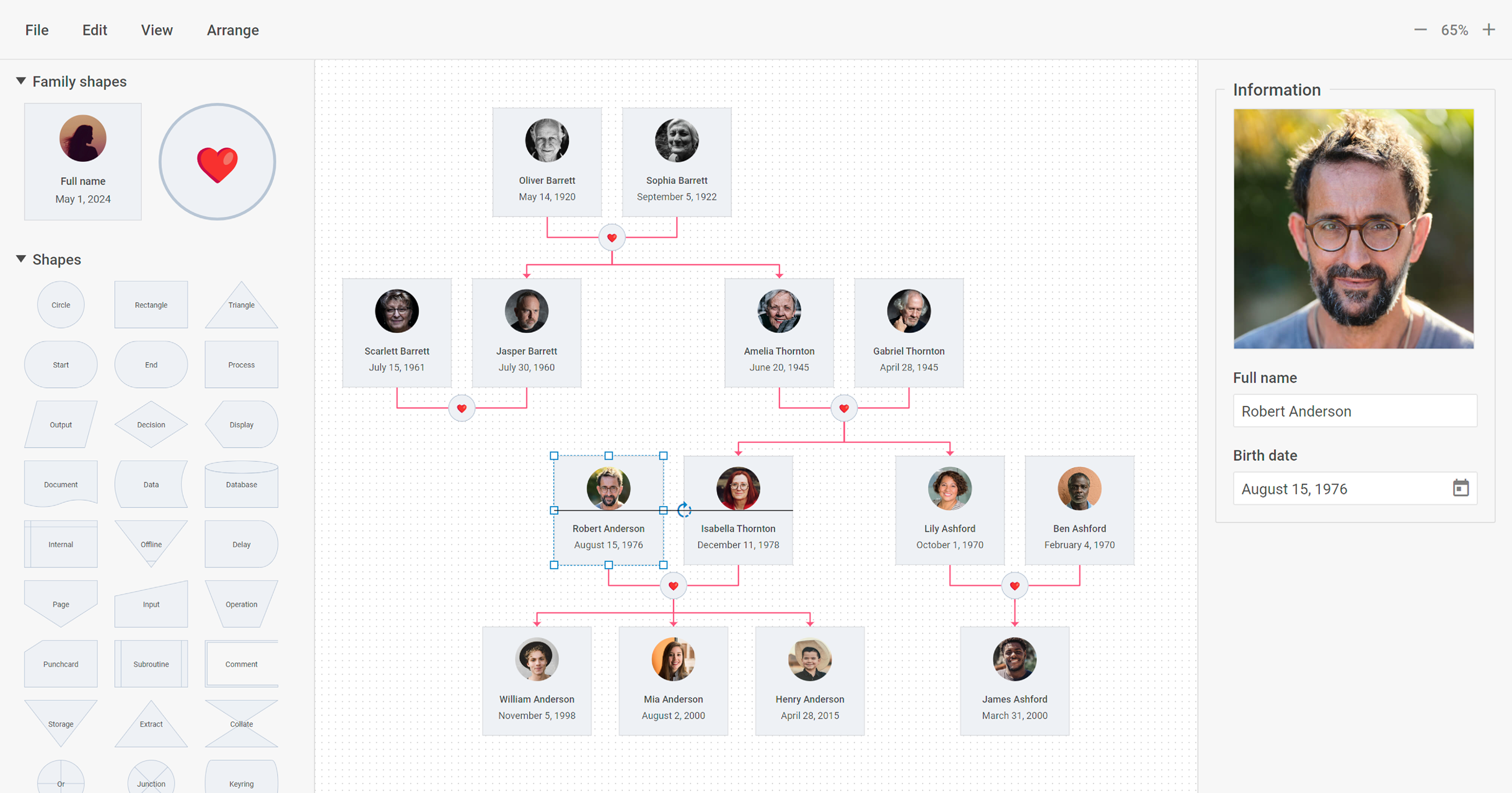
DHTMLX delivers JavaScript/HTML5 libraries and UI widgets designed for building enterprise web apps of any complexity. With these out-of-the-box components, web developers can streamline their coding processes and integrate advanced functionality, to reduce development time. The actual DHTMLX product lineup comprises a range of web-based tools that can cover most of the contemporary business needs. DHTMLX
$799
one-time fee lowest cost single component
React Native
Score9.5 out of 10
N/A
React Native is a framework for building native applications using React. It is open source and free, and developed by Meta Platforms. It enables users to create native apps for Android and iOS using React. React Native combines native development with React, a JavaScript library for building user interfaces.
$0
Pricing
DHTMLX
React Native
Editions & Modules
DHTMLX Gantt Individual - Professional Functionality with Standard Support
$799
one-time fee for 1 developer
DHTMLX Gantt Commercial - Professional Functionality with Premium Support
$1599
one-time fee for 5 developers
DHTMLX Gantt Enterprise - Professional Functionality with Premium Support
$2999
one-time fee for 20 developers
DHTMLX Gantt Ultimate - Professional Functionality with Ultimate Support
$5999
one-time fee for an unlimited number of developers
No answers on this topic
Offerings
Pricing Offerings
DHTMLX
React Native
Free Trial
Yes
No
Free/Freemium Version
Yes
Yes
Premium Consulting/Integration Services
No
No
Entry-level Setup Fee
No setup fee
No setup fee
Additional Details
UI widgets are available standalone or "a la carte," or as part of bundles built around a theme (e.g. complete edition, scheduling components, planning components, etc.).
CIO in Information Technology at ALL4TEC (Computer Software, 11-50 employees)
Chose DHTMLX
Compared with from scratch development of a graphical modeler or even a tabular representation in JS, using DHTMLX saved us a significant amount of precious time. By relying on this actively maintained product, we've been able to concentrate on the business aspects that are …
A de minimis incentive was given to thank the reviewer for their time. The incentive was not used to bias or drive a particular response, nor was the incentive contingent on a positive endorsement. More Info
Rapid development of web applications: DHTMLX provides a set of pre-built UI widgets that can be easily integrated into web applications, which makes it well suited for developing applications quickly. DHTMLX is well suited for building enterprise-level applications that require complex UI elements and data visualization. DHTMLX is less appropriate for Simple applications: If you are building a simple application that does not require a complex UI, DHTMLX may be overkill, and you may be better off using a lighter-weight framework.
A de minimis incentive was given to thank the reviewer for their time. The incentive was not used to bias or drive a particular response, nor was the incentive contingent on a positive endorsement. More Info
We are implementing React Native framework for the development of the Front-End for the machine learning models maintenance and monitoring website. It provides meaningful error messages, and time-saving and robust tools make it a premium choice over other platforms. Moreover, it provides intelligent debugging tools and error report mechanisms. And most importantly for us, it provides the aesthetic minimal functionality to learn in order to implement it, thereby eliminating the need to work in Xcode or Android Studio for iOS or Android apps respectively.
A de minimis incentive was given to thank the reviewer for their time. The incentive was not used to bias or drive a particular response, nor was the incentive contingent on a positive endorsement. More Info
A de minimis incentive was given to thank the reviewer for their time. The incentive was not used to bias or drive a particular response, nor was the incentive contingent on a positive endorsement. More Info
With regard to the two major components we used, namely the tabular representation and the graphical modeler, we were able to effectively replace the existing building blocks of our applications by integrating them. We were able to retain existing functionalities and benefit from a significant enhancement with what DHTMLX offers natively. This made it easy for us to get our end-users to adopt the change.
React Native uses JavaScript in the frontend and hooks and functions in the backend to connect the database to the real-time application. It also does not need any external support for multilevel configuration for different platforms. In terms of usability, it perfectly holds the front-end and backend development with some external configuration if we require it in our business. Sometimes it requires more configurations and pathways to build a certain level of functionality for the end users, but every technology has a tough phase where a certain concept get lack of visibilty to the users.
We looked at Kendo UI for ASP.Net Core as it has a Gantt chart but it was not as close a fit to our requirements as the DHTMLX Gantt Resource Management component. We'd have had to do much more work to make this fit.
A de minimis incentive was given to thank the reviewer for their time. The incentive was not used to bias or drive a particular response, nor was the incentive contingent on a positive endorsement. More Info
Compared with Angular and Vue, Reactive Native doesn't have a steep learning curve, considering it is a complete solution, and mastering Angular and Vue requires one to learn associated concepts like TypeScript and MVC. In React, the same code base may be implemented for creating a UI element and dictating its behavior, thereby eliminating the over-engineering procedures and following programming paradigms like KISS, DRY and SOLID.
A de minimis incentive was given to thank the reviewer for their time. The incentive was not used to bias or drive a particular response, nor was the incentive contingent on a positive endorsement. More Info
A de minimis incentive was given to thank the reviewer for their time. The incentive was not used to bias or drive a particular response, nor was the incentive contingent on a positive endorsement. More Info
A de minimis incentive was given to thank the reviewer for their time. The incentive was not used to bias or drive a particular response, nor was the incentive contingent on a positive endorsement. More Info