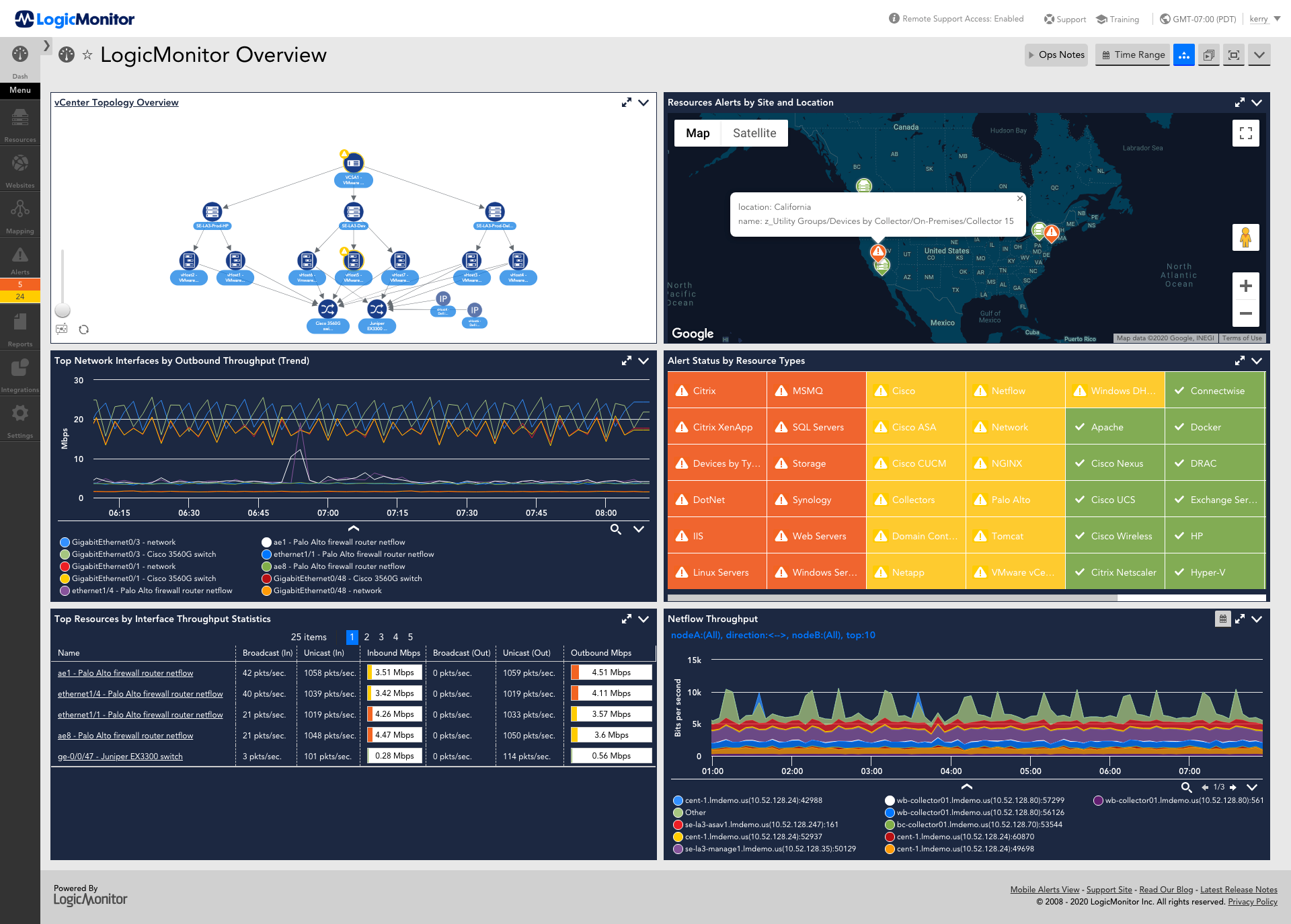
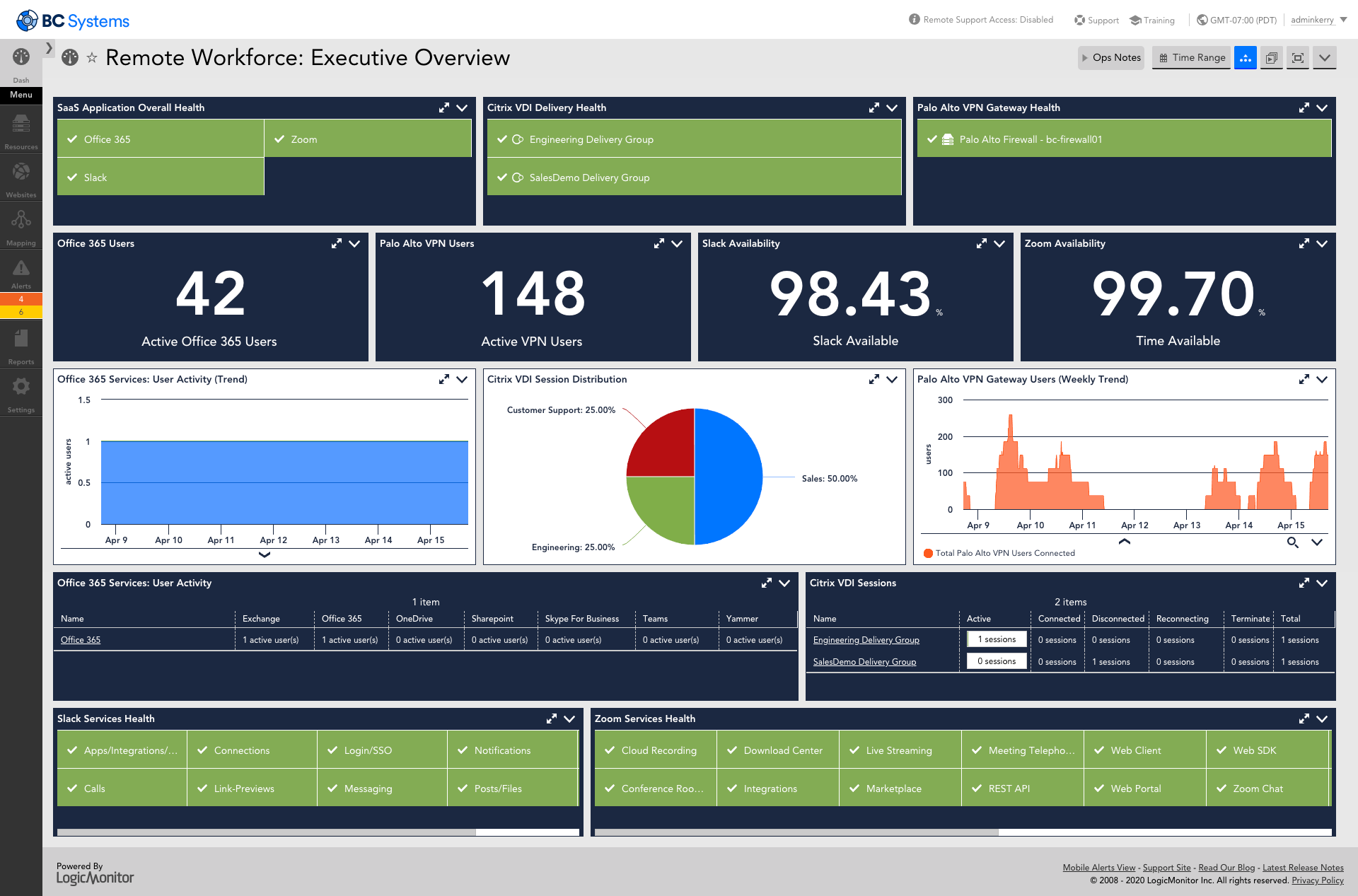
LogicMonitor’s SaaS-based platform, LM Envision, enables observability across on-prem and multi-cloud environments. It provides IT and business teams operational visibility and predictability across their technologies and applications.
N/A
Logstash
Score 9.0 out of 10
N/A
N/A
N/A
New Relic
Score 7.8 out of 10
N/A
New Relic is a SaaS-based web and mobile application performance management provider for the cloud and the datacenter. They provide code-level diagnostics for dedicated infrastructures, the cloud, or hybrid environments and real time monitoring.
$0
No credit card required; 100 GB free ingest per month, 1 free full user + unlimited basic users, 8 days retention, 100 Synthetics Checks
Pricing
LogicMonitor
Logstash
New Relic
Editions & Modules
Enterprise
Contact sales team
Website Monitoring
Contact sales team
No answers on this topic
Free (Forever)
$0
No credit card required; 100 GB free ingest per month, 1 free full user + unlimited basic users, 8 days retention, 100 Synthetics Checks
Telemetry Data Platform
$0.25
per month per extra GB data ingest (after first free 100GB per month)
Incident Intelligence
$0.50
per month per event (after first 1000 free events per month)
Standard
$99
per month per full user (after first free full user - unlimited free basic users)
Pro
Contact sales team
Enterprise
Contact sales team
Offerings
Pricing Offerings
LogicMonitor
Logstash
New Relic
Free Trial
Yes
No
No
Free/Freemium Version
No
No
Yes
Premium Consulting/Integration Services
Yes
No
No
Entry-level Setup Fee
No setup fee
No setup fee
No setup fee
Additional Details
Our platform is broken down into Pro and Enterprise Pricing. Pro includes monitoring for all of your cloud, hybrid, and on-premises infrastructure. Our Enterprise package includes all of this, plus our AIOps and Machine Learning functionality that provides dynamic thresholds, root cause analysis, anomaly detection and more!
LogicMonitor only charges by the device. What is considered a device? A device is anything with an IP address that you want to monitor, including a physical device or a cloud resource. This means multiple data sources under the same IP address can be monitored for the same price. Unlike some monitoring platforms. we don’t charge per node, interface, or metric.
Basically, we did not have any idea about it and how to choose, but we asked one of our former bosses, as they were very experienced with it, so they helped us by clarifying a few things between New Relic and LogicMonitor, as they told us that if you are looking for an …
Some teams in our company are also using New Relic, and they are pretty satisfied with it. However, I also used it for some time, and I did not find it as flexible as LogicMonitor for our needs. So, yes, I suggested that management remove New Relic, as we have a superior tool …
I was one of the members who were looking for a better application for our system security, and we tried Datadog and New Relic. Those software were very good for normal usage. New Relic was working fine until we started facing problems if any sudden system increase as it was …
One of our main objectives while choosing a next gen monitoring platform was scalability in that regard we were not interested in legacy on prem solution and SAAS model was our preferred solution which supports rapid scalability when needed. Another important objective was to …
Most vendors are experts in one area (APM, ITIM, Logs, Network, Cloud). LogicMonitor provides strong monitoring and alerting functionality in all areas. They are also leaders in innovation for the newest services we’re using (Kubernetes, Fargate, Fortigate, Cohesity). Most of …
New Relic has a native integration with the IaaS service that the company utilizes which made it very easy to set up, integrate, and it also has consolidated billing with that IaaS service which is a big plus for the organization. After evaluating, I also thought it had the …
We selected New Relic since it was very dynamic and versatile to use. It works well in all aspects of monitoring, and observability and would allow having a focus on collaboration with different repeatable processes. Also, New Relic has a good focus on working well with CLI, …
Elasticsearch with its Beats technology is open source and has good community support. Amazon CloudWatch is another good alternative if you are using AWS because then the metrics are right there. In fact, I like CloudWatch especially because it is mostly free for basic use and …
The example I will give will explain my rating for it. One employee left our company due to a personal issue, and at that time, our team was working on a highly secure project. He wanted to take revenge on our company, so he began hacking our systems from the outside. Since it appears that someone without authorization is attempting to access our systems, LogicMonitor simultaneously alerted our team to the problem. We stopped that threat with LogicMonitor.
Perfect for projects where Elasticsearch makes sense: if you decide to employ ES in a project, then you will almost inevitably use LogStash, and you should anyways. Such projects would include: 1. Data Science (reading, recording or measure web-based Analytics, Metrics) 2. Web Scraping (which was one of our earlier projects involving LogStash) 3. Syslog-ng Management: While I did point out that it can be a bit of an electric boo-ga-loo in finding an errant configuration item, it is still worth it to implement Syslog-ng management via LogStash: being able to fine-tune your log messages and then pipe them to other sources, depending on the data being read in, is incredibly powerful, and I would say is exemplar of what modern Computer Science looks like: Less Specialization in mathematics, and more specialization in storing and recording data (i.e. Less Engineering, and more Design).
New Relic its an excellent tool for monitoring services used on the SAAS universe, like web servers, relational and nosql dbms, reverse proxies, text databases, etc. Its also a powerful tool to monitor resource usage on said servers. However, its not well fitted to monitor custom services - if you need to generate alerts based on logs or database information, for example
Logstash design is definitely perfect for the use case of ELK. Logstash has "drivers" using which it can inject from virtually any source. This takes the headache from source to implement those "drivers" to store data to ES.
Logstash is fast, very fast. As per my observance, you don't need more than 1 or 2 servers for even big size projects.
Data in different shape, size, and formats? No worries, Logstash can handle it. It lets you write simple rules to programmatically take decisions real-time on data.
You can change your data on the fly! This is the CORE power of Logstash. The concept is similar to Kafka streams, the difference being the source and destination are application and ES respectively.
And while powerful, building tailored dashboards with organ-specific metrics (such as energy load variance across regions) can be difficult to navigate. The UI isn't as drag-and-drop easy, and query-based widgets typically involve some trial and error for non-devs.
Alerts may be hypersensitive or over general. I We often get a spam of non-critical alerts while doing load testing, all overhauling to me alone and making it difficult to identify actual issues especially in energy systems where spikes are very common.
With our expanding fleet of Iot devices, the per-host pricing model is becoming expensive, quickly. More detailed billing based on microservices, or that works at sensor level, would make it more adaptable for energy platforms.
This product has met virtually all of our needs. It was easy to implement and has been simple to support. Customization has been intuitive with many options available. They keep adding features and expanding available options. The future of LogicMonitor looks even better than it is today which is very promising. The management and support teams at LogicMonitor are always helpful
The only issue that we have had with New Relic is that the price might be a little expensive for smaller companies. The amount of data you store in New Relic impacts the cost, and can get away from you if you don't work closely with the vendor. Overall though the application is top notch.
Set up is super easy. Just stand up a small Linux or Windows server to act as a collector. There are no agents to install on monitored devices and all you need is SNMP or WMI access. When creating dashboards, all you have to do is find the widget on the device you want to show up and choose the menu option to add it.
As I said earlier, for a production-grade OpenStack Telco cloud, Logstash brings high value in flexibility, compliance, and troubleshooting efficiency. However, this brings a higher infra & ops cost on resources, but that is not a problem in big datacenters because there is no resource crunch in terms of servers or CPU/RAM
I have given this much rating as I am used New Relic in different sectors and for different use cases like its K8s monitoring, infra monitoring, full stack monitoring as compare to other tools New Relic gives data in a formatted and connected way, and also it is giving us value for money. It also launches new features day by day which helps users to track the issue very quickly. It also supports OTel integrations which is the latest trend of observability tools. thats why I had given this much rating to New Relic.
The sales team support we received was top notch. They worked hand in hand to make sure the product met all expectations. So far we have not really had to work with support that much; we have worked with setup team after purchase to deploy product fully. No issues so far and we are four weeks in.
The support team has been really helpful and resolved most of the issues on time. However, for a couple of issues, several follow-ups were needed to elicit a reasonable response. The issue was deeply technical and could have been investigated only by their Architects, and bringing them into the ticket took longer than needed
I did not truly dedicate myself to implementing LogicMonitor. However, I overheard the IT team members explain that "LogicMonitor is perfect for us as it has made most of the work automated, and implementation and training sessions were perfect for us." Thus, I can state that everything went smoothly with our implementation.
It's better to start by implementing New Relic in one project and test everything. Try to follow best recommended practices and read all the official documentation. Everything seems well tested. Then, start by installing agents to the rest of your projects and keep a close look to all logs and metrics New Relic gives you.
Basically, we did not have any idea about it and how to choose, but we asked one of our former bosses, as they were very experienced with it, so they helped us by clarifying a few things between New Relic and LogicMonitor, as they told us that if you are looking for an automated option, then there is no better option than LogicMonitor.
Logstash can be compared to other ETL frameworks or tools, but it is also complementary to several, for example, Kafka. I would not only suggest using Logstash when the rest of the ELK stack is available, but also for a self-hosted event collection pipeline for various searching systems such as Solr or Graylog, or even monitoring solutions built on top of Graphite or OpenTSDB.
Data Dog has solutions that look more attractive, but not at their price point. We have also tried to build a solution straight from the Cloud, where our business is built, but some things are too hard to replicate. This shows that New Relic is useful and helps our efficiency.
Pricing seems to be getting more and more aggressive, I worry that it's going to turn into ServiceNow or SAP and everything minor feature will be an extreme cost that prices out us and our customers
Haven't really used it but our initial onboarding PS was disappointing. Felt like we were being told what we needed to cover as opposed to what we wanted to cover. In addition, we were pushed into using the PS in tight time frames and we were not ready to do so.
Positive: LogStash is OpenSource. While this should not be directly construed as Free, it's a great start towards Free. OpenSource means that while it's free to download, there are no regular patch schedules, no support from a company, no engineer you can get on the phone / email to solve a problem. You are your own Engineer. You are your own Phone Call. You are your own ticketing system.
Negative: Since Logstash's features are so extensive, you will often find yourself saying "I can just solve this problem better going further down / up the Stack!". This is not a BAD quality, necessarily and it really only depends on what Your Project's Aim is.
Positive: LogStash is a dream to configure and run. A few hours of work, and you are on your way to collecting and shipping logs to their required addresses!