Adobe acquired Omniture in 2009 and re-branded the platform as SiteCatalyst. It is now part of Adobe Marketing Cloud along with other products such as social marketing, test and targeting, and tag management.
SiteCatalyst is one of the leading vendors in the web analytics category and is particularly strong in combining web analytics with other digital marketing capabilities like audience management and data management.
Adobe Analytics also includes predictive marketing capabilities that help…
N/A
Conductor
Score 9.4 out of 10
N/A
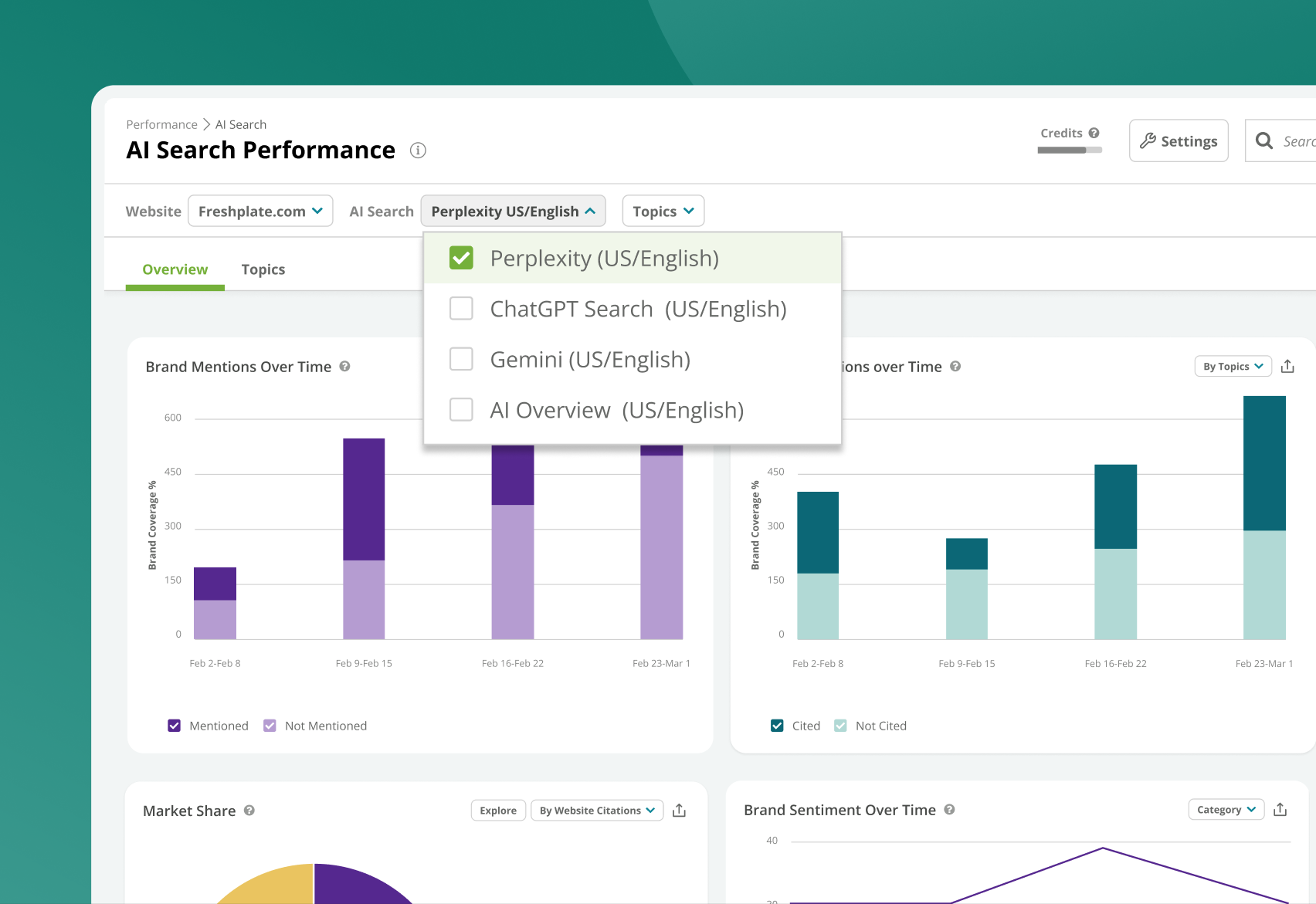
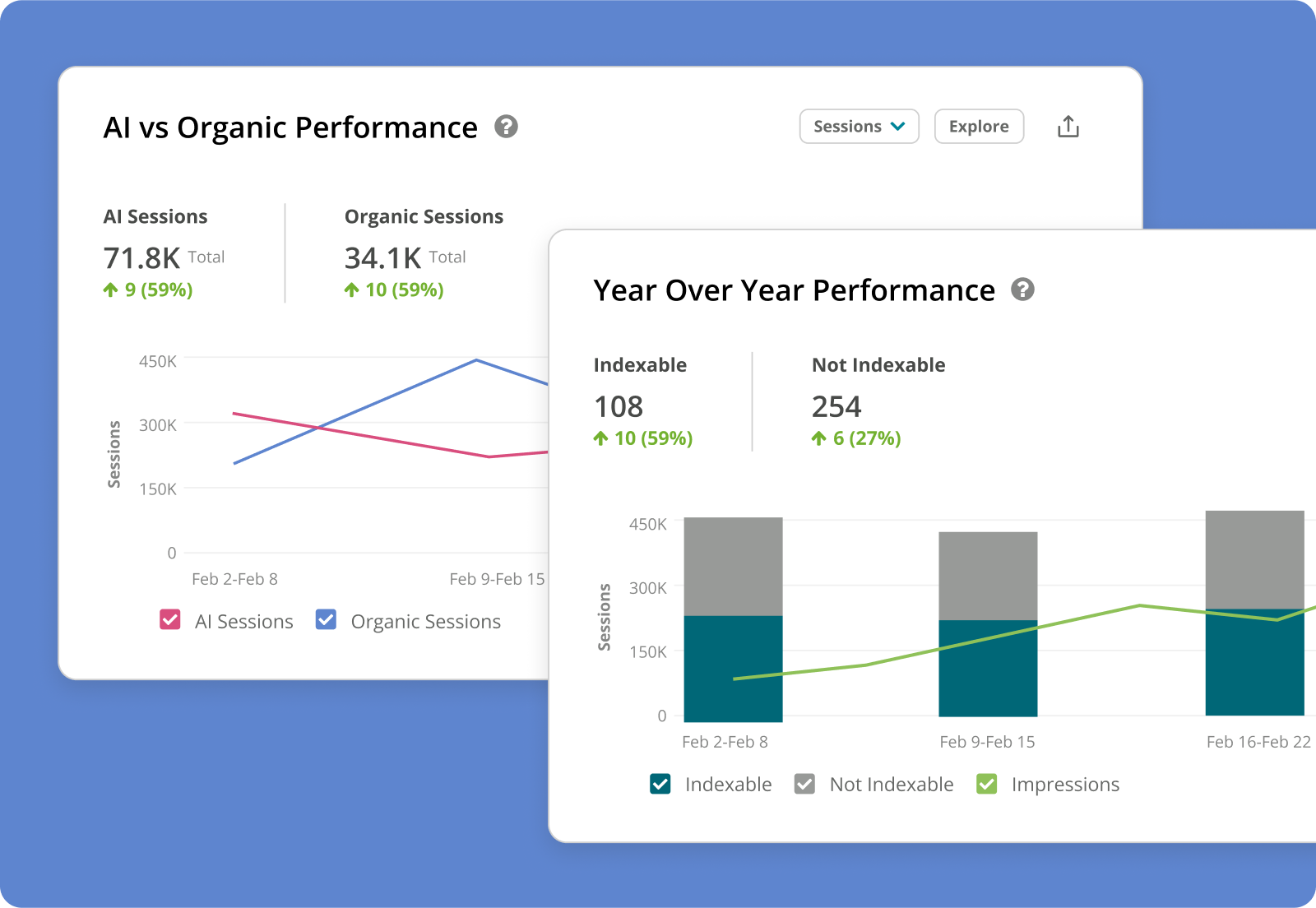
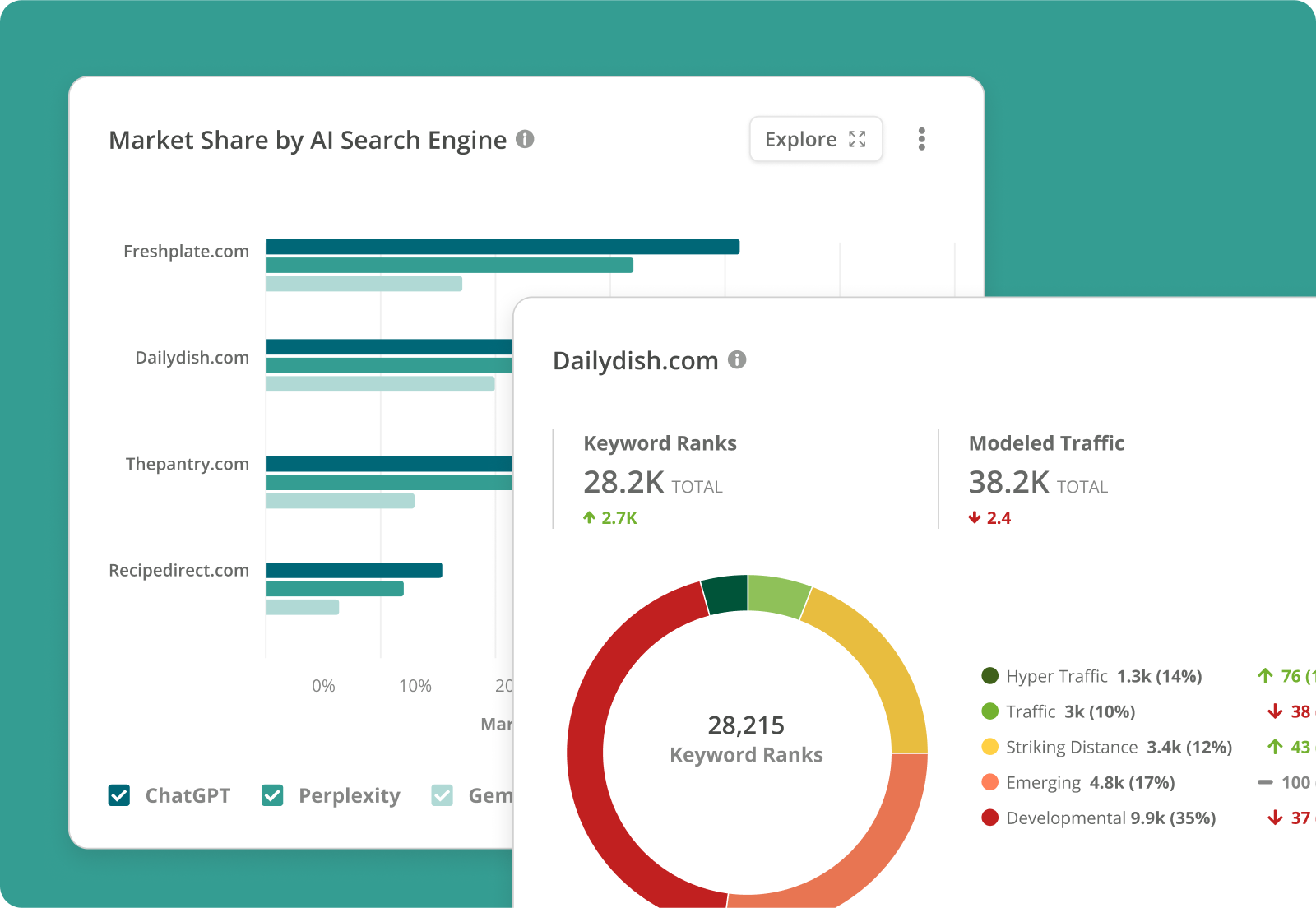
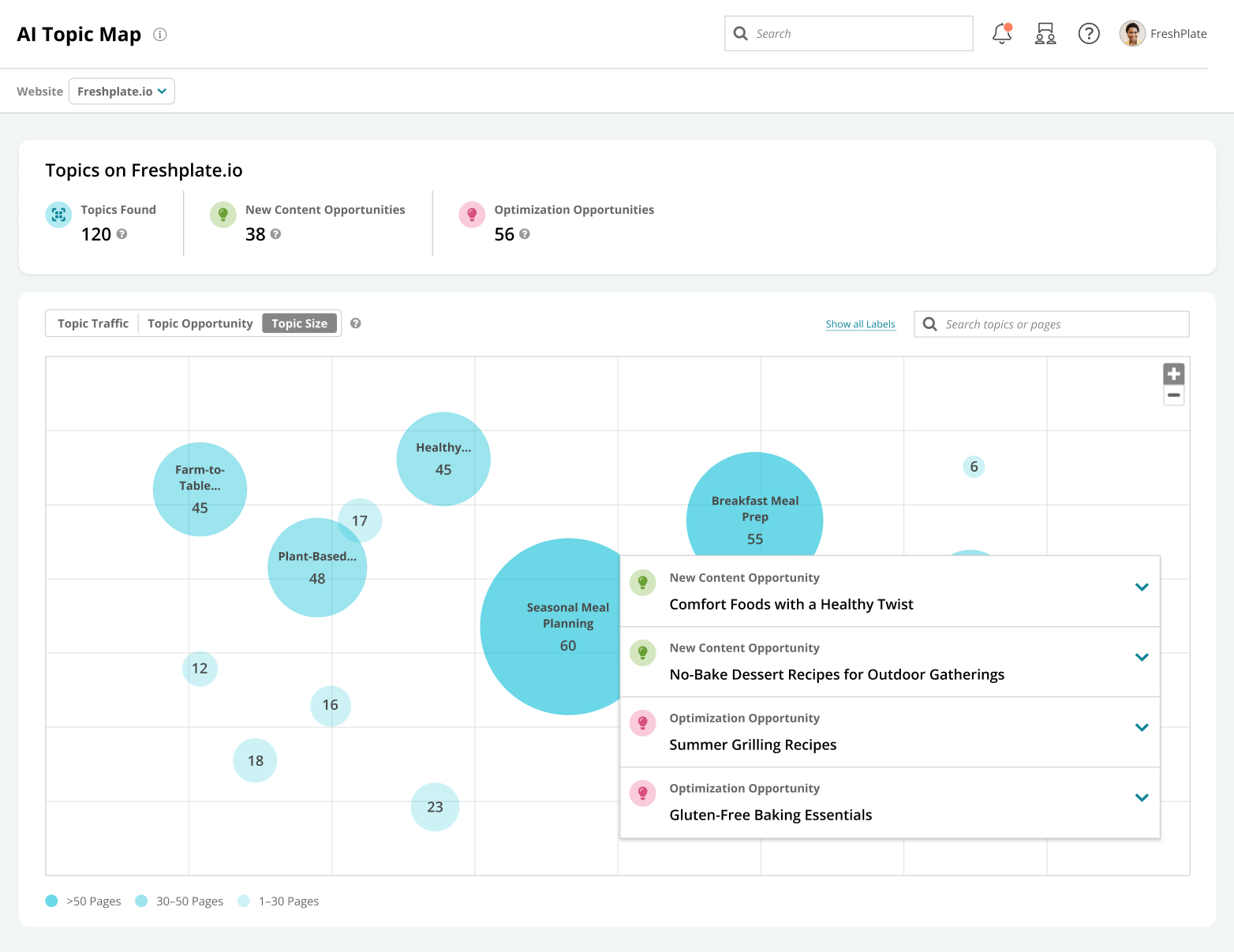
Conductor is an enterprise AEO platform that provides unified AEO & SEO intelligence, scaled AI content generation, and real-time website monitoring. From tracking visibility in LLMs to technical health and content optimization, Conductor’s platform empowers teams to increase authority and visibility in AI and traditional search and accelerate digital growth. Conductor states its current customers include global brands such as SAP, e.l.f Cosmetics, FedEx, and Mastercard.
N/A
Google Analytics
Score 8.2 out of 10
N/A
Google Analytics is perhaps the best-known web analytics product and, as a free product, it has massive adoption. Although it lacks some enterprise-level features compared to its competitors in the space, the launch of the paid Google Analytics Premium edition seems likely to close the gap.
Sr. Marketing Manager of Web Analytics and Personalization
Chose Adobe Analytics
Adobe Analytics far surpasses Google Analytics in the following arenas: journey analysis. Adobe Analytics very clearly portrays user journey data unlike any other web analytics tool.
Verified User
Employee
Chose Adobe Analytics
Adobe Analytics is far better and customizable than the free version of Google Analytics.
I used Google Analytics extensively but Adobe Analytics triumphs. It provides an overall overview which is extremely helpful. Google is a great tool for advertisement and I suggest you not go into that venture to keep your exclusivity. This makes Adobe Analytics amazing and …
Many of our users come from a background of using Google Analytics. They like it, but Adobe Analytics gives them an ability for a more thorough analysis.
Historically I've looked at a lot of different products. More recently I'd say Mamo and Google Analytics. Those are probably the two big ones that I've seen around, so yeah.
It's more feature rich. It provides more dimensions, more breakdowns, and it also scales data better.
Compared to Google Analytics, Adobe Analytics is more powerful for deep segmentation and global analysis. It’s a bit less intuitive, but we chose it for flexibility, better cross-channel attribution, and the ability to handle complex user journeys at scale, which mattered more …
We evaluated and we currently use Mixpanel and we have Google Analytics on a couple of our properties. And honestly, once you get the hang of the Adobe Analytics workspace, the other products really don't stack up against it because the segmentation and the ability to create …
I've used Google Analytics, which is probably the most direct competitor to Adobe Analytics, as well as Pendo Analytics, which is a little bit more of an adjacent product. It's more focused on product analytics rather than web analytics. I've also used Localytics, which is a …
I believe Adobe is more suitable for complex website structures as its data visualization dashboard options gives multiple options to represent data in a dashboard which is easy to read and understand. Also, the setting up of CMPID and tracking of goals is much simpler along …
We felt Adobe Analytics was a much more robust platform and stacked that gave us much more depth into user behavior across our different channels. We needed a platform that had no sampling involved with a longer time. Period for analysis to ensure we were always able to pull …
Clients usually select Adobe Analytics because it suits them better than the alternatives and they want more customisation than GA4 offers. Also because they might be with Adobe Experience Cloud for a few other things like tag management, A/B testing, audience manager, campaign …
Adobe is more sophisticated and customizable but Google UI is a lot cleaner and nice that it connects with Gmail data so you can see demo of people going to your site/app.
Conductor uses Google Analytics to get much of its data, so they're fairly comparable in terms of the information they use. However, I feel like I get a better picture of what my company is personally looking for by using Conductor, because it's designed with companies like …
We have looked at a few other competitors or other SAAS options but none of them offered the number and quality of tools and resources that Conductor offered especially for the flexible pricing we found with Conductor.
Semrush -- I still use this suite, though not for the info I get from Conductor. I don't see their ranking data as being as accurate, but they do show other key data points and 3rd party traffic stats. BrightEdge -- the platform is most comparable with Conductor, but have the …
I've used BrightEdge, Ahrefs, Semrush, Siteimprove, and a few others I can't think of the name right now. We didn't move from one to the other, this was always the tool I have used with this company.
Conductor has a more user friendly interface and provides more information and more relevant information to problems I am looking to solve for my clients.
I've logged into a client's previous install of BrightEdge to learn the capabilities of the platform. I find that tool is extremely powerful for auditing and rank tracking but it lacks the content discovery engine and competition analytics that Conductor provides.
I still regularly use other SEO platforms along with Conductor, which each have their own unique advantage. I think in terms of overall SEO strategy and measurement of SEO health, Conductor does the best job at providing helpful reports and bringing multiple data sources …
We have used BrightEdge, gShift Labs, Lindex, and SEO Clarity. Major reasons for we moved away from gShift for better reporting capabilities and have since enjoyed innovation and superior tracking features and user interface of Conductor. The customer service teams and …
Conductor had more features and options in one place than other products we looked at. We previously used tools that were all disjointed, but Conductor brought everything together and added more insight into the overall market, competitors, and recommendations than we ever had.
We use two platforms currently, google analytics and conductor. We have separate teams that use one or the other more and our team, we usually use both. However, google analytics is easier to receive data like bounce rates, customer IDs, and map a customer's purchasing path. …
We moved from BrightEdge to conductor because of its usability, similar or expansive features and tools, and because it was the better tool for us to provide more value to our clients
We used multiple platforms for SEO and content marketing in the past, Conductor substituted some of the but not all. We still have to use 3rd party platforms for backlink reasearch.
We never used a product before, but we did have an agency that monitored this for us and reported to us on status. It was cumbersome. They only checked our rankings once a quarter so we couldn't make decisions or changes fast enough. We chose Conductor because the tool was …
We have tried a number of tools over the years. The biggest difference with Conductor has to be the integration, competitive analysis and recommendations that the software makes based on the current structure of the site, content and keyword discovery. Customer service is also …
Google Analytics is free! And while Adobe Analytics is arguably more powerful, it's paid. Additionally, Google Analytics' integrations are vastly well known, thoroughly well (and more) documented, and used by more people. That means that it's also easy to find people that are …
Plain and simple - Google Analytics is a free solution with a robust amount of reporting capabilities. It only lacks as it provides a certain amount of reporting points out of the box compared to Adobe Analytics which is more of an enterprise type of reporting solutions. Adobe …
Google Analytics (free version) is typically my go-to recommendation for most companies. Small to medium size businesses, definitely. Larger organizations with need for a complex account structure / hierarchy and the need for highly customized analytics metrics, dimensions, …
We have been using Adobe Analytics for a while but the system seemed to be more complex when compared to super user friendly Google Analytics. Moreover, the option to add custom metrics and dimensions is lacking in Adobe Analytics. Google Analytics is good with transactional …
Adobe Analytics has been in the market for a long time; some people still know it as Omniture or SiteCatalyst. It seems that some great ideas from Google Analytics, such as Enhanced Ecommerce and the new way of measuring events with GA4, are adapted from the traditional Adobe …
Adobe Analytics and Google Analytics 360 are both paid/premium options for website tracking. Though there are certain use cases when these might make sense (you operate entirely in the Adobe suite, you're a massive company/site that doesn’t mind the price tag on Google …
I have not used Adobe Analytics as much, but I know they offer something called customer journey analytics, which we are evaluating now. I have used Semrush, and I find them much better than Google Analytics. I feel a fairly nontechnical person could learn Semrush in about a …
Ease of use: Google Analytics is known for its user-friendly interface and straightforward setup process, making it accessible for beginners. Adobe Analytics has a steeper learning curve and requires more technical expertise. Features: Adobe Analytics offers a more comprehensive …
Adobe Analytics is good but it is more suited to people who are fully and technically into reporting and the solutions it provides. Google Analytics on the other hand provides a much easier way of setting up the Analytics. Most of the data reporting, charts and visualisations …
Verified User
Account Manager
Chose Google Analytics
Google Analytics is free while Adobe Analytics is really expensive
Google Analytics is for me the default one to implement especially for business starting in analytics. The time (aka cost) of implementation is very low and it provides results in a matter of hours. The integration with the Google ecosystem is also a plus especially when …
Built-in reports are beneficial but you can create custom reports if you need more details with different dimensions and metrics it also provides insights which is just little data about your site traffic in sentence format its the best way to know which strategy you are on …
Google Analytics is a bit cheaper than its competitors and provides a slightly different role as it tracks all channels. It has a close relation to Google and this makes the data a bit more valuable than those programs that are not.
Google Analytics provides everything you need in terms of straight forward analytics needs. The tool is not very flexible compared to other software such as adobe, and if you want to upgrade to premium or add in a bunch of custom situations, that can be become very [tedious] …
[Google Analytics] provides a broader appeal, combining what would usually require several different platforms, and as such is a bit of a jack of all trades in comparison, although often to a "good enough" level. If there is a particular aspect that you then find you would like …
Google Analytics is the industry standard, integrates seamlessly with most site setups, and cannot even be compared on cost. While it falls short in some areas like individual user tracking and cross-device reporting, it provides 80-90% of the needed visibility for online …
Google Analytics is the web's gold standard. We also use StatCounter for redundancy sake and because its visitor tracking and basic reporting are spectacular. But Google is a must-have no matter what else you end up using.
The redundancy issues plays out in terms of data …
Google Analytics stacks up as some of the best among the competition, assuming you're using it for its intended purpose. It's been the easiest to integrate into our applications, as well as the easiest UI to use. We selected Google Analytics for security and budget reasons, but …
Both are great, just different. Most clients believe Google is the golden standard due to the strong presence of Google's brand everywhere, but Adobe seems to have stronger, drill down tracking at the expense of a harder to use interface.
We have been using Google Analytics for over 10 years. Over that time we have periodically reviewed our analytics platforms a number of times. For us, it made more sense to stay with google analytics primarily because if we migrated to another platform we would lose the …
Honestly, because Adobe Analytics is so customizable, I found that it is very well-suited for almost any type of web digital experience tracking of behavioral analytics. It has a very robust mech architecture for any type of e-commerce platform. But it is extensible and is easily adaptable to other circumstances. For example, in our university situation, we've been able to use it for student portal experience tracking, how well they are interacting, interfacing with our internal sites, and how well they are working with our task submission processes. But it does a great job of managing all aspects of the key journeys, especially from a marketing perspective. So while it might not be as out-of-the-box for some of those other alternative use cases outside of marketing, it's extensible and customizable enough that it's worked really well and met our needs.
Conductor is a great tool to use when we're planning and optimizing content around specific trends. It also helps us track our on-going performance as well, which is great to help us improve. Conductor is less ideal for content that has a quick turnaround time or pieces where SEO isn't a priority, also if you're looking to manage content publishing directly. It's more useful when it comes to strategy and optimization for in-depth pieces.
Google Analytics is particularly well suited for tracking and analyzing customer behavior on a grocery e-commerce platform. It provides a wealth of information about customer behavior, including what products are most popular, what pages are visited the most, and where customers are coming from. This information can help the platform optimize its website for better customer engagement and conversion rates. However, Google Analytics may not be the best tool for more advanced, granular analysis of customer behavior, such as tracking individual customer journeys or understanding customer motivations. In these cases, it may be more appropriate to use additional tools or solutions that provide deeper insights into customer behavior.
Within my role of advertising, I can come in, and I can see I'm paying for visitors, paying to drive people to the website. So I can see the differences in my different traffic sources, whether that's a Google search campaign or a Facebook social campaign. I can measure the quality of that traffic and see what they're doing, whether they're bouncing right away and leaving the website, or spending more or less time on the website. And whether they're taking the actions. My ad campaign is focused on filling out forms, and ultimately, that's it. Just measure and see if my campaigns are successful or not.
When I need to quickly determine what Google features our keywords are ranking for: Featured Snippets, Carousels, Rich Snippets, Sitelinks, PAA boxes, etc.
The ability to create highly customizable dashboards that provide a one-page view of insights for the specific web properties you are tracking.
A content guidance tool that is unmatched by any other product available in the market.
I think the biggest room for improvement is performance. When I go in certain times of the day or for certain clients, it's slow and it won't load the reports that I need. And as a result, needing to answer a question where you normally have the expectation of it being a near real-time answer that you get when you have to wait for reports to load or you have to wait because the reports can't load at all. It's a really unfortunate thing. It's a big problem actually. So I'd say that's one area of improvement. It's just improving the performance of the reports so that they'll load consistently all the time quickly and effectively.
Backlink tracking/reporting (would like to see backlinks more easily and maybe backlink opportunities if possible)
Custom content briefs (right now I move the brief from the platform version into our own in-house Word doc template because it is more detailed. Would love to be able to customize the brief that is set up within Conductor so that we can do it all in one place.)
We need it to discover threats long before they become a loophole in the security ecosystem. Also, it is very much compliant with customer standards and expectations. It provides marketing intelligence through in-depth analysis. Overall, a very good product to gain customer attention and thereby improve market
Conductor enables high-value SEO activity. There are a lot of moving parts in SEO and I'm always open to products that fit our requirements, but Conductor has built a stronger argument for its value after we subscribed than it had when we subscribed -- that's rare.
We will continue to use Google Analytics for several reasons. It is free, which is a huge selling point. It houses all of our ecommerce stores' data, and though it can't account for refunds or fraud orders, gives us and our clients directional, real time information on individual and group store performance.
It is necessary to have a minimum knowledge on tracking tools so you can use the tool on full performance. It is not an introduction tool, so please bear that in mind. Once you got the knowledge you just need a small training on how to create your custom reports, where to find the components you need and how to add them to your dashboard. Then you share your report or create a rule for periodic sharing and it's done. Finally, if you have a lot of data stored the tool might be a little slower but that's ok.
I check features like the InsightStream every Monday to monitor any major losses or gains in performance. These are easily digested and save me tons of time searching for these insights manually. If there's anything "worth calling home about" I can easily add insights into a workspace and create a report to communicate these results. It's super easy to use Conductor with a team and across departments.
Google Analytics provides a wealth of data, down to minute levels. That is it's greatest detriment: find the right information when you need it can be a cumbersome task. You are able to create shortcuts, however, so it can mitigate some of this problem. Google is continually refining Analytics, so I do not doubt there will be improvements
I do not ever recall a time when Adobe Analytics was unavailable to me to use in the 8 or so years I have been an end user of the product. My most-used day-to-day analytics tool Parse.ly however, generally has a multiple hours planned offline maintenance every two to four weeks, and sometimes has issues collecting realtime analytics that last anywhere between 15 minutes to an hour, and happen anywhere between 1 to 5 times a month.
We all know Google is at top when it comes to availability. We have never faced any such instances where I can suggest otherwise. All you need is a Google account, a device and internet connection to use this super powerful tool for reporting and visualising your site data, traffic, events, etc. that too in real time.
Again, no issues here. Performance within the day updates hourly. other reports are updated overnight and available to access by the next morning. Pages load quickly, the site navigates easily and the UX is quite straightforward to get command over. On this front, I give Adobe kudos for building a great experience to work within
This has been a catalyst for improving our site's traffic handling capabilities. We were able to identify exit% from our sites through it and we used recommendations to handle and implement the same in our sites. We have been increasing the usage of Google Analytics in our sites and never had any performance related issues if we used Analytics
Support for Adobe Analytics is ok, it used to be worse years ago. Now, the technology team at Adobe is way more knowledgeable on the product itself as well as the implementation. They also study your custom implementation and have good knowledge of where your company stands. Dedicated support is something worth considering.
The Conductor support team is excellent, especially our Customer Success manager. Our monthly calls to review our wins, losses, and key takeaways for the next steps are incredibly helpful, and Conductor's platform provides not only an organic search tool for our company but also a learning resource via our Customer Success calls.
The Google reps respond very quickly. However, sometimes they can overly call you to set up an apportionment. I'm very proficient and sometimes when I talk to reps, they give beginner tutorials and insights that are a waste of time. I wish Google would understand my level of expertise and assign me to a rep (long-term) that doesn't have to walk me through the basics.
It was a one-day training several years ago that cost the organization several thousand dollars. There were only about 10 people in the training class. Adobe tried to cram so much information into that one-day class that none of our users felt like they really learned anything helpful from the experience. Follow-up training is too expensive
Our in house SEO manager trained everyone. It was easy to learn and he was well versed with the product. Any questions we had he was able to answer or reach out to support to find the answer
The online training for Adobe SiteCatalyst consists of short product videos. These are ok, but only go so far. For a while Adobe charged a fee for this, but recently made these available for free. There are many great blog posts that help users learn how to apply the product as well.
love the product and training they provide for businesses of all sizes. The following list of links will help you get started with Google Analytics from setup to understanding what data is being presented by Google Analytics.
One of the benefits and obstacles to successfully using Adobe Analytics is a great / more accurate implementation, make sure your analytics group is intimate with the details of the implementation and that the requirements are driven by the business.
I definitely recommend their professional services for getting started. It got our account 90% of the way to where we needed to be in order to gain value from it. In fact, I'd suggest that with few exceptions (such as, you have a staff that is already familiar with the platform and doesn't need any help), the quick start services over the first 30-90 days should be a standard part of onboarding with any new client. It definitely got us to the point of gaining ROI from the solution and, in turn, will make it easier to justify renewal and continued investment in it.
I think my biggest take away from the Google Analytics implementation was that there needs to be a clear understanding of what you want to achieve and how you want to achieve it before you start. Originally the analytics were added to track visitors, but as we became more savvy with the product, we began adding more and more functionality, and defining guidelines as we went along. While not detrimental to our success, this lack of an overarching goal resulted in some minor setbacks in implementation and the collection of some messy data that is unusable.
We evaluated and we currently use Mixpanel and we have Google Analytics on a couple of our properties. And honestly, once you get the hang of the Adobe Analytics workspace, the other products really don't stack up against it because the segmentation and the ability to create reports pretty rapidly are invaluable.
We didn't use another product previously, we used an agency that did everything for us, so bringing Organic SEO in-house was why we went with Conductor. I have used other products in other roles and at other companies and each has its strengths. Conductor is good for large enterprises
I have not used Adobe Analytics as much, but I know they offer something called customer journey analytics, which we are evaluating now. I have used Semrush, and I find them much better than Google Analytics. I feel a fairly nontechnical person could learn Semrush in about a month. They also offer features like competitive analysis (on content, keywords, traffic, etc.), which is very useful. If you have to choose one among Semrush and Google Analytics, I would say go for Semrush.
Adobe Analytics is relatively affordable compared to other tools, given it provides a range of flexible variables to use that I have not found in any other tools so far. It is worth investing in if your company is medium or large-sized and brings a steady flow of revenue. For small companies, it can be overpriced.
My organization uses Adobe Analytics across a multitude of brand portfolios. Each brand has multiple websites, mobile apps and some even have connected TV apps/channels on Roku and similar devices. Adobe can handle the multitude of properties that have simple, small(ish) websites and the larger brand properties that include web, mobile and connected TVs/OTT devices.
Each of those larger brands has multiple categories and channels to keep track of. We can see the data by channel/device or aggregate all the data together. This gives our executive teams the full picture and the departmental teams the view they need to see their own performance.
Google Analytics is currently handling the reporting and tracking of near about 80 sites in our project. And I am not talking about the sites from different projects. They may have way more accounts than that. Never ever felt a performance issue from Google's end while generating or customising reports or tracking custom events or creating custom dimensions
The professional services team is one of the best teams for complex adobe analytics implementations, especially for clients having multiple website and mobile applications. However, the cost of professional services is a bit high which makes few clients opt out of it, but for large scale implementations they are very helpful
Adobe Analytics impacts nearly every aspect of a billion plus dollar revenue eCommerce business. From measuring the impact of new build features to marketing campaigns.
We are saving substantial money and resource effort by consolidating all of our properties to Adobe Analytics from alternative solutions, at which point we will finally be able to report on Total Digital, rather than disparate reports.
We support experimentation on every platform and the performance is only known through Adobe Analytics tagging.
Conductor helped us aim at low hanging fruits for quick wins, which increased our traffic
With Conductor's tool, it was easy to look at general keywords where we were already ranking, but not good enough, and then focus around what we could do to increase our positioning
All this extra traffic, gave us more leads, therefore more sales!