
Michael Huey
Senior Support Engineer
Chose Adobe Commerce

| Product | Rating | Most Used By | Product Summary | Starting Price |
|---|---|---|---|---|
 Adobe Commerce | N/A | Adobe Commerce delivers personalized shopping at scale. Delivered as Adobe Commerce as a Cloud Service (ACCS), it boosts conversion with an AI-powered storefront, built-in merchandising, and GenAI-driven content. ACCS supports rapid expansion through multi-site, multi-language, and multi-brand capabilities, handling millions of SKUs, complex catalogs, and custom pricing. Always-on SaaS innovation lowers total cost of ownership by removing upgrade overhead and minimizing… | N/A | |
 Shopify | N/A | Shopify is a commerce platform designed for both online stores and retail locations. Shopify offers a professional online storefront, a payment solution to accept credit cards, and the Shopify POS application to power retail sales. | $39 per month | |
 Volusion | N/A | Volusion is a cloud-based ecommerce solution from the company of the same name in Austin, TX. It features an intuitive dashboard, built-in marketing and promos, SEO, templates, and tools to customize look and appearance. | $29 per month |
| Adobe Commerce | Shopify | Volusion | ||||||||||||||||||||||
|---|---|---|---|---|---|---|---|---|---|---|---|---|---|---|---|---|---|---|---|---|---|---|---|---|
| Editions & Modules | No answers on this topic |
|
| |||||||||||||||||||||
| Offerings |
| |||||||||||||||||||||||
| Entry-level Setup Fee | No setup fee | No setup fee | No setup fee | |||||||||||||||||||||
| Additional Details | Must contact sales team for pricing. | A 25% discount is offered for annual billing. | — | |||||||||||||||||||||
| More Pricing Information | ||||||||||||||||||||||||
| Adobe Commerce | Shopify | Volusion | |
|---|---|---|---|
| Considered Multiple Products |  Adobe Commerce Michael Huey Senior Support Engineer Chose Adobe Commerce  Zach Shelley Senior Marketing Project Manager Chose Adobe Commerce  Jeff McRitchie Vice President of Ecommerce Chose Adobe Commerce Magento is a great mid market product. It give you the ability to customize and can handle more complex business needs than both Shopify and BigCommerce. The ability to host the platform yourself and have full access to the source code allows for larger more complex catalogs, …  Jeff Moriarty Digital Marketing Manager Chose Adobe Commerce While Magento is more customizable, all the main features I need can be done through Shopify and the cost is $300 per month instead of the $4,000 in development I am spending and the $600 in hosting per month.  Joseph Rounds Senior Software Engineer Chose Adobe Commerce Easy of customization lacks recurring options limited by Magento plugins.  Chris Metropulos Product Manager Chose Adobe Commerce Magento is not technically a master of any portion of building an ecommerce webpage but it certainly is very good at a lot of things which ultimately was the deciding factor. Primarily its versatility was above that of the other choices. Wordpress created beautiful content …  Bryan Bielefeldt CTO, Partner Chose Adobe Commerce Magento is a more enterprise level solution. It is viable for smaller businesses, however requires a higher upfront investment while others have lower upfront but more maintenance. | Shopify  Marcio Vizoli Analista de sistema Chose Shopify Shopify seemed to be more intuitive and more customizable. It seemed to fit a little more in what the company sought, and ended up being our choice, even despite a higher price. The company ended up opting for Shopify by putting everything in the balance and deciding that its …  Brian Chung Graphic Designer Chose Shopify We used Volusion for a while, but switched over because Shopify was a lot easier to use. It has an easier check-out process, better templates, easier management of products, and is user-friendly. Squarespace on the other hand, we still use because we think it's better when we …  Paul Francis Jones Web, Social Media & Ecommerce Manager Chose Shopify My #1 issue with small business and ecommerce is that there's this belief that you can plug a few pictures into any old website, and the orders will start pouring in. This is simply not true, and if you try and build your online business that way you'll save yourself some time …  Bailey Witt, MBA Senior Digital Marketing Strategist Chose Shopify Shopify is so much easier to use, and much more user-friendly than both BigCommerce and Magento. The reporting, product management, and app marketplace are much better as well. Shopify also integrates with other systems very easily with apps and sales channels, so it saves a … Joseph Rounds Owner/Software Engineer Chose Shopify Ease of setup. Allows for a very open api.  John Crumpton Technical Director (CTO) Chose Shopify Magento is more serious; you'll need support from your digital agency and a retainer for promotions and updates. WooCommerce is good but becomes expensive with all the extras that shopify has out of the box. And this relies on WordPress which you'll need to maintain and keep …  Brian Manning President & Co-Founder Chose Shopify More complex and higher cost to customize, operate and maintain.  Horacio Carcamo Product Development Asst. Chose Shopify Shopify performs a great marketing influence by having ads and different kinds of branding on various social media. Also, their utilities promotion creates a great impact on the people's mind, and after executing action on the platform, in my experience I liked it how …  Steven Duran Director of Business Development Chose Shopify Shopify as a business is one of the fastest-growing e-commerce solutions in the world. And for good reason, because it's core functionality is set up in such a way that you can literally start an online business in a couple of hours. They have a massive suite of applications …  Adam Litvack Vice President, eCommerce Chose Shopify We evaluated building our own site on servers with other software such as open-source. Include Magento. None compare to the easy setup and scalability that Shopify has. Being on the cloud allows us not to worry about servers or anything else such as downtime or traffic spikes … Jeff Moriarty Digital Marketing Manager Chose Shopify  Scott Wanamaker Senior Program Manager and Product Manager (eAccountable Tools and Paid Search) Chose Shopify I think Shopify was most similar to BigCommerce, but a good cart before needing to use Magento which felt more enterprise.  Jeremy Hawes Web & Software Project Manager Chose Shopify Shopify is much easier and intuitive for our clients. Shopify is built much better for developers to come in and make customizations to both design and functionality. Finally, there's speed - Shopify has typically always been significantly faster.  Ronen Amit Founder and Senior eCommerce Strategist & Consultant Chose Shopify We have used Magento for higher end projects. Magento is open source and therefore has better customization capabilities. Shopify on the other had, is more user-friendly, more cost effective and has superior customer service, which some Magento versions don't have at all. …  Sabrina Sebastian Director of Digital Strategy Chose Shopify Shopify does bring a great product to market and the cost is great.  Scott Markman Director of eCommerce Chose Shopify |  Volusion Michael Huey Senior Support Engineer Chose Volusion Again, we work with all of these platforms, not just Volusion. However, we do make recommendations for Volusion based on the size of client and the need for additional customization and tuning. For clients who lack major development resources in house to maintain a platform …  Cameron Renfro Volusion Premiere Expert Chose Volusion Volusion provided the best overall list of features, performance history, and bang for the buck. By not being the new kid on the block, they have worked out a lot the bugs and kinks that plague many ecommerce platforms. They've also refined a system that is very user-friendly …  Jackie McClelland Online Marketing Strategist Chose Volusion I liked Volusion better because it has less options which makes learning easier. I think Magento is better for large stores.  Ryan Forrest Founder & Chief Automation Architect Chose Volusion I would say overall Volusion offers very similar solutions to these other platforms. One of the main reasons I went with it over others was my experience working on Volusion stores for years before we opened our own stores and took on new clients. I'm comfortable with the … Paul Francis Jones Web, Social Media & Ecommerce Manager Chose Volusion We use Shopify and while the monthly fee is slightly higher than Volusion, working within Shopify and the visual results you get...it's not even close. Volusion seems very outdated and overcomplicated, but looking for positives with Volusion, again, I'm paying an additional $40 …  Lisa Autumn Papageras Web Manager Chose Volusion I've used Magento and Zen Cart. I think that Volusion is better for the nontechnical people and it comes with a lot that Magento would make you buy or code an extension for.  Jose Miguel Vera Director Of Marketing Chose Volusion Volusion makes the creation of a store a simple process even for a beginner. More importantly, for advanced users it allows to work fast, efficiently, and with efficacy due to its bulk import/export functionality. Shopify is aesthetically pleasing and Magento is an open source … |
| Adobe Commerce | Shopify | Volusion | |||||||||||||||||||||||||||||||||||||||
|---|---|---|---|---|---|---|---|---|---|---|---|---|---|---|---|---|---|---|---|---|---|---|---|---|---|---|---|---|---|---|---|---|---|---|---|---|---|---|---|---|---|
| Online Storefront |
| ||||||||||||||||||||||||||||||||||||||||
| Online Shopping Cart |
| ||||||||||||||||||||||||||||||||||||||||
| Online Payment System |
| ||||||||||||||||||||||||||||||||||||||||
| eCommerce Marketing |
| ||||||||||||||||||||||||||||||||||||||||
| eCommerce Business Management |
|
| Adobe Commerce | Shopify | Volusion | |
|---|---|---|---|
| Small Businesses |  Ecwid by Lightspeed Score 10.0 out of 10 | Ecwid by Lightspeed Score 10.0 out of 10 | Ecwid by Lightspeed Score 10.0 out of 10 |
| Medium-sized Companies |  Shopify Plus Score 9.0 out of 10 | Shopify Plus Score 9.0 out of 10 | Shopify Plus Score 9.0 out of 10 |
| Enterprises |  IBM Digital Commerce Score 9.0 out of 10 | IBM Digital Commerce Score 9.0 out of 10 | IBM Digital Commerce Score 9.0 out of 10 |
| All Alternatives | View all alternatives | View all alternatives | View all alternatives |
| Adobe Commerce | Shopify | Volusion | |
|---|---|---|---|
| Likelihood to Recommend | 7.9 (54 ratings) | 8.5 (161 ratings) | 1.5 (20 ratings) |
| Likelihood to Renew | 9.0 (10 ratings) | 10.0 (16 ratings) | 1.0 (12 ratings) |
| Usability | 7.3 (14 ratings) | 8.5 (15 ratings) | 10.0 (1 ratings) |
| Availability | 10.0 (2 ratings) | 10.0 (2 ratings) | - (0 ratings) |
| Performance | 9.0 (1 ratings) | 10.0 (1 ratings) | - (0 ratings) |
| Support Rating | 8.0 (1 ratings) | 10.0 (3 ratings) | 1.0 (2 ratings) |
| Online Training | 8.0 (2 ratings) | 10.0 (1 ratings) | - (0 ratings) |
| Implementation Rating | 8.0 (1 ratings) | 10.0 (2 ratings) | 10.0 (2 ratings) |
| Contract Terms and Pricing Model | - (0 ratings) | 10.0 (1 ratings) | - (0 ratings) |
| Ease of integration | - (0 ratings) | 10.0 (1 ratings) | - (0 ratings) |
| Product Scalability | - (0 ratings) | 10.0 (1 ratings) | - (0 ratings) |
| Vendor post-sale | - (0 ratings) | 10.0 (1 ratings) | - (0 ratings) |
| Vendor pre-sale | - (0 ratings) | 10.0 (1 ratings) | - (0 ratings) |
| Adobe Commerce | Shopify | Volusion | |
|---|---|---|---|
| Likelihood to Recommend | Adobe
| Shopify
| Volusion LLC
|
| Pros | Adobe
| Shopify
| Volusion LLC
Ryan Forrest Founder & Chief Automation Architect |
| Cons | Adobe
| Shopify
 Namrata Agarwal Managing Director | Volusion LLC
Michael Huey Senior Support Engineer |
| Likelihood to Renew | Adobe
| Shopify
| Volusion LLC
Jose Miguel Vera Director Of Marketing |
| Usability | Adobe
| Shopify
| Volusion LLC
 Patrice Romzick Owner |
| Reliability and Availability | Adobe No answers on this topic | Shopify
Namrata Agarwal Managing Director | Volusion LLC No answers on this topic |
| Performance | Adobe No answers on this topic | Shopify
Namrata Agarwal Managing Director | Volusion LLC No answers on this topic |
| Support Rating | Adobe
| Shopify
Paul Francis Jones Web, Social Media & Ecommerce Manager | Volusion LLC
 Haley Owens Marketing & Social Media Coordinator |
| Online Training | Adobe
| Shopify
Namrata Agarwal Managing Director | Volusion LLC No answers on this topic |
| Implementation Rating | Adobe No answers on this topic | Shopify
| Volusion LLC
|
| Alternatives Considered | Adobe
| Shopify
 Emilee Christianson Sr. Account Manager | Volusion LLC
 Shayna Bane Online Brand Manager |
| Scalability | Adobe No answers on this topic | Shopify
Namrata Agarwal Managing Director | Volusion LLC No answers on this topic |
| Return on Investment | Adobe
Jeff McRitchie Vice President of Ecommerce | Shopify
| Volusion LLC
Paul Francis Jones Web, Social Media & Ecommerce Manager |
| ScreenShots | Volusion Screenshots   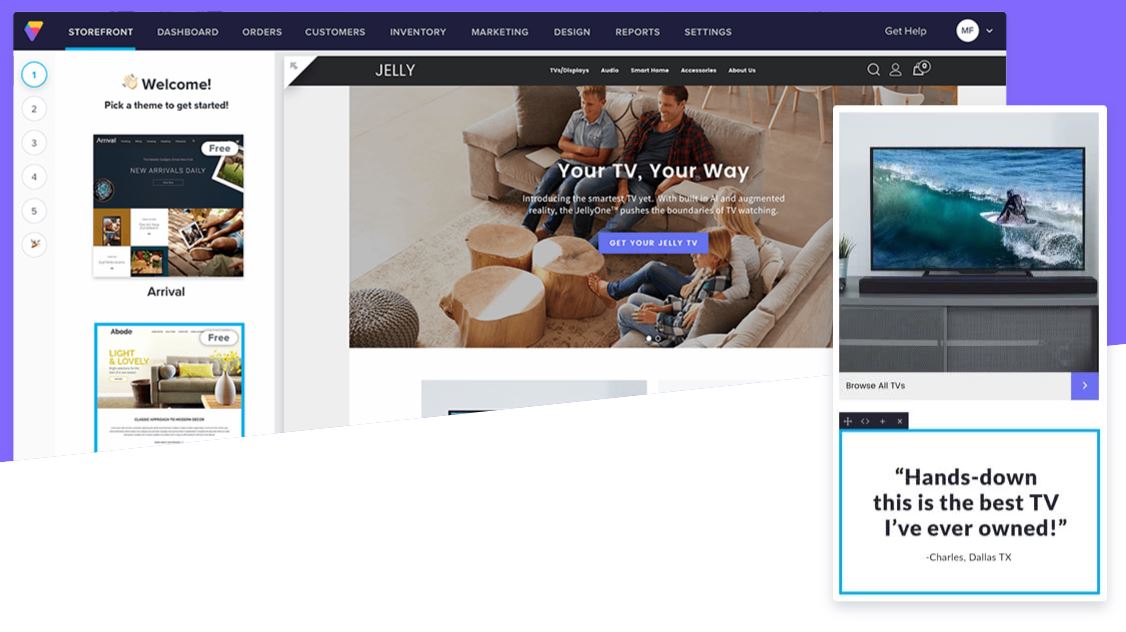   |