Adobe Test and Target is an A/B, multi-variate testing platform which Adobe acquired as part of the Omniture platform in 2009. It is now part of the Adobe Marketing Cloud. It offers tight integration with Adobe analytics and content management products.
N/A
Google Tag Manager
Score 9.3 out of 10
N/A
From Google, the Google Tag Manager is a tag management application that facilitates creating, embedding, and updating tags across websites and mobile apps. It is a free option, vs. the company's enterprise-tier Google Tag Manager 360.
$0
Webtrends Optimize
Score 9.7 out of 10
N/A
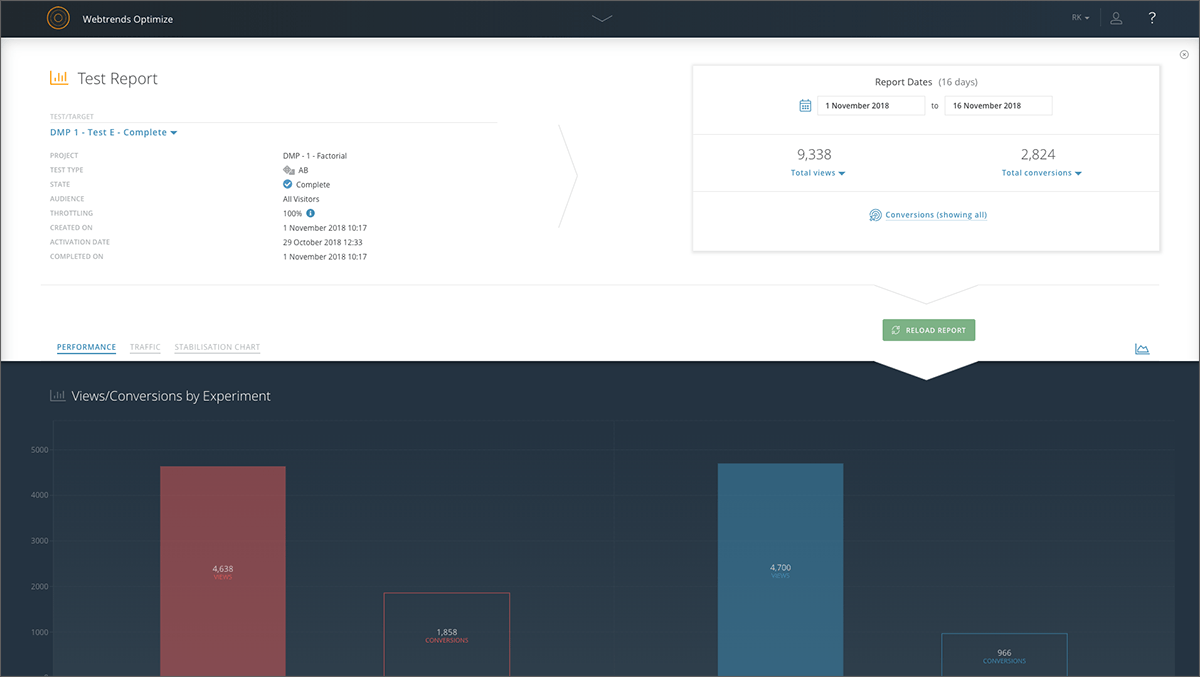
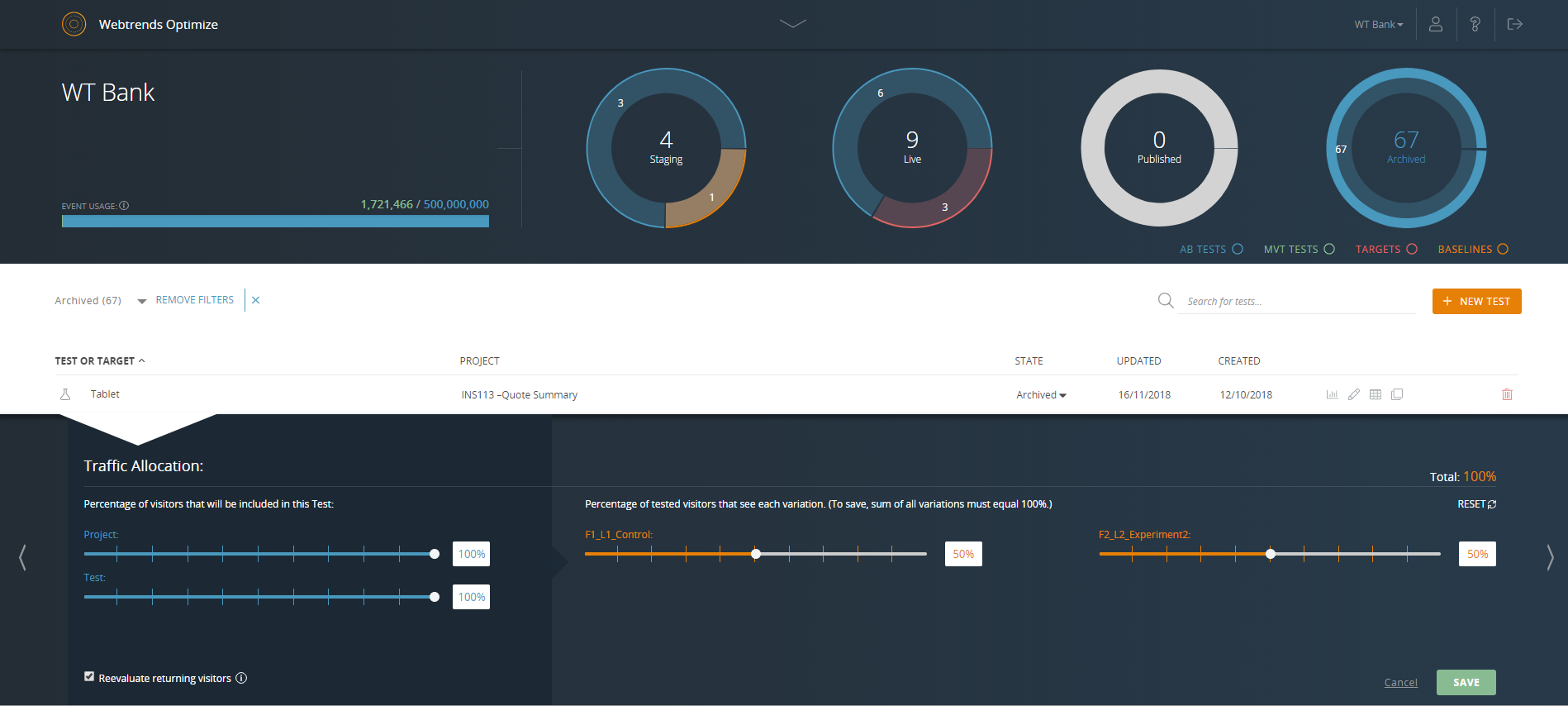
Webtrends Optimize is a web optimization platform and is offered by the company of the same name. The product competes most often with Adobe Test and Target, Maxymiser, SiteSpect, and Optimizely.
N/A
Pricing
Adobe Target
Google Tag Manager
Webtrends Optimize
Editions & Modules
No answers on this topic
No answers on this topic
No answers on this topic
Offerings
Pricing Offerings
Adobe Target
Google Tag Manager
Webtrends Optimize
Free Trial
No
No
Yes
Free/Freemium Version
No
Yes
No
Premium Consulting/Integration Services
No
No
Yes
Entry-level Setup Fee
No setup fee
No setup fee
No setup fee
Additional Details
—
—
There is no tiering and no different prices for different tools. The entire feature set is available to all users as standard at one price, agreed up front.
If you're using the Adobe stack and tools to power your website, Target is a great solution to implement. I've utilized Target within two organizations, one running on Adobe Experience Manager (AEM), and the other on Adobe Magento. I don't see how companies could harness the full capacity of Target without also having Adobe Analytics integrated. This is their 'secret sauce' and might not be a good solution for companies who are invested in Google Analytics 360. Integration was straightforward but did require support from the Adobe team to implement successfully. While Target is a great tool for digital teams to support, you'll need your tech team aligned and available to support implementation.
I have found Google Tag Manager as the go to solution for managing all of your event and conversion tags for your website. Not only does it make it easy to manage all of your tags in the one place, it is fairly intuitive to use and there is plenty of videos and help documentation online to help set up what ever you need. No scenarios come to mind at the moment on where it is less appropriate to use.
Webtrends optimize is a marketing solution aimed squarely at transactional and eCom based websites. I would only recommend a colleague to engage with the solution once the marketing dept is at a point where their website is fully optimized in regards to SEO and all the other fundamentals in order to truly build upon what Webtrends can offer. This shows you an easier way of measuring your ROI and the money you will invest with the tool-moving forward.
This application gives us an incredible integration with Adobe Analytics that allows its operation to be the best and determine the performance of our website.
It offers us an analysis based on user behavior and a web page customization option to adapt and meet the needs of those users.
Selecting elements on a site [object, class, cookie, etc] (to later fire an event, send some data, etc) is very easy with triggers. Want to add an event when someone clicks on a button? Super easy. It was many many DOM selectors and you can even add custom functions if you need to do something more specific
In general, firing events in different circumstances is very easy mixing triggers and tags. You can track almost any element of the DOM and do whatever you want with it.
Testing is a great functionality. Only you can see what's on the site and you can debug it easily by seeing which events or tags were triggered and all the DOM elements involved (and why they matched the trigger).
Working in environments (staging, production) and versioning is easy to do, deploying changes in 2 clicks.
Intuitive test set-up makes for a low learning curve.
Ability to create custom data tables which enable exporting of visitor level data for more in-depth analysis outside of the Webtrends Optimize platform.
This is something a lot of testing tools struggle with, but I think the WYSIWYG ("What you see is what you get") editor - or Visual Experience Composer (VEC) in Adobe terminology - could definitely use some work. It's a struggle to execute many tests beyond simple copy, color, placement changes, and even the features that do exist are often clunky if not altogether broken.
The interface itself can be a bit counterintuitive in certain parts. If you are familiar with other tools, it's likely middle of the road in this respect; think much easier to understand than Monetate for instance, but a far cry from the simplicity of an Optimizely.
It can be a bit buggy from time to time. The worst example is the frequency at which the tool will fail to save due to an error, but not inform you of this until you try to save, at which point your only option is to log out, log back in, and make all of your updates once again. It can become an extreme pain point at times, and I personally have just gotten into the habit of saving every couple of minutes to avoid a massive loss of productivity.
There are several good integrations, but there can always be more. Native tracking for call tracking solutions, analytics providers, non-Google advertisers would be top of my list.
Documentation is just dreadful. Luckily there are some awesome folks out there doing crowdsourced tutorials (shout out to Simo Ahava) but by and large the Google Tag Manager instructions are worth what you pay for them.
The cost is a factor. When you're trying to save money, particularly as a startup (a lot of our clients are up-and-comers) it has to be seen as an investment...but the cost to implement the system is fairly large.
There's a bit of a steep learning curve, you can't just dive into the program.
It's not impossible but it's not as easy as snapping your fingers to easily implement the program cross-platform.
We have a team of people trained on how to use the application and it integrates well with the other Adobe products we use. Our future roadmap of testing will require some complex scenarios which we hope Target will be able to accomplish
I haven't found another option for us to use especially one that is free. Down the road we may go a different route but for now GTM is a good option and does what we need it to do. It'd be nice to get more support or more integrations but with the free version there's only so much one can expect to get I suppose.
The recent UI update is a complete mess. It is difficult to navigate and find features that previously existed. The reactiveness of the page depending on window size is also ridiculous and it is absurd that depending on how large your window is, entire columns of functions will disappear with no indication that they are missing. The usability of the tool has fallen off a cliff.
No difficult obstacle to overcome but Google Tag Manager can still be difficult for many users to deploy. Sure the basic HTML script can be deployed quite easily, but when you start to require triggers, variables, etc, it can be a little daunting.
Set up of basic tests that do not use segmentation or targeting is an intuitive experience that can be learned quickly by new users. However, as the need for segmentation and other more advanced capabilities arise, the experience begins to degrade.
On several occasions, we have had the need to ask for help from the Adobe Target support team, and I must say that they have provided us with an excellent experience, as they take care of solving the problems quickly and with high precision
GTM does not provide support. This is one of GTM's biggest issues but it's due to the level of customization for each website. If your team thinks they would heavily rely on the need for a support staff it is probably better to invest in a paid service with a team that can support your needs.
The instructor that came to train us was awesome and this training was very useful. I would recommend it for anyone who is going to be using this software. I only mark it lower because it is an added expense to an already expensive product, and a lot of the training covered the "Target" portion of the software (which again, we didn't use)
The training was very easy to understand, however it would have been more useful to my development team than me. It was also primarily over-the-phone, which is never as easy to follow as in-person. We ended up scheduling and paying for an in-person training session to supplement the online/phone training because it wasn't helpful enough.
Implement using a global mBox on the page so you can change any and everything over the traditional method. Traditional method is good if you do not have technical web dev resources, do not know Javascript/jQuery, or you have money to blow on mBox calls. Global deployment reduces mBox calls and allows you to touch many parts of the page easily. A lot more customizable
Planning and communication will help greatly with an in-house implementation. If there are large teams, try to limit the number of people involved to 1-2 developers (back-end dev may be necessary depending on your platform), one analytics marketer and one project manager.
We seriously considered another software but because we use so many other Adobe products this made the most sense for us. If you are not dependent on other Adobe software and are a smaller company, in my opinion, Target may not be the best fit.
We moved to GTM from a standard Google Analytics implementation. GTM is much more flexible and easier to make changes, especially as the changes relate to multiple sites and environments. While there is a learning curve when figuring out how to use GTM, I believe the change has been worth it because it helps us understand at a more fundamental level how our tracking works and gives us a lot more control over what we track and how.
Webtrends Optimize can be used for much more complex tests, allows better conversion tracking and data collection. Visual Website Optimizer (VWO) is suitable for smaller, simple projects. Webtrends Optimize comes with an excellent consultancy that could save you a lot of time and resources
We have been able to run specific A/B tests that have shown an increase in conversion, which in turn has led to very large banked sales numbers for the year.
We have been able to prove that using and automated Merchandising process did not decrease conversion. This allowed us to greatly increase efficiency by opening up resource time.
GTM is very useful to determine if a particular element on the site is useful (i.e. is it being watched, is it being clicked, does it help customers navigate through more pages). As an SEO person, I can use this information to decide what to optimize for but also to track progress and see improvements in engagement.
With the use of Google Tag Manager, I was able to easily inject an A/B testing tool which lead to several improvements in lead generation.
So far we haven't seen an ROI that we can accurately measure due to only running a couple of tests that haven't resulted in direct, site wide changes. However, we have learnt a lot about how to set up the right processes and documentation.