Atlassian Jira is a project management tool, featuring an interactive timeline for mapping work items, dependencies, and releases, Scrum boards for agile teams, and out-of-the-box reports and dashboards.
$9
per month per user
GitLab
Score 8.8 out of 10
N/A
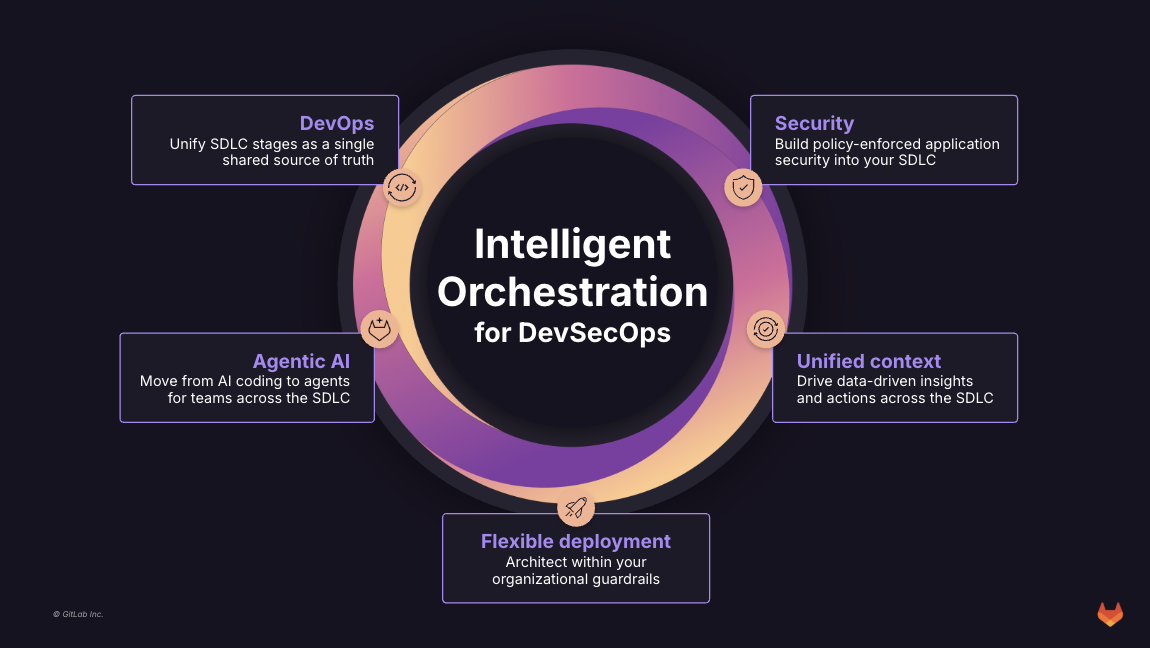
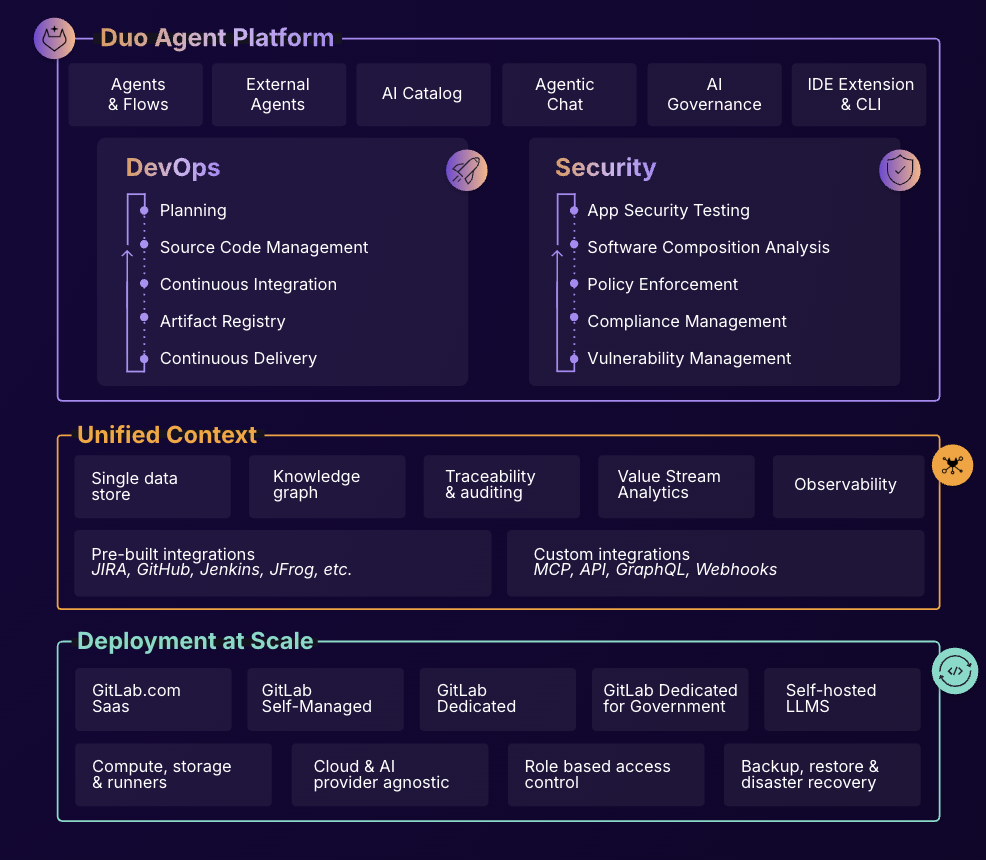
GitLab is an intelligent orchestration platform for DevSecOps, where software teams enable AI at every stage of the software lifecycle to ship faster. The platform enables teams to automate repetitive tasks across planning, building, securing, testing, deploying, and maintaining software.
$0
per month per user
Trello
Score 8.4 out of 10
N/A
Trello from Atlassian is a project management tool based on a Kanban framework. Trello is ideal for task-management in a to-do list format. It supports sharing boards and cards across users or teams. The product offers a free version, and paid versions add greater automation, collaboration, and administrative control.
$6
per month per user
Pricing
Atlassian Jira
GitLab
Trello
Editions & Modules
Standard
$9
per month per user
Premium
$17
per month per user
Enterprise
Contact Sales
per year
GitLab Free (self-managed)
$0
GitLab Free
$0
GitLab Premium
$29
per month per user
GitLab Premium (self-managed)
$29
per month per user
GitLab Ultimate
Contact Sales
GitLab Ultimate (self-managed)
Contact Sales
Standard
$6
per month per user
Premium
$12.50
per month per user
Enterprise
$17.50
per month per user
Free
Forever Free
Offerings
Pricing Offerings
Atlassian Jira
GitLab
Trello
Free Trial
Yes
Yes
No
Free/Freemium Version
Yes
Yes
Yes
Premium Consulting/Integration Services
No
Yes
No
Entry-level Setup Fee
No setup fee
Optional
No setup fee
Additional Details
Higher volume teams may qualify buyers for a discount.
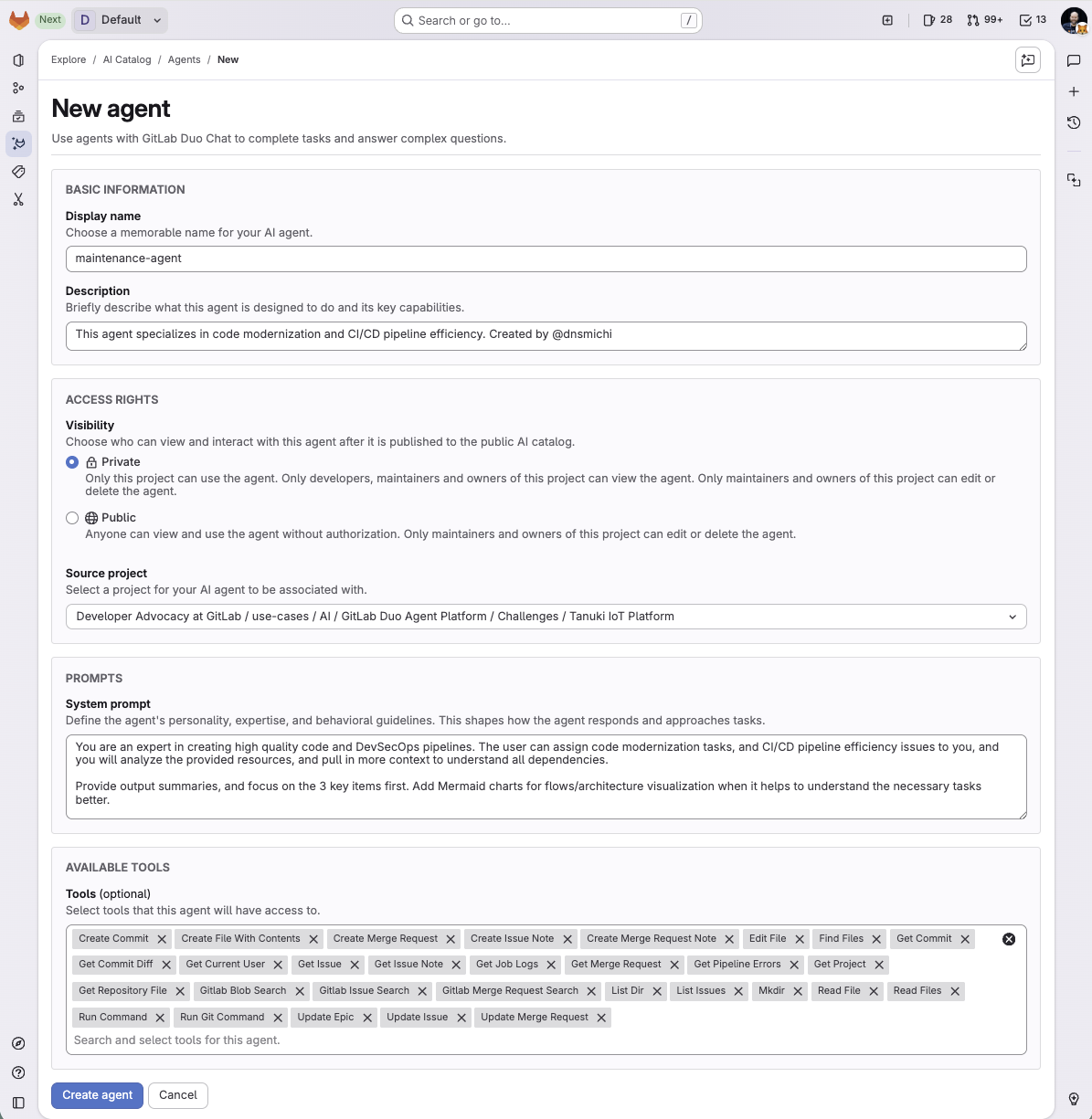
GitLab Credits enable flexible, consumption-based access to agentic AI capabilities in the GitLab platform, allowing you to scale AI adoption at your own pace while maintaining cost predictability. Powered by Duo Agent Platform, GitLab’s agentic AI capabilities help software teams to collaborate at AI speed, without compromising quality and enterprise security.
If usage exceeds monthly allocations and overage terms are accepted, automated on-demand billing activates without service interruption, so your developers never lose access to AI capabilities they need.
Real-time dashboards provide transparency into AI consumption patterns. Software teams can see usage across users, projects, and groups with granular attribution for cost allocation. Automated threshold alerts facilitate proactive planning. Advanced analytics deliver trending, forecasting, and FinOps integration.
A discount is offered for annual billing and for larger numbers of users.
I personally use Trello to keep track of personal stuff and used it as a task management tool for very small development teams/projects, but Jira is a million miles ahead of it regarding a number of options and customizations. I also used Rally on a previous company and …
Jira Software is considered perfect when it comes to handling a software team which might need an advanced agile functionality as well as structured workflow wherein Trello could be quick in terms of capturing or sharing the ideas or lists or to-do's. Jira has a better UI and …
I've used Trello for managing tickets, it's possibly but provides no ability to have backlog features unless you use plug-ins. Plus, once you get a large backlog the page takes a long time to load. Jira is quick and has this all built in.
Jira Software has more integrations and has more features than many of its competitors. While some of its competitors do have better UI/UX than Jira Software, they have improved this greatly over time. Atlassian also acquired Trello years ago, so that adds better user …
Asana is great for people who need simpler project management systems. It does not have a wide range of features but its integrations are a lot more streamlined and easy to set up. Trello is great for those who just want to manage scrum boards and swim lanes.
Earlier we have used the Freshteam and Trello software, these are very good individually. Still, when we talk about an end-to-end software engineering process, those fall short as they don't have many integrations with other software and thus make the management process very …
Jira was the application choose by the company that work for, was already part of the culture, it perform well for organizing and managing the software projects and the company, ClickUp its easier to configure projects and automations and Azure Dev Ops and Trello is simpler but …
Trello is amazing for simple project management and great for non-technical teams, but it lacks the depth and complexity of JIRA for detailed issue tracking and complex workflows. Asana, similar to Trello, is great for simple and lightweight project management but isn't …
Jira is more feature-rich than Trello and also has better integration with other tools. Trello is a lot more focused on work tracking, while Jira can do a lot more than that. Both can also be combined, although they're often considered mutually exclusive alternatives—I've seen …
Compared to GitLab, Jira offers a lot more features and details. The GitLab feature is nice for small projects or teams but we are multiple teams with multiple topics and projects even inside one team - so Jira is more applicable for our case. Azure DevOps offers a comparable …
Firstly the community support and the help that the community it supports is amazing also the product which is designed simple but is perfect when it comes to execution and the ease of using the product and the extra features of the bug logging and resources management and …
Verified User
Manager
Chose Atlassian Jira
Atlassian Jira provides the greatest access to integrated tools, the most common/familiar interface and toolset for most development teams, and is competitively priced when compared to the level of customization required to outfit similar tools we've used.
Jira was selected because it is used by all of our clients and has become the accepted standard in the type of work that we do. The other tools are great in their own right and would better suit a more insular way of working, where a business conducts all work internally, but …
We've used a variety of tools for project/work tracking and Jira seems to be the most detailed one that allowed cross-functional collaboration between product, dev, ux, and other key stakeholders. It also allows users to be tagged in work and asynchronously share documentation …
I didn't pick Jira, it was imposed to me from my employer. If it were for me i would probably have used Linear, since i think it's much more streamlined and doesn't really have tons of less features, but rather an extremely simplified interface that can even work perfectly as a …
JIRA has a great support and a heap of documentation to fast-forward users to learn the software. It also has agile development capability which is a must to have feature in our organization. Active directory integration is also very handy. Especially the capability for bugs …
It's fantastic and wouldn't substitute it for anything else.
Verified User
Manager
Chose Atlassian Jira
Jira is the "default" do-everything software project management platform. It literally does everything, but consequently does nothing particularly well. That said, it is robust enough to compete with enterprise heavyweights like Rally, and (usually) easy and light enough to …
Jira Software integrates with other software platforms nearly as well as its competitors, such as Asana or ClickUp. However, it provides more advanced tools than ClickUp and Asana, allowing project managers to see the workload of their team members, manage burndown, and react …
Lead Consultant - Solutions Architect - Software Engineer
Chose Atlassian Jira
Jira Software works for many development environments, has custom workflows, is friendly, stable, robust, and can be integrated with the most recognized DevOps tools on the market.
Jira is easy to use for less technical work professionals, while Azure and GitHub [take] more time to learn how to use effectively. For large firms with multiple business and technology teams collaborating, Jira Software is a great tool for first time Agile users and …
We have recently migrated from Bamboo to GitLab across our enterprise as part of our tech modernization roadmap. GitLab provides a all-in-one platform for integrated code management. The only advantage that Bamboo had over GitLab was the integration with JIRA. The streamlined …
GitLab is miles ahead of the competition. In so many words, having a simple UI with robust security and the ability to conduct Git actions takes the cake. The competitions like to say they can do these things easily but their products are more confusing and hard to use.
GitHub is an inferior product from most points of view. We had to use it and the teams finds no positives about it. Everything is a downgrade from our previous GitLab solution.
GitLab CI\CD is vastly superior to workflows, for example doing a manual node is just "when : manual" …
My feedback may not be important here because when I joined the company they already had GitLab and we still use it due to the ability to do CI/CD Integration, deployments, debugging, code owners approval, and Jira integration. So far we have not had any major blocker that has …
It was a management decision to use GitLab over other tools. It integrates well with RBAC using Terraform. Runners are easy to setup. Almost all the features the organization used before are available in GitLab.
Gitlab provided on par functionality and it provided a good option for us to self host which is very important for our business. We think the business continuity story is more solid with Gitlab.
GitLab is easily the preferred tool when it comes to versioning and source control. With other tools the UI often feels outdated and clunky leading to inefficiency and confusion. With some of the sleeker tools such as GitKraken, while the aesthetic is pleasing, the experience …
We are coming from Bitbucket, and we switch to Gitlab to improve the source code management and the reading, which is better on Gitlab. The Merge request flow is also better than Bitbucket. This allows us to use Gitlab CI, which is well-integrated. Compared to GitHub, it is …
The best thing about GitLab is the pricing and the smooth and fast onboarding. The base plan itself covers most use cases in Gitlab and that too is completely free, this gives the small companies or the startups the push they require at the beginning. Other than that Gitlab has …
GitLab is 100% integrated with the development process and deploys to the production environment. On the other hand, it has very useful integrations and great management of labels and responsible users to obtain better communication and knowledge of the status of each project.
Gitlab made our product life cycle efficient. It has a better user interface and user experience. GitLab doesn't clutter with many features upfront and provides a lot of free services, which is missing in any other product. For small teams, it's the best piece of software. I …
The main reason for selecting GitLab over the others is that the free version also we have most of the functionalities available. We can create private repositories, assign different permissions to different users, can create a good number of users, so almost everything you …
As a front-end to revision control workflows, all three products are similar. Bitbucket suffers from the usual problems with Atlassian: it's slow and bloated. GitHub is a viable alternative for these workflows; the choice is entirely dependent on organizational constraints. For …
Sometimes it gets very slow and provides a problem to connect or update the servers. Search is difficult on some pages. Some features are missing that are available on GitHub.
GitLab offers us the CE as an on-premise option without additional cost. We can deploy easily GitLab CE using docker official images. The GitLab CI option is more mature and simple than GitHub Actions.
GitLab is the best combination of all the other tools. They are still viable in their own sense, but for the projects we were using, GitLab proved to be an excellent alternative.
I never used GitHub for work, but to keep my blog and personal code safe and accessible wherever I go. Jira is a swiss army knife. With its plug-in, you can do more things than Gitlab. On Jira, you can block, for example, a user to move tickets to UAT to code review. On Jira, …
Gitlab surpasses Bitbucket in all areas except of course the very tight integration Bitbucket has with JIRA and Confluence. Almost everyone uses JIRA at some level or time so Bitbucket has a more natural and tight integration feel. However, there is good JIRA integration with …
Trello is better than GitLab CI and other tools because it provides a very simple way of managing project with just lists and draggable components. Also, thanks to Mobile version, it is really easy for a team lead to manage his projects at anytime of a day. So I widely …
Easier to use and easier to integrate with 3rd party software. Better design and we don't need to build everything from scratch.
Verified User
Employee
Chose Trello
For our purposes and my role in the business, Trello is simpler and easier to use. I found Jira very hard to navigate to individual projects, and the process of creating a card was very time-consuming. That said, I think Jira performs a number of roles that Trello doesn't, and …
Verified User
Team Lead
Chose Trello
Trello offers wide range of features even for free users which other vendors rarely offers.
Verified User
Project Manager
Chose Trello
Trello offers more functionality and features for use before forcing you to purchase.
We do use and like Jura but this can be used with it and we do. It isn’t just Jira light. It’s feature packed but available and understandable to the masses. Anybody can learn this where Jira may take more time. The price is better and it’s just better looking visually honestly.
Verified User
Manager
Chose Trello
Trello gives a better visibility and Freemium account to start with
We use Confluence as our central source of truth for all documentation across our big, disparate group. Different purposes, but they're our core tool stack for internal team infrustructure.
UI and ease of use are very successful for Trello. Team members like to use this tool to compare the other. It supports cross-platform and is actually not complicated, you get familiar with the features very quickly. Tagging the task or changing the background of the projects, …
Verified User
Professional
Chose Trello
Compared to others, Trello is definitely one of the most economical options which makes it more appealing to freelancers. It is also more simple and visually engaging which makes it intuitively easy to use. However, it lacks advanced features such as timeline management, …
Ultimately, we use JIRA and Trello for different things. While each has similar elements to the other, it's really about the workflow you need, and how you must manage it. JIRA offers custom workflows and process-based rule enforcement, whereas Trello simply offers a linear, …
Trello is open source and free to use for small scale projects, that's one of the reasons I selected it. Besides I didn't want more features like JIRA provides.
Trello can be viewed as the simplest form of task management, whereas project management would look more like ClickUp followed by Asana and JIRA. Trello is easy to view, easy to use, and easy to implement.
Director of Customer Operations & Account Management
Chose Trello
Trello's greatest strength versus other project management tools is its simplicity and ease-of-use. You don't need any type of training or previous set up. You can literally start using it within seconds after setting up an account.
I find Trello to be more visual than other products. As mentioned, the graphics are better visually and easier to use. It was the easiest to learn and get started with. Five stars! I learned it because some teams and clients used it previously.
JIRA is used for larger-scale products but Trello can be used for small projects. In JIRA, we can use Outlook tasks, but it is not mobile-friendly overall. Trello is good in that case.
Based on the size and needs of our organization, the main reason we chose Trello of other alternatives simply comes down to cost. We use the free version and it meets our needs and then some. We've had team members use some alternatives and for the most part, the feature set of …
I personally like JIRA much more than Trello because of my time spent on it across organizations and teams. I am aware of JIRA's capabilities which is why I like it more. I really like JIRA's UI especially because of how formal and well-aligned everything is.
Trello solves an entirely different problem. It provides tools to plan and manage projects, but it provides purely agile tools. It's a simple solution to a simple problem. By requiring a little bit of manual process for everything, it makes everything very flexible and simple …
Todoist - There's good functionality here but you really need the paid version to get the most out of it. This isn't set up for kanban. Remember the Milk is really for personal lists. Evernote - This is incredibly free form. I loved it at first but honestly, you can just use a …
Ultimately, Trello feels like a simpler version of JIRA. In our team's earlier days, we used and loved Trello. Now, our team has moved to JIRA -- not necessarily because we needed more functionality, but the larger product, design, and development teams use JIRA, and it was …
Jira facilitates software development, bug tracking, and sprints. It's ideal for structured workflows, issue management, and customer communication. However, more straightforward tools might be more efficient for highly creative, unstructured tasks or tiny, agile teams with quick visual overviews. Jira's complexity can be overkill for basic task lists.
GitLab is good if you work a lot with code and do complex repository actions. It gives you a very good overview of what were the states of your branches and the files in them at different stages in time. It's also way easier and more efficient to write pipelines for CI\CD. It's easier to read and it's easier to write them. It takes fewer clicks to achieve the same things with GitLab than it does for competitor products.
For teams or individuals with lots of individual tasks/details to track, Trello is perfect! It basically removes the need for a paper checklist. For those that need an overall project management tool that requires less tasks and more overarching goals, collaboration amongst various teams, and gantt charts I would suggest monday.com
Integration of tools like Bitbucket, Github, etc., has made it easier to track the code changes, pull requests, and branches linked to the respective ticket.
The detailed tracking system in JIRA has helped the teams prioritize and understand the project tasks and issues.
JIRA's project tracking board helps you keep track of the project, its flow, and expectations in a structured format.
This is because Jira Software generates a huge profit for an affordable price. Having a tool that makes team management transparent and effective is very valuable.
In addition, the renewal of Jira Software and all Atlassian tools is predictable and clear, as the prices are published on the Atlassian website and there is no pyramid of intermediaries.
I really feel the platform has matured quite faster than others, and it is always at the top of its game compared to the different vendors like GitHub, Azure pipelines, CircleCI, Travis, Jenkins. Since it provides, agents, CI/CD, repository hosting, Secrets management, user management, and Single Sign on; among other features
I am very likely to renew Trello, because it doesn't cost anything to do so. I am also very likely to use Trello's upgraded features in the future because a lot of my team's data is stored on there and they have already gotten used to the platform. Trello is very easy for new team members to pick up, making the onboarding and usability very streamlined.
The interface is simple and easy to use if you have some experience with it. Configuration is also logical most of the time. However, less experienced users tend to find themselves lost in some tasks - usually complex project configuration- but sometimes simple things, such as seeing why a user can't move issues in a workflow. Jira configuration requires a good amount of experience - and even experienced users often resort to documentation. It's a tool that's easy to use if you know what you're doing and where to find the proper documentation, but novice users tend to find it challenging.
I find it easy to use, I haven't had to do the integration work, so that's why it is a 9/10, cause I can't speak to how easy that part was or the initial set up, but day to day use is great!
Trello is incredibly intuitive, both on desktop and mobile right away. It is also full of helpful features that make it even easier to use, and is flexible enough to suit almost any organizational need. Onboarding for the software is thorough, but concise, and the service is frequently updated with even more QOL improvements.
Did not face any issues and whenever they plan maintanance they update all of us very well in advance also so in that view we are good with the product stability.
I've never had experienced outages from GItlab itself, but regarding the code I have deployed to Gitlab, the history helps a lot to trace the cause of the issue or performing a rollback to go back to a working version
Performance is really good though it holds lot of data it loads quickly especially search operation also get the results very quickly as needed hence its good
GItlab reponsiveness is amazing, has never left me IDLE. I've never had issues even with complex projects. I have not experienced any issues when integrating it with agents for example or SSO
I have not had a chance to contact JIRA's customer support. It does offer extensive documentation, although it often feels too technical for me. There is also a JIRA training app that lets you take little lessons and quizzes on different areas (e.g., JIRA basics, agile). I did find it a helpful way to teach myself.
At this point, I do not have much experience with Gitlab support as I have never had to engage them. They have documentation that is helpful, not quite as extensive as other documentation, but helpful nonetheless. They also seem to be relatively responsive on social media platforms (twitter) and really thrived when GitHub was acquired by Microsoft
I haven't reached out to their support very often and their support is very limited anyway for the free users. They do have tons of great articles and videos in their Help Center and constantly send emails with updates and add-ons to the product. The fact that I've barely ever had to contact their support team means that they've developed a great product.
Had received training from our own internal user so it was good and also very easy to understand topics and many tasks in the UI are self explanatory and we can do by our own
One of their strong points i stheir documentation. Almost all of the basic set up needed within JIRA is available online through atlassian and its easy to find and very precise. The more critical issues need to be addressed as well and hence the rating of 8 instead of a 9.
Take your time implementing Jira. Make sure you understand how you want to handle your projects and workflows. Investing more time in the implementation can pay off in a long run. It basically took us 5 days to define and implement correctly, but that meant smooth sailing later on.
For our small business, getting a few of us started well on Trello was the key, I think. As long as a couple of us were really comfortable with the interface, we could lead others and help them with any questions. From now on, anyone who works with us just naturally uses Trello for information sharing - it's just part of what we do.
monday.com cannot be integrated with CI/CD tools, whereas Atlassian Jira integrates with CI/CD tools seamlessly. Atlassian Jira has strong Agile and Scrum support. Coming to monday.com, it has basic agile functionality. But Atlassian Jira has a complex UI, and monday.com has an intuitive, drag-and-drop interface. Overall, Atlassian Jira provides features like Agile project management, DevOps integration, and customizable workflows.
Gitlab seems more cutting-edge than GitHub; however, its AI tools are not yet as mature as those of CoPilot. It feels like the next-generation product, so as we selected a tool for our startup, we decided to invest in the disruptor in the space. While there are fewer out-of-the-box templates for Gitlab, we have never discovered a lack of feature parity.
Trello is more simple and not as "robust" as the other tools, but it's easier to use and manage and understand and ACTUALLY get stuff done with. It's simplicity is part of the beauty of using it. You don't need a million options that nobody uses, you just need to get stuff done.
Atlassian Jira's robust workflow automation has boosted team efficiency, shortening delivery cycles and driving a positive ROI through improved project management.
Its advanced reporting and integration capabilities have enabled data-driven decisions, aligning operations with key business objectives.
However, the steep learning curve can delay adoption, potentially hindering short-term ROI.
Trello keeps me organized, focused, and on track. I could filter the Trello board to only see my issues and understand what I needed to work on and when.
Trello helped our team implement an agile structure. It's a very simple kanban method of viewing all of your team's tasks and statuses. You can completely customize the columns to your team's specific workflow and create tags relevant to your work.
Trello helps reduce unnecessary communications between teams. When I want to request translations, I simply create a card on the localization Trello board -- no need to directly message anyone on the team, and I can watch the status of the card change from "in progress" to "in review" to "translated," all without having to directly ask for updates.