Adobe Dynamic Tag Management (DTM) was a tool used by marketers to manage tags, and for collecting and distributing data across digital marketing systems. Adobe DTM is a legacy, and it will not receive feature updates. Adobe invites users to upgrade to Launch on the Adobe Experience Platform.
N/A
Optimizely Web Experimentation
Score 8.7 out of 10
N/A
Whether launching a first test or scaling a sophisticated experimentation program, Optimizely Web Experimentation aims to deliver the insights needed to craft high-performing digital experiences that drive engagement, increase conversions, and accelerate growth.
N/A
Webtrends Optimize
Score 9.7 out of 10
N/A
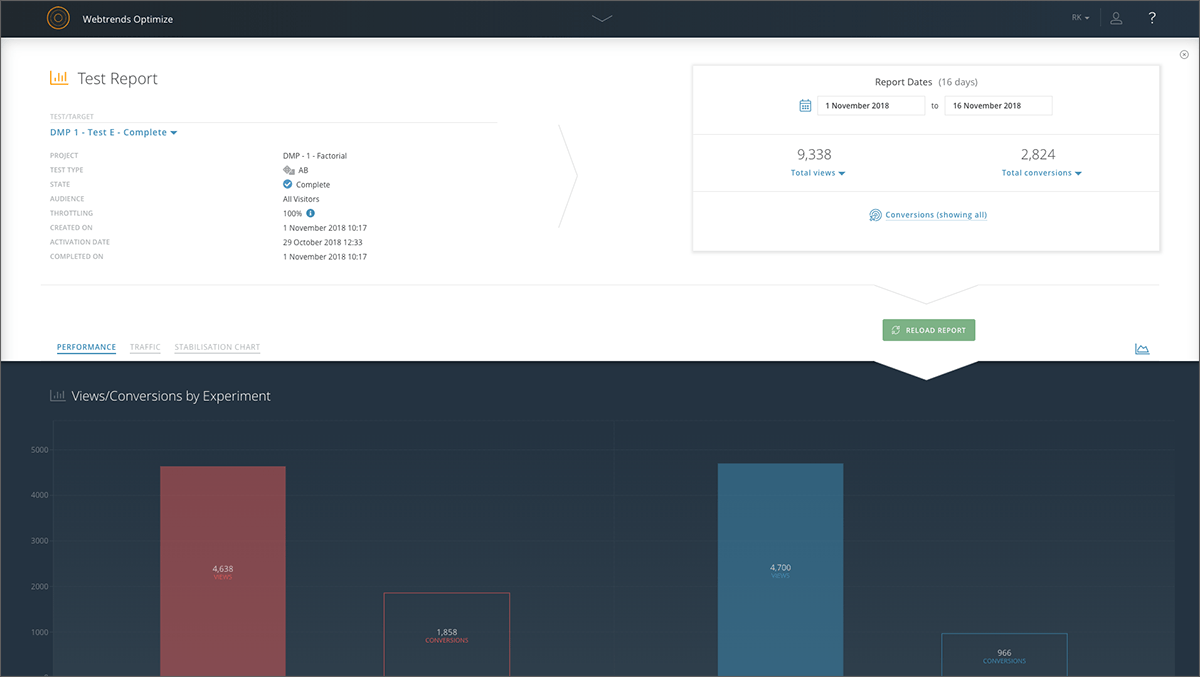
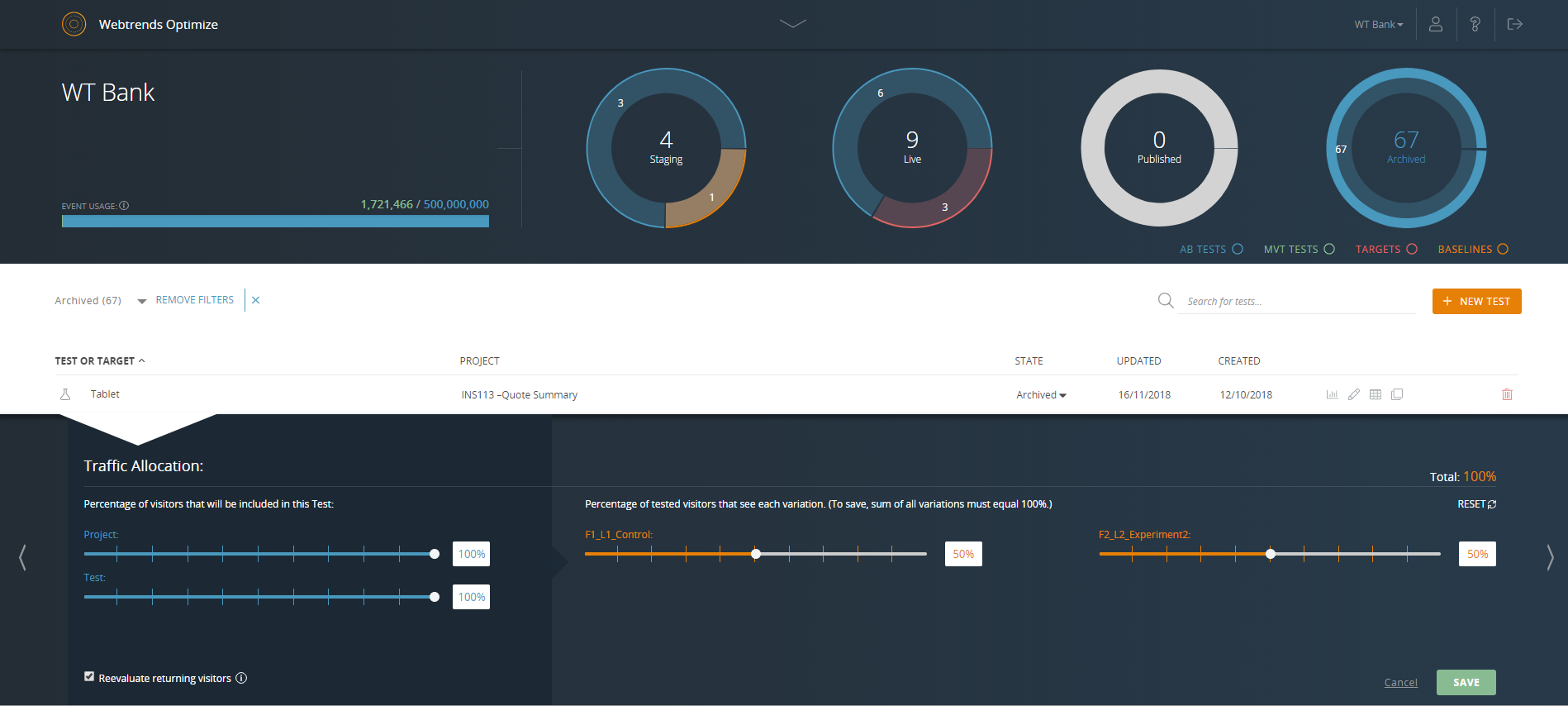
Webtrends Optimize is a web optimization platform and is offered by the company of the same name. The product competes most often with Adobe Test and Target, Maxymiser, SiteSpect, and Optimizely.
N/A
Pricing
Adobe Dynamic Tag Management (discontinued)
Optimizely Web Experimentation
Webtrends Optimize
Editions & Modules
No answers on this topic
No answers on this topic
No answers on this topic
Offerings
Pricing Offerings
Adobe Dynamic Tag Management (discontinued)
Optimizely Web Experimentation
Webtrends Optimize
Free Trial
No
Yes
Yes
Free/Freemium Version
No
No
No
Premium Consulting/Integration Services
No
Yes
Yes
Entry-level Setup Fee
No setup fee
Optional
No setup fee
Additional Details
—
—
There is no tiering and no different prices for different tools. The entire feature set is available to all users as standard at one price, agreed up front.
More Pricing Information
Community Pulse
Adobe Dynamic Tag Management (discontinued)
Optimizely Web Experimentation
Webtrends Optimize
Considered Multiple Products
Adobe Dynamic Tag Management (discontinued)
No answer on this topic
Optimizely Web Experimentation
Verified User
Contributor
Chose Optimizely Web Experimentation
None of them have a best in class stats engine and live within an ecosystem of marketing technology products the way that Optimizely does, so the scalability of using any one of those tools is limited as compared to using Optimizely Web Experimentation.
Optimizely is my favorite due to its ease of use and exceptional testing capabilities. It is not the cheapest tool, but the other tools that could be compared are not cheap—you get what you pay for. Some of the smaller tools are making gains, though!
> Adobe's pretty cool for its recomentation / AI / ML engine > VWO's wysiwyg is pretty solid and the heatmapping is nice > abtasty's consent features are pretty cool to launch patch and AB Test Consent Rate > Monetate & Dynamic Yield's pre-built personalization features help …
Whilst Optimizely is more expensive (for us at least) we found it was far technically superior and easier to use. We have not run into the technical constraints that we have with other tools. In addition when we went to market to evaluate different suppliers optimizely won …
Adobe Test & Target - not chosen due to cost and set-up requirements.
Webtrends Optimize
Verified User
Employee
Chose Webtrends Optimize
Webtrends Optimize is one of the best solutions out there for digital marketers to improve their sales by providing a better experience for their customers' journey. With that said, it is also a costly solution in comparison to other services in the market today. The adage of …
Omniture: extreme feature set and integration with business intelligence and other systems. The problem was price. I was never able to convince management that the price tag was justified.
Features
Adobe Dynamic Tag Management (discontinued)
Optimizely Web Experimentation
Webtrends Optimize
Security
Comparison of Security features of Product A and Product B
Adobe Dynamic Tag Management (discontinued)
10.0
5 Ratings
18% above category average
Optimizely Web Experimentation
-
Ratings
Webtrends Optimize
-
Ratings
Role-based user permissions
10.05 Ratings
00 Ratings
00 Ratings
Tag Management
Comparison of Tag Management features of Product A and Product B
Adobe Dynamic Tag Management (discontinued)
9.4
5 Ratings
15% above category average
Optimizely Web Experimentation
-
Ratings
Webtrends Optimize
-
Ratings
Tag library
9.04 Ratings
00 Ratings
00 Ratings
Tag variable mapping
10.05 Ratings
00 Ratings
00 Ratings
Ease of writing custom tags
10.05 Ratings
00 Ratings
00 Ratings
Rules-driven tag execution
9.05 Ratings
00 Ratings
00 Ratings
Tag performance monitoring
10.04 Ratings
00 Ratings
00 Ratings
Page load times
10.05 Ratings
00 Ratings
00 Ratings
Mobile app tagging
10.04 Ratings
00 Ratings
00 Ratings
Library of JavaScript extensions
7.12 Ratings
00 Ratings
00 Ratings
Data Management & Integrity
Comparison of Data Management & Integrity features of Product A and Product B
Adobe Dynamic Tag Management (discontinued)
7.6
4 Ratings
7% below category average
Optimizely Web Experimentation
-
Ratings
Webtrends Optimize
-
Ratings
Event tracking
10.04 Ratings
00 Ratings
00 Ratings
Mobile event tracking
10.04 Ratings
00 Ratings
00 Ratings
Data distribution management
7.03 Ratings
00 Ratings
00 Ratings
Universal data layer
10.04 Ratings
00 Ratings
00 Ratings
Automated error checking
1.03 Ratings
00 Ratings
00 Ratings
Testing and Experimentation
Comparison of Testing and Experimentation features of Product A and Product B
Adobe Dynamic Tag Management (discontinued)
-
Ratings
Optimizely Web Experimentation
8.0
163 Ratings
5% below category average
Webtrends Optimize
8.3
1 Ratings
1% below category average
a/b experiment testing
00 Ratings
9.0163 Ratings
9.11 Ratings
Split URL testing
00 Ratings
8.5135 Ratings
8.21 Ratings
Multivariate testing
00 Ratings
8.4139 Ratings
8.21 Ratings
Multi-page/funnel testing
00 Ratings
7.9126 Ratings
8.21 Ratings
Cross-browser testing
00 Ratings
8.197 Ratings
8.21 Ratings
Mobile app testing
00 Ratings
8.175 Ratings
8.21 Ratings
Test significance
00 Ratings
8.4147 Ratings
8.21 Ratings
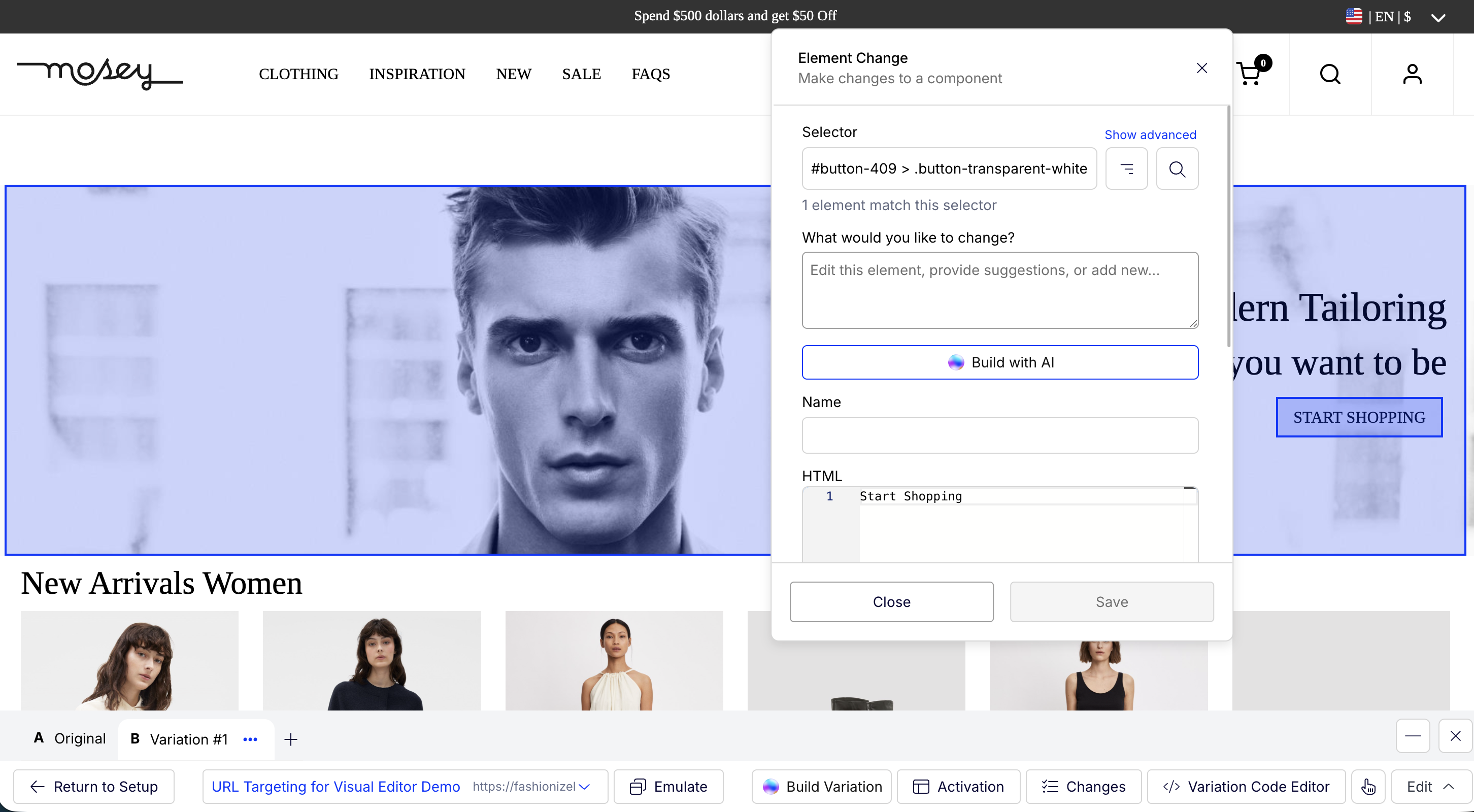
Visual / WYSIWYG editor
00 Ratings
8.1133 Ratings
8.21 Ratings
Advanced code editor
00 Ratings
8.0125 Ratings
8.21 Ratings
Page surveys
00 Ratings
6.217 Ratings
8.21 Ratings
Visitor recordings
00 Ratings
8.418 Ratings
8.21 Ratings
Preview mode
00 Ratings
7.6145 Ratings
8.21 Ratings
Test duration calculator
00 Ratings
7.9112 Ratings
8.21 Ratings
Experiment scheduler
00 Ratings
8.2112 Ratings
8.21 Ratings
Experiment workflow and approval
00 Ratings
7.890 Ratings
8.21 Ratings
Dynamic experiment activation
00 Ratings
7.574 Ratings
8.21 Ratings
Client-side tests
00 Ratings
7.896 Ratings
9.11 Ratings
Server-side tests
00 Ratings
7.250 Ratings
8.21 Ratings
Mutually exclusive tests
00 Ratings
8.180 Ratings
8.21 Ratings
Audience Segmentation & Targeting
Comparison of Audience Segmentation & Targeting features of Product A and Product B
Adobe Dynamic Tag Management (discontinued)
-
Ratings
Optimizely Web Experimentation
8.2
152 Ratings
7% below category average
Webtrends Optimize
8.2
1 Ratings
7% below category average
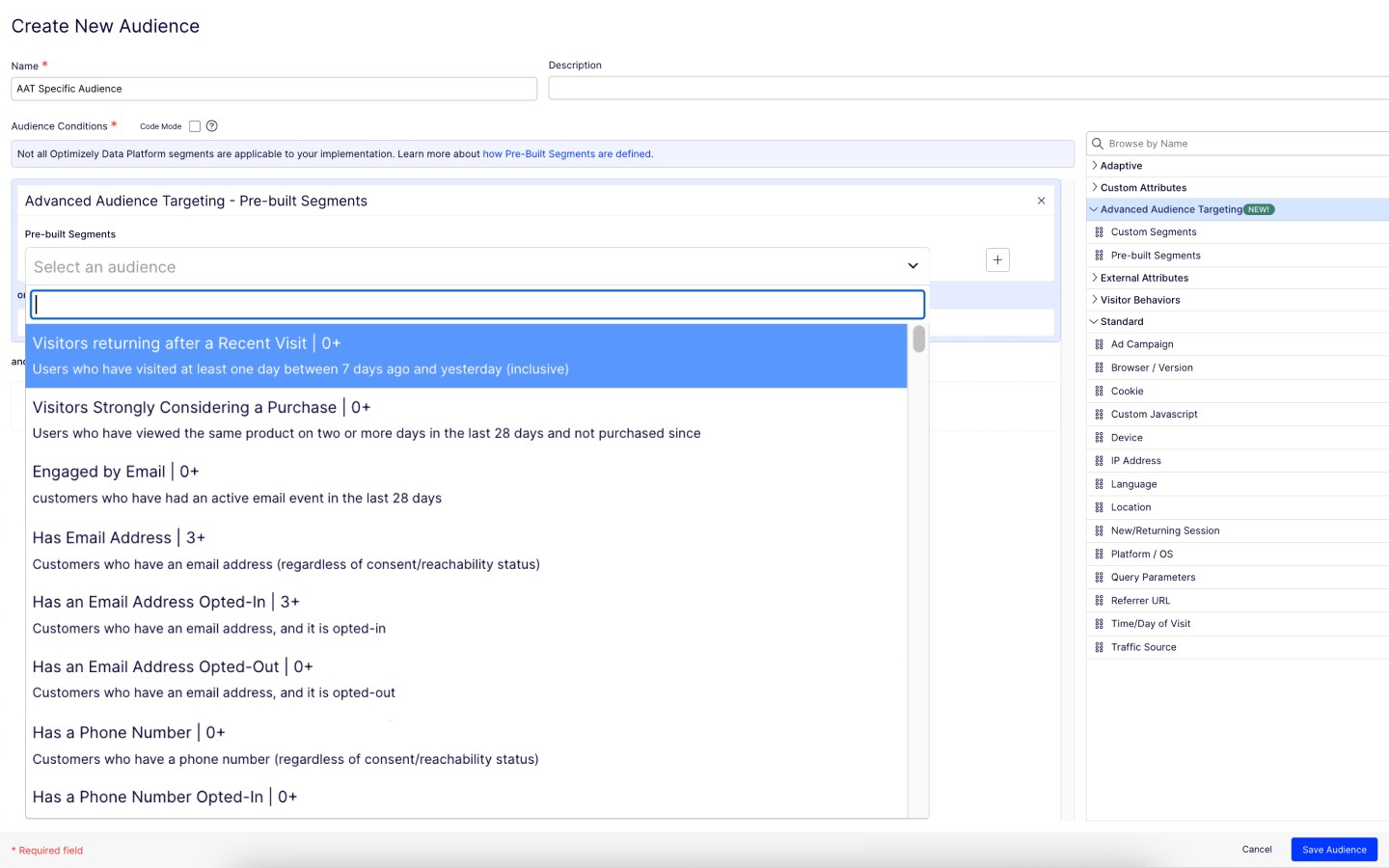
Standard visitor segmentation
00 Ratings
8.4147 Ratings
9.11 Ratings
Behavioral visitor segmentation
00 Ratings
7.7122 Ratings
8.21 Ratings
Traffic allocation control
00 Ratings
9.1144 Ratings
7.31 Ratings
Website personalization
00 Ratings
7.8111 Ratings
8.21 Ratings
Results and Analysis
Comparison of Results and Analysis features of Product A and Product B
If you're on the Adobe stack at all, you absolutely need DTM. It will make your life infinitely easier. It's so simple to update your Adobe Analytics code and have version control, and when we implemented Adobe Target, it took literally less than 15 minutes for me to do. I also think it's significantly simpler than Google Tag Manager. I went through all manner of difficulty when implementing tags on that and have not had similar problems on DTM. If you're frequently placing pixels, it's a great tool that will speed their deployment. The only situation in which I think a tag manager is not appropriate is if you have a dev with too much time on their hands. Otherwise, get a TMS and get DTM.
I think it can serve the whole spectrum of experiences from people who are just getting used to web experimentation. It's really easy to pick up and use. If you're more experienced then it works well because it just gets out of the way and lets you really focus on the experimentation side of things. So yeah, strongly recommend. I think it is well suited both to small businesses and large enterprises as well. I think it's got a really low barrier to entry. It's very easy to integrate on your website and get results quickly. Likewise, if you are a big business, it's incrementally adoptable, so you can start out with one component of optimizing and you can build there and start to build in things like data CMS to augment experimentation as well. So it's got a really strong a pathway to grow your MarTech platform if you're a small company or a big company.
Webtrends optimize is a marketing solution aimed squarely at transactional and eCom based websites. I would only recommend a colleague to engage with the solution once the marketing dept is at a point where their website is fully optimized in regards to SEO and all the other fundamentals in order to truly build upon what Webtrends can offer. This shows you an easier way of measuring your ROI and the money you will invest with the tool-moving forward.
It is a rules based tag management system that allows the application of tracking pixels much easier than hard coding.
By placing 2 pieces of code on the top and bottom of each page of a website, we can create rules that track certain events and relay the information back to Adobe Media Optimizer and Google analytics.
It has simplified the coding process so one doesn't have to generate tons of gory javascript to deploy on each individual page to get tracking.
The Platform contains drag-and-drop editor options for creating variations, which ease the A/B tests process, as it does not require any coding or development resources.
Establishing it is so simple that even a non-technical person can do it perfectly.
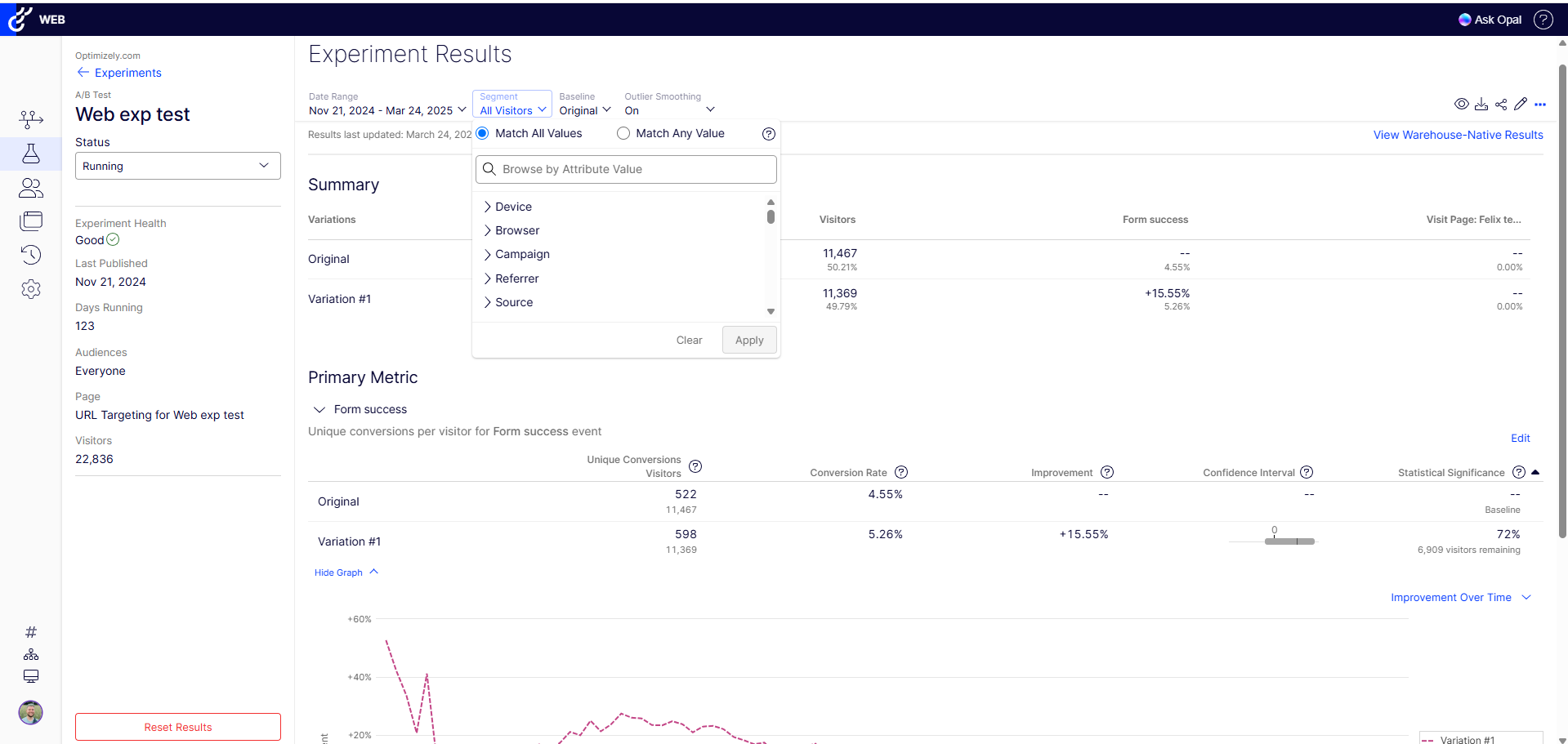
It provides real-time results and analytics with robust dashboard access through which you can quickly analyze how different variations perform. With this, your team can easily make data-driven decisions Fastly.
Intuitive test set-up makes for a low learning curve.
Ability to create custom data tables which enable exporting of visitor level data for more in-depth analysis outside of the Webtrends Optimize platform.
The cost is a factor. When you're trying to save money, particularly as a startup (a lot of our clients are up-and-comers) it has to be seen as an investment...but the cost to implement the system is fairly large.
There's a bit of a steep learning curve, you can't just dive into the program.
It's not impossible but it's not as easy as snapping your fingers to easily implement the program cross-platform.
I rated this question because at this stage, Optimizely does most everything we need so I don't foresee a need to migrate to a new tool. We have the infrastructure already in place and it is a sizeable lift to pivot to another tool with no guarantee that it will work as good or even better than Optimizely
Optimizely Web Experimentation's visual editor is handy for non-technical or quick iterative testing. When it comes to content changes it's as easy as going into wordpress, clicking around, and then seeing your changes live--what you see is what you get. The preview and approval process for sharing built experiments is also handy for sharing experiments across teams for QA purposes or otherwise.
Set up of basic tests that do not use segmentation or targeting is an intuitive experience that can be learned quickly by new users. However, as the need for segmentation and other more advanced capabilities arise, the experience begins to degrade.
I would rate Optimizely Web Experimentation's availability as a 10 out of 10. The software is reliable and does not experience any application errors or unplanned outages. Additionally, the customer service and technical support teams are always available to help with any issues or questions.
I would rate Optimizely Web Experimentation's performance as a 9 out of 10. Pages load quickly, reports are complete in a reasonable time frame, and the software does not slow down any other software or systems that it integrates with. Additionally, the customer service and technical support teams are always available to help with any issues or questions.
Although it is a newer product to Adobe, they seem to truly care about our challenges and are very proactive in making sure that we have the most knowledgeable support available in a timely manner.
They always are quick to respond, and are so friendly and helpful. They always answer the phone right away. And [they are] always willing to not only help you with your problem, but if you need ideas they have suggestions as well.
The tool itself is not very difficult to use so training was not very useful in my opinion. It did not also account for success events more complex than a click (which my company being ecommerce is looking to examine more than a mere click).
In retrospect: - I think I should have stressed more demo's / workshopping with the Optimizely team at the start. I felt too confident during demo stages, and when came time to actually start, I was a bit lost. (The answer is likely I should have had them on-hand for our first install.. they offered but I thought I was OK.) - Really getting an understanding / asking them prior to install of how to make it really work for checkout pages / one that uses dynamic content or user interaction to determine what the UI does. Could have saved some time by addressing this at the beginning, as some things we needed to create on our site for Optimizely to "use" as a trigger for the variation test. - Having a number of planned/hoped-for tests already in-hand before working with Optimizely team. Sharing those thoughts with them would likely have started conversations on additional things we needed to do to make them work (rather than figuring that out during the actual builds). Since I had development time available, I could have added more things to the baseline installation since my developers were already "looking under the hood" of the site.
Adobe DTM provides a more secure data analytics solution. It is customized and best used on large scale deployments of websites with pages 10,000+. The Adobe Analytics tool, once learned, is very easy to use and provides more robust, customized graphics and ability to export data to "securely" via FTP from the cloud to SQL database.
The ability to do A/B testing in Optimizely along with the associated statistical modelling and audience segmentation means it is a much better solution than using something like Google Analytics were a lot more effort is required to identify and isolate the specific data you need to confidently make changes
Webtrends Optimize can be used for much more complex tests, allows better conversion tracking and data collection. Visual Website Optimizer (VWO) is suitable for smaller, simple projects. Webtrends Optimize comes with an excellent consultancy that could save you a lot of time and resources
We can use it flexibly across lines of business and have it in use across two departments. We have different use cases and slightly different outcomes, but can unify our results based on impact to the bottom line. Finally, we can generate value from anywhere in the org for any stakeholders as needed.
The key factor is that my devs are not tied up with petty things like adding JS or advertising pixels. Simple work like that can be handled by me while they work on feature development.
Release cycle is much shorter when a dev is needed, say for a direct call rule that involves JS being written. We don't have to go through the normal release cycle and can do it on an ad hoc basis without all the rigmarole of a hot fix.
We're able to share definitive annualized revenue projections with our team, showing what would happen if we put a test into Production
Showing the results of a test on a new page or feature prior to full implementation on a site saves developer time (if a test proves the new element doesn't deliver a significant improvement.
Making a change via the WYSIWYG interface allows us to see multiple changes without developer intervention.
So far we haven't seen an ROI that we can accurately measure due to only running a couple of tests that haven't resulted in direct, site wide changes. However, we have learnt a lot about how to set up the right processes and documentation.