Google Analytics is perhaps the best-known web analytics product and, as a free product, it has massive adoption. Although it lacks some enterprise-level features compared to its competitors in the space, the launch of the paid Google Analytics Premium edition seems likely to close the gap.
$0
per month
Optimizely Web Experimentation
Score 8.7 out of 10
N/A
Whether launching a first test or scaling a sophisticated experimentation program, Optimizely Web Experimentation aims to deliver the insights needed to craft high-performing digital experiences that drive engagement, increase conversions, and accelerate growth.
I'm an advanced user of Google Analytics and have used their 'In Page Analytics' reporting before quite a bit. Google Analytics has one advantage in this regard, in that the click maps within these tools are integrated into all of the other metrics which GA provides. That said, …
Google Analytics has its place and is very useful but Crazy Egg provides that extra visual benefit that makes the analytics easy to understand for everyone involved.
Google Analytics offers features similar to Crazy Egg, but Crazy Egg's heatmap takes it over the edge. The heatmap goes beyond what a click-log offers by offering a big-picture view of user behavior.
Crazy Egg is much better than Google Analytics at user experience analysis and making real, practical improvements to the website, but falls short on audience demographic information. We use both for different types of analysis. I prefer the user experience and ease of use in …
We felt that Crazy Egg is easy to set up and use when compared to other tools. Also, the pricing is affordable so we gave it a try and it works for us.
We selected Crazy Egg because it was cheaper and simpler to implement than other tools we evaluated. Other tools felt too complicated for the first step in heat mapping, but as a growing organization trying to learn more about our users, it felt like the optimal first step for …
I have not used another software all that similar to Crazy Egg. I find Crazy Egg to be a unique tool to incorporate into your analytics, though I have seen similar software out there.
There are a lot of tools with similar feature and closely equal pricing- This factor is the most confusing. As we need something for our website and not every tool has everything and it took time for us to understand this. We choose Crazy Egg for its ease of using and anyone …
Crazy Egg a bit low on features and has a not so friendly interface. But depending on the complexity of your team/projects/experience in digital marketing, it is a great place to start. It's budget friendly. If you have an advanced analytics or A/B testing solution it's a nice …
We've never used ClickTale and it was obvious that they offered a lot for businesses. The reason why we chose Crazy Egg is because it fit our business needs and scale perfectly. We do not utilize the software as much as we should; however, when we do use it, we gain a lot of …
The company actually still uses Optimizely and Google Analytics as well. Optimizely works well with Crazy Egg because we can do beta testing not only to see if the conversion rate goes up (Optimizely), but also see how the user is interacting with the change (Crazy Egg). Google …
Crazy Egg is a heat-mapping program that shows where users are clicking on a page, even if there isn't a link. It's a great companion piece to Google Analytics, but I wouldn't use it as a one-for-one replacement. Together, they can provide a great deal of help. VWO allows for …
Handles the basics better with minimal training and investment, but falls short at optimization work. Google Analytics has remained the backbone of our web analytics work for a very long time, so it is a nice "default" option to always have present in our programs even if we …
I've spoken pretty extensively already about how Adobe Analytics and Google Analytics compare, but again it's not really close between the two tools. Again, there may be some use cases where GA makes more sense (primarily if you are trying to cut down on the expenses of the …
Google Analytics provided all the tools that we needed. We found that the other tools were a little more difficult to use and create reports. Additionally, the integrations that Google Analytics provided was a lot more efficient in terms of what we were looking for. Very …
Google Optimize was much less flexible for our program needs and requires Google Analytics for analysis and metrics tracking. Optimizely Web Experimentation lets you build any number of metrics which can be much more complex than standard GA goals. Optimizely Web …
It's a lot more, well, site stacked, it's way better than that. Adobe Target. I think the UI is easier to use on Optimizely. The one thing that I would say comparatively is our analytics talking to each other. Obviously Adobe, we use Adobe Analytics and Adobe Target, so they …
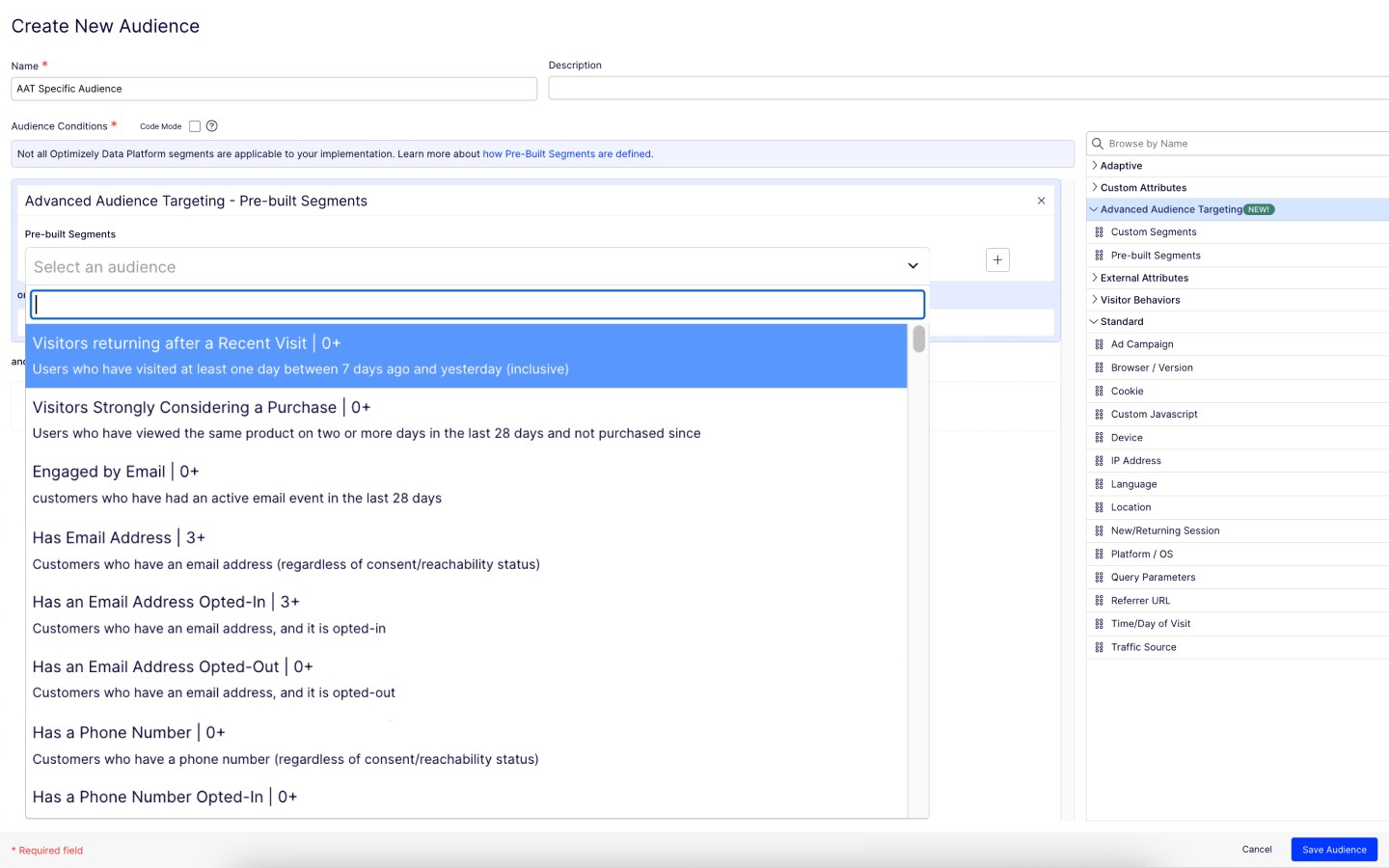
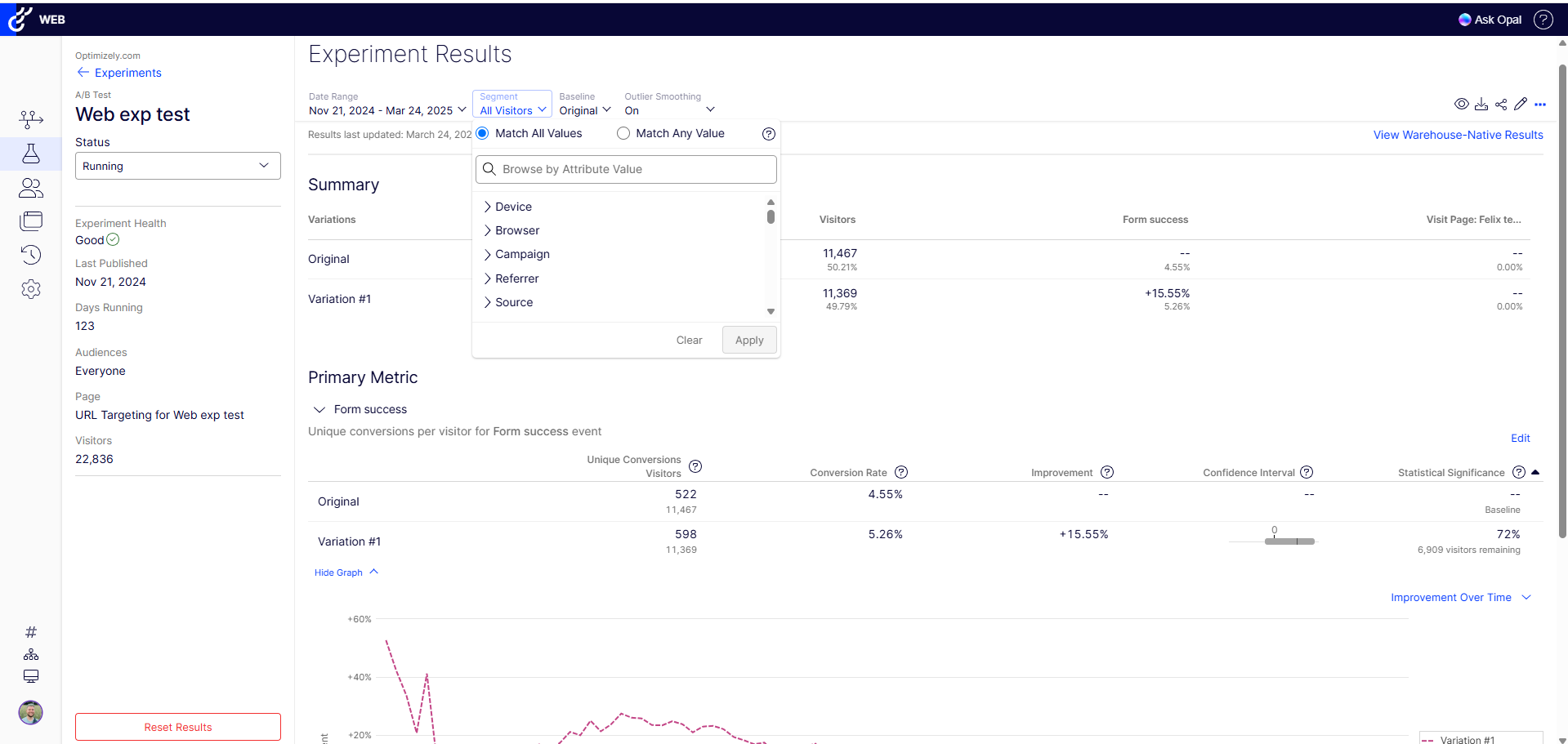
The ability to do A/B testing in Optimizely along with the associated statistical modelling and audience segmentation means it is a much better solution than using something like Google Analytics were a lot more effort is required to identify and isolate the specific data you …
Best-in-Class Experiment Design compared to platforms like VWO and Convert. Optimizely offers a more polished and intuitive UI for setting up experiments. It feels purpose-built with lots of concurrent tests. Features like traffic allocation, audience targeting, and variation …
Optimizely is highly intuitive, allowing marketers or non-technical folks to run experiments without complicated coding. It also allows for various types of experimentation, including A/B tests, multivariate tests, and personalization. This capability will enable teams to run …
None of them have a best in class stats engine and live within an ecosystem of marketing technology products the way that Optimizely does, so the scalability of using any one of those tools is limited as compared to using Optimizely Web Experimentation.
Optimizely is more user-friendly and cost-effective, ideal for experimentation-focused teams, while Adobe Target excels in advanced personalization and seamless integration within the Adobe ecosystem, making it better suited for large enterprises.
Optimizely Web Experimentation was more robust and able to handle the broad array of sites we run than VWO. It has been a great platform to easily add additional sites onto, but still providing a universal overview of all of them, making management a simple task.
It's slightly more complicated to use, but in my experience, it has more capabilities. Also, Google Optimize was depreciated, so this is definitely the next best platform.
unbounce's Visual Editor is what I'd expect out of Optimizely Web Experimentation, but I believe it's missing. Otherwise, Optimizely Web Experimentation is better.
Optimizely is a far more comprehensive solution. While it's true there are competitors to X Web, there's nothing to touch Optimizely's Full Stack product. Their customer support is based out of the USA, which cuts down wait times if we have questions/issues. This wasn't the …
Optimizely has better customer service if you need to talk to a person and a great library of documentation if you run into issues and want to troubleshoot yourself. Web Experimentation has allowed for our testing capabilities to grow as our research program develops. …
Google Optimize was great, but our organization already had contracts with Optimizely Web Experimentation for their other tools. unbounce wasn't really an option either mainly because it was only a landing page testing tool and had to use their platform to host the tests. We …
Optimizely is an integrated solution that supports all the performance areas and does the analytics while working on all other areas. The products I use were a lot more simple, they helped me but in a limited way so I came to search for software and tool which fitted really well.
+ I strongly believe that this tool helps when a firm has good user count (depends on business model) as most of these tools are data friends. More data - more valuable insights+ Best fit if someone who is looking for deeper insights of individual page - Not suggested for very fewer visits of a website. Suggested toimprove better visit count
Google Analytics is particularly well suited for tracking and analyzing customer behavior on a grocery e-commerce platform. It provides a wealth of information about customer behavior, including what products are most popular, what pages are visited the most, and where customers are coming from. This information can help the platform optimize its website for better customer engagement and conversion rates. However, Google Analytics may not be the best tool for more advanced, granular analysis of customer behavior, such as tracking individual customer journeys or understanding customer motivations. In these cases, it may be more appropriate to use additional tools or solutions that provide deeper insights into customer behavior.
I think it can serve the whole spectrum of experiences from people who are just getting used to web experimentation. It's really easy to pick up and use. If you're more experienced then it works well because it just gets out of the way and lets you really focus on the experimentation side of things. So yeah, strongly recommend. I think it is well suited both to small businesses and large enterprises as well. I think it's got a really low barrier to entry. It's very easy to integrate on your website and get results quickly. Likewise, if you are a big business, it's incrementally adoptable, so you can start out with one component of optimizing and you can build there and start to build in things like data CMS to augment experimentation as well. So it's got a really strong a pathway to grow your MarTech platform if you're a small company or a big company.
Provides heatmaps that shows you the elements on your site that are and aren't performing well.
Provides scrollmaps so you can see how far down a page users are scrolling and which content never gets seen.
Screenshots show you how your website looks across a variety of different devices.
Provides a type of clickmap called confetti that enables you visualise clicks by segments - device, new/returning visitors, campaigns and other metrics.
The Platform contains drag-and-drop editor options for creating variations, which ease the A/B tests process, as it does not require any coding or development resources.
Establishing it is so simple that even a non-technical person can do it perfectly.
It provides real-time results and analytics with robust dashboard access through which you can quickly analyze how different variations perform. With this, your team can easily make data-driven decisions Fastly.
The largest thing we've struggled with is the Optimizely integration. I've contacted customer service a few times to get it properly setup. Customer Service is always friendly and helpful; they provide clear steps to get it setup. Unfortunately despite clear instructions, they are tedious, and if not completed in the correct order, the integration with Optimizely does not work. My success rate with the integration is less than 55%.
It's a great tool considering how inexpensive it is. If used correctly and you have a plan for tracking your websites, this tool can make a world of a difference. If you are not going to sit down and take the time to make a plan for how to use this tool, I would say it is not worth your time. Yes, you can look at items on your website that need to be changed, but without a consistent plan, other important items that need changing can be lost in the mix. Make sure you have enough time and energy to invest in this and it will be well worth it
We will continue to use Google Analytics for several reasons. It is free, which is a huge selling point. It houses all of our ecommerce stores' data, and though it can't account for refunds or fraud orders, gives us and our clients directional, real time information on individual and group store performance.
I rated this question because at this stage, Optimizely does most everything we need so I don't foresee a need to migrate to a new tool. We have the infrastructure already in place and it is a sizeable lift to pivot to another tool with no guarantee that it will work as good or even better than Optimizely
Crazy Egg is extremely easy to set up and use, and very well done from a user experience standpoint. It is really helpful that I can give stakeholders access to the interface and get them interacting with it with minimal training. The A/B testing is the easiest I have ever used, with minimal performance impact to the website.
Google Analytics provides a wealth of data, down to minute levels. That is it's greatest detriment: find the right information when you need it can be a cumbersome task. You are able to create shortcuts, however, so it can mitigate some of this problem. Google is continually refining Analytics, so I do not doubt there will be improvements
Optimizely Web Experimentation's visual editor is handy for non-technical or quick iterative testing. When it comes to content changes it's as easy as going into wordpress, clicking around, and then seeing your changes live--what you see is what you get. The preview and approval process for sharing built experiments is also handy for sharing experiments across teams for QA purposes or otherwise.
It's slow to post data, and slow to get a snapshot to finally be active (i.e. not pending). Not intolerable, but would be nice to see data within a couple hours. Often have to wait to the next day.
We all know Google is at top when it comes to availability. We have never faced any such instances where I can suggest otherwise. All you need is a Google account, a device and internet connection to use this super powerful tool for reporting and visualising your site data, traffic, events, etc. that too in real time.
I would rate Optimizely Web Experimentation's availability as a 10 out of 10. The software is reliable and does not experience any application errors or unplanned outages. Additionally, the customer service and technical support teams are always available to help with any issues or questions.
This has been a catalyst for improving our site's traffic handling capabilities. We were able to identify exit% from our sites through it and we used recommendations to handle and implement the same in our sites. We have been increasing the usage of Google Analytics in our sites and never had any performance related issues if we used Analytics
I would rate Optimizely Web Experimentation's performance as a 9 out of 10. Pages load quickly, reports are complete in a reasonable time frame, and the software does not slow down any other software or systems that it integrates with. Additionally, the customer service and technical support teams are always available to help with any issues or questions.
I think support is an area where Crazy Egg is lacking. I would love to have a quarterly check-in with a Crazy Egg rep to understand what kinds of changes have been made to the platform and what is on the horizon. I also think a quick consulting sessions with a rep could be extremely beneficial, as I'm sure there are ways to use the tool that we haven't even thought about yet that would be extremely insightful for our team.
The Google reps respond very quickly. However, sometimes they can overly call you to set up an apportionment. I'm very proficient and sometimes when I talk to reps, they give beginner tutorials and insights that are a waste of time. I wish Google would understand my level of expertise and assign me to a rep (long-term) that doesn't have to walk me through the basics.
They always are quick to respond, and are so friendly and helpful. They always answer the phone right away. And [they are] always willing to not only help you with your problem, but if you need ideas they have suggestions as well.
love the product and training they provide for businesses of all sizes. The following list of links will help you get started with Google Analytics from setup to understanding what data is being presented by Google Analytics.
The tool itself is not very difficult to use so training was not very useful in my opinion. It did not also account for success events more complex than a click (which my company being ecommerce is looking to examine more than a mere click).
I think my biggest take away from the Google Analytics implementation was that there needs to be a clear understanding of what you want to achieve and how you want to achieve it before you start. Originally the analytics were added to track visitors, but as we became more savvy with the product, we began adding more and more functionality, and defining guidelines as we went along. While not detrimental to our success, this lack of an overarching goal resulted in some minor setbacks in implementation and the collection of some messy data that is unusable.
In retrospect: - I think I should have stressed more demo's / workshopping with the Optimizely team at the start. I felt too confident during demo stages, and when came time to actually start, I was a bit lost. (The answer is likely I should have had them on-hand for our first install.. they offered but I thought I was OK.) - Really getting an understanding / asking them prior to install of how to make it really work for checkout pages / one that uses dynamic content or user interaction to determine what the UI does. Could have saved some time by addressing this at the beginning, as some things we needed to create on our site for Optimizely to "use" as a trigger for the variation test. - Having a number of planned/hoped-for tests already in-hand before working with Optimizely team. Sharing those thoughts with them would likely have started conversations on additional things we needed to do to make them work (rather than figuring that out during the actual builds). Since I had development time available, I could have added more things to the baseline installation since my developers were already "looking under the hood" of the site.
I will say that I didn't evaluate or select Crazy Egg, it's been a legacy tool that has been at the company before me. Honestly, we're not even sure of all of the features/functionality that we can use. Me, as a UXR, I think there are some other tools that would help me more in gaining visibility into what our users are doing on our website. I've evaluated other tools that are more aligned with UXR. However, if we properly paired it with experimentation, this might be more of a valuable tool for us.
I have not used Adobe Analytics as much, but I know they offer something called customer journey analytics, which we are evaluating now. I have used Semrush, and I find them much better than Google Analytics. I feel a fairly nontechnical person could learn Semrush in about a month. They also offer features like competitive analysis (on content, keywords, traffic, etc.), which is very useful. If you have to choose one among Semrush and Google Analytics, I would say go for Semrush.
The ability to do A/B testing in Optimizely along with the associated statistical modelling and audience segmentation means it is a much better solution than using something like Google Analytics were a lot more effort is required to identify and isolate the specific data you need to confidently make changes
Its reliability (not scaleability, as the question asks for, sorry) is pretty good but through our testing we know that some clicks do not get recorded. It doesn't bother us a lot because we look at the aggregate of thousands of visits, but we do know it misses things. As for scaleability, it's about right. You really don't want zillions of clicks per snapshot - the screen just turns to 100% dots and you lose the ability to differentiate different screen areas. We find that 25,000 clicks for a page gives us a really good view.
Google Analytics is currently handling the reporting and tracking of near about 80 sites in our project. And I am not talking about the sites from different projects. They may have way more accounts than that. Never ever felt a performance issue from Google's end while generating or customising reports or tracking custom events or creating custom dimensions
We can use it flexibly across lines of business and have it in use across two departments. We have different use cases and slightly different outcomes, but can unify our results based on impact to the bottom line. Finally, we can generate value from anywhere in the org for any stakeholders as needed.
We're able to share definitive annualized revenue projections with our team, showing what would happen if we put a test into Production
Showing the results of a test on a new page or feature prior to full implementation on a site saves developer time (if a test proves the new element doesn't deliver a significant improvement.
Making a change via the WYSIWYG interface allows us to see multiple changes without developer intervention.