Hotjar is a conversion rate optimization tool for digital marketers. Features include heatmapping, visual session recording, conversion funnel analytics, form analytics, feedback polls and surveys, and usability testing.
The tool is used by digital analysts, UX designers, web developers and product marketers. Hotjar was acquired by Contentsquare September 2021, and is now a Contentsquare brand.
$39
per month 100 daily sessions
Optimizely Web Experimentation
Score 8.7 out of 10
N/A
Whether launching a first test or scaling a sophisticated experimentation program, Optimizely Web Experimentation aims to deliver the insights needed to craft high-performing digital experiences that drive engagement, increase conversions, and accelerate growth.
If I were in charge of the purchase decision, I probably would've gone with Hotjar, as they have additional qualitative data collection abilities other than heat and click maps. However, I inherited the purchase decision. Crazy Egg has been great for our click and heatmap needs.
Hotjar is more expensive than Crazy Eggs, and we needed a tool to fit the budget for small comp. With more time, we could have tested it deeply also to have a better opinion, it seems to be great too
We felt that Crazy Egg is easy to set up and use when compared to other tools. Also, the pricing is affordable so we gave it a try and it works for us.
I will say that I didn't evaluate or select Crazy Egg, it's been a legacy tool that has been at the company before me. Honestly, we're not even sure of all of the features/functionality that we can use. Me, as a UXR, I think there are some other tools that would help me more in …
We selected Crazy Egg because it was cheaper and simpler to implement than other tools we evaluated. Other tools felt too complicated for the first step in heat mapping, but as a growing organization trying to learn more about our users, it felt like the optimal first step for …
I have not used another software all that similar to Crazy Egg. I find Crazy Egg to be a unique tool to incorporate into your analytics, though I have seen similar software out there.
It is very simple to use, everything from setting up to seeing the results. You can easily export everything into a JPG or PDF and share it with clients. CrazyEgg is also more value oriented with a lower price point.
There are a lot of tools with similar feature and closely equal pricing- This factor is the most confusing. As we need something for our website and not every tool has everything and it took time for us to understand this. We choose Crazy Egg for its ease of using and anyone …
Crazy Egg a bit low on features and has a not so friendly interface. But depending on the complexity of your team/projects/experience in digital marketing, it is a great place to start. It's budget friendly. If you have an advanced analytics or A/B testing solution it's a nice …
We've never used ClickTale and it was obvious that they offered a lot for businesses. The reason why we chose Crazy Egg is because it fit our business needs and scale perfectly. We do not utilize the software as much as we should; however, when we do use it, we gain a lot of …
The company actually still uses Optimizely and Google Analytics as well. Optimizely works well with Crazy Egg because we can do beta testing not only to see if the conversion rate goes up (Optimizely), but also see how the user is interacting with the change (Crazy Egg). Google …
Hotjar offers a much more comprehensive service and more tools for a lower value than Crazy Egg. We've also found that there intuitive and easy to use interface makes the software a much more attractive option for us as it's something anyone within the organization can begun …
I used Crazy Egg ages ago but never got into it! I'm sure the tool is much different now.
Google Optimize is not a direct competitor, but tests can be run, and with funnel and events tracking in Google Analytics, you can get a lot of the data that Hotjar is also telling you it …
Hotjar stacks up on basic feature, ease of use, implementation, and, of course, the cost. Its out-of-the-box solution makes it less painful when implementing bigger solutions like Tealium. While Crazy Egg is pretty much for the smaller scale website, which for that purpose …
Hotjar was relatively more known to the team and they had past experience as well with the tool which made the adoption relatively easier. As such we didn’t find a lot of difference between the two tools when it comes fulfilling our use cases so for us specifically both were …
It's nice to know what exactly your site visitors like and what they think. Hotjar is the best software in the industry for such purpose. It is so easy-to-use and combines user behavior analysis and customer feedback tools that help you make more effective strategies and …
Ok Hotjar is more comparable with CrazyEgg, we haven't really [used] CrazyEgg since we get everything we need with Hotjar and the tools work just perfect, let's say HotJar is a very polished product and that's why we haven't changed it.Normal analytics like Google Analytics …
Hotjar is robust and incredibly affordable. It's insane how cheap it is for what it provides. Recordings and heatmaps alone are worth the price tag. Add on the other feedback gathering functionality and it's a really good bargain. It comes at a slight cost at the manual …
Best value, most bells, and whistles for the price point. When you are a startup, SMB, a lead budget is critical, and Hotjar matches right up with that. They will work with you, teach you how to use the software to get what you need out of it to help your business.
Hotjar provides a lot of functionalities under one roof that are typically available in multiple other software programs. We use it to replace several other products and it's not the best at every single feature, but Hotjar is the best all-around tool, especially for the price.
No other solution offers the full suite of visitor recording, heatmapping and scroll mapping, polls, surveys, and funnel tracking at such a reasonable price point. Every other solution compromises either on features or price, with many sacrificing on both - fewer features and …
Hotjar offers a range of tools rather than focus on one functionality. Combining information from heatmaps, website recordings and user questionaries can provide a full picture of user behavior and user motivations that further help to improve the UX and UI. Hotjar was chosen …
We can now A/B test inside our CMS fairly easily, so we dropped Optimizely. Everything else we use in tandem with Hotjar. Google Analytics normal traffic stats compared with the in-depth and specific reports we set up through Hotjar combine for a valuable arsenal of tools at …
Hotjar provides a variety of features typically available in multiple other products. We used it to replace (or instead of) several other products. It may not be best-in-class at every single feature it provides, but Hotjar is the lowest hassle way to make quick impact if you …
I prefer Hotjar to the competition for two reasons. 1) Hotjar combines all of the most useful tools for gathering qualitative and behavioral data from users and visitors into a single tool. 2) Hotjar has achieved a balance of functionality to usability that is almost ideally …
We use crazyegg in conjunction with optimizely. They aren't really direct competitors. Crazy is graphical heatmap tracking of a page and doesn't A|B test. We need Optimizely to split out our testing variations for us and then we use Crazy Egg to supplement our knowledge for a …
Verified User
Director
Chose Optimizely Web Experimentation
We're not using UserZoom or Hotjar. We use the others for specific functions. Optimizely is the best for website optimization.
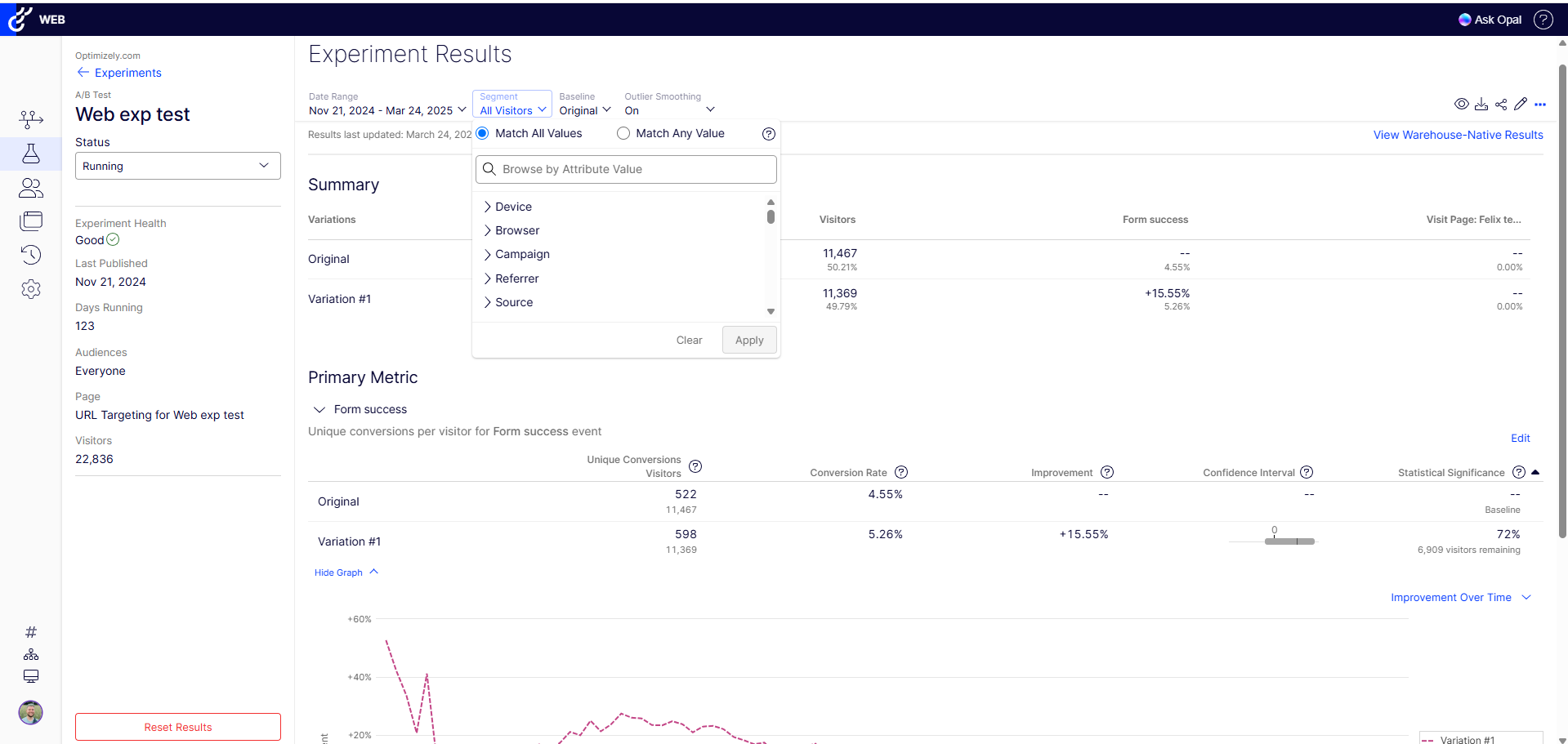
The ability to do A/B testing in Optimizely along with the associated statistical modelling and audience segmentation means it is a much better solution than using something like Google Analytics were a lot more effort is required to identify and isolate the specific data you …
Optimizely is highly intuitive, allowing marketers or non-technical folks to run experiments without complicated coding. It also allows for various types of experimentation, including A/B tests, multivariate tests, and personalization. This capability will enable teams to run …
Optimizely has everything in one place. It is also more thorough, letting you do any kind of experimentation. It also has a much better interface that allows you to manipulate the creative/code much more easily.
Optimizely Web Experimentation was more robust and able to handle the broad array of sites we run than VWO. It has been a great platform to easily add additional sites onto, but still providing a universal overview of all of them, making management a simple task.
> Adobe's pretty cool for its recomentation / AI / ML engine > VWO's wysiwyg is pretty solid and the heatmapping is nice > abtasty's consent features are pretty cool to launch patch and AB Test Consent Rate > Monetate & Dynamic Yield's pre-built personalization features help …
Feature experimentation had some extra benefits, specially with segmentation, but pricing was prohibited. So we sticked with Optimizely Web Experimentation.
unbounce's Visual Editor is what I'd expect out of Optimizely Web Experimentation, but I believe it's missing. Otherwise, Optimizely Web Experimentation is better.
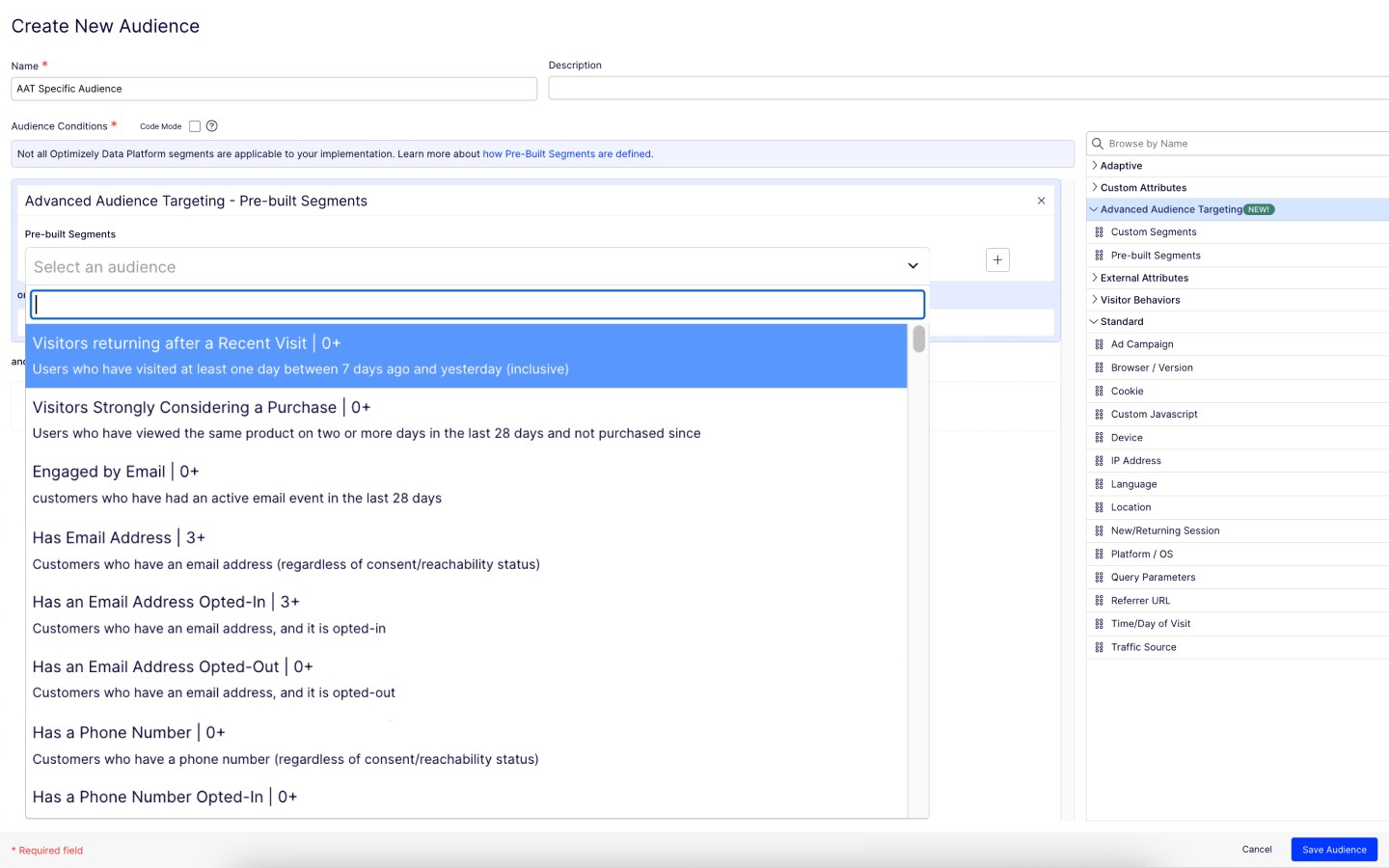
We chose Optimizely specifically for its split testing and advanced audience segmentation capabilities. It makes it way easier to see which option objectively performs better.
Monetate, but the tool was a little too far out of our budget. We picked Optimizely because it was cost effective and our ROI was justified based upon a defined baseline to increase conversion and continue the strategy of A/B testing.
Features
Crazy Egg
Hotjar
Optimizely Web Experimentation
Testing and Experimentation
Comparison of Testing and Experimentation features of Product A and Product B
Crazy Egg
-
Ratings
Hotjar
-
Ratings
Optimizely Web Experimentation
8.0
163 Ratings
5% below category average
a/b experiment testing
00 Ratings
00 Ratings
9.0163 Ratings
Split URL testing
00 Ratings
00 Ratings
8.5135 Ratings
Multivariate testing
00 Ratings
00 Ratings
8.4139 Ratings
Multi-page/funnel testing
00 Ratings
00 Ratings
7.9126 Ratings
Cross-browser testing
00 Ratings
00 Ratings
8.197 Ratings
Mobile app testing
00 Ratings
00 Ratings
8.175 Ratings
Test significance
00 Ratings
00 Ratings
8.4147 Ratings
Visual / WYSIWYG editor
00 Ratings
00 Ratings
8.1133 Ratings
Advanced code editor
00 Ratings
00 Ratings
8.0125 Ratings
Page surveys
00 Ratings
00 Ratings
6.217 Ratings
Visitor recordings
00 Ratings
00 Ratings
8.418 Ratings
Preview mode
00 Ratings
00 Ratings
7.6145 Ratings
Test duration calculator
00 Ratings
00 Ratings
7.8112 Ratings
Experiment scheduler
00 Ratings
00 Ratings
8.2112 Ratings
Experiment workflow and approval
00 Ratings
00 Ratings
7.890 Ratings
Dynamic experiment activation
00 Ratings
00 Ratings
7.574 Ratings
Client-side tests
00 Ratings
00 Ratings
7.896 Ratings
Server-side tests
00 Ratings
00 Ratings
7.250 Ratings
Mutually exclusive tests
00 Ratings
00 Ratings
8.180 Ratings
Audience Segmentation & Targeting
Comparison of Audience Segmentation & Targeting features of Product A and Product B
Crazy Egg
-
Ratings
Hotjar
-
Ratings
Optimizely Web Experimentation
8.2
152 Ratings
7% below category average
Standard visitor segmentation
00 Ratings
00 Ratings
8.4147 Ratings
Behavioral visitor segmentation
00 Ratings
00 Ratings
7.7122 Ratings
Traffic allocation control
00 Ratings
00 Ratings
9.1144 Ratings
Website personalization
00 Ratings
00 Ratings
7.8111 Ratings
Results and Analysis
Comparison of Results and Analysis features of Product A and Product B
+ I strongly believe that this tool helps when a firm has good user count (depends on business model) as most of these tools are data friends. More data - more valuable insights+ Best fit if someone who is looking for deeper insights of individual page - Not suggested for very fewer visits of a website. Suggested toimprove better visit count
Hotjar is good for a first pass at understanding user sentiment or locating potential usability issues. There are features such as "rage clicked" which shows recordings or instances when a user rage clicked or had an issue with your site. Hotjar has also been helpful to launch intercept surveys on mobile, desktop, and app, which not all competitor software allow. Hotjar recordings are fun to watch. "Watching Hotjar like Netflix" is a favorite pastime at work.
I think it can serve the whole spectrum of experiences from people who are just getting used to web experimentation. It's really easy to pick up and use. If you're more experienced then it works well because it just gets out of the way and lets you really focus on the experimentation side of things. So yeah, strongly recommend. I think it is well suited both to small businesses and large enterprises as well. I think it's got a really low barrier to entry. It's very easy to integrate on your website and get results quickly. Likewise, if you are a big business, it's incrementally adoptable, so you can start out with one component of optimizing and you can build there and start to build in things like data CMS to augment experimentation as well. So it's got a really strong a pathway to grow your MarTech platform if you're a small company or a big company.
Provides heatmaps that shows you the elements on your site that are and aren't performing well.
Provides scrollmaps so you can see how far down a page users are scrolling and which content never gets seen.
Screenshots show you how your website looks across a variety of different devices.
Provides a type of clickmap called confetti that enables you visualise clicks by segments - device, new/returning visitors, campaigns and other metrics.
Heat mapping is great on Hotjar. It is a good place to start when you are looking at the UX & CRO on your website. You can see the % of people clicking on elements on a page, how far they scroll, and mouse movements.
Hotjar is great for session recordings. These record the mouse movements, clicks, pages and scrolls of a user in video format. You can watch these to investigate what works well on a site and identify potential roadblocks and bugs.
Hotjar is great as it ensures that users details are anonymous; for instance, if you are watching a session recording, you cannot see what a user types in a form field, as Hotjar blanks this out.
Hotjar has a poll function, so you can have polls on your website.
The Platform contains drag-and-drop editor options for creating variations, which ease the A/B tests process, as it does not require any coding or development resources.
Establishing it is so simple that even a non-technical person can do it perfectly.
It provides real-time results and analytics with robust dashboard access through which you can quickly analyze how different variations perform. With this, your team can easily make data-driven decisions Fastly.
The largest thing we've struggled with is the Optimizely integration. I've contacted customer service a few times to get it properly setup. Customer Service is always friendly and helpful; they provide clear steps to get it setup. Unfortunately despite clear instructions, they are tedious, and if not completed in the correct order, the integration with Optimizely does not work. My success rate with the integration is less than 55%.
It's a great tool considering how inexpensive it is. If used correctly and you have a plan for tracking your websites, this tool can make a world of a difference. If you are not going to sit down and take the time to make a plan for how to use this tool, I would say it is not worth your time. Yes, you can look at items on your website that need to be changed, but without a consistent plan, other important items that need changing can be lost in the mix. Make sure you have enough time and energy to invest in this and it will be well worth it
Even though the heat maps and user recordings were useful, our website was significantly slowed down after we installed Hotjar, so much so, that it took over a minute for our blog to load. The data that we gathered was not worth the length that it took our website to load.
I rated this question because at this stage, Optimizely does most everything we need so I don't foresee a need to migrate to a new tool. We have the infrastructure already in place and it is a sizeable lift to pivot to another tool with no guarantee that it will work as good or even better than Optimizely
Crazy Egg is extremely easy to set up and use, and very well done from a user experience standpoint. It is really helpful that I can give stakeholders access to the interface and get them interacting with it with minimal training. The A/B testing is the easiest I have ever used, with minimal performance impact to the website.
So easy and simple to use! Straightforward anyone in the team is able to easily go in and set up anything in Hotjar. The UI is really simple. Whenever you give feedback to Hotjar they continously take on board the feedback and improve the tool.
Optimizely Web Experimentation's visual editor is handy for non-technical or quick iterative testing. When it comes to content changes it's as easy as going into wordpress, clicking around, and then seeing your changes live--what you see is what you get. The preview and approval process for sharing built experiments is also handy for sharing experiments across teams for QA purposes or otherwise.
It's slow to post data, and slow to get a snapshot to finally be active (i.e. not pending). Not intolerable, but would be nice to see data within a couple hours. Often have to wait to the next day.
I would rate Optimizely Web Experimentation's availability as a 10 out of 10. The software is reliable and does not experience any application errors or unplanned outages. Additionally, the customer service and technical support teams are always available to help with any issues or questions.
I would rate Optimizely Web Experimentation's performance as a 9 out of 10. Pages load quickly, reports are complete in a reasonable time frame, and the software does not slow down any other software or systems that it integrates with. Additionally, the customer service and technical support teams are always available to help with any issues or questions.
I think support is an area where Crazy Egg is lacking. I would love to have a quarterly check-in with a Crazy Egg rep to understand what kinds of changes have been made to the platform and what is on the horizon. I also think a quick consulting sessions with a rep could be extremely beneficial, as I'm sure there are ways to use the tool that we haven't even thought about yet that would be extremely insightful for our team.
Hotjar is a SaaS-based company, and as such has a good support service. Users can quickly submit support tickets through Hotjar's online portal. Enterprise customers get access to additional support members and have SLAs to support their larger, more complex needs. Overall, Hotjar is extremely reliable and I've never had to reach out to customer support.
They always are quick to respond, and are so friendly and helpful. They always answer the phone right away. And [they are] always willing to not only help you with your problem, but if you need ideas they have suggestions as well.
The tool itself is not very difficult to use so training was not very useful in my opinion. It did not also account for success events more complex than a click (which my company being ecommerce is looking to examine more than a mere click).
In retrospect: - I think I should have stressed more demo's / workshopping with the Optimizely team at the start. I felt too confident during demo stages, and when came time to actually start, I was a bit lost. (The answer is likely I should have had them on-hand for our first install.. they offered but I thought I was OK.) - Really getting an understanding / asking them prior to install of how to make it really work for checkout pages / one that uses dynamic content or user interaction to determine what the UI does. Could have saved some time by addressing this at the beginning, as some things we needed to create on our site for Optimizely to "use" as a trigger for the variation test. - Having a number of planned/hoped-for tests already in-hand before working with Optimizely team. Sharing those thoughts with them would likely have started conversations on additional things we needed to do to make them work (rather than figuring that out during the actual builds). Since I had development time available, I could have added more things to the baseline installation since my developers were already "looking under the hood" of the site.
I will say that I didn't evaluate or select Crazy Egg, it's been a legacy tool that has been at the company before me. Honestly, we're not even sure of all of the features/functionality that we can use. Me, as a UXR, I think there are some other tools that would help me more in gaining visibility into what our users are doing on our website. I've evaluated other tools that are more aligned with UXR. However, if we properly paired it with experimentation, this might be more of a valuable tool for us.
Video Capture - HotJars video capture of user sessions is nothing short of amazing. It is so useful (not to mention cool) to see, in real time, how users interact with our software. It makes our jobs so much easier and more enjoyable to get this type of d
User Surveys - The ease and flexibility of surveys we can make available on our website are an awesome tool to get additional data.
Simple implementation - Adding a very small amount of code to our website gives us the ability to use all of HotJars features without having to touch our code again.
The ability to do A/B testing in Optimizely along with the associated statistical modelling and audience segmentation means it is a much better solution than using something like Google Analytics were a lot more effort is required to identify and isolate the specific data you need to confidently make changes
Its reliability (not scaleability, as the question asks for, sorry) is pretty good but through our testing we know that some clicks do not get recorded. It doesn't bother us a lot because we look at the aggregate of thousands of visits, but we do know it misses things. As for scaleability, it's about right. You really don't want zillions of clicks per snapshot - the screen just turns to 100% dots and you lose the ability to differentiate different screen areas. We find that 25,000 clicks for a page gives us a really good view.
We can use it flexibly across lines of business and have it in use across two departments. We have different use cases and slightly different outcomes, but can unify our results based on impact to the bottom line. Finally, we can generate value from anywhere in the org for any stakeholders as needed.
We have fixed many issues, for example, checkout usability problems with the video recording feature. You can catch bugs and get an overall idea of how a particular page is working.
Polls have helped us pair intent with the video sessions, so we can understand better why certain users answered different things. You get greedy and try to ask everything but that won't work. Keep it simple and it will give you small but important insights.
We're able to share definitive annualized revenue projections with our team, showing what would happen if we put a test into Production
Showing the results of a test on a new page or feature prior to full implementation on a site saves developer time (if a test proves the new element doesn't deliver a significant improvement.
Making a change via the WYSIWYG interface allows us to see multiple changes without developer intervention.