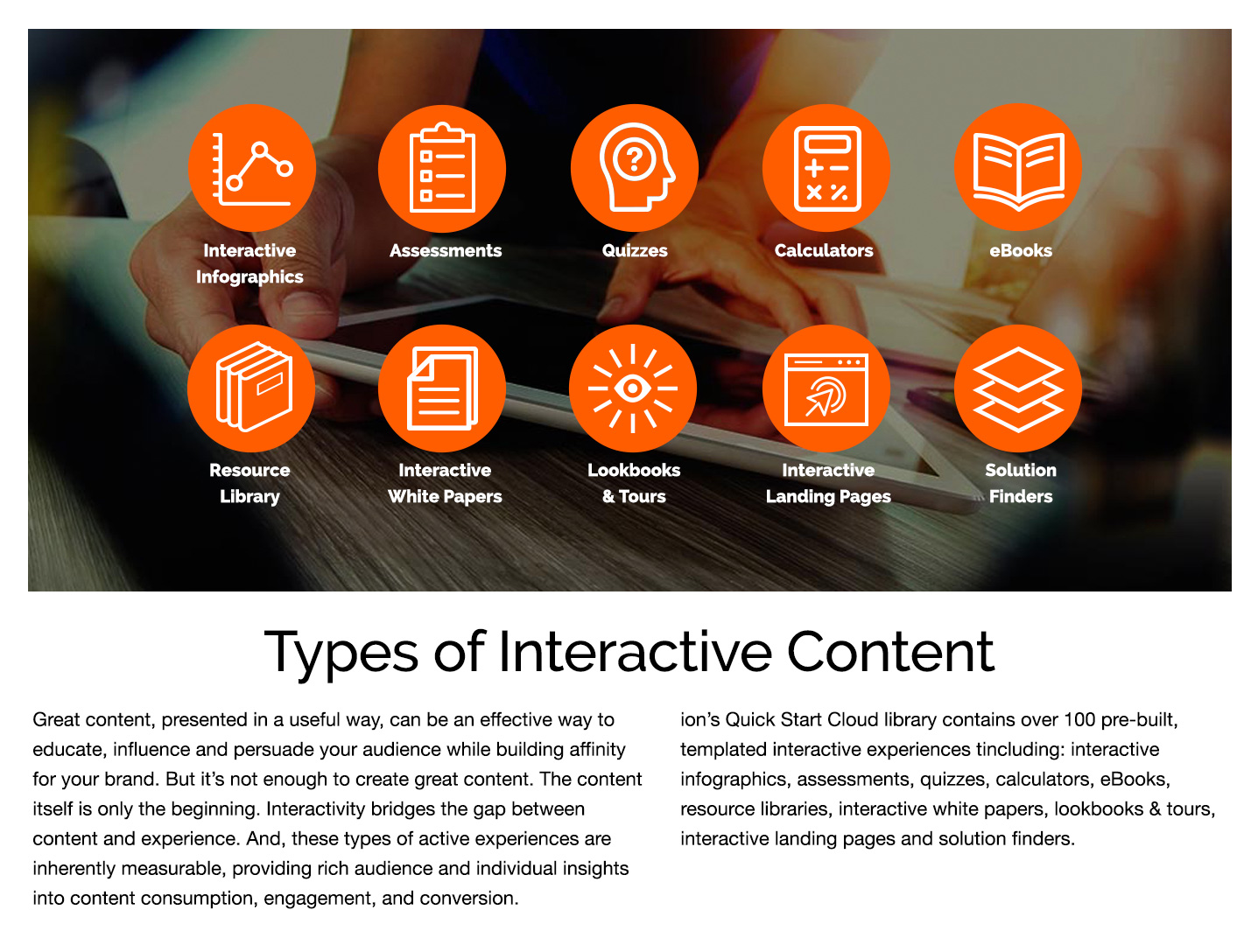
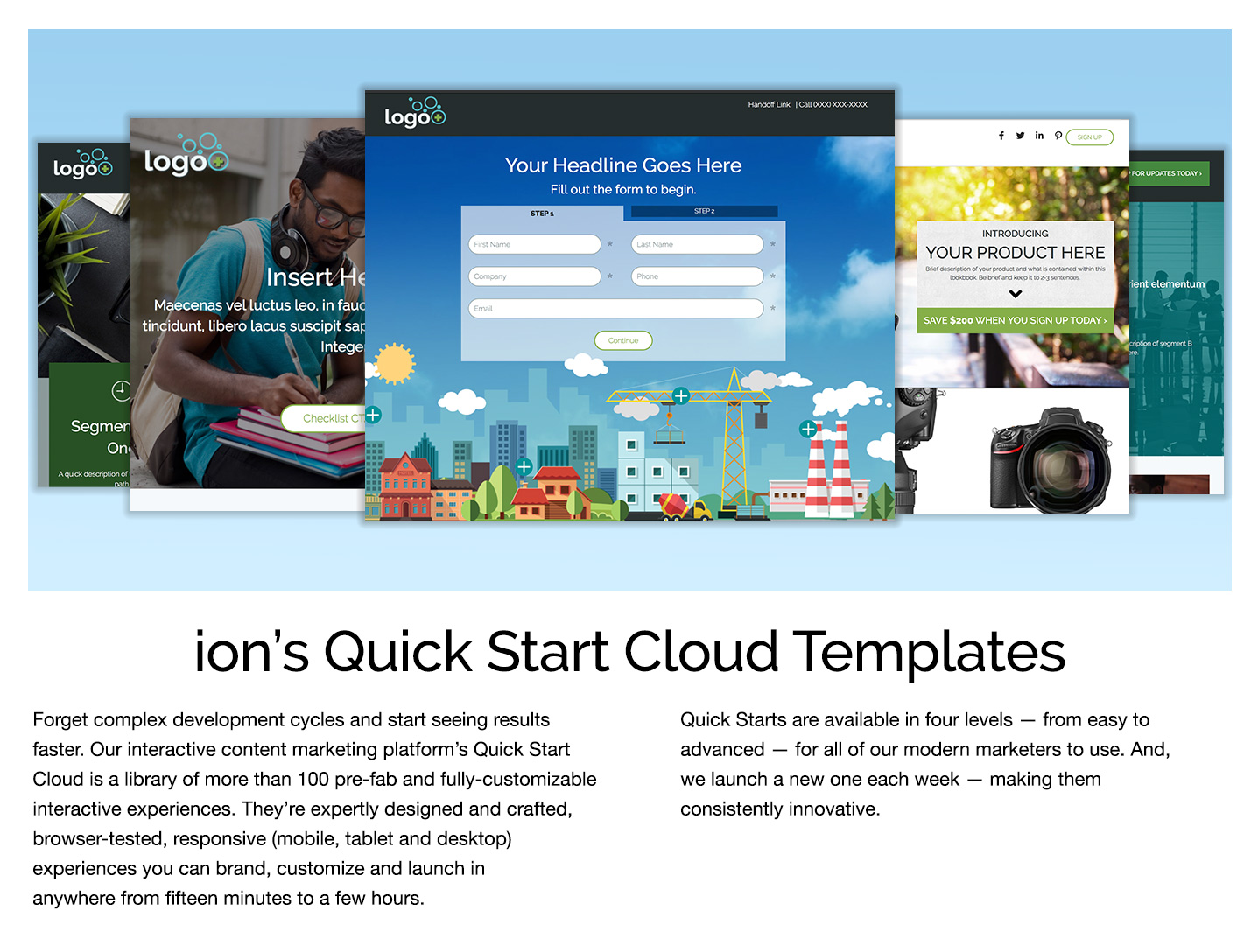
Ion is an enterprise-grade content experience platform that empowers modern marketers and designers to create no-code interactive content experiences integrated with their CRM or marketing automation tools.
N/A
Optimizely Web Experimentation
Score 8.7 out of 10
N/A
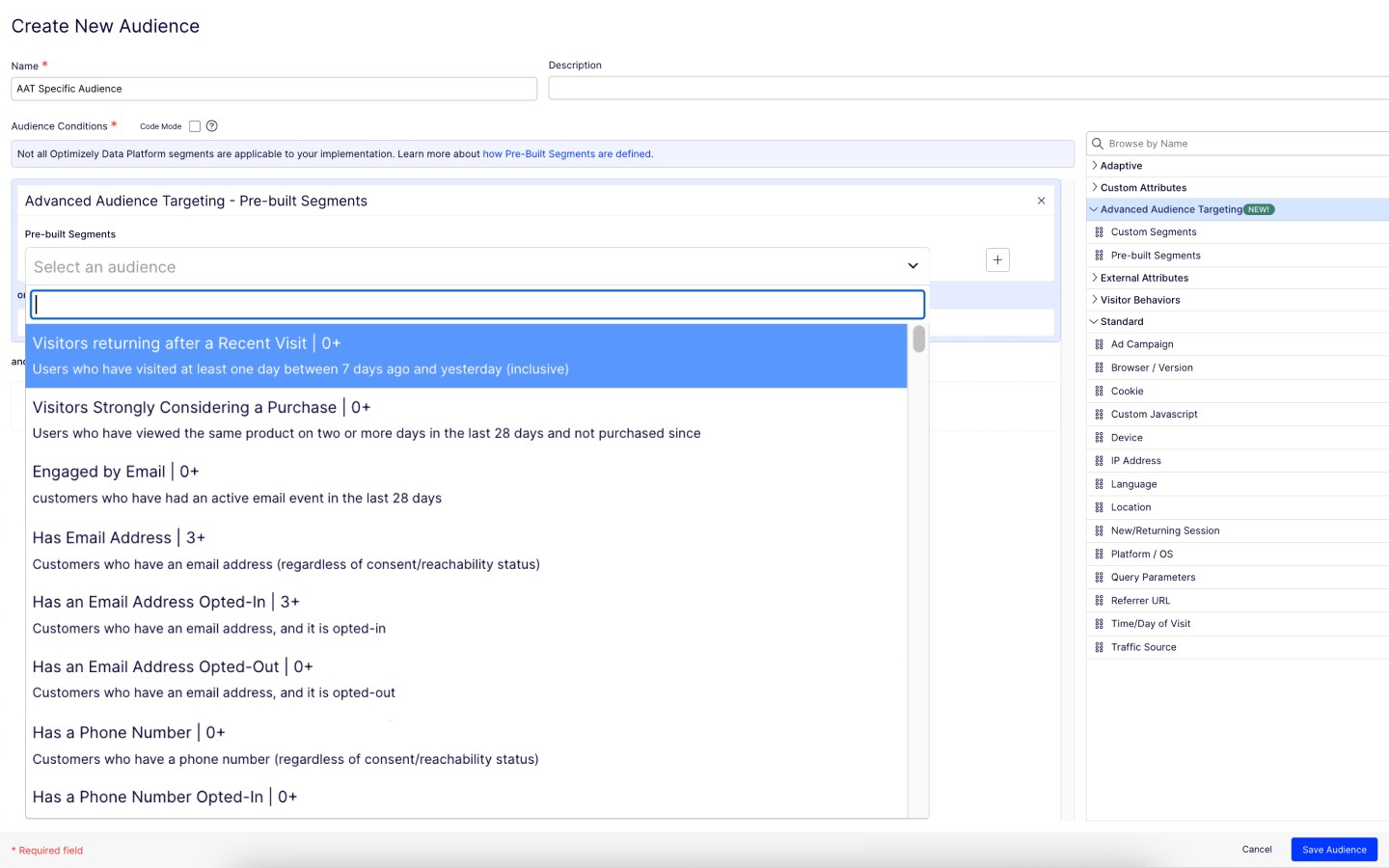
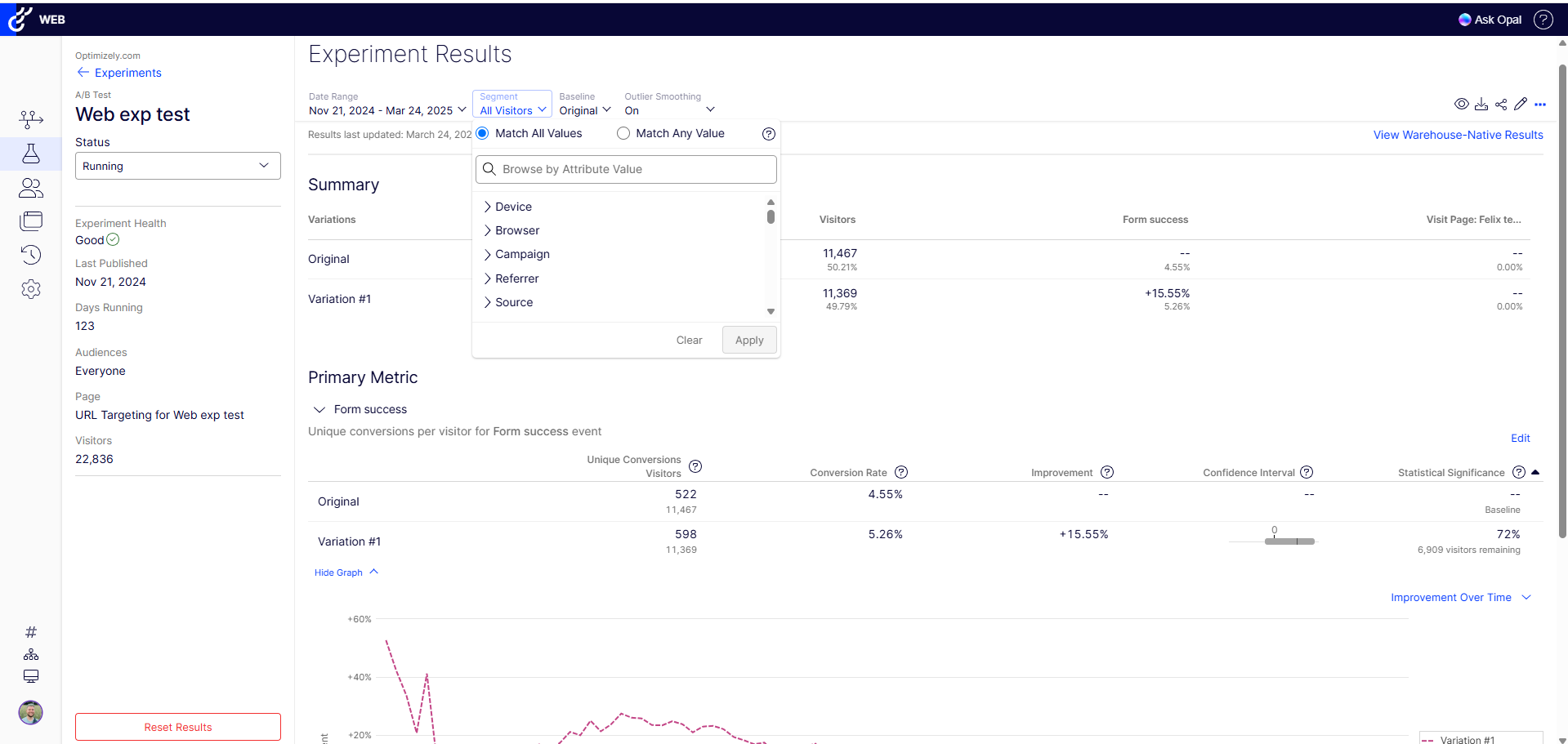
Whether launching a first test or scaling a sophisticated experimentation program, Optimizely Web Experimentation aims to deliver the insights needed to craft high-performing digital experiences that drive engagement, increase conversions, and accelerate growth.
N/A
Agentforce Marketing
Score 7.7 out of 10
N/A
Marketing Cloud is a cloud-based digital marketing platform, used by marketers can segment their audience, deliver personalized messages, track campaign performance, engage leads and accounts, and optimize strategies based on real-time insights.
$1,250
per month per installation
Pricing
Ion Interactive
Optimizely Web Experimentation
Salesforce Agentforce Marketing
Editions & Modules
Managed Services + SaaS
Custom
per year
No answers on this topic
Account Engagement
$1,250
per month
Engagement
$1,250
per month
Intelligence
$3,000
per month
Loyalty Management
$20,000
per month
Personalization
$100,000
per year
Data Cloud for Marketing
$108,000
per year
Offerings
Pricing Offerings
Ion Interactive
Optimizely Web Experimentation
Agentforce Marketing
Free Trial
No
Yes
Yes
Free/Freemium Version
No
No
No
Premium Consulting/Integration Services
Yes
Yes
Yes
Entry-level Setup Fee
$5,500 per customer
Optional
No setup fee
Additional Details
ion’s Build Anything SaaS platform provides organizations with an entirely new and agile interactive content marketing capability. It enables non-technical marketers and designers to create, test and measure an unlimited number of all types of interactive content marketing experiences. It includes unlimited seats, experiences, tests, customization, phone and email support, analytics and more.
It works well for A/B testing and data collection. Additionally, our Salesforce integration is critical for our team. With Ion Interactive, we are able to reliably retain all lead information, and pass it into Salesforce. This includes UTM information as well as proprietary ID …
Honestly these are different products. Other web platforms, are built to create a website. However this is meant for rapid content creation of landing pages. A user lands on the page, does a desired action (fills out a form, clicks a button, etc) and then they are done. Also …
Compared to Adobe's products, I prefer ion. However, Optimizely is slightly more intuitive to use than ion, but the value comes in big savings over Optimizely's prices.
Unbounce is the super light, beginners version of ion interactive. We've only used Unbounce if a client already has them on record. Optimizely and Visual Website Optimizer are sort of separate beasts that let us do separate things. We've almost split them into a church/state …
I was not involved in the decision to adopt ion at my current agency. However, clients occasionally use other landing page tools and we have overall found ion to be the best choice in its class: its reporting, design capabilities, ease of deployment, and integration suite makes …
Other platforms don't have the ability to customize as much as ion. We need to be able to add widgets/plugins or be able to get into the framework to be able to create a completely custom experience.
It depends on wha the individual is looking for and what their skill level and experience is. Ion is unique in that it is a comprehensive package. It offers CAD, analytics and web design and optimization. In order to achieve this without Ion, you would need Adobe, Google …
I have not used other landing page creation tool, but have compared ION to Optimizely and Adobe Test and Target. ION is a much more flexible solution than Adobe Test and Target, and is more affordable and comes with free customer support.
Interactive and Digital Strategy, Production and Marketing Consultant
Chose Ion Interactive
We actually like and still use Optimizely, but ION is much more robust.. again with its pros and cons. We even use this on our ION pages for testing at times. I think we could get rid of it if we had a better grasp on how to A/B on ION (which I believe it does offer).
We found ION to be much better at being able to quickly and effectively launch, measure and change tests. The only downside is that ION needs to be on its owner server (at least with our setup) so it's not as easy to use it to test core site content.
If you want to choose a quick start template and fill in the fields with your content, Ion will be fantastic for you. We've done this with whitepapers and quizzes and it's been great and extremely easy to use. If you have an exact idea of what you want, and a background in web development, you may get frustrated. Ion has some quirks that make it tricky to fully customize - everyone once in a while I really just want to go into the HTML and make some changes, but can't. If you are looking to reuse a piece of content for specific targeting (industry or account-specific), Ion is great. The dynamic substitutions are great and very helpful.
I think it can serve the whole spectrum of experiences from people who are just getting used to web experimentation. It's really easy to pick up and use. If you're more experienced then it works well because it just gets out of the way and lets you really focus on the experimentation side of things. So yeah, strongly recommend. I think it is well suited both to small businesses and large enterprises as well. I think it's got a really low barrier to entry. It's very easy to integrate on your website and get results quickly. Likewise, if you are a big business, it's incrementally adoptable, so you can start out with one component of optimizing and you can build there and start to build in things like data CMS to augment experimentation as well. So it's got a really strong a pathway to grow your MarTech platform if you're a small company or a big company.
I think the product, by definition, is meant for marketing — and we use it exactly for that, for running campaigns. That’s the best-suited use case for the product. I don’t think it’s really meant to be used for anything else — that’s just not how it’s designed.
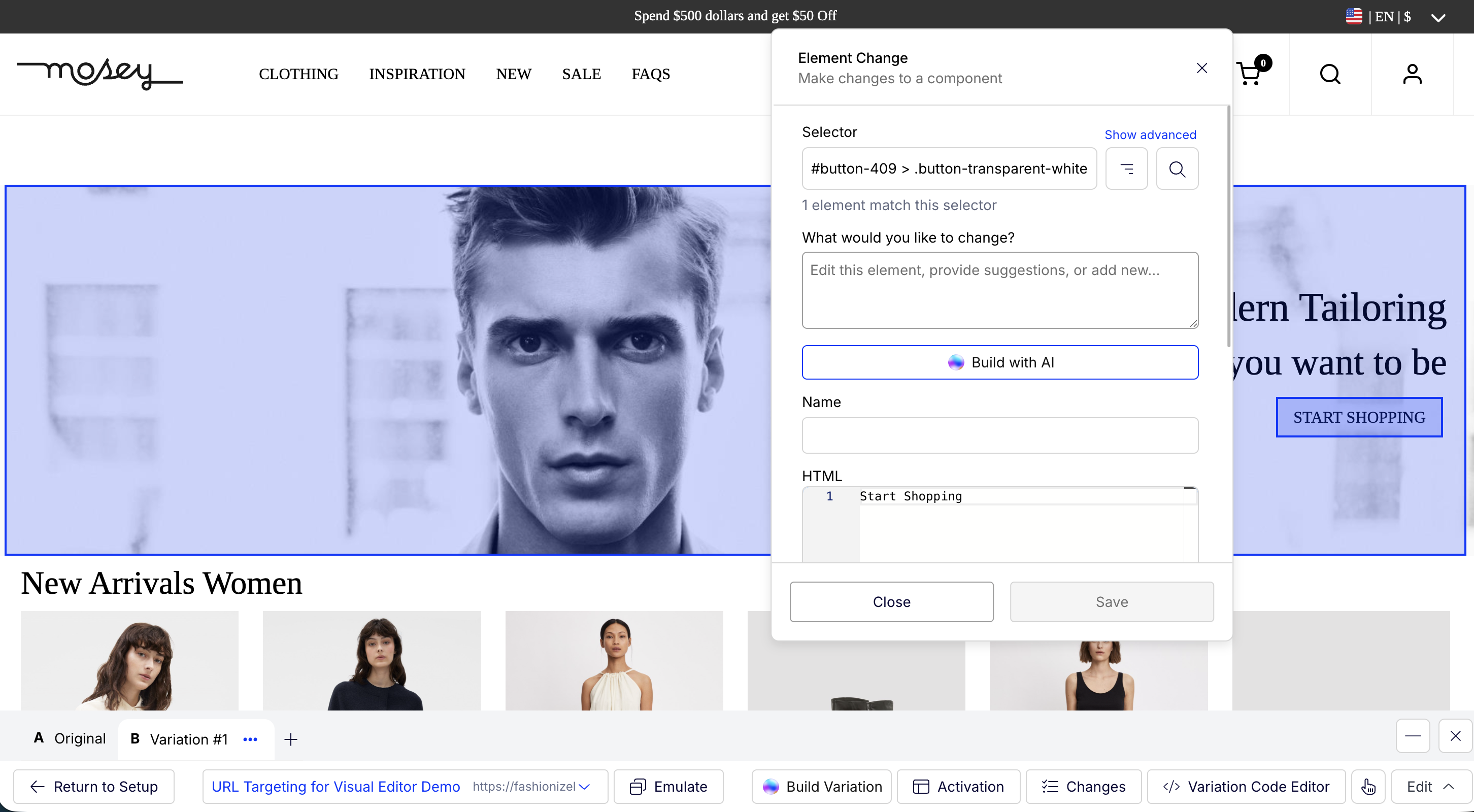
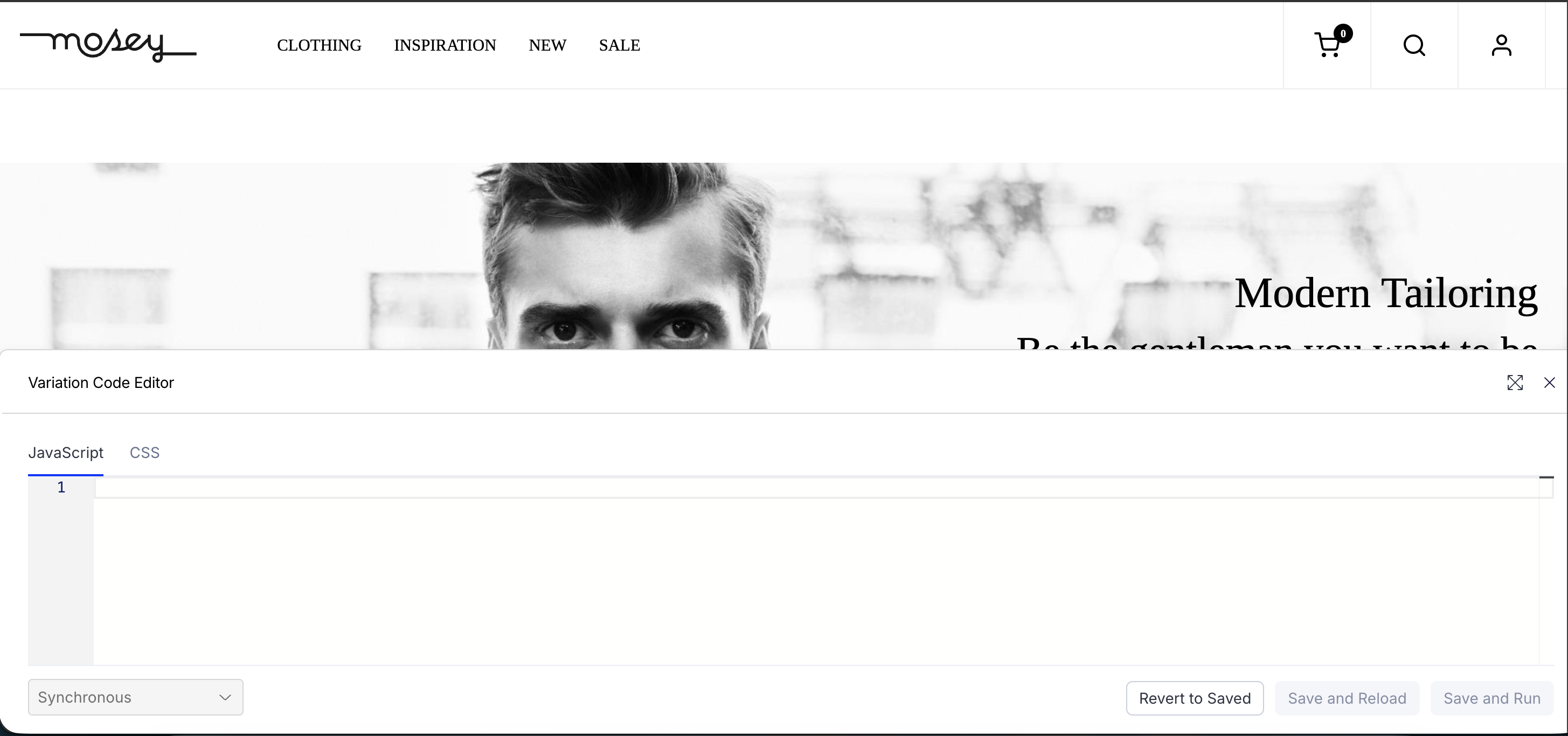
The Platform contains drag-and-drop editor options for creating variations, which ease the A/B tests process, as it does not require any coding or development resources.
Establishing it is so simple that even a non-technical person can do it perfectly.
It provides real-time results and analytics with robust dashboard access through which you can quickly analyze how different variations perform. With this, your team can easily make data-driven decisions Fastly.
Ion University, while stacked with a wealth of information, is difficult to navigate from a troubleshooting perspective. The tutorial videos are all very helpful, but they are also very long. Sometimes I would want to search for how to address a particular issue I was struggling with and it would be a two-minute segment buried in a 45-minute video.
Again, getting back the self-guidance side of things. I think a lot of the tutorials are set up in a way that makes sense to Ion, but not as much to the end user.
I think the controls admins use when creating new users could be a bit more straightforward.
We use it for every landing page and we plan on only doing more dynamic content creation. We dont see that option coming in-house any time ever in the future. ION has a very robust platform for us to work with that really allows us to do more for our customers in regards to having the one-to-one conversation.
I rated this question because at this stage, Optimizely does most everything we need so I don't foresee a need to migrate to a new tool. We have the infrastructure already in place and it is a sizeable lift to pivot to another tool with no guarantee that it will work as good or even better than Optimizely
As of right now we have not seen any other program that integrates as seamlessly into our Salesforce platform. We have barely scratched the surface of all the features and use cases. It would be irresponsible to make a move to another platform in the near future. We have not come up against any limitations that would prompt a need to switch
Usability is straightforward, with extensive documentation and tutorials provided to ensure landing pages are built to specifications and can be optimized for performance. Built-in platform funnels give insight into customer dropoff, success/failures, and conversions (at a glance). Setting up a landing page can be done quickly and easily, with numerous integrations (CRMs like SalesForce, for instance) supported
Optimizely Web Experimentation's visual editor is handy for non-technical or quick iterative testing. When it comes to content changes it's as easy as going into wordpress, clicking around, and then seeing your changes live--what you see is what you get. The preview and approval process for sharing built experiments is also handy for sharing experiments across teams for QA purposes or otherwise.
You won't find another solution that has as many features as Salesforce Marketing Cloud Interaction Studio. We all know Salesforce, we all know how big they are and it's not for nothing... Their tools do most of the things you want, need and even imagine. Using it is complicated, but the usability is infinite.
I would rate Optimizely Web Experimentation's availability as a 10 out of 10. The software is reliable and does not experience any application errors or unplanned outages. Additionally, the customer service and technical support teams are always available to help with any issues or questions.
Upgrades and timing of the upgrades were communicated well and planned during off hours for our work. If we did have a campaign scheduled during that time, it would kick-off after the system was back active. There were a few unplanned system down times, but it was a rare occurrence and those times were also short in duration.
I would rate Optimizely Web Experimentation's performance as a 9 out of 10. Pages load quickly, reports are complete in a reasonable time frame, and the software does not slow down any other software or systems that it integrates with. Additionally, the customer service and technical support teams are always available to help with any issues or questions.
Though the make up of MA apps is not built this way today, it would be nice to see them become more real-time. The integration between Salesforce and Pardot is not a true real-time integration. If I modify something in Salesforce, those changes are not automatically reflected in Pardot immediately. There is a delay of about 15 minutes before the systems sync. This delay, although not long, is less than ideal We would love the systems to be integrated real time such that changes are propagated from one system to the other immediately.
The ION support team is amazing. There has not been a single issue they they could not solve for me. If there is a feature or request that they do not have, they have even, on occasion, created custom scripts for our team. *Update 6/5/17 - ION has continued to delight on multiple occasions. I appreciate their attention to detail and ability to solve whatever issue I have. After 3+ years of use and support, ION still has my full endorsement.
They always are quick to respond, and are so friendly and helpful. They always answer the phone right away. And [they are] always willing to not only help you with your problem, but if you need ideas they have suggestions as well.
They are really responsive and more than not solve the problem or give you insight to how you can manage the solution yourself. I do find however sometimes a long delay on the more complex issues when they need to loop in other departments. but overall a good experience with support
The trainers at the Pardot user conference (Elevate and Connections) were very knowledgeable and presented the material well. Again, the content was targeted to more of a new user audience, and was not really relevant for folks who had been using the product for 2+ years.
They offer a great amount of online training, videos, articles, etc. There is usually an answer available if you run into an issue. I would recommend taking advantage of the online training they offer. I wish I would have done it sooner.
The tool itself is not very difficult to use so training was not very useful in my opinion. It did not also account for success events more complex than a click (which my company being ecommerce is looking to examine more than a mere click).
Pardot's online training touches on all topics briefly and vaguely without much indepth exploration into how a final outcome could look, such as Nurturing Campaigns, Email templates, landing page templates, etc... The only true way to uncover Pardot's full capabilities is to have Front End design and coding experience. Without this key skill set, I would not recommend Pardot to another business.
There were a lot of things we learned about the tool once we really got in and got our hands dirty. Being hands-on was essential for our team to be able to utilize ION in the most effective manner.
In retrospect: - I think I should have stressed more demo's / workshopping with the Optimizely team at the start. I felt too confident during demo stages, and when came time to actually start, I was a bit lost. (The answer is likely I should have had them on-hand for our first install.. they offered but I thought I was OK.) - Really getting an understanding / asking them prior to install of how to make it really work for checkout pages / one that uses dynamic content or user interaction to determine what the UI does. Could have saved some time by addressing this at the beginning, as some things we needed to create on our site for Optimizely to "use" as a trigger for the variation test. - Having a number of planned/hoped-for tests already in-hand before working with Optimizely team. Sharing those thoughts with them would likely have started conversations on additional things we needed to do to make them work (rather than figuring that out during the actual builds). Since I had development time available, I could have added more things to the baseline installation since my developers were already "looking under the hood" of the site.
From an IT perspective, once you set up the Javascript beacon and start collecting data there is a waiting game. During this time you can start labeling your site actions which can be labor intensive for a single person, but you don't really have the final end-users on the platform yet. We did a lot of training so users were experienced, but it wasn't until they had their first tasks to accomplish that they started using the system and had questions. I'd recommend setting up some immediate goals for an end-user to start segmenting for the purpose of displaying message campaigns so you can jump start end-user action.
I was not the decision maker to choose this over Uberflip, but the UI is much more appealing to me. It's incredibly easy to use, clean, and from a backend standpoint, it requires little to no tech savvy'ness. Our team has really enjoyed using it and has required no training what-so-ever.
The ability to do A/B testing in Optimizely along with the associated statistical modelling and audience segmentation means it is a much better solution than using something like Google Analytics were a lot more effort is required to identify and isolate the specific data you need to confidently make changes
We use Salesforce Marketing Cloud for lead management, generating reports, tracking customer and dealer information, inputting orders, and more. I prefer HubSpot for email marketing and automation because it is easier to use and the emails are designed much better. We currently use Salesforce and HubSpot, and we are very happy to have both, as they have different pros/cons.
Separate client portfolios enable scalability, however, some elements are still grouped for all accounts so it's difficult to scale for an ad agency with multiple clients. Would prefer totally separate sections of the platform for all clients with each element housed separately.
We can use it flexibly across lines of business and have it in use across two departments. We have different use cases and slightly different outcomes, but can unify our results based on impact to the bottom line. Finally, we can generate value from anywhere in the org for any stakeholders as needed.
Prior to this, we had no solution and literally were doing things on paper in a world where technology is outpacing paper. Having this process optimized has made it easier for the sales and marketing people to change information. From the training perspective, it has allowed us to see holes in where we could create additional support training, so the ROI here has been a lot more than just the optimization of a process.
Though we have not had the service long enough to see any measurable outcomes, we've been able to create interactive web content faster than ever before
The speed with which we can build interactive pages and re-use assets has been critical as projects we've done with Ion have made their way around and more and more internal clients have said "me too" for their own projects
It is very pricey at $28K for the base annual subscription (dropping to $24k after the first year), so depending on your budgetary situation, that may make no sense for your team--but we had contract money set aside for a company to build us a microsite for around the amount, so we just used it for Ion instead and will now be building the microsite ourselves using it
We're able to share definitive annualized revenue projections with our team, showing what would happen if we put a test into Production
Showing the results of a test on a new page or feature prior to full implementation on a site saves developer time (if a test proves the new element doesn't deliver a significant improvement.
Making a change via the WYSIWYG interface allows us to see multiple changes without developer intervention.
Salesforce Marketing Cloud allows us to more efficiently reach out to a higher number of prospects.
Salesforce Marketing Cloud allows us to nimbly communicate important messages in a timely fashion to facilitate conversion.
Salesforce Marketing Cloud allows us to track who is opening our messages so that we can stop sending to those not interested and focus on the most engaged audiences.