Adobe acquired Omniture in 2009 and re-branded the platform as SiteCatalyst. It is now part of Adobe Marketing Cloud along with other products such as social marketing, test and targeting, and tag management.
SiteCatalyst is one of the leading vendors in the web analytics category and is particularly strong in combining web analytics with other digital marketing capabilities like audience management and data management.
Adobe Analytics also includes predictive marketing capabilities that help…
N/A
Chartbeat
Score 8.8 out of 10
N/A
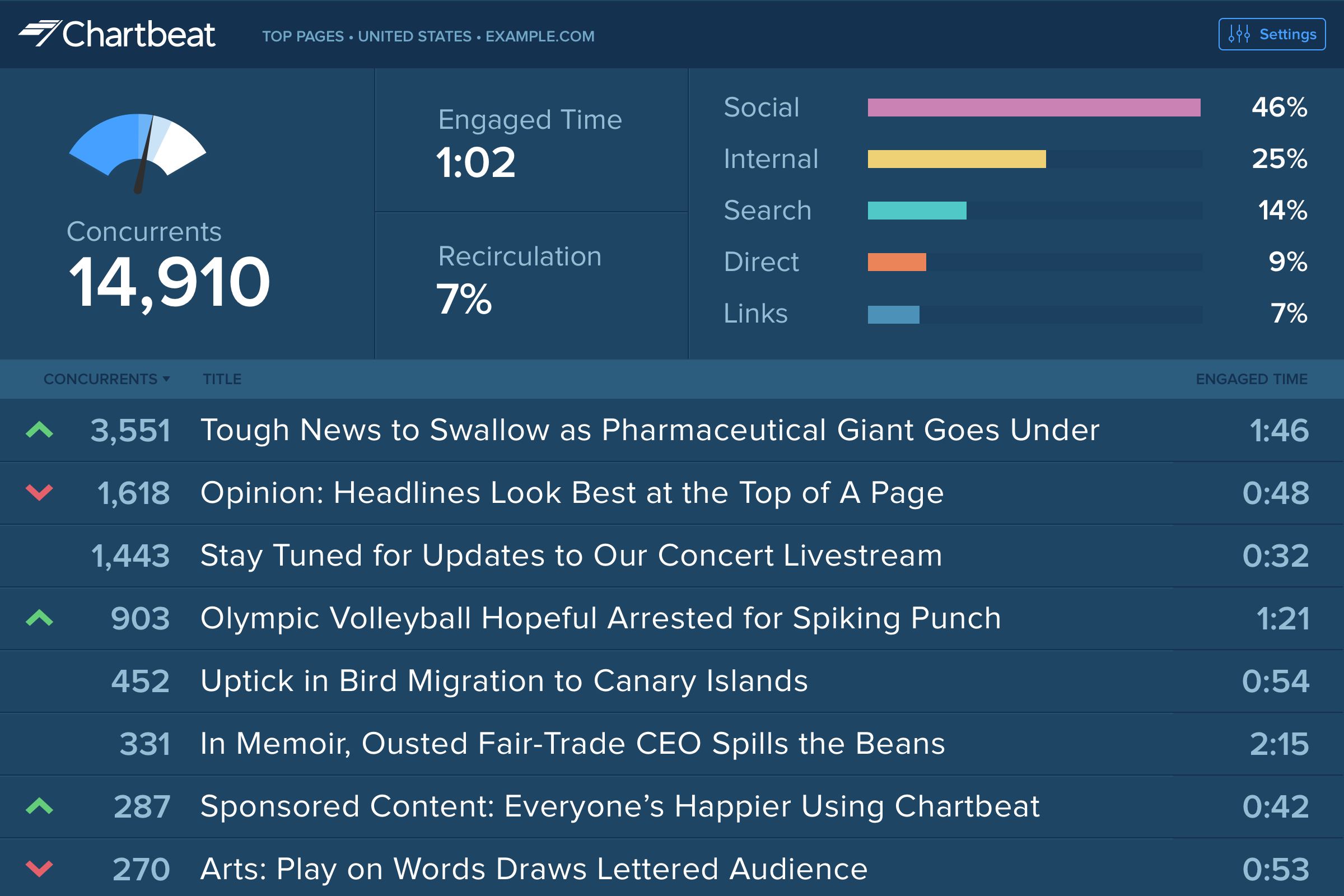
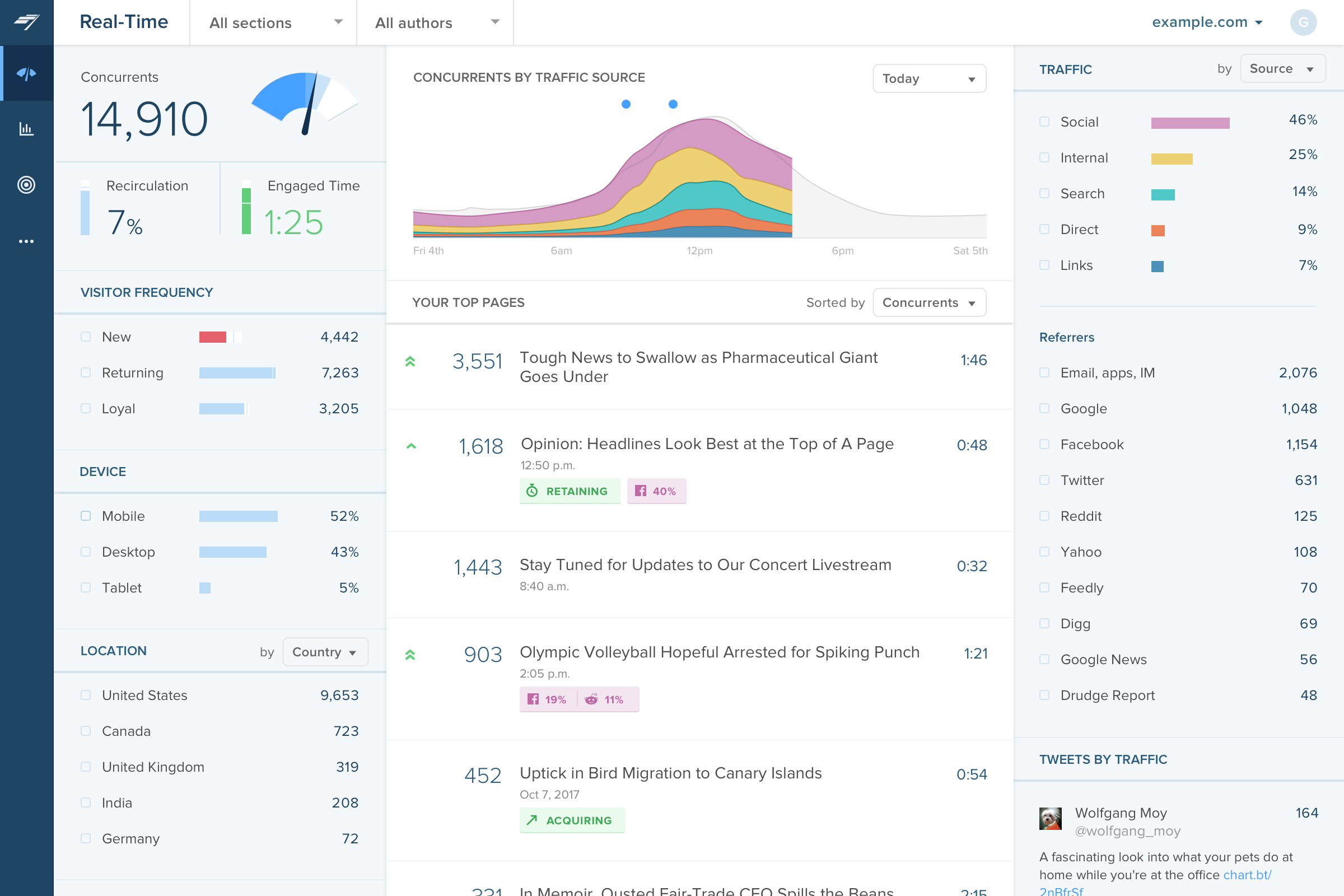
Chartbeat delivers real-time analytics, insights, and transformative tools for content teams around the world, to help improve audience engagement, inform editorial decisions, and increase loyalty.
N/A
Google Analytics 360 (discontinued)
Score 8.3 out of 10
N/A
Google Analytics 360 (formerly Google Analytics Premium) was an enterprise-level analytics solution that was sunset in July of 2024.
$150,000
Up to 1 Billion hits/month
Pricing
Adobe Analytics
Chartbeat
Google Analytics 360 (discontinued)
Editions & Modules
No answers on this topic
No answers on this topic
Google Analytics Premium
$150,000
Up to 1 Billion hits/month
Google Analytics
Free
Offerings
Pricing Offerings
Adobe Analytics
Chartbeat
Google Analytics 360 (discontinued)
Free Trial
No
Yes
No
Free/Freemium Version
No
No
Yes
Premium Consulting/Integration Services
Yes
Yes
Yes
Entry-level Setup Fee
Optional
No setup fee
No setup fee
Additional Details
—
Chartbeat pricing is based on monthly site page views. Discounts are applied to multi-year contracts. The Basic Plan includes the Real-time Dashboard, Historical Dashboard, Heads Up Display, Reports, Big Board, iOS and Android app, and Real-time API endpoints.
The Plus Plan includes all of the Basic Plan features, plus ONE of the following Premium features: Headline Testing, Advanced Queries, or Multi-Site View.
The Premium Plan includes all of the Basic Plan features, plus ALL Premium features: Headline Testing, Advanced Queries, Multi-Site View, and enterprise-level support and custom trainings.
Adobe Analytics allows for the comparison of the same metric with and without various segments applied. Google Analytics is an all-or-nothing situation; either you apply a segment to metric or you do not. This makes it difficult for segment vs. non-segment and creating …
It helps to understand what channels and devices are users using and what route they are taking to convert. It helps to check the funnels and drop offs at each stage
Google Analytics comes across more of a reporting tool whereas Adobe Analytics is more of an Enterprise level analytics tool. Contentsquare provides some traffic and flow capabilities but not to the same level as Adobe Analytics. However, Contentsquare's major advantage is its …
Google Analytics (inc. 360): Target is less intuitive than Google on a number of fronts: layout, naming conventions, default reporting views, but offers more flexible reporting options without having to swap to tools like BigQuery. In a lot of instances, its faster than Google …
As the implementation involves multiple products to be integrated together like Adobe Experience Manager, Target, Adobe Audience Manager, We recommended Adobe Analytics as the best suitable product for analytics, as the tracked data would be seamlessly available to other …
Adobe's Analysis Workspace offers a significantly better interface than Google Analytics. It has an improved data model versus Google Analytics and there is no limit to data segmentation in the platform. Adobe also offers many more dimension and metric options for analytics …
Senior Business Intelligence Manager at Sky Betting and Gaming
Chose Adobe Analytics
Adobe Analytics is a more in-depth tool with some of the advanced features making it much easier for users to deep-dive themselves into problems. The workspace functionality is much better in terms of conducting analysis than tweaking the standard reporting functionality that Go…
Adobe Analytics is better for scale and customization. Google 360 lacks the ability to pull in as many data sources. Google Analytics doesn't give in-depth data. Tableau Desktop isn't a measurement platform, but it does perform better as [a] data visualization and reporting …
Adobe Analytics outperforms Google Analytics and Snowplow when comparing the feature sets, but the other tools bring advantages and flexibility that Adobe does not. The features and capabilities just within the tool are unmatched as Adobe Workspace and the segment and …
Not all the platforms above are a direct competitor to Adobe Analytics, as some of them are advertising platforms and not analytics only. Saying that, I think Adobe Analytics is most probably the best out of them all and this is due to Marin having a slightly "older" look and Go…
When it comes to reporting on a website, Adobe Analytics is by far the most superior tool in my opinion. It is also very good when you have several platforms like web, mweb and app. Then you can see the customer data across all platforms in one tool.
Adobe analytics is very similar to Google Analytics 360. The one thing I say that turns us off from using Adobe Analytics on more clients is the fact that it isn't easy to set up compared to Analytics. Google Analytics focuses more on your website as a whole, versus Adobe …
Adobe and Google are the market leaders and way ahead in market share as compared to other providers in the market. Between Adobe and Google, there are few nuances that differentiate at the feature level. If an organization is using other products of Adobe experience cloud, …
We decided to implement the Adobe Analytics service in our organization because compared to other alternatives, Adobe Analytics is a very reliable and accurate service. The recommendations we were given about this service allowed us to verify its high functionality, and I …
Adobe Analytics and Google Analytics are most often compared. Google Analytics has become a favorite for ease and cost. But Adobe Analytics still is the most advanced for robust enterprise implementation. I recommend GA for smaller clients and Adobe Analytics when it is the …
Adobe Analytics has a more modern and friendlier user interface and it's easier to use for me. Google analytics has better compatibility with other Google products
Adobe Analytics has better features for finding problems and highlighting areas of improvement on a website, but the Google products seem to integrate better into third-party tools, which can be very valuable in a complex business environment. All of the listed tools take care …
Adobe analytics has been selected as a platform to be used across a huge company, which tracks the performance of a hundreds of thousands pages with different type of content. It's believed to be the most accurate tool and the support on the side of the platform has been always …
From its original namesake (Omniture), the strength of the brand was a big factor. Also the idea of having dedicated support staff 24/7. More visually appealing. More custom tools (Analysis Workspace, Discover, Report Builder).
Omniture gives more detailed analytics to look at trends and diagnostics over a span of time. Chartbeat is better for real time to assess what is going on right now.
Verified User
Employee
Chose Chartbeat
Chartbeat is better for live metrics than either Adobe or Google, but Adobe Omniture especially is much better for tracking historic numbers.
We use Chartbeat for real-time evaluation and Adobe Analytics for longer-term performance reporting. Chartbeat is easier to use overall, particularly for content producers. Researchers tend to rely on Adobe Analytics for their reports. We have found that we need to keep using …
We use Chartbeat in conjuction with these tools. Chartbeat is forward facing and we encourage everyone in the newsroom to use it. It provides the best live view, but lacks depth needed for more longer-term trend reporting and analysis. Domo allows much more advanced data …
Verified User
Manager
Chose Chartbeat
Google Analytics 360 had problems, but after it was discontinued, Google Analytics became a shell of its former self. An added benefit of Chartbeat is that it's more "live" (looking at live concurrents rather than in the past however many minutes) and tells you how that number …
Chartbeat stands out in terms of real-time tracking and information from which to manage homepages, I found this better than Smart Octo's equivalent. However, the ability to quickly explore past data does not go as deep as Google Analytics.
Verified User
Manager
Chose Chartbeat
Chartbeat is better than GA when it comes to ease of use and immediacy. The homepage layover that Chartbeat offers is unique from what I've seen and gives me an instant knowledge of what's working on my site and how to best arrange it.
Other products like Chartbeat that I've used are Parse.ly, GA, and Omniture. Parse.ly is the only tool, in my opinion, that offers more real-time data, but the interface is lacking and isn't as intuitive as Chartbeat.
Chartbeat is certainly better at visualizing content and segmenting the data all on one screen. We can filter by section, author, channel and more without leaving the main dashboard page. Combining properties together in roll up groups is another key feature. We're able to …
In my opinion, Chartbeat should be paired with Google Analytics. Chartbeat is perfect for real-time results, an area GA lacks, and GA is best for long-term outlook.
Chartbeat's realtime its superior to all tools we have. It really makes the difference. We are in calls with Chartbeat for raw data, this is a new product and it will be open a lot of interesting information with raw data in real-time.
Chartbeat really remains the gold standard in the tracking, measurement and display of realtime engagement metrics. If your site has sufficient audience benefit from immediate changes in content programming, display and design, it's a great tool with a highly refined and …
Google Analytics gives me a better overview of my site's performance, I think; however, when it comes to real-time insights, I always turn to Chartbeat.
Chartbeat is great because it gives you numbers fast. It can be left up on a screen all day and not touched and will still give you facts that you want or need about how many people are on the website at a given time. It is reliable and very easy to understand.
Google Analytics Premium is the more user friendly experience of the two. If you want people in your organization, outside of your analytics/web department to look at and occasionally use the tool, then this would be the ideal choice. However, the amount of times you are going …
Google Analytics and Adobe Analytics are very similar. I wasn't involved in the decision making process at my organization, as we had GA well before I began in my position. However, GA has a suite of other tools that complement Web Analytics that makes it extremely easy to …
Google Analytics Premium is more simple and focused on marketers' needs with a clear advantage for driving improvements to advertising, especially with the Google tech stack. Adobe Analytics is very complex and great for enterprises, especially those that want to measure …
Adobe Analytics is a robust tool, feature-rich, and good reporting. It has focused on understanding user behavior and e-commerce performance at its core. However, with the sophistication comes difficulty in use and the ability for simple reporting and analysis. The setup of Ado…
Piano Cxense and Chartbeat, in conjunction with Google Analytics are the suite of tools that we use to monitoring and measure our sites performance in realtime and historic.
Unless you have very complex and edge case analytics needs, Google Analytics [360 (formerly Google Analytics Premium)] is likely going to be the best choice. From both a cost and usability stand point, Google wins. Adobe has the edge case when you need to create really custom …
Google Analytics and Adobe Analytics are both great products and solutions. Each has advantages and disadvantages that need to be evaluated based on your business needs and the people you have to leverage them. Google Analytics is a lower overall investment than Adobe Analytics …
As long as the budget isn't in question, then I think you get a lot more for your money for 360. Having more confidence in the data is essential, your typical GA suite is good but there are limitations. These limitations unfortunately mean that a lot of the time you are having …
Features like user segmentation and visualization of user behavior and journey.
Custom reporting and creating custom tables with different metrics is what we miss.
Big Query, Google Optimize and other features.
Google Analytics is much more user friendly and requires less day to day management. Google Analytics should be the platform of choice unless there are complex business reasons to choose Adobe.
HubSpot spends too much time trying to sell you on other products instead of assisting you with your current product in a consultative manner. Google customer support doesn't consult per se, but they do focus on the current product at hand without constantly trying to upsell …
Maybe for a small company with small products for their thing, Adobe may be bit of an implementation too much for them, but when it comes to companies like us, like a life sciences or large enterprises and even small enterprises, but with more products, more analysis that they need to make their marketing experience better, maybe Adobe product is the best suitable.
The main point of benefit is the realtime data. This is vital to our team as we are publishing a lot of content per day, so we have a busy homepage to manage and it's important to know which content is performing well. We also like to get an understanding as quickly as possible - which Chartbeat offers - of where traffic is coming from. Often we will see an example where a page is getting high traffic from Google, for example, and we know that might not need to be placed so prominently on the homepage because the traffic is arriving to us externally anyway. Without that depth of understanding what is performing best and why - updated immediately, unlike in Google Analytics now - our homepage would not be as well optimised for users coming to us direct
As I have discussed previously their insights were very useful. The second thing is since it is a Google product you will connect the data very easily from other platforms like Bigquery, Google Drive, etc. and even you can connect Google marketing platform. through this tool, you can track your live campaign how they were performing, and how it will be engaging your customer as well.
It summarizes large complex data better than any other analytics solution I've dealt with without the need for sampling, gives the right level of detail, does the right level of breakdowns, aggregation. I consistently not only use Adobe Analytics, but I use other data sets and compare against Adobe Analytics. And as I go into Adobe Analytics and compare, as long as I've done the query right and the other systems, they're very, very close. And if anything, with a lot of Adobe's newer products, they've gotten more accurate over time. So that's basically, you asked me what I liked about it. I like that it's accurate. I like that I don't have to do a lot of explaining. There's enough explaining in the world of web analytics to have to go back and explain why data's problematic. And so like I said, provided that the implementation is correct, it's a very easy conversation. Even if people may not like the answer.
It is an excellent cloud analytics platform that is easy to install and configure and easy to deploy and use, allowing us to measure web traffic and other tools.
It is an entirely online tool; it does not take up hard disk space like other desktop tools.
Since this tool is draggable, Google is constantly adding more features.
Even beginners who do not have a custom dashboard can get information. If there is a problem somewhere on the site that needs to be investigated, Google Analytics 360 will notify you.
Support. I mentioned this earlier and we don't know what we don't know. Researching the massive amounts of documentation isn't realistic with bandwidth constraints, and our rep getting frustrated with us when we go through what we are seeing is disappointing.
Education. More please, and designed more towards the "business side". I get with the many many many different implementations (every company is different!), that it's tough, but even a basic of the basics would be nice for situations that everyone is looking at, like the engagement with the merchandising on the home page (or any certain page).
Source of traffic needs improvement. Search and social make sense, but "internal" and "links" is a grey area. It would be helpful to define those with an organization and provide an information icon so users can easily remember what each of those buckets is tracking.
More ways to customize the real-time board. For example, with video content, that's great that I can see a user has started a video, but what is the completion rate, was that only on O&O or can that track Facebook, too?
Would like to see demo (age) information included as a way to slice the data so I can see what's working with my older and younger demo.
Generally I think there is a lot you can do within the tool, but as it is a Google product it means there is limited support - something which I think lets all of the platform stacks down
There could be more visual signifiers to identify if a feature is a normal or 360 feature. This would mean you can really get to grips with what the extra more advanced elements are
We've found multiple uses for Adobe Analytics in our organization. Each department analyzes the data they need and creates actionables based off of that data. For E-Commerce, we're constantly using data to analyze user engagement, website performance and evaluate ROI.
I gave Chartbeat a 5 for a renewal rating, because, while it delivers clear and understandable content, Google Analytics also provides many of the same features for free. For a small to medium website, I believe it would be more cost effective to use Google Analytics. A website with a high amount of traffic, however, could merit spending the money on Chartbeat to maximize their potential.
Google Analytics 360 is an upgraded version of the most widely used web/app analytics tracking tools in the market. The price is stable and predictable making it a long-term product of choice. It's easy to use and pairs so well with other Google Marketing Platform products.
Sometimes the processing times are very long. I have had reports or dashboards time out multiple times during presentations. It could be improved. It is understandable since there is a huge data set that the tool is processing before showing anything, however for a company that large they should invest in optimizing processing times.
I am able to "set it and forget it," keeping it up on my monitor for either constant checking or just keeping an eye on the numbers during the day. I'm also able to keep track of what times are perfect to post a story and which stories rack up the most traffic.
The UI is very easy to navigate and use. The features are well designed and intuitive. As long as the user has a good understanding of basic digital analytics definitions and capabilities, this tool should be quite easy to use. I consider Google Analytics Premium to be the easiest of all of the enterprise solutions out there to use.
I do not ever recall a time when Adobe Analytics was unavailable to me to use in the 8 or so years I have been an end user of the product. My most-used day-to-day analytics tool Parse.ly however, generally has a multiple hours planned offline maintenance every two to four weeks, and sometimes has issues collecting realtime analytics that last anywhere between 15 minutes to an hour, and happen anywhere between 1 to 5 times a month.
Again, no issues here. Performance within the day updates hourly. other reports are updated overnight and available to access by the next morning. Pages load quickly, the site navigates easily and the UX is quite straightforward to get command over. On this front, I give Adobe kudos for building a great experience to work within
I barely see any communication from Adobe Analytics. The content on the web is also not that great or easy to read. I would recommend a better communication about the product and the new addons information to come to its user by a better mean.
I have had limited experience of support for Chartbeat but whenever I have needed help it has been there. Recently there was an issue of seeing different forms of data in real time - app and otherwise effectively, and the issue was being clearly dealt with and communicated back to us.
If you purchase Premium through a reseller like LunaMetrics, you are going to be taken care of. The additional amount of support and services that a reseller provides to make sure you have the best experience with the product is the reason why the reseller program exists to begin with. Support doesn't have to be just reactive, it can be proactive as well.
It was a one-day training several years ago that cost the organization several thousand dollars. There were only about 10 people in the training class. Adobe tried to cram so much information into that one-day class that none of our users felt like they really learned anything helpful from the experience. Follow-up training is too expensive
The online training for Adobe SiteCatalyst consists of short product videos. These are ok, but only go so far. For a while Adobe charged a fee for this, but recently made these available for free. There are many great blog posts that help users learn how to apply the product as well.
There is a ton of information online about Google Analytics, but Google Analytics Premium users will have dedicated support and training from Google or an Authorized Reseller.
One of the benefits and obstacles to successfully using Adobe Analytics is a great / more accurate implementation, make sure your analytics group is intimate with the details of the implementation and that the requirements are driven by the business.
If you already have the basic version of GA installed, "getting" GA Premium happens immediately through a virtual flipping of the switch - no need to re-implement. You'll want to expand your use of custom dimensions and metrics (you get 10x the amount with Premium). Ideally, you'll be using a tag management solution to talk with GA Premium, in concert with implementing a dataLayer (to note, Google's Tag Manager platform is covered under the same GA Premium SLA, and it's free). There are some welcomed "configurations" with GA Premium, such as integrating with DoubleClick products, activating data driven attribution models, and building roll-up executive reports - but all of these are easy point and click solutions. In comparison with any other enterprise analytics solution, implementing GA and GA Premium is traditionally easier and more flexible. And if you have any trouble or need an extra set of hands for implementation, GA Certified Partners like LunaMetrics can help
Google Analytics comes across more of a reporting tool whereas Adobe Analytics is more of an Enterprise level analytics tool. Contentsquare provides some traffic and flow capabilities but not to the same level as Adobe Analytics. However, Contentsquare's major advantage is its Zoning (Heatmapping), Impact Quantification and Find 'n' Fix modules; none of which are knowingly available in Adobe Analytics.
Omnilytics is more robust, detailed, and catered for an intermediate media user, while I think Chartbeat is a more user-friendly and beginner-oriented piece of technology. That being said, there is an impressive amount of lift for Chartbeat, and it's evident that simplicity is the key to using a software daily (which is absolutely the point in the content world).
Unless you have very complex and edge case analytics needs, Google Analytics [360 (formerly Google Analytics Premium)] is likely going to be the best choice. From both a cost and usability stand point, Google wins. Adobe has the edge case when you need to create really custom reports, dimensions, metrics, etc. In my experience, this is rarely the case and you end up biting off more than you can chew. Stick with Google unless you are or plan on hiring an Adobe Analytics expert.
Adobe Analytics is relatively affordable compared to other tools, given it provides a range of flexible variables to use that I have not found in any other tools so far. It is worth investing in if your company is medium or large-sized and brings a steady flow of revenue. For small companies, it can be overpriced.
My organization uses Adobe Analytics across a multitude of brand portfolios. Each brand has multiple websites, mobile apps and some even have connected TV apps/channels on Roku and similar devices. Adobe can handle the multitude of properties that have simple, small(ish) websites and the larger brand properties that include web, mobile and connected TVs/OTT devices.
Each of those larger brands has multiple categories and channels to keep track of. We can see the data by channel/device or aggregate all the data together. This gives our executive teams the full picture and the departmental teams the view they need to see their own performance.
The professional services team is one of the best teams for complex adobe analytics implementations, especially for clients having multiple website and mobile applications. However, the cost of professional services is a bit high which makes few clients opt out of it, but for large scale implementations they are very helpful
Adobe Analytics impacts nearly every aspect of a billion plus dollar revenue eCommerce business. From measuring the impact of new build features to marketing campaigns.
We are saving substantial money and resource effort by consolidating all of our properties to Adobe Analytics from alternative solutions, at which point we will finally be able to report on Total Digital, rather than disparate reports.
We support experimentation on every platform and the performance is only known through Adobe Analytics tagging.