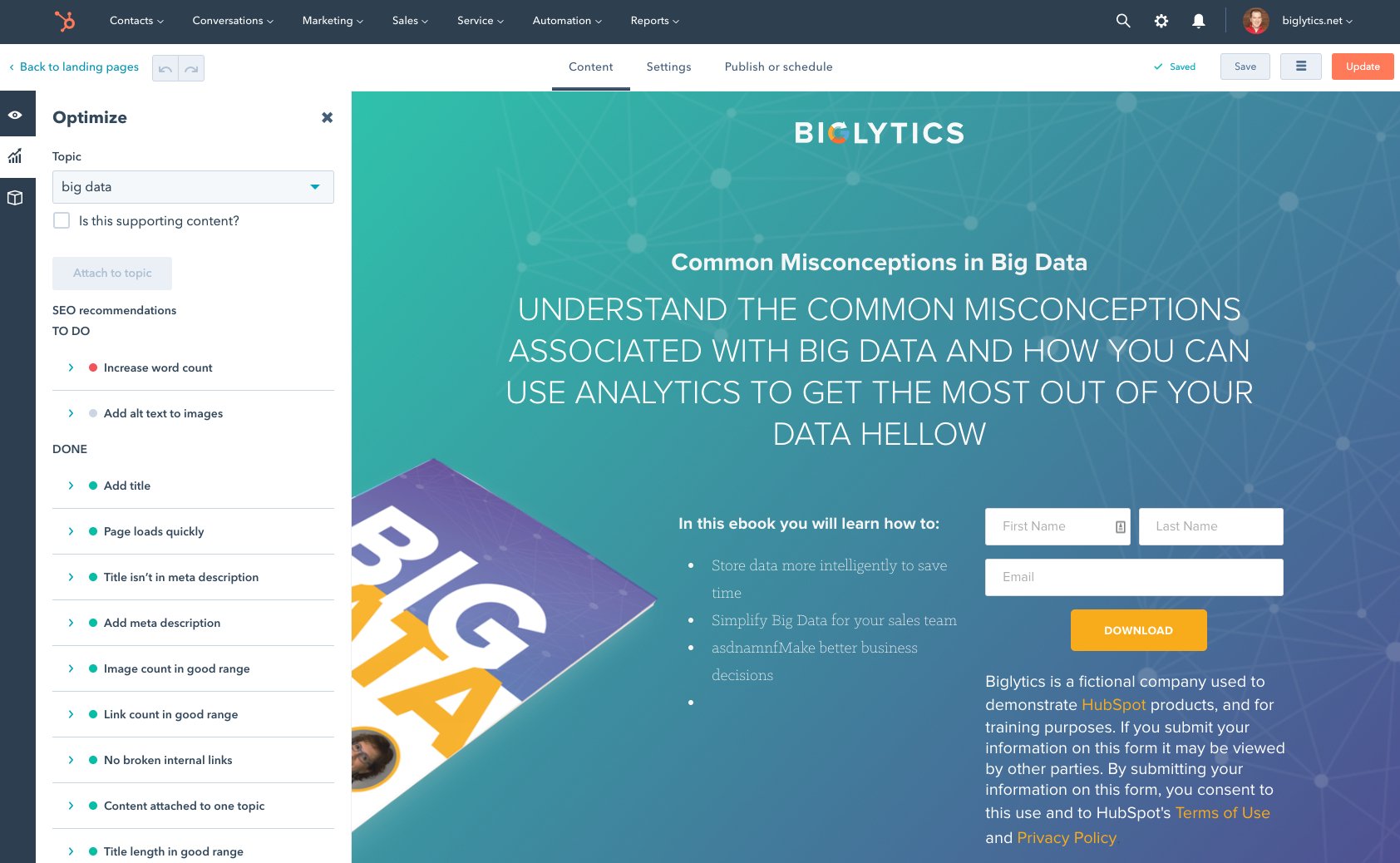
HubSpot's Marketing Hub is an all-in-one inbound marketing engine that includes tools for email marketing, landing page creation, social media marketing, content management, reporting & analytics, search engine optimization (SEO), and more.
$15
per month per seat
Agentforce Sales
Score8.8 out of 10
N/A
Salesforce' Agentforce Sales (formerly Salesforce Sales Cloud) is the company's flagship CRM platform. The AI CRM for Sales features data built right in.
$25
per month
Pricing
HubSpot Marketing Hub
Agentforce Sales
Editions & Modules
Marketing Hub Starter
$15
per month per seat
Marketing Hub Professional
$890
per month Includes 3 Core Seats (Additional Core Seats start at $50)
Marketing Hub Enterprise
Starts at $3,600
per month Includes 5 Core Seats (Additional Core Seats start at $75)
Starter
$25.00
per month per user
Professional
$80.00
per month per user
Enterprise
$165.00
per month per user
Unlimited
$330.00
per month per user
Agentforce 1 Sales
$550
per month per user
Offerings
Pricing Offerings
HubSpot Marketing Hub
Agentforce Sales
Free Trial
Yes
Yes
Free/Freemium Version
Yes
No
Premium Consulting/Integration Services
Yes
No
Entry-level Setup Fee
Required
Optional
Additional Details
—
—
More Pricing Information
Community Pulse
HubSpot Marketing Hub
Agentforce Sales
Considered Both Products
HubSpot
Verified User
Chose HubSpot Marketing Hub
I think HubSpot Marketing Hub is more intuitive - with workflows, with reporting, with creation of landing pages and emails. It felt like everything was more complicated and required more steps with Pardot, leaving more room for error. And while Pardot is natively integrated …
A de minimis incentive was given to thank the reviewer for their time. The incentive was not used to bias or drive a particular response, nor was the incentive contingent on a positive endorsement. More Info
Verified User
Chose HubSpot Marketing Hub
I have used and evaluated Marketo, Pardot, and Mailchimp alongside HubSpot Marketing Hub. Marketo offers a deeper automation but it's tougher to use. Pardot integrates well with Salesforce but not much useful for B2C. Mailchimp is great for simple email marketing but lacks …
A de minimis incentive was given to thank the reviewer for their time. The incentive was not used to bias or drive a particular response, nor was the incentive contingent on a positive endorsement. More Info
Freelancer in Customer Service at Zamaswazi (Sporting Goods, 1-10 employees)
Chose HubSpot Marketing Hub
HubSpot Marketing Hub is far more user-friendly compared to Get Respond and Mailchimp which is known for being complex and requiring a steep learning curve. HubSpot’s drag-and-drop builder for emails, landing pages, and workflows is ideal for users who don’t have advanced …
A de minimis incentive was given to thank the reviewer for their time. The incentive was not used to bias or drive a particular response, nor was the incentive contingent on a positive endorsement. More Info
Chief Strategy Officer in Marketing at Salted Stone (Marketing & Advertising, 51-200 employees)
Chose HubSpot Marketing Hub
We and our clients have used all of these platforms and where they fall short is ... - Usability: they are generally built for operation and not the typical marketer. HubSpot is by far the best experience for the user. - All in one: other platforms are bolt-ons whereas HubSpot is …
A de minimis incentive was given to thank the reviewer for their time. The incentive was not used to bias or drive a particular response, nor was the incentive contingent on a positive endorsement. More Info
Verified User
Chose HubSpot Marketing Hub
HubSpot Marketing Hub stacks up well against competitive platforms. If you have used something else it's not that hard to transition but make sure you read the documentation and the help files and try to go through some of the free trainings to ramp up. As the product suite …
A de minimis incentive was given to thank the reviewer for their time. The incentive was not used to bias or drive a particular response, nor was the incentive contingent on a positive endorsement. More Info
Verified User
Chose HubSpot Marketing Hub
HubSpot [Marketing Hub] hands down! From the user interface all the way down to programmatic details, HubSpot [Marketing Hub] is leaps ahead over Pardot. I mean, what kind of system can't handle prospect time-zone sending? Pardot, that's who. HubSpot [Marketing Hub] is …
A de minimis incentive was given to thank the reviewer for their time. The incentive was not used to bias or drive a particular response, nor was the incentive contingent on a positive endorsement. More Info
Verified User
Chose HubSpot Marketing Hub
Well HubSpot certainly wins the interface battle, several features to be able to customize completely the platform, so that it’s geared to my marketing team’s preferences. For example, I’m not able to define permissions as well as other platforms, nor do I have an easy interact …
A de minimis incentive was given to thank the reviewer for their time. The incentive was not used to bias or drive a particular response, nor was the incentive contingent on a positive endorsement. More Info
Consultant in Sales at Medical Advantage Group (Hospital & Health Care, 51-200 employees)
Chose HubSpot Marketing Hub
Salesforce and NetSuite are both great software however I believe HubSpot stacks up against them quite well. HubSpot has all of the same features when it comes to Sales Reporting, Dashboards, Follow up tasks, Note Taking, etc as the others. I would say Salesforce is more …
A de minimis incentive was given to thank the reviewer for their time. The incentive was not used to bias or drive a particular response, nor was the incentive contingent on a positive endorsement. More Info
Verified User
Chose HubSpot Marketing Hub
HubSpot is a middle of the road platform compared to other similar platforms that can be overly simple or overly complex. HubSpot is a great starting point for organizations wanting to invest in inbound marketing and/or marketing automation without having to invest heavily in …
A de minimis incentive was given to thank the reviewer for their time. The incentive was not used to bias or drive a particular response, nor was the incentive contingent on a positive endorsement. More Info
Account Executive in Sales at 120WaterAudit (Marketing and Advertising, 51-200 employees)
Chose HubSpot Marketing Hub
I believe the main difference between the two is that Salesforce is built more with the salesperson in mind, while HubSpot focuses both on the marketing side as well as the sales side. I have never seen the ability to create two distinct pipelines in Salesforce as we did in …
A de minimis incentive was given to thank the reviewer for their time. The incentive was not used to bias or drive a particular response, nor was the incentive contingent on a positive endorsement. More Info
Verified User
Chose HubSpot Marketing Hub
HubSpot offers a great low/no cost option to get started with several channels and grow leads quickly. It's easier to set up than some of its competitors and can be managed by a small team. Eventually as a company grows and adds to the team another platform may be required but …
A de minimis incentive was given to thank the reviewer for their time. The incentive was not used to bias or drive a particular response, nor was the incentive contingent on a positive endorsement. More Info
Marketing Manger in Marketing at Conexlink (Computer Software, 11-50 employees)
Chose HubSpot Marketing Hub
While Salesforce has a more robust CRM, HubSpot has a much better marketing platform. At first, we used both but struggled with the information going back and forth. The cost was also a factor. We ended up stopping Salesforce and for awhile we just manually tracked leads, which …
A de minimis incentive was given to thank the reviewer for their time. The incentive was not used to bias or drive a particular response, nor was the incentive contingent on a positive endorsement. More Info
Inbound Marketing Manager in Marketing at Sendible (Internet, 11-50 employees)
Chose HubSpot Marketing Hub
It was a bit of a pain to use Salesforce, to be honest. As an SMB, it was overly complicated for what we needed in a CRM tool, and when comparing prices with their marketing automation software, HubSpot was much better suited for us in terms of use, functionality, and price.
A de minimis incentive was given to thank the reviewer for their time. The incentive was not used to bias or drive a particular response, nor was the incentive contingent on a positive endorsement. More Info
Verified User
Chose HubSpot Marketing Hub
Personally, I've only ever used HubSpot. However, Salesforce (along with other tools) was being used when I first started in my current role. Having multiple tools to send emails, look after sales demos, host the website, and other things, meant that our time was consumed by …
A de minimis incentive was given to thank the reviewer for their time. The incentive was not used to bias or drive a particular response, nor was the incentive contingent on a positive endorsement. More Info
Verified User
Chose HubSpot Marketing Hub
HubSpot is more lightweight than Salesforce and Pardot, but also easier to use and manage. While I've found Pardot to be highly unreliable, HubSpot's performance never disappointed—for what it is. Again, it's a simpler tool, but sometimes that's all that's needed. For a small …
A de minimis incentive was given to thank the reviewer for their time. The incentive was not used to bias or drive a particular response, nor was the incentive contingent on a positive endorsement. More Info
Digital Marketing Director in Marketing at Velocity Technology Solutions (Information Technology and Services, 501-1000 employees)
Chose HubSpot Marketing Hub
We migrated from Marketo to HubSpot and noticed a difference nearly right away. Gone were hours of putting a campaign together through multiple folders only to have Marketo display the rainbow wheel of death and have the campaign disappear with all of your work. Additionally, …
A de minimis incentive was given to thank the reviewer for their time. The incentive was not used to bias or drive a particular response, nor was the incentive contingent on a positive endorsement. More Info
Head of [Inbound] Sales in Sales at Strategic IC - The Inbound to ABM Agency (Marketing and Advertising, 11-50 employees)
Chose HubSpot Marketing Hub
HubSpot is a great tool that integrates with 3rd party apps like drift Salesforce. You can use these products together or just use HubSpot. HubSpot offers a great user experience (and by great I mean it's quite easy to learn).
HubSpot acts as the central system for a number of …
A de minimis incentive was given to thank the reviewer for their time. The incentive was not used to bias or drive a particular response, nor was the incentive contingent on a positive endorsement. More Info
Verified User
Chose HubSpot Marketing Hub
The benefit of HubSpot is that it includes a website building platform to go alongside of their marketing capabilities. I've used landing page software, another tool for analytics, a third software for marketing automation, and a fourth for building our website/blog. But with …
A de minimis incentive was given to thank the reviewer for their time. The incentive was not used to bias or drive a particular response, nor was the incentive contingent on a positive endorsement. More Info
VP of Marketing in Marketing at HCSS (Computer Software, 51-200 employees)
Chose HubSpot Marketing Hub
HubSpot does a number of marketing activities all in one, easy platform. We can do things like email, blog, lead nurturing, keyword research, reports, buyer personas, etc.
A de minimis incentive was given to thank the reviewer for their time. The incentive was not used to bias or drive a particular response, nor was the incentive contingent on a positive endorsement. More Info
Verified User
Chose HubSpot Marketing Hub
HubSpot's Enterprise marketing plan blows Marketo's reciprocal plan out of the water. From all angles, I've by and large been taken aback by the difference between the two platforms when both are said to be "industry-leading." From reporting to email deliverability to design to …
A de minimis incentive was given to thank the reviewer for their time. The incentive was not used to bias or drive a particular response, nor was the incentive contingent on a positive endorsement. More Info
Digital Marketing Manager in Marketing at Teradici (Computer Software, 201-500 employees)
Chose HubSpot Marketing Hub
There are many great marketing automation platforms and I am always interested in evaluating them. I often find, however, that the competitors' assumptions regarding Hubspot's capabilities (or lack thereof) are misinformed or simply wrong. I have seen interesting features in …
A de minimis incentive was given to thank the reviewer for their time. The incentive was not used to bias or drive a particular response, nor was the incentive contingent on a positive endorsement. TR verified that a representative sample of customers was invited. More Info
Growth Hacker in Marketing at CourseStorm (Education Management, 1-10 employees)
Chose HubSpot Marketing Hub
In the past, I've worked with companies that use both Marketo and Pardot. Pardot is an absolutely horrible solution, I don't know why anyone would ever buy it or use it. There are many way better options that are much cheaper than Pardot, so why even bother with their solution? …
A de minimis incentive was given to thank the reviewer for their time. The incentive was not used to bias or drive a particular response, nor was the incentive contingent on a positive endorsement. More Info
Marketing Planner & Inbound Digital Marketer in Marketing at LDF Group (Financial Services, 51-200 employees)
Chose HubSpot Marketing Hub
We chose Hubspot over Pardot due to the all round functionality of Hubspot. Pardot specialises in Marketing Automation, but you get that and much more with Hubspot and the prices are comparable. We needed a solution that enabled the whole marketing team to improve their …
A de minimis incentive was given to thank the reviewer for their time. The incentive was not used to bias or drive a particular response, nor was the incentive contingent on a positive endorsement. More Info
Content and PR Marketing Specialist in Marketing at Finicity (Financial Services, 201-500 employees)
Chose HubSpot Marketing Hub
HubSpot is a better all-around automation solution for our small marketing department. It helps us function as a design team, social media managers, a copy writing team and campaign strategists when we need to have those hats on. It makes switching back and forth easy and helps …
A de minimis incentive was given to thank the reviewer for their time. The incentive was not used to bias or drive a particular response, nor was the incentive contingent on a positive endorsement. More Info
Inbound Marketing Specialist in Social Media at Salsa Labs (Internet, 51-200 employees)
Chose HubSpot Marketing Hub
I used to use Percolate, and it just didn't have the comprehensiveness of Hubspot. Hubspot is a, in 98% of cases, a one stop shop - and that matters when you are a one woman content and social media engagement manager. Plus, I have learned so much through Hubspot Academy.
A de minimis incentive was given to thank the reviewer for their time. The incentive was not used to bias or drive a particular response, nor was the incentive contingent on a positive endorsement. More Info
Salesforce
Verified User
Chose Agentforce Sales
At our company, we use Salesforce and HubSpot. I personally like both for different reasons. Salesforce makes it easy to generate reports, keep track of dealer and customer information, tie customers to dealers, and is easy to use. However, I like HubSpot for the marketing …
A de minimis incentive was given to thank the reviewer for their time. The incentive was not used to bias or drive a particular response, nor was the incentive contingent on a positive endorsement. More Info
A de minimis incentive was given to thank the reviewer for their time. The incentive was not used to bias or drive a particular response, nor was the incentive contingent on a positive endorsement. TR verified that a representative sample of customers was invited. More Info
Account Manager in Sales at Trucking Unlimted (Marketing & Advertising, 11-50 employees)
Chose Agentforce Sales
While HubSpot CRM is a great platform in many ways, it offers little that SalesForce.com does not already offer in a much more sophisticated manner. HubSpot CRM feels like an entry-level CRM system meant to make users familiar with a CRM rather than successful with a CRM, which …
A de minimis incentive was given to thank the reviewer for their time. The incentive was not used to bias or drive a particular response, nor was the incentive contingent on a positive endorsement. More Info
A de minimis incentive was given to thank the reviewer for their time. The incentive was not used to bias or drive a particular response, nor was the incentive contingent on a positive endorsement. More Info
Verified User
Chose Agentforce Sales
Salesforce is heads and shoulders above all other CRM systems out there - it's more powerful, more customizable, more scale-able, and more mobile friendly. On top of that, Salesforce has extremely content-rich communities where you can interact with other Salesforce users and …
A de minimis incentive was given to thank the reviewer for their time. The incentive was not used to bias or drive a particular response, nor was the incentive contingent on a positive endorsement. More Info
Director of Product & Operations in Corporate at Enthusem by Prospect Smarter, Inc. (Marketing and Advertising, 11-50 employees)
Chose Agentforce Sales
InsideSales was great for making outbound dials but we found it difficult to use as a CRM system and it didn't offer the same flexibility for integrating with other platforms that Salesforce does.
A de minimis incentive was given to thank the reviewer for their time. The incentive was not used to bias or drive a particular response, nor was the incentive contingent on a positive endorsement. More Info
Verified User
Chose Agentforce Sales
They seem to continue to be ahead of the curve and make their marketplace of integrations more valuable.
A de minimis incentive was given to thank the reviewer for their time. The incentive was not used to bias or drive a particular response, nor was the incentive contingent on a positive endorsement. TR verified that a representative sample of customers was invited. More Info
Planificador Territorial II in Research & Development at MPPP (Environmental Services, 501-1000 employees)
Chose Agentforce Sales
The tools that SalesForce has are more improved than others like HubSpot, and are very smooth and stable. When I did my research on the market, I found out that SalesForce has a 5 star rating, over the 4 stars for other similar softwares. My criteria is to work with proven …
A de minimis incentive was given to thank the reviewer for their time. The incentive was not used to bias or drive a particular response, nor was the incentive contingent on a positive endorsement. More Info
Verified User
Chose Agentforce Sales
SalesForce is a better CRM, HubSpot is great for marketing automation. They have integration together, so efforts are optimized when they are paired together. They each have their strengths and weaknesses, but as per my first remark, you can easily tell where they fall on the …
A de minimis incentive was given to thank the reviewer for their time. The incentive was not used to bias or drive a particular response, nor was the incentive contingent on a positive endorsement. More Info
A de minimis incentive was given to thank the reviewer for their time. The incentive was not used to bias or drive a particular response, nor was the incentive contingent on a positive endorsement. More Info
A de minimis incentive was given to thank the reviewer for their time. The incentive was not used to bias or drive a particular response, nor was the incentive contingent on a positive endorsement. More Info
Verified User
Chose Agentforce Sales
SFDC is the top choice if you need the customization it can give you and already have a MAP. If you don't need such customization, it still might be the best option at the basic offering.
A de minimis incentive was given to thank the reviewer for their time. The incentive was not used to bias or drive a particular response, nor was the incentive contingent on a positive endorsement. More Info
Marketing Coordinator in Marketing at The Strouse Corporation (Industrial Automation, 51-200 employees)
Chose Agentforce Sales
I have not tried using any other CRMs available. We are current hubspot subscribers as a CMS and I have briefly looked at their CRM platform but it does not appear to be as robust as Salesforce.
As I said previously, I was not a fan at the beginning because, like everyone, I don't take change so well. Once I started following leads through HubSpot Marketing Hub, I integrated it with my email and created templates for what I needed, I started to see the positives immediately. My time working was better spent as I eliminated time put in routine tasks. I was able to track all communication in HubSpot Marketing Hub, we created systems in the office assigning tasks to one another and, through HubSpot Marketing Hub, our leads were able to book meetings in my calendar automatically. To be honest, if you are in sales and marketing, I cannot think of scenarios where HubSpot Marketing Hub cannot help. All I would like to say is, when using templates, pay attention to where you send them - you may need some personalization. I would encourage the management of HubSpot Marketing Hub to create short tutorials for beginners like me who need to configure and start using various features: setting up deals, templates, and dashboards.
A de minimis incentive was given to thank the reviewer for their time. The incentive was not used to bias or drive a particular response, nor was the incentive contingent on a positive endorsement. More Info
Obviously, for any business, there are two main areas to focus on — the sales path and the service path. Sales Cloud wouldn’t be suited for a company that’s primarily into support services. For those kinds of companies, Salesforce has a different product — Service Cloud. So, for anyone in the support or service space, Sales Cloud isn’t the right fit.
A de minimis incentive was given to thank the reviewer for their time. The incentive was not used to bias or drive a particular response, nor was the incentive contingent on a positive endorsement. More Info
A de minimis incentive was given to thank the reviewer for their time. The incentive was not used to bias or drive a particular response, nor was the incentive contingent on a positive endorsement. More Info
The customizations - We have an organization that operates differently from most companies, so we’ve had to implement quite a few customizations — and Salesforce allows us to do that quite quickly. Most of the time, delays come from dependencies on other internal parties rather than the system itself.
From my perspective as a consultant, one of the biggest advantages is that everything is in Salesforce — all the details, all in one place. The ability to customize it easily is a big plus; there’s really a lot you can do with it.
A de minimis incentive was given to thank the reviewer for their time. The incentive was not used to bias or drive a particular response, nor was the incentive contingent on a positive endorsement. More Info
While Hubspot has added some collaborative tools, I think this could improve. I'd like to see more options to comment on emails and ways of being able to share out changes as well as approval channels.
The ability to update ads via the calendar is pretty cumbersome. There's no good way to bulk edit or update. You have go into each one individually.
Real time edits would be nice. If you have multiple people working on the same thing, you'll get kicked out and your changes might not be saved.
A de minimis incentive was given to thank the reviewer for their time. The incentive was not used to bias or drive a particular response, nor was the incentive contingent on a positive endorsement. More Info
We still need to include the production part. We started using Salesforce to sell the seeds — our inventory is in SAP — and from there we handle sales and track the process of planting, harvesting, selling, and then collecting payments. But we don’t yet manage the earlier production processes, like production planning. We handle allocation, but not full production planning, and that’s an area where we still have room for improvement.
A de minimis incentive was given to thank the reviewer for their time. The incentive was not used to bias or drive a particular response, nor was the incentive contingent on a positive endorsement. More Info
Our business relies on the HubSpot platform to manage our marketing, sales and CRM processes. HubSpot marketing automation helps us define our activities and streamlines them in a cohesive and efficient way. Without HubSpot, we will have to revert to the 'old way' of doing everything with a variety of disparate systems.
A de minimis incentive was given to thank the reviewer for their time. The incentive was not used to bias or drive a particular response, nor was the incentive contingent on a positive endorsement. More Info
There are days when I wish we hadn't switched, but I know that if we put in the time, we will get to where we want to be with the software and that it has many more capabilities than anything else we looked at. However, the amount of time and onboarding we need to do is also far greater than we realized/were told when we originally bought the product. They told us we should hire onboarding support, but at the end, after we had already reached our budget maximum for this, so it's been slower than we had hoped.
A de minimis incentive was given to thank the reviewer for their time. The incentive was not used to bias or drive a particular response, nor was the incentive contingent on a positive endorsement. More Info
While there are some frustrating things that pop up unexpectedly ("wait... I can't do X?"), I have found HubSpot to be easy to use and extremely helpful to my daily work. The documentation is really good, and when it's not helpful, the support staff have been amazing.
A de minimis incentive was given to thank the reviewer for their time. The incentive was not used to bias or drive a particular response, nor was the incentive contingent on a positive endorsement. More Info
Because I think it could be easier. We have different standards today since we’re used to interacting with consumer apps like Starbucks, where all you do is scan your card. Then, when you use Sales Cloud, there are still a lot of manual inputs. So my mission with AI is really about figuring out how to make that easier.
A de minimis incentive was given to thank the reviewer for their time. The incentive was not used to bias or drive a particular response, nor was the incentive contingent on a positive endorsement. More Info
They have had issues with system availability over the course of days. Sometimes the system is unusable, other times updates simply take a long time to show up. It's better now but, from a reliaibility standpoint, HubSpot is not Salesforce.com yet. Still great software though.
Salesforce is always available securely from any internet-capable device anywhere in the world, UNLESS you choose to set security measures so that ONLY trusted IP ranges may access the system at certain times of the day. It's all about choice and flexibility with Salesforce products.
A de minimis incentive was given to thank the reviewer for their time. The incentive was not used to bias or drive a particular response, nor was the incentive contingent on a positive endorsement. More Info
With all the new features in HubSpot, the system can get a tad slow sometimes... That said, most of the time it is lightning fast and I have no problems. Because most of the integrations are API, they silently work in the background. I have not had trouble with lag due to HubSpot integration
Salesforce performance in general is excellent. "The cloud infrastructure beneath Force.com has been fine-tuned over the past 10 years. It powers nearly 100,000+ businesses running more than 185,000 applications that 3 million users count on every day." Points per Salesforce - 1) Multitenant kernel - With a multitenant platform, each business that uses the app doesn’t have its own copy. Instead, all businesses share a single copy and then customize it for their specific needs. 2) ISO 27001 certified security - You can’t compromise when it comes to enterprise-level security. Force.com is road-tested and trusted by nearly 100,000+ companies, including many of the world’s most security-conscious organizations, such as banks and health care providers. 3) Proven reliability - All Force.com apps run on world-class data centers with backup, failover, and disaster-recovery facilities. Force.com has had a proven 99.9 percent uptime record for years. 4) Proven, real-time scalability - Force.com is used by many of the world's largest enterprises, including Cisco, Japan Post Network, and Symantec. Applications can automatically scale from a few users to millions of page views, as needed. 5) Real-time query optimizer - You need fast access to your data. The Force.com query optimizer delivers under 300ms response time, at a massive scale. 6) Real-time transparent system status - You can always see real-time system performance, availability, and security information at trust.salesforce.com. 7) Real-time upgrades - Unlike traditional software platforms, our upgrades never break your customizations, code, or integrations. We upgrade the platform for you 3 to 4 times each year. As a result, you’re always on the latest version, with access to the latest features, performance, and security enhancements. 8) Real-time sandbox environments - With a single click, you can create copies of your applications, configuration, and data in separate environments for development, testing, and training. 9) Three global production data centers and disaster recovery - Force.com runs on three geographically dispersed, mirrored data centers with built-in replication, disaster recovery, a redundant network backbone, and no single points of failure
During the few times I've needed it, HS support has been accessible, helpful and efficient. Often rolling up their sleeves to make changes for you as opposed to leaving you with a list of instructions to decipher on your own.
The overall support has been good. More and more features are being released quite frequently. Very small features are also making big difference in how the tool can be adapted and used better. If there is anything we need or are stuck, the support team sets up a call and helps in resolving the issue/provides workarounds.
I did the 2-day classroom at HubSpot's corporate office in Cambridge. First off, it was amazing to see their corporate office in general. They have such a cool office environment. But it was also great to have the ability to learn in a workshop format with other HubSpot users and meet my Account Manager/ Inbound Marketing Consultant in person.
I attended two training sessions. I would rate them a 4 as an advanced user. It was very basic – great for someone new – would give 8+ for new person.
I had 3 years of experience at the time. I skipped basic and went onto advanced and still not helpful. A lot of it was best practices that didn’t feel relevant for our business
I went through Inbound Marketing University in 2006. Great training and helped my transition from traditional (outbound) marketing to inbound marketing that I've been able to apply to a number of businesses from wastewater and water reuse, to professional services and SaaS. Share information of value to build awareness and trust. Answer customers' questions in a transparent way to generate more qualified leads. Understand the difference between a marketing qualified lead and a sales qualified lead and put together a lead nurturing program. Your sales and marketing efforts will see significant ROI.
I have gone through multiple. The content that’s delivered is quite basic – I wish they had more advanced training.
We are grandfathered into premium support plus training. We get unlimited access to instructor led and online training for free. We have taken advantage of this
My biggest piece of advice for those who are implementing Hubspot is that you need to devote the time up front and learn how to use the product. Once you learn how to use Hubspot, it will be much more effective as well as much easier to use in the long run
Just from an organizational standpoint - we standardized our data prior to moving to Salesforce. But we essentially standardized it wrong. That's created a big disgusting mess for us know that I'll have to deal with as the Admin. Be sure you think through use cases prior to doing something like that - seek outside opinions on how the data will work best, especially depending on what else you're going to integrate with Salesforce.
Other competing software such as Zoho and Boomtown may have more bells and whistles, but it is too cumbersome and has many parts that only advanced users can operate. With HubSpot, each function is within reach of the average agent. It doesn't overpromise and then makes you feel incompetent when you can't use it all...
A de minimis incentive was given to thank the reviewer for their time. The incentive was not used to bias or drive a particular response, nor was the incentive contingent on a positive endorsement. More Info
So I've evaluated, implemented Microsoft Dynamics in the past. I've used Oracle CRM solutions. I've used Daylight, which is a very niche CRM system the last couple of years. And I've evaluated a variety from Legacy Microsoft Ones to Zoho and Sugar when making implementation decisions at other companies. But usually I've gone with Salesforce. I'd say it's better than most. The only one that I generally prefer, and last time I chose an implementation from scratch, I did Microsoft Dynamics. And the reason is for small mid-size organization, Microsoft Dynamics, if you already have Microsoft Office products, it's much better integrated to all of the Excel, Word, OneNote, Outlook email than what you get from Salesforce. And so that's the only one that if someone's a Microsoft organization and small sized company, it'll save a lot of integration things, a lot of security, a lot of login and access and IT management by just sticking within the Microsoft ecosystem. But outside of that, if you don't use Microsoft or if you're a large organization or have other needs that you want, Salesforce I'd say is better than all of the other CRM offerings out there. It's the easiest to use and the most robust and the most vendors and products for the ecosystem.
A de minimis incentive was given to thank the reviewer for their time. The incentive was not used to bias or drive a particular response, nor was the incentive contingent on a positive endorsement. More Info
Salesforce is the most widely used CRM system. Professionalism tends to increase when things go wrong for market leaders. Salesforce considers us as users because they own the market. Having all of our data in one place and all of our teams working within Salesforce. Anyone who uses Salesforce is impacted by it, even if they don't.
HubSpot is addressing this more and more. Currently you can assign tasks to designated sales teams, which grow as you grow. They've added free baseline products for those just getting started. These and more contribute to the scalability of HubSpot - so I gave it an 8 and am hoping for more in the future!
It's very scalable as it has a ton of features (but you do need an admin who understands how to leverage these features). Because of the various features, we've also needed to host onboarding sessions with our users so that they can familiarize themselves with the platform, which isn't always super user-friendly or intuitive.
A de minimis incentive was given to thank the reviewer for their time. The incentive was not used to bias or drive a particular response, nor was the incentive contingent on a positive endorsement. TR verified that a representative sample of customers was invited. More Info
Using Salesforce.com has made my daily routines more efficient and simplified the manual tasks I had to perform independently. I can now access data from any device, online or offline, and provide better guidance to my team about the forecasts provided by the built-in artificial intelligence (AI). A chat with a Salesforce support specialist would be great. The knowledge base has a community forum where Salesforce users can ask questions and learn more about the product.
A de minimis incentive was given to thank the reviewer for their time. The incentive was not used to bias or drive a particular response, nor was the incentive contingent on a positive endorsement. More Info
It allows me to keep a close eye on all of my performance metrics through the Dashboard Reporting, ie what my sales pipeline looks like, how much it's changed in the last 60 days, new opportunities created in the last 7 days, # of emails sent for the week, etc. The ease of the design and output make it really easy to check my progress throughout the day to find where I have holes and am falling short on my personal and work goals. It's resulted in greater transparency with my Mgmt Team and shorter 1-on-1 mtgs with my boss as he can see exactly where I am at all times (to be fair, I'm a senior sales rep, so he pretty much lets me do my job completely unfettered), but it does prove that I am continually producing which recently resulted in a raise I didn't even ask for.
The SF repository is so detailed that I don't have to spend tons of time finding frequently used websites attached to a client or see what all interactions with the company look like. Even though I don't use SF for my bulk emails and email sequences, SF provides me with an email to use in the bcc of these emails which links everything back to SF. I find that extremely helpful. This really impacts my efficiency and I can honestly say that once I started using all the functionality of data management, it saved me about 20% of my time/week that I could then allocate towards other revenue-generating tasks like prospecting and account management. The more time I have for those, the better. My year-over-year on accounts 1 year and older just grew by 17% this last year.
A de minimis incentive was given to thank the reviewer for their time. The incentive was not used to bias or drive a particular response, nor was the incentive contingent on a positive endorsement. More Info