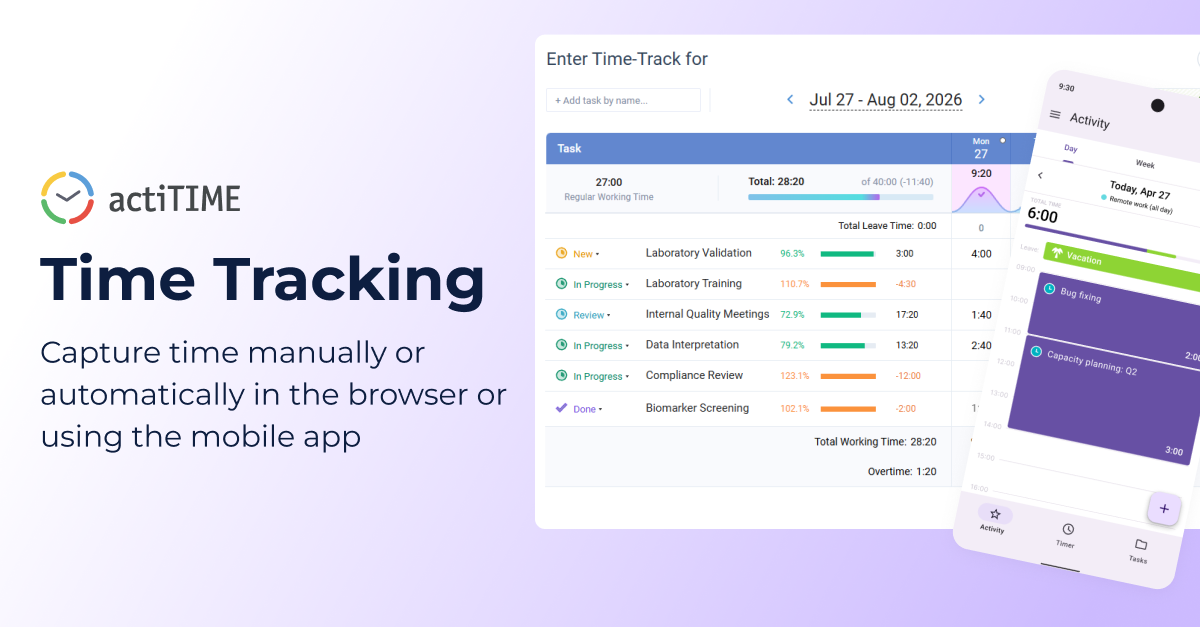
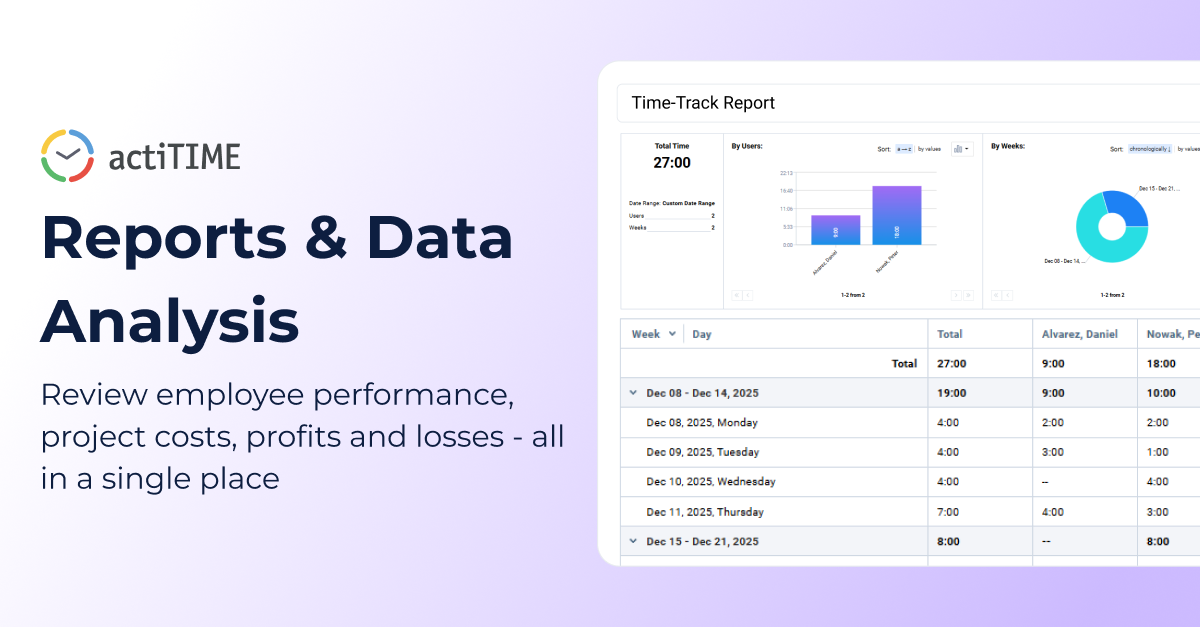
actiTIME, from Canadian company Actimind, is time-tracking software.
$7
per month per user
Redmine
Score7.2 out of 10
N/A
Redmine is a project management web application written using the Ruby on Rails framework. It is cross-platform and cross-database, and free to download and use as an open source project available on the GNU 2.0 license.
$0
per month
Pricing
actiTIME
Redmine
Editions & Modules
actiTIME Free (up to 3 users)
$0
per user per month
actiTIME Online (41-200 users)
$6
per month per user
actiTIME Online (1-40 users)
$7
per month per user
actiTIME Self-Hosted
$120
user
actiTIME Online (200+ users)
Fixed Cost
for unlimited users
No answers on this topic
Offerings
Pricing Offerings
actiTIME
Redmine
Free Trial
Yes
No
Free/Freemium Version
Yes
Yes
Premium Consulting/Integration Services
Yes
No
Entry-level Setup Fee
No setup fee
No setup fee
Additional Details
Three different actiTIME versions are available:
- actiTIME Free is online software for teams of up to three users with basic time-tracking functionality.
- actiTIME Online is full-featured online software with free regular product upgrades starting at $7 user/month.
- actiTIME Self-Hosted is software that you install on your own servers and purchase with a one-time payment.
—
More Pricing Information
Features
actiTIME
Redmine
Project Management
Comparison of Project Management features of actiTIME and Redmine
Feature
actiTIME
-
Ratings
Redmine
8.2
13 Ratings
7% above category average
Task Management
00 Ratings
10.013 Ratings
Resource Management
00 Ratings
7.012 Ratings
Gantt Charts
00 Ratings
9.012 Ratings
Scheduling
00 Ratings
7.011 Ratings
Workflow Automation
00 Ratings
10.09 Ratings
Team Collaboration
00 Ratings
10.012 Ratings
Support for Agile Methodology
00 Ratings
6.910 Ratings
Support for Waterfall Methodology
00 Ratings
8.010 Ratings
Document Management
00 Ratings
10.011 Ratings
Email integration
00 Ratings
8.010 Ratings
Mobile Access
00 Ratings
5.59 Ratings
Timesheet Tracking
00 Ratings
9.011 Ratings
Change request and Case Management
00 Ratings
7.012 Ratings
Budget and Expense Management
00 Ratings
7.011 Ratings
Professional Services Automation
Comparison of Professional Services Automation features of actiTIME and Redmine
ActiTime is a perfect program for managing payments and expenses within the company. It is an ideal tool to manage the activity of employees and the time they devote to their daily tasks within the company. ActiTime is undoubtedly recommended for its excellent performance in generating reports and the quality of its production. If anything could improve this tool it is its interface as it has become a bit outdated.
A de minimis incentive was given to thank the reviewer for their time. The incentive was not used to bias or drive a particular response, nor was the incentive contingent on a positive endorsement. More Info
Redmine is a perfect solution for businesses that are looking for a FREE and open source solution for project management. It is great for teams that are managing numerous tasks or projects at one time. Redmine is easy to set up and is fairly self-explanatory for anyone who is semi tech-savvy.
A de minimis incentive was given to thank the reviewer for their time. The incentive was not used to bias or drive a particular response, nor was the incentive contingent on a positive endorsement. More Info
A de minimis incentive was given to thank the reviewer for their time. The incentive was not used to bias or drive a particular response, nor was the incentive contingent on a positive endorsement. More Info
A de minimis incentive was given to thank the reviewer for their time. The incentive was not used to bias or drive a particular response, nor was the incentive contingent on a positive endorsement. More Info
A de minimis incentive was given to thank the reviewer for their time. The incentive was not used to bias or drive a particular response, nor was the incentive contingent on a positive endorsement. More Info
The design and user-interface are a little outdated. It looks like a product that was designed ten years ago and doesn't have a polished look and feel like newer apps have.
It's not particularly designed to support agile-based project management methodologies such as Scrum.
A de minimis incentive was given to thank the reviewer for their time. The incentive was not used to bias or drive a particular response, nor was the incentive contingent on a positive endorsement. More Info
Redmine is a great product to have in an organization. It's extremely flexible, costs much less to maintain than other alternatives, and as a tool, it is relatively fast to get experienced with. The primary advantages of working with Redmine are: flexible platform, API, open-source and highly configurable, stability.
A de minimis incentive was given to thank the reviewer for their time. The incentive was not used to bias or drive a particular response, nor was the incentive contingent on a positive endorsement. More Info
It has quality support, solving any problem quickly, and clarifying any doubt that arises. It works very well and has quick and detailed answers, the quality of service in this sense is impeccable. ActiTime offers an online chat by which you can solve most of the problems almost immediately.
A de minimis incentive was given to thank the reviewer for their time. The incentive was not used to bias or drive a particular response, nor was the incentive contingent on a positive endorsement. More Info
Redmine is free, easy to use and it's everything you could want in a free project management program. The fact that it has wiki integration and that it can track on such a granular level is amazing. Assigning tasks to other users, such as our development team, is fantastic and ensures we are always up-to-date on where we are what - on what projects.
A de minimis incentive was given to thank the reviewer for their time. The incentive was not used to bias or drive a particular response, nor was the incentive contingent on a positive endorsement. More Info
A de minimis incentive was given to thank the reviewer for their time. The incentive was not used to bias or drive a particular response, nor was the incentive contingent on a positive endorsement. More Info
Jira is a great project management tool for software product life cycle management for an agile environment based on agile methodologies. Jira is an intuitive and modernized user interface design compared with Redmine but Redmine is a lightweight and affordable project management and task tracking solution with its essential features and functionalities.
A de minimis incentive was given to thank the reviewer for their time. The incentive was not used to bias or drive a particular response, nor was the incentive contingent on a positive endorsement. More Info
It allows us to take the process and the expenses made in each project, and these give us the possibility to choose the correct budget for what we are doing.
This application does not give the ease of knowing that the payments will be made to different employees without any complication, generating reports that justify the hours of work they did.
A de minimis incentive was given to thank the reviewer for their time. The incentive was not used to bias or drive a particular response, nor was the incentive contingent on a positive endorsement. More Info
Customers receive updates on all progress made for their issues -- this results in an informed customer who is being given transparency on all steps of our process.
Customers have responded well from being able to not have to track down emails and instead come to a central place for requests.
A de minimis incentive was given to thank the reviewer for their time. The incentive was not used to bias or drive a particular response, nor was the incentive contingent on a positive endorsement. More Info