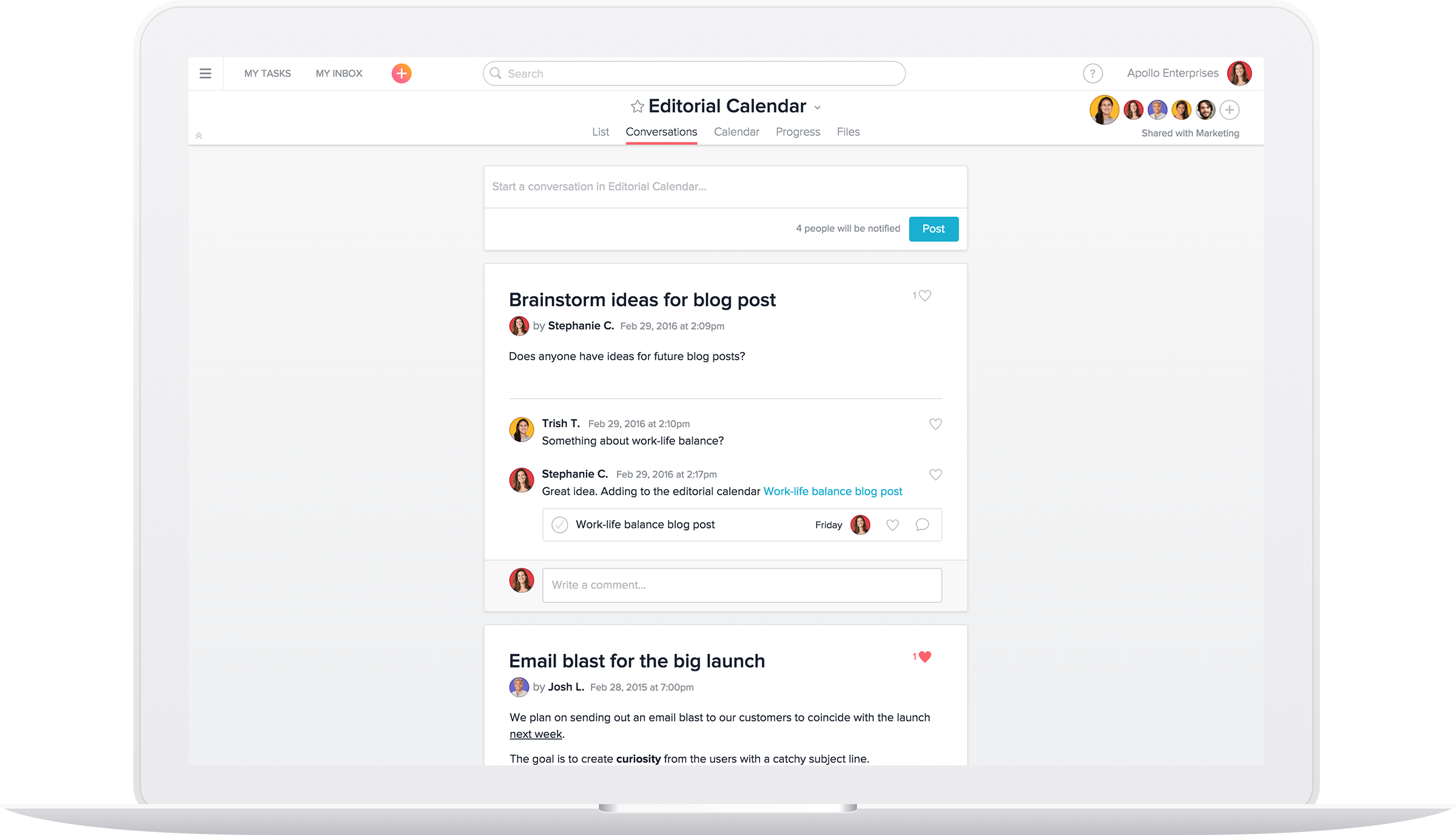
Asana is a web and mobile project management app. With tasks, projects, conversations, and dashboards, Asana lets an entire team know who's doing what by when, enabling workload balancing. Users can also add integrations for GANTT charts, time tracking and more.
$13.49
per month per user
ClickUp
Score 8.6 out of 10
Small Businesses (1-50 employees)
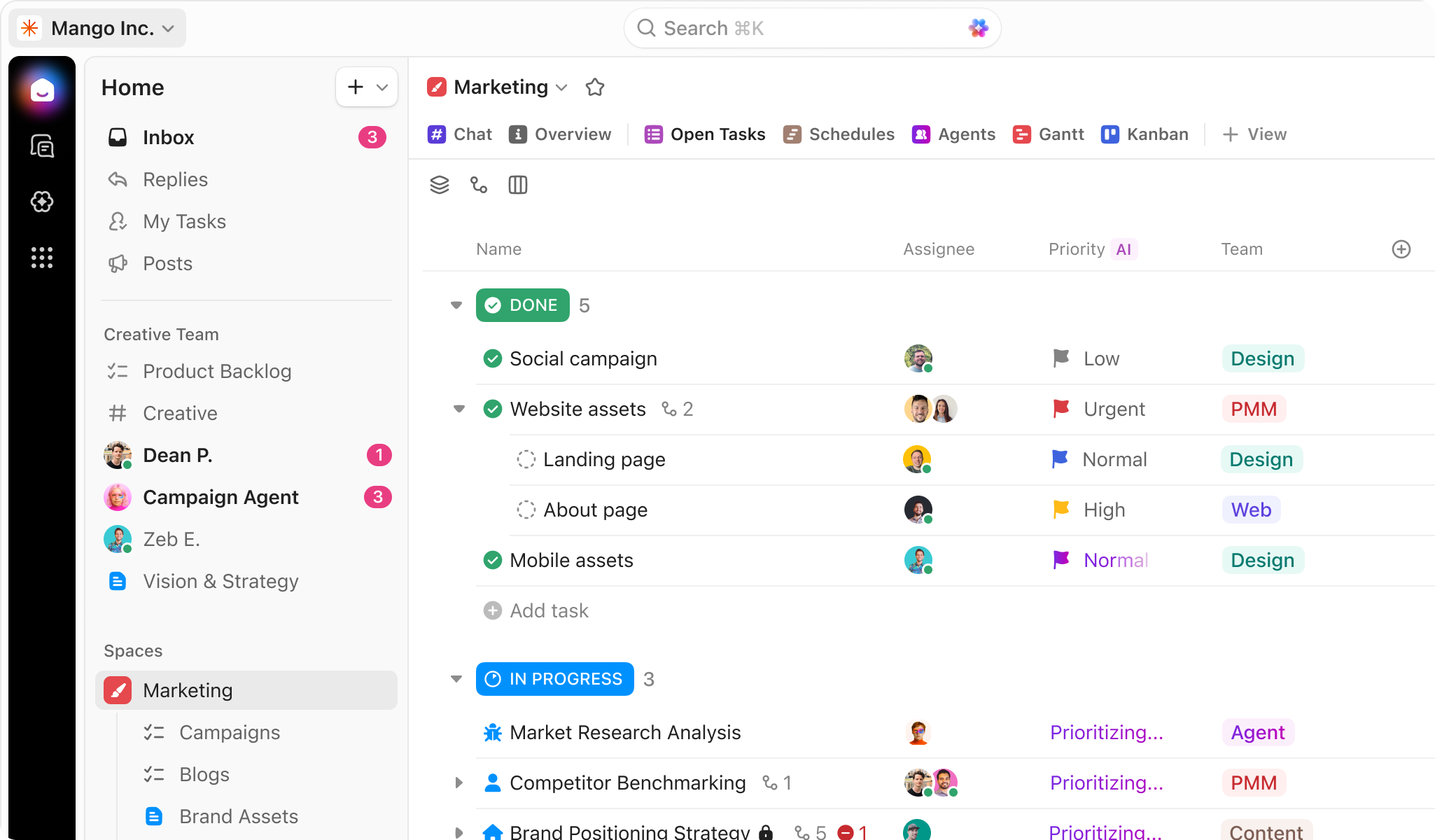
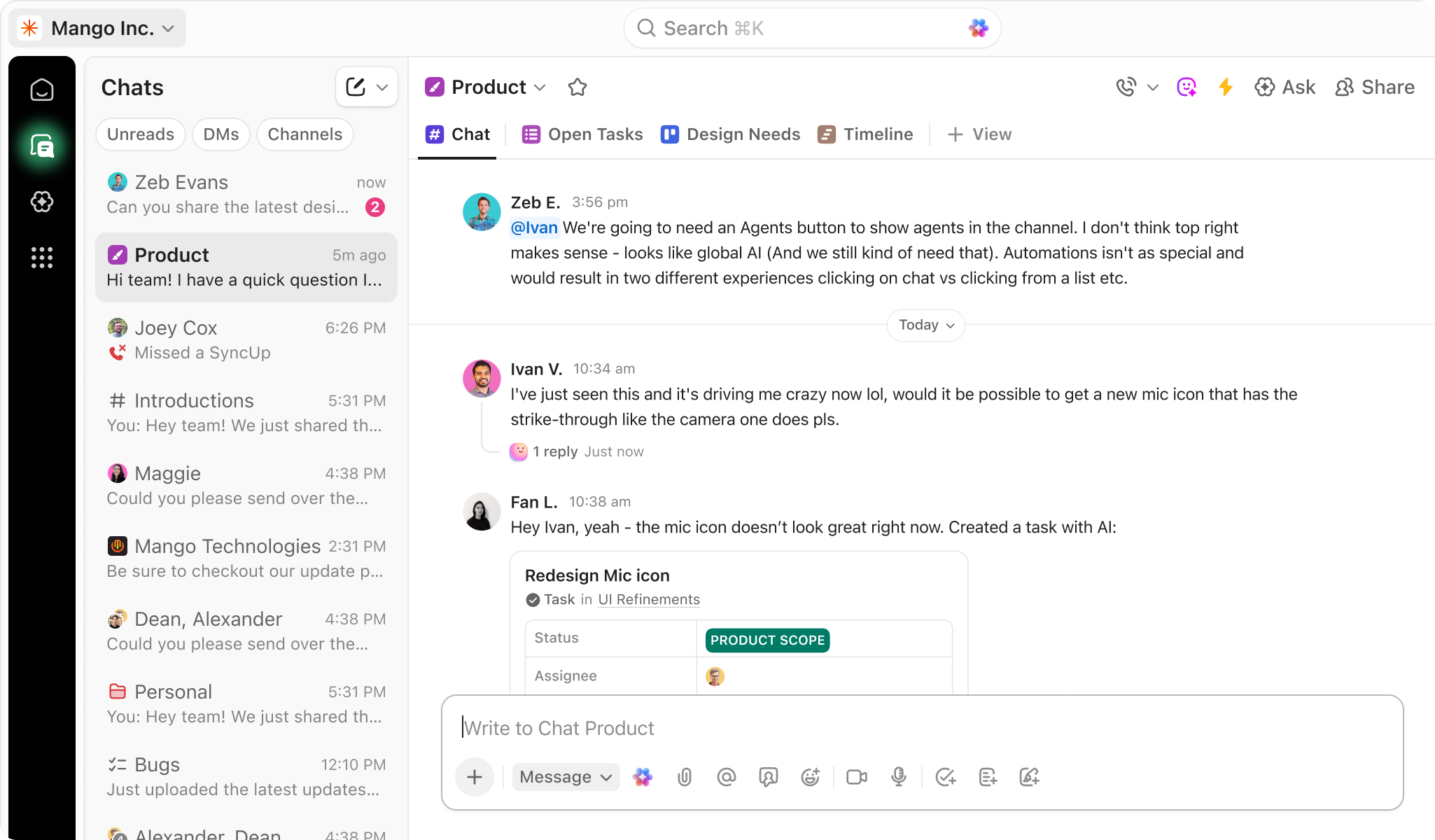
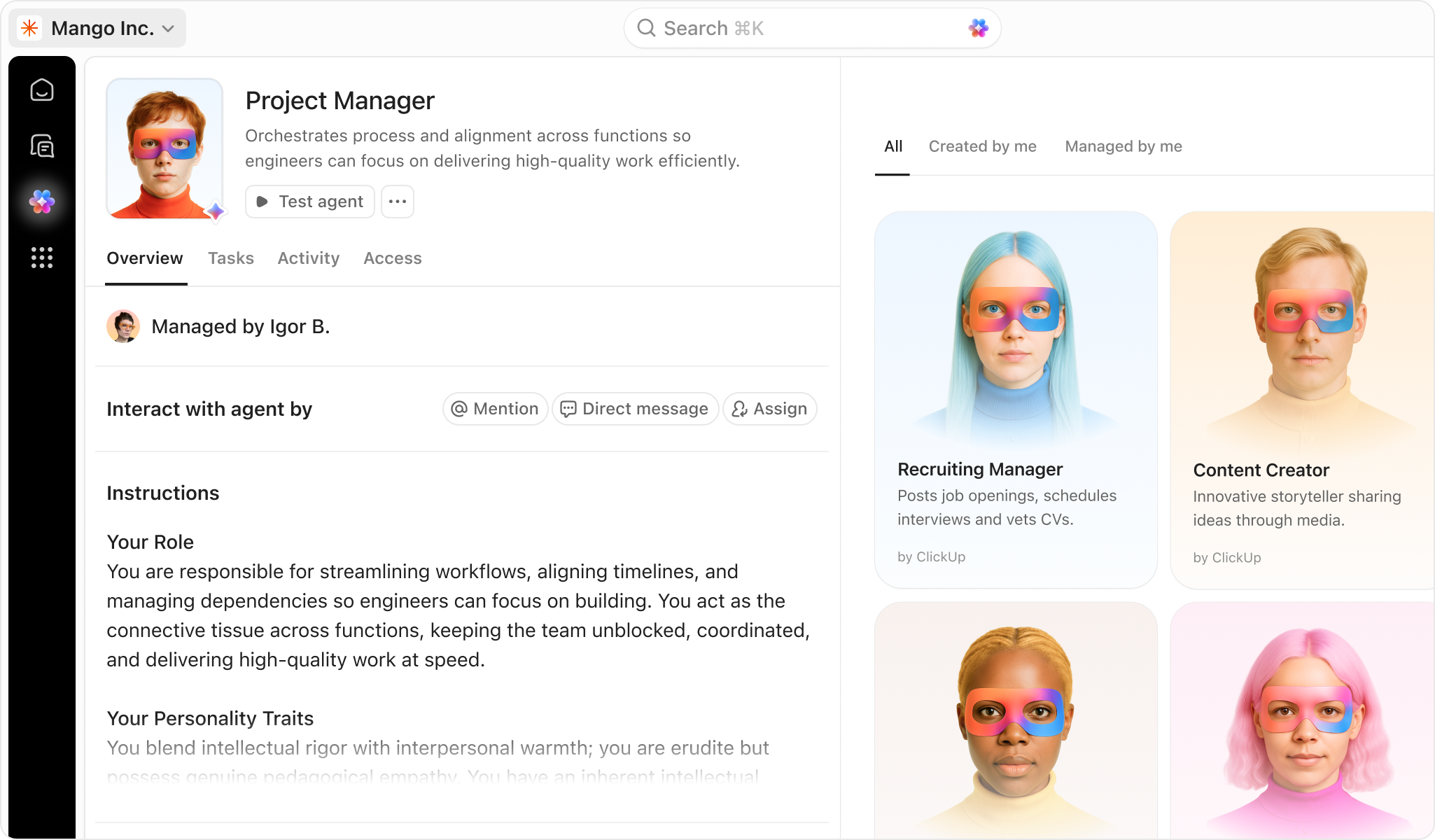
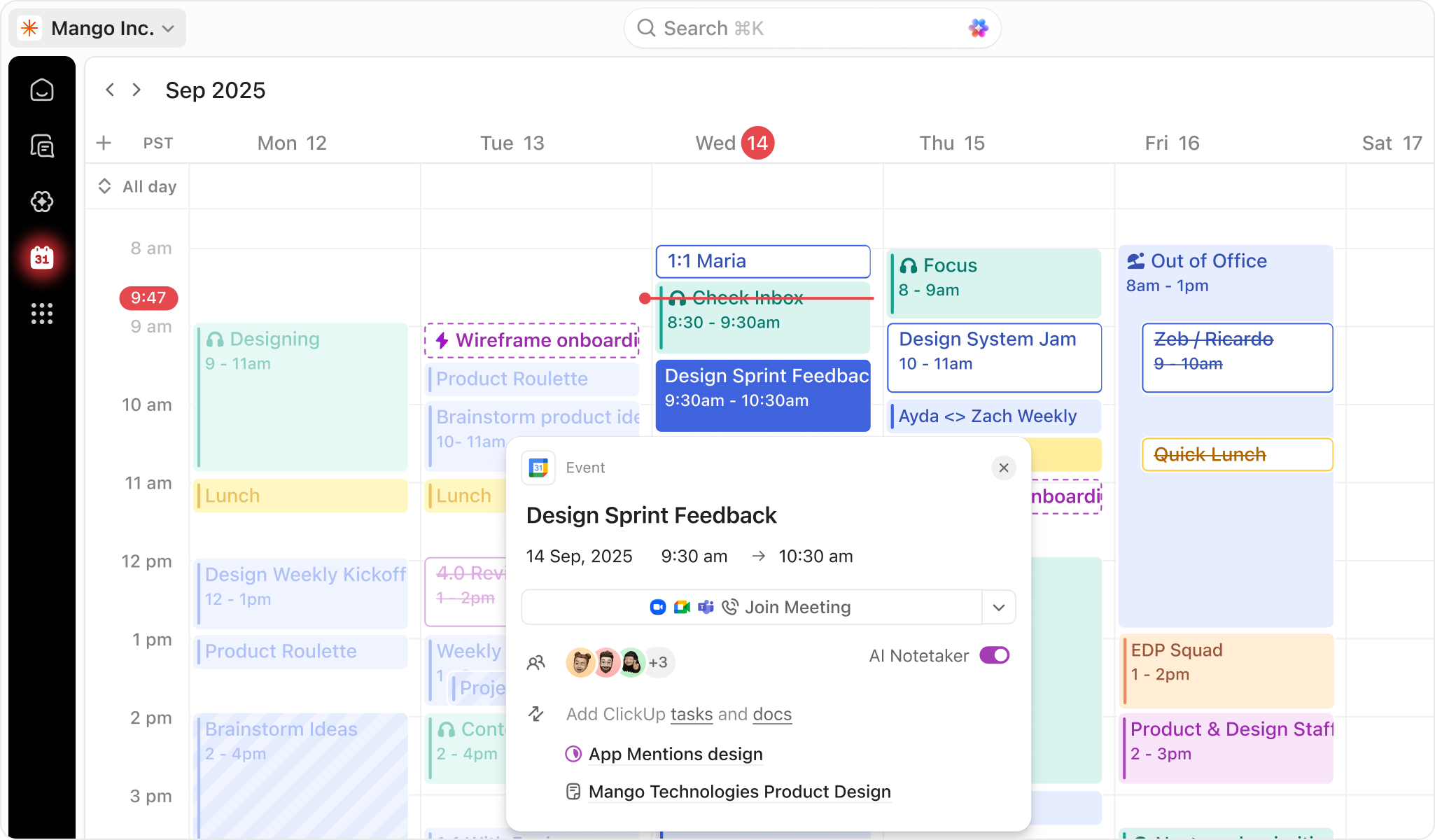
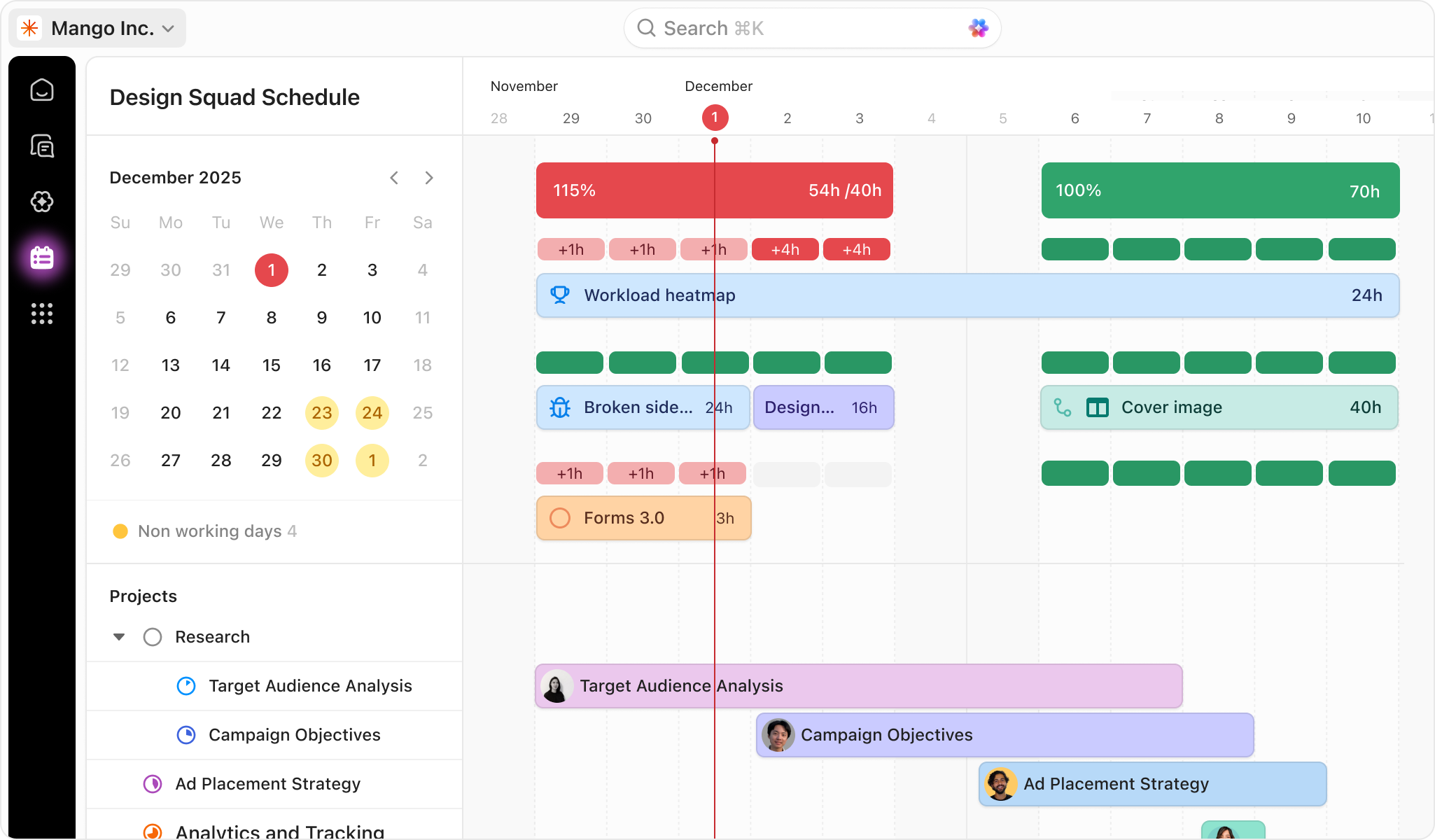
ClickUp is a productivity platform that brings together work apps, data, and workflows. Also presented as a Converged AI Workspace, ClickUp eliminates work sprawl to provide context and a single place for humans and agents to work together. The platform currently boasts over 20 million users worldwide.
$0
per month per seat
Quickbase
Score 8.6 out of 10
N/A
Quickbase helps users tackle any project, no matter how complex. Quickbase helps customers see, connect and control complex projects. Whether it’s raising a skyscraper or coordinating vaccine rollouts, the no-code software platform allows business users to custom fit solutions to the way they work – using information from across the systems they already have.
$700
per month
Pricing
Asana
ClickUp
Quickbase
Editions & Modules
Starter
$13.49
per month per user
Advanced
$30.49
per month per user
Enterprise
Contact Sales
Personal
Free
Unlimited
$10
per month per user
Business
$19
per month per user
Enterprise
Custom
Enterprise
Full Customizable
per month/billed annually
Business
Starting at $2,200
per month
Team
Started at $700
per month
Offerings
Pricing Offerings
Asana
ClickUp
Quickbase
Free Trial
Yes
Yes
Yes
Free/Freemium Version
Yes
Yes
No
Premium Consulting/Integration Services
Yes
Yes
Yes
Entry-level Setup Fee
Optional
No setup fee
Optional
Additional Details
A discount is offered for annual billing.
Discount available for annual billing.
Quickbase offers three key plans, with feature distinction, simple and consistent entitlements, and a flexible licensing model, giving users the option of either user based or usage based licensing across all 3 plans.
Cost and the lowest ramp-up time is always factored in while still meeting the needs of a very fast-paced environment. Asana has more capability than Trello or ClickUp and is a more visual tool than JIRA.
Asana generally takes less time to set up, so for my small team that has limited experience working with project management tools, Asana is great. We didn't need anything with lots of bells and whistles so Asana works well. ClickUp takes much more time to set up initially, but …
Side by side with the other two Asana by far beats monday.com and is comparable and slightly better than ClickUp. Monday is completely browser-based and is hard to navigate and figure out how to set up. Asana and ClickUp are the exact opposite. Both are easy to set up and …
Verified User
Manager
Chose Asana
For us, ClickUp was only implemented by department whereas Asana was implemented organization wide.
Asana is a top-tier project management software that helps us organize and track projects from start to finish. It allows us to apply tasks/to-dos to multiple projects without duplication, divide complex projects into smaller tasks, and track project progress. It also helps us …
Asana has a clean interface and is great for basic task management, but it lacks depth in custom workflows, advanced automation, and built-in documentation. ClickUp allows us to customize everything.
Jira is eccellent for technical teams, especially in software development, but …
Jira is a product that was once very good, but it became too "heavy" to use, many of its tools were not useful to me at the time and only caused me noise. On the other hand, Trello is very basic for the number of tasks, relationships and objectives of our organization, it is …
The main reason I initially chose ClickUp over all of the others was price. Because we are a small nonprofit, our funds for this were basically $0. So the robust free version of ClickUp really sold me. Once I got in there and worked with it, I realized just how valuable this …
ClickUp has more features integrated and well organized. Especially the concept of having Spaces, folders and lists helps a lot in organizing the projects and each having its own workflows.
ClickUp had a more all-in-one solution for all the issues we have been trying to solve at the agency as well as an integration into our finance system (NetSuite) which helped adoption by our finance team.
ClickUp is more visual and user-friendly, and also has the best customer service and webinars. The attention to clients is a huge differentiation between tools. The webinars are my favorite thing as they provide information, feature updates, and free templates.
ClickUp allows for a lot more customization, so power users will be happy. But with a lot of customization comes more options, so users have to be wary when setting up projects to not overcomplicate them.
Verified User
Project Manager
Chose ClickUp
Harvest doesn't have a lot of the tools which ClickUp does.
Every other tool I have used has been for organizing tasks and work only. There were some of the other features, but none of them had the ability to do everything we need to manage a project from start to finish.
I still use both. ClickUp is a little "bigger" and has some more tunning over details. When someone ask me about which to choose, my answer is "you must try them"... start using both and you'll find the best using them and asking users how they feel.
I walked away from so many other products that I tried primarily because I wanted to have a task and productivity tool that allowed me to re-envision my 'data' at the task level. I wanted to be able to have Gantt views and dashboard views and then dive in deeper with comments …
Verified User
Team Lead
Chose ClickUp
It combines them all with a user friendly interface and a really nice workflow. It keeps work in as less places as possible which makes it easy for new colleagues.
Verified User
Director
Chose ClickUp
ClickUp has the best UX by far. It also has the most necessary features and the fewest unnecessary features.
All of them are based on activity management, however ClickUp stands out in several areas: integrations with other tools, management of several spaces simultaneously through views/dashboards, the vast majority of the tools listed do not allow me to have visibility of everything …
Verified User
Manager
Chose ClickUp
ClickUp is by far the most easy to use, superb interface and functionality. The notifications are far superior too.
The best feature of ClcikUp over others is it's customization as well as hierarchy. Departments, clients, operations become easier to manage if the hierarchy is setup in a good way that can allow your business scale without altering it repeatedly. Customization is another …
Verified User
C-Level Executive
Chose ClickUp
Much more flexible and complete, you can shape it for your liking.
ClickUp can be very simple, yet very advanced. That helps us get started while providing something we can grow into as well, to avoid a future switch again.
Because ClickUp simply aggregates all the best features from all those solutions.
Verified User
Director
Chose ClickUp
ClickUp was the best option for us given its low price, ease of use, and clean appearance. We moved from Zoho Projects, which was functional, but required advanced development knowledge to fully customize. Zoho Projects also was not as attractive or easy to use as ClickUp has …
Quickbase
Verified User
Project Manager
Chose Quickbase
I have used Asana to help manage projects, but it doesn't have nearly as many features or customization options as QuickBase does. I selected QuickBase over Asana because there are so many different ways to track projects, and you can use it for just about anything. Asana …
I used Asana for project management, which is a bit different than how I'm using Quick Base. Asana has better UI/UX-- I think a bit more intuitive and pleasing interface. This is not a deal-breaker, and nice to have but honestly, it's nice. Also, I'm using the free version of As…
Quickbase stacks up against them because it's speed of delivery is not only important for development but also for true change and lifetime, which are remarkable tools.
QuickBase is more versatile but less polished. My users really like "pretty" and "fast" user interfaces with live updates, which Google Sheets can provide. Google Sheets is my primary competitor internally vs. QuickBase due to the live updates. QuickBase does not really work …
The usability of Asana is broad since it's available in a variety of platforms that are widely used nowadays. I think that it would be great for people who are constantly on the move and switching devices, since it has allowed me to work from my phone, too. I also think that Asana has proven itself to handle a large quantity of work
My team and I use ClickUp to manage program implementations, volunteer recruitment and communication, in-house event management, invoice tracking, and team task management that requires input and communication among multiple members, as well as individual tasks. We use the team Spaces so everyone can see where each project is in its process and dependencies to let others know when the next step is ready to be done. I use it for personal goal setting and achievements.
I no longer think that Quickbase is the way of the future. They do not fix major bugs in a timely manner, and are releasing basic functionality behind a paywall. I believe that Enterprise Level Tier should be given certain things, like SLAs on Support and up-time. However, as a low-code no-code platform the majority of the accounts, "builders", and users are not going to be able to justify the cost of an Enterprise Tier Plan, and won't be able to use the features that Quickbase continues to advertise.
Through it, we were able to communicate and cooperate with the rest of the team to complete the work in the required manner and at the appropriate time.
I'd like to see a link on email notices that take you directly into said notice. On an app that only has 1 or 2 email notices firing, there's no issue. However, we have some tools that are so complex that they have about 20 email notices firing at any given time based on the action users take. In this case, if we have to go in to modify a notice, we have to guess or scroll down the long list of notices to see which one we need to customize. It would be great if Quickbase had the URL of said notice somewhere at the footer of that notice so when Administrators click on it, it takes them into the exact notice they need to update.
When filling out or reviewing a lengthy form, I'd like to see the Save & close button, as well as a Save & next option at the bottom of the form rather than having to scroll back up to the top of those forms just to click on those choices.
It has been a game-changer in terms of project tracking, as animation is a demanding product that requires multiple layers of analysis, revisions, tracking, scheduling, etc. ClickUp simplifies many approvals as anyone can easily add items, and you can tag the people who need to look at them.
For our use-case of QuickBase, there really aren't any other products out there that can offer us the same out-of-the-box solutions they provide to us. We're also so integrated with it in our daily processes that to move away from it abruptly would cause mass chaos, so it's going to be renewed for at least the next several years.
It is very user-friendly. Takes a new employee an hour to start figuring out how the system works. That's an important factor. You don't want to encounter the issue where employees need a week to understand how the system works. For example, JIRA, I tried using it for a week and I still don't understand the complicated layout. Asana has a simple interface. Once you see it, you get it type of program.
Far easier to use than any other PM tool. ClickUp is incredibly intuitive and had us saving time and energy within the first week of implementation. In my opinion, PM software should make it easier to focus on the deliverables - it shouldn't take all your time and energy to learn how to use the tool in the first place. ClickUp is a user-friendly tool that actually helps us focus on what's important.
Quick Base has done everything we have asked it to do and then some. Our original goal was to have one system for CRM that encompassed both the sales process and the customer management. We have gone w-a-y beyond that with analytics, project management, system bug logging, and historical effort reporting.
For over a year ClickUp was unavailable to us just twice for a couple of hours. I would say for a system this big and working globally that was a minor issue. They managed to fix all the issues within a couple hours and then it was back up and running perfectly fine.
Once we did get Quick Base configured and customized it was reliably available when we needed it. We may have had one or two occasions when the product was inaccessible but those were few. The greatest challenge with its availability was its difficulty with integrating with our systems.
The speed of ClickUp is average to be honest. This is one of the biggest flaws of the system, sometimes it's also lagging a little bit but we also have a lot of documents, lists etc. on our workspace. However, with the next version of ClickUp I've seen they are planning to increase the speed by almost 500%, probably by changing the technology, so I am more than looking forward to it.
Some of our tables that hold over a million records are starting to perform poorly, with some summaries taking over 20 seconds to load. This may be an indication that it is best to archive old data when reaching large volumes like this.
I haven't had to use their support so I can't rate it. The fact that I haven't needed them reflects the ease of use of the product. I would recommend that any new users schedule a complete demo of the product to ensure that they are using it to it's fullest (there's a lot of useful features).
I started using ClickUp when it was what most would consider a baby company. There were the occasional bugs that made working in ClickUp a little bit of a headache, but the support feature allowed me to chat with a real persona and communicate my issues. I would always get prompt support and someone willing to really help me, not just point me to FAQ pages. Not feeling like a number really makes a difference.
If you utilize the community, the support is amazing. Unfortunately, I find their actual support system a bit underwhelming. They don't seem to have a great process for interacting directly with an issue and often sweep significant issues under the rug by categorizing them as "Enhancement" ideas or legacy items.
There are multiple guides on literally all of the functions you can find within the system, therefore it's easy to learn anything you'd really like to use, starting from project and people management, down to Gantts, mind maps, time tracking, inviting Clients as guests to work with you on the projects and so much more.
Quick Base already is having a separate portal of providing training to customers and it is very easy to use and updates as per the new features added in to the application
Start small. Don’t try to build the most elaborate plans first. Resist the urge to get into Gantt charts if no one is used to them. Just get work written, add dates and assignees, and start getting used to it. If you did not use a work management tool before, you need to be gracious with yourself about the fact that you likely do not have the muscle memory for working this way yet. But you will get there.
And leverage people who know it if possible. Look for ClickUp experts and vendors. They can really supercharge your effectiveness at building the tool out and speed up the process.
I was not directly involved with the initial account implementation, only a bystander. For the app I directly implemented for my department only, I wish I had know to create an app diagram first. I don't remember if that was suggested. I think that would be a great help tip tool when a new app is created, to have a page with a check list of what is needed or how to get started. If you are a regular app builder, then you can bypass it or have the ability to turn it off in the app settings.
Asana is a top-tier project management software that helps us organize and track projects from start to finish. It allows us to apply tasks/to-dos to multiple projects without duplication, divide complex projects into smaller tasks, and track project progress. It also helps us organize work on Kanban boards or linear lists. It stands out from the crowd in a big way compared to the competition.
It’s far better than Slack. However, I found Monday mobile app much better and they have a good CRM. I chose ClickUp because it was already being used my the company who invested in us and they asked us to use it. We quickly adopted
Well, there's a plethora of low-code tools out on the marketplace and, you know, there's a reason that we've decided to partner with QuickBase because it has all the right balance of the ability to integrate with the ability for a citizen developer to create apps successfully. So if you look at something like Zo Ho's low-code offering, for example, yes, there are some similarities there, but they're really dependent on all of their other licensed products to get you where you want to be, where with QuickBase you have the ability to truly create something custom.
Scaling with ClickUp is superb. If you create a workflow best suited for your organization then it's all about creating new accounts and teaching the new employees the workflow you're using. It's that simple. There is no black magic when it comes to Clickup.
It has evolved really well with our company, but there is a hard limit to the table size that has begun to affect us and not let us grow. The table size limit is set at 500 MB and we have had to jump through quite a few hoops to be able to get by.
Significant reduction in turnaround times on many types of reportable data - as we moved from completely untrackable (manual) data collection to CU, its impossible to give a hard number, but at an estimate we have seen between turnaround times halve overall, some even more significantly.
ROI is HUGE. Our company saved over 3.5 million in one year alone based on developments that year in Quickbase that saved time for many teams
Less user error - implementing automations and standardized workflows has led to less user error as was previously seen by maintaining spreadsheets or Smartsheets