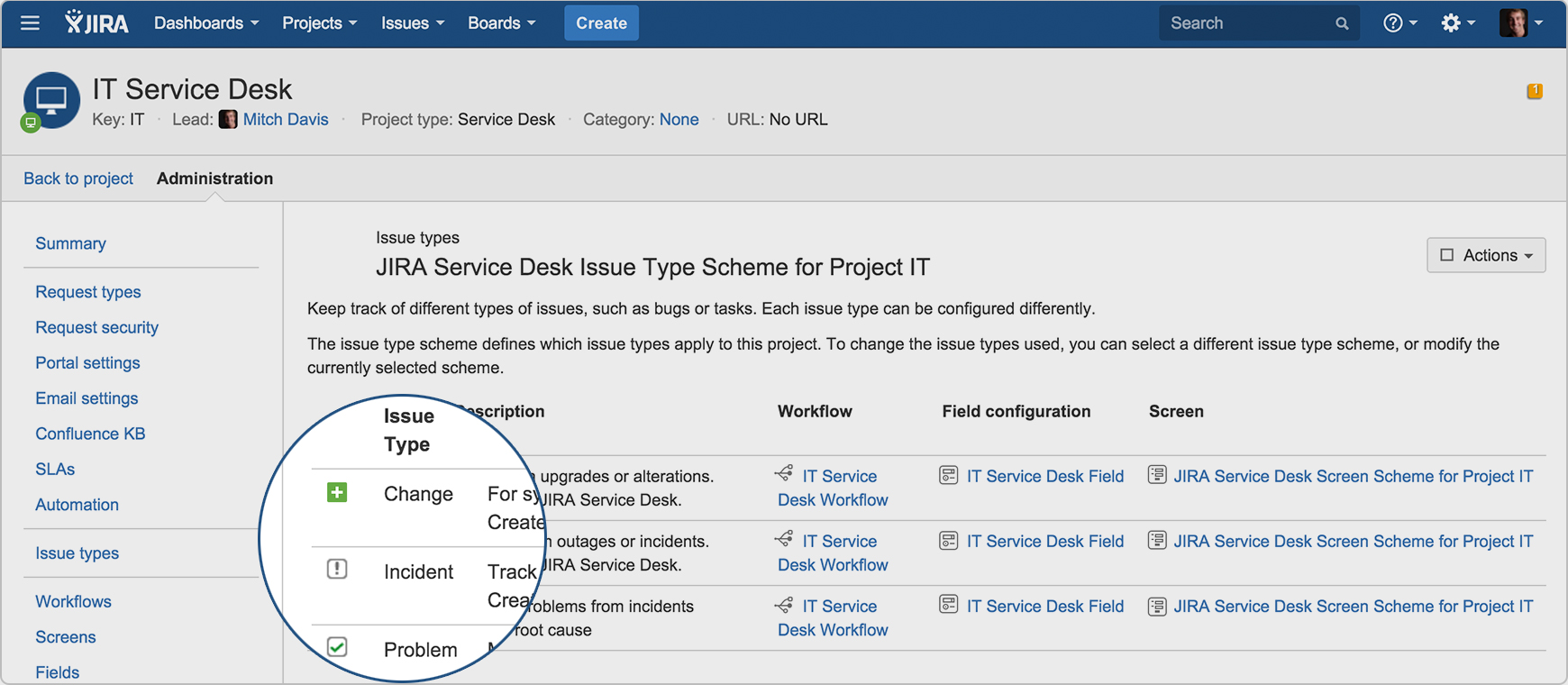
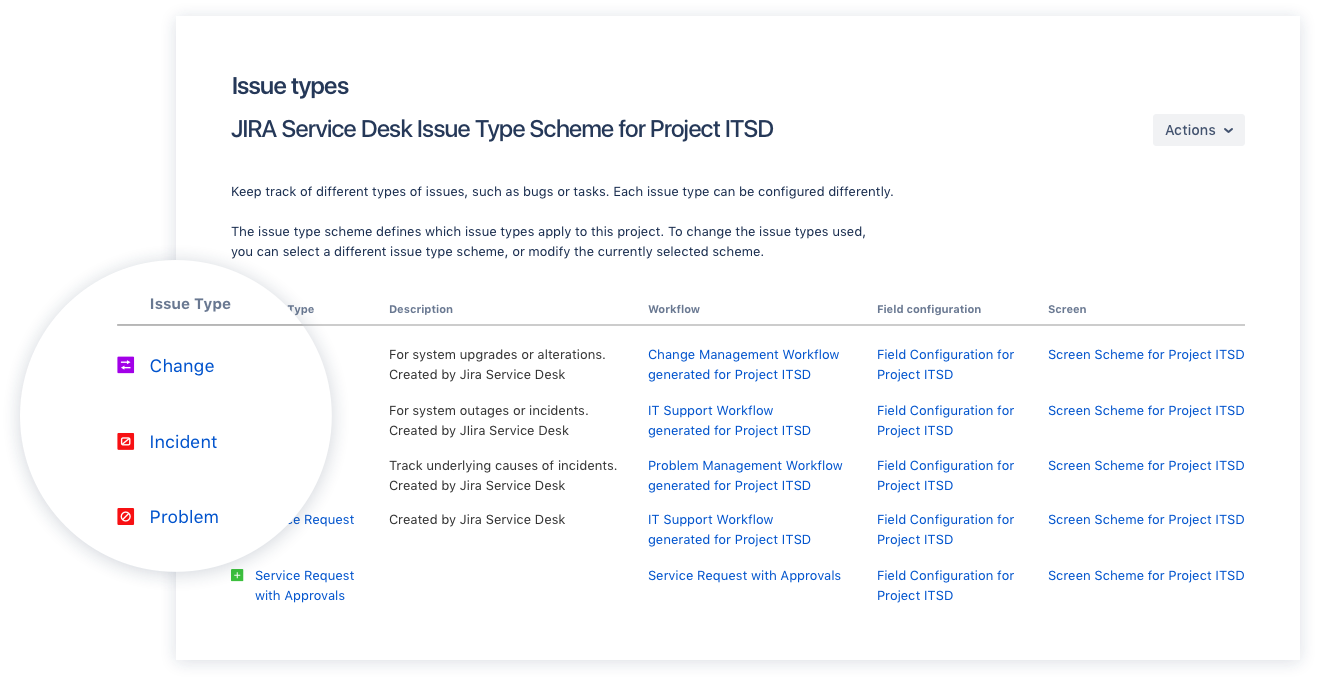
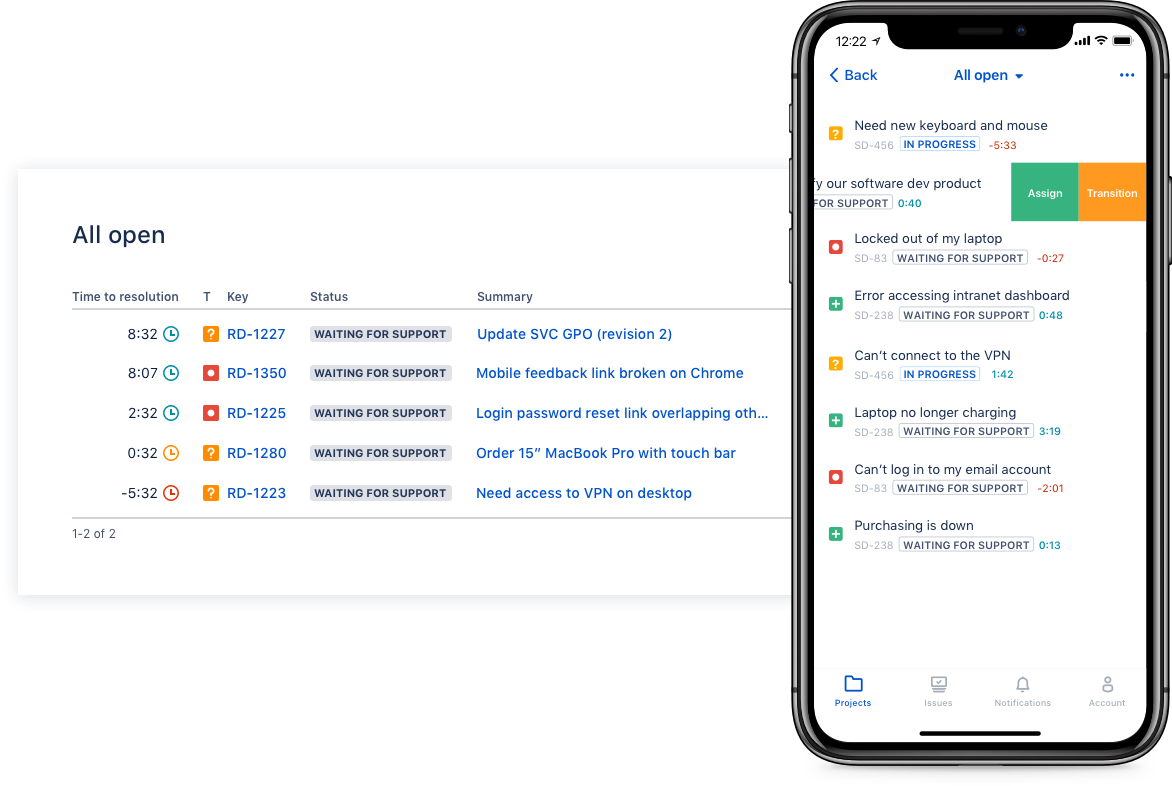
Jira Service Management (formerly Jira Service Desk, now including features from the former Mindville Insight, acquired by Atlassian in June 2020) is a service desk software that is purpose-built for IT, service, and support teams. The software provides everything IT and support teams need out-of-the-box for service request, incident, problem and change management. Jira Service Management integrates seamlessly with Jira Software so that IT and development teams can work better together. Users…
$0
per month
OpenText Dimensions CM
Score 8.0 out of 10
N/A
Dimensions CM is Software Change and Configuration Management for Agile development, developed by Serena Software and now sold by OpenText.
Great to manage your issues in a clear and centralised way. If your development teams work with Jira, it will all naturally come together. Great way to manage the issues from end to end. - Very flexible if you have people who understands the set up and is able to configure it for your needs - Maybe not the best if you want something with very easy set up
Serena CM is well suited to highly controlled, audited, and process driven environments. It will allow strict segregation of duties, and change traceability. If implemented correctly it will help you quickly build trusts with your auditors. It is also well suited to environments that require constant branching and merging. Due to the complexity of the product and learning curve for your development and operations team it may be overkill in a small shop with loose rules
Code Promotion: Dimensions CM allows supervisors to control changes to code, in that they delegate requests to developers, and act as a gatekeeper prior to promoting to the next environment. This functionality is configurable so you can set up a workflow that best fits the structure and requirements of your own company.
Code Repository for changes and versioning: Code can be checked out by item or by synchronizing folders. Code revisions can be compared against other revisions or work files. Item histories show which developers made which modifications, and which supervisor and operations personnel were involved in assigning the request and promoting the code to each environment. Additionally a pedigree will show a stream diagram which graphically displays branches and merges.
Deployment: Serena Change Management offers help automating deployment including integrations with SVN and Jenkins. Its newer versions also have a powerful graphical deployment automation tool (Serena Deployment Automation- SDA). It comes with a certain amount of licenses built-in. If you have a many nodes to deploy to there will be separate licensing costs for that.
Ability to control the number of email notifications received (Note: this is a new feature in the Latest release but I personally haven not extensively looked at it and how well it solves the existing problem).
No way to reply to multiple tickets at once, say you got 4 tickets in for the same issue, there is no way you can reply to them in one stroke. Other Ticketing systems do have this ability.
Using a large number of add-ons to customize and add additional features adds up quickly and can become rather expensive.
Request forms are very basic and there is no native dynamic field ability available.
The only major negative that I have encountered with Serena CM product is that the very power and flexibility of the tool means there is a risk that you will make a mess of things. In other words it gives you plenty of rope to tangle yourself with. I recommend careful, well thought out deployments implementing the built in roles and workflows that can be turned on and configured, using a consistent methodology.
My experience with the Serena help desk support has not been impressive. Though reasonably polite and diligent, the technicians were well trained, and often gave bad advise and terrible scripts. On several occasions I had to rewrite scripts they have me; if I had run them as provided they would have caused even more difficulties than the problem I was trying to solve. I speak of the support in the past tense because I conditioned myself not to call them, it was usually just easier to solve nay problems my self. They do have a good account management team though, and for any major issues you can go thru them.
I gave JIRA a score of 9 since I am happy with the service it offers. I can easily see the SLA since it gives me visibility. I can pull up the reports I need. I can reach out to our clients using the PR ticket so it is hassle-free for me.
I have not used the technical support from Atlassian. In terms of online help and resources, they are a bit limited thus making it more of a challenge to troubleshoot issues and learn more functionality. There aren't a lot of resources available on the Atlassian site besides developer documents. It would be nice to have a blog or forum where users can get the help they need.
When I evaluated Spiceworks, it was not going to be replacing any ticketing systems. However, I did evaluate it and was not extremely impressed by the short demo I did. JIRA was selected because a branch of our company was already using it, so it made sense to consolidate into one service desk solution, and JIRA was the better option since it was less expensive and geared towards being a ticketing system.
Serena CM is superior to Microsoft Team Foundation Server (TFS) in overall functionality, but does not have very good native integration with Microsoft. Therefore in a Microsoft centric shop with no audit needs ,TFS would be better. Otherwise I would choose Serena CM
Serena has facilitated our annual completion of various audit and technology control certifications. These certifications make a huge difference to our company's reputation and bottom line.