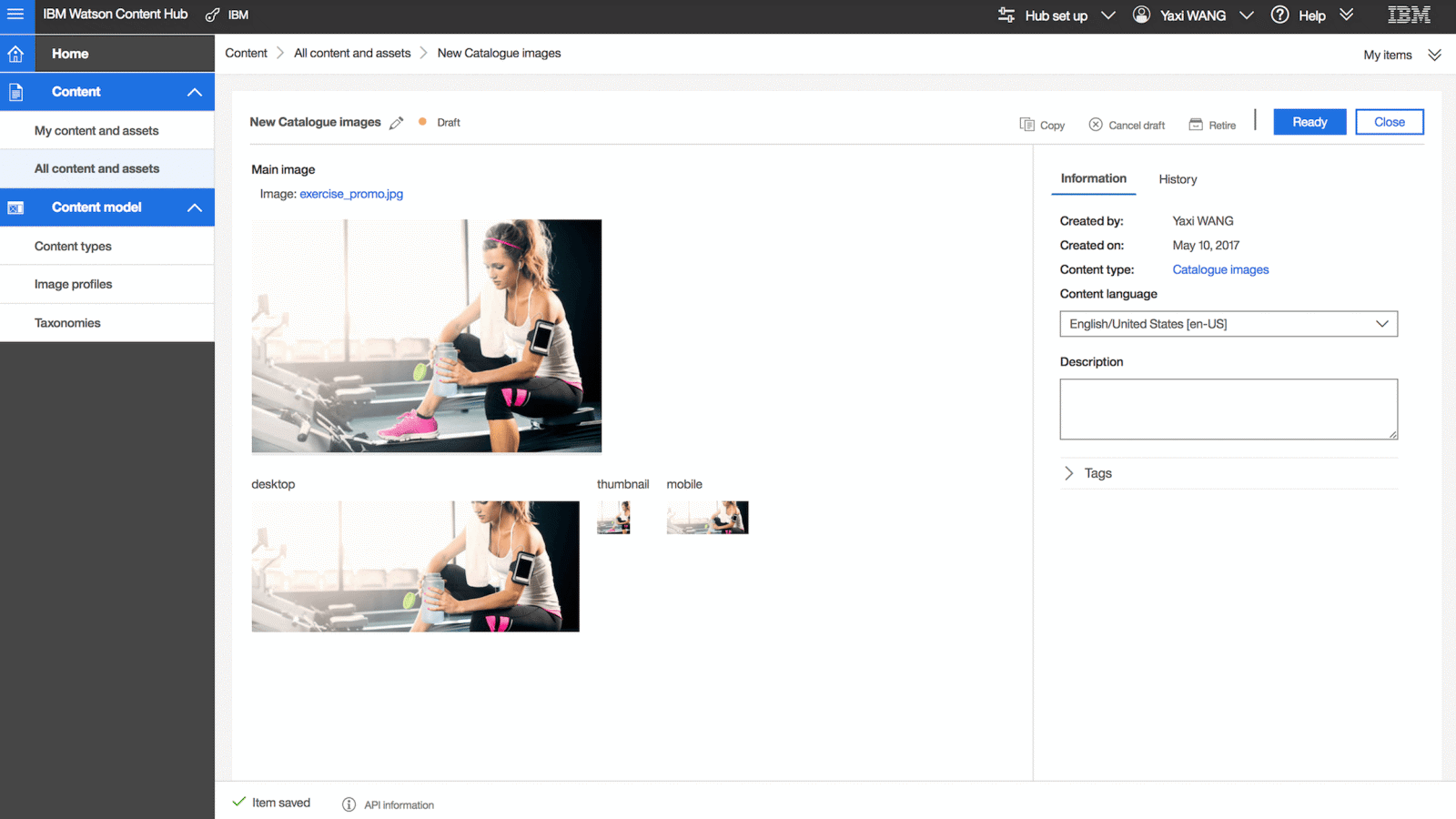
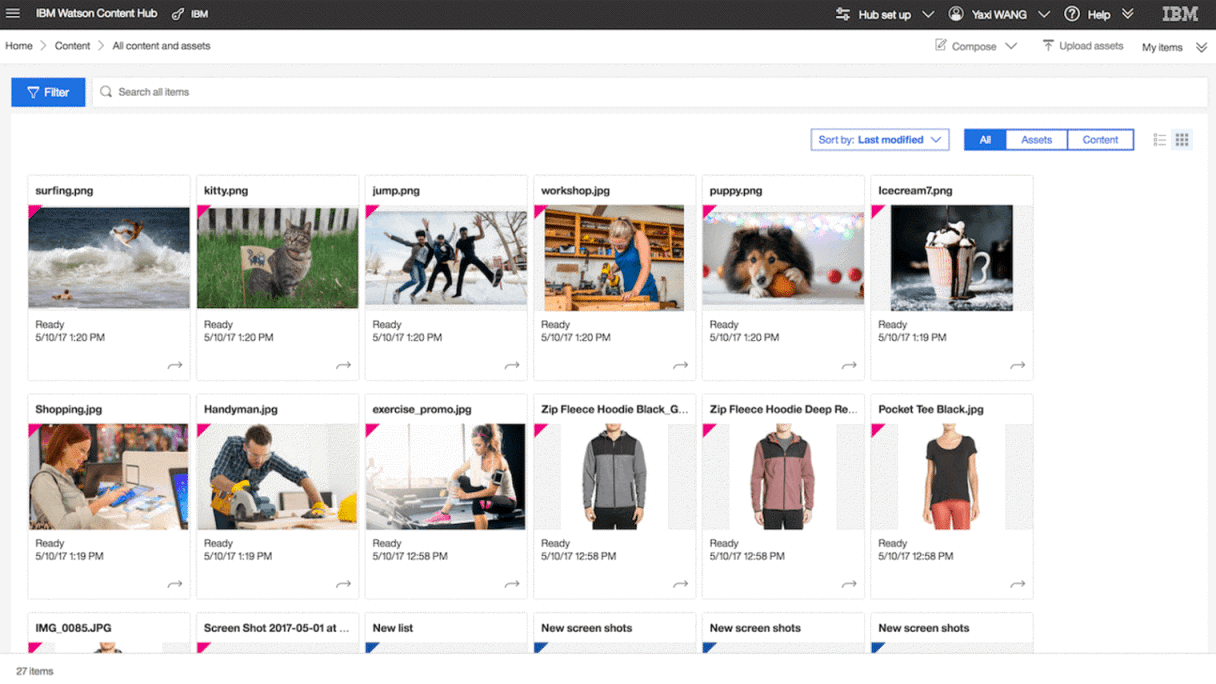
Acoustic Content (formerly Watson Content Hub) gives business owners the power to create, robust and consistent brand experiences using cloud-based, cognitive content management capabilities. Marketing and merchandising professionals can quickly select content to create relevant offers delivered across multiple channels, such as mobile, web-based or email. Acoustic is an independent spun off from IBM Watson Marketing in 2019.
N/A
Movable Type
Score 8.0 out of 10
N/A
Movable Type is a Perl-based content management system from Six Apart, featuring the capability to host multiple weblogs and standalone content pages, manage files and user roles, templates, tags, categories, and trackback links.
N/A
Pricing
Acoustic Content
Movable Type
Editions & Modules
No answers on this topic
No answers on this topic
Offerings
Pricing Offerings
Acoustic Content
Movable Type
Free Trial
Yes
No
Free/Freemium Version
No
No
Premium Consulting/Integration Services
No
No
Entry-level Setup Fee
No setup fee
No setup fee
Additional Details
—
—
More Pricing Information
Community Pulse
Acoustic Content
Movable Type
Considered Both Products
Acoustic Content
Verified User
Anonymous
Chose Acoustic Content
Acoustic Content stands out mainly in 3 areas, Digital Asset Management system AI Based metatags More secure CDN and REST API to share content All these three features play a huge role in Acoustic Content CMS in terms of finding matching images for our content, categorize …
I have never had any experience without IBM applications but I can confirm that compared to other content tools provided by IBM, this is one of the complete packages.
I haven't had experience outside of the IBM applications but can confirm that compared to other content tools provided by IBM, this is one of the more complete packages.
WordPress and Movable Type are the go to CMS for a reason - they are by far the easiest to navigate, learn, and use for daily blogging/content management. And now with more plug-ins available, these CMS products are getting more responsive and are offering capabilities (even …
I've used Joomla! and Drupal. Both are power CMSs but I found it easier to work with Movable Type. Every CMS has its positive and negative points, but I found more benefits to using Movable Type compared to Joomla! and Drupal.
Movable Type is better than Wordpress because it generates static sites that cannot be broken by losing your database connection. The custom fields in MT are superior to Wordpress because of the way the fields are presented in the new content form. You need to get paid plugins …
I believe that these two product are interchangeable for my purposes. I believe WordPress is slightly more complicated and prone to accidents to someone dealing solely with writing like myself; however, this seems to be the hot product right now, and Moveable Type may need to …
Compared to other content management systems that I have used, Movable Type is certainly a top-of-the-line platform. It is my primary choice when building large and intense user-based websites. If I'm building something simple, like a client portfolio website, I may stick with …
Movable Type is outdated and out of style with current blog design trends.
Verified User
Anonymous
Chose Movable Type
Movable Type can be compared to WordPress. It's easy to use, and I would say Movable Type is actually more user-friendly.
Verified User
Anonymous
Chose Movable Type
I have not used any other product except Movable Type for my job needs because this is a fairly new position for me. However, with the positive experiences that I have had with Movable Type thus far, I cannot imagine using another product to meet the demands of my job. I am …
Features
Acoustic Content
Movable Type
Security
Comparison of Security features of Product A and Product B
Acoustic Content
8.4
Ratings
2% above category average
Movable Type
5.0
Ratings
49% below category average
Role-based user permissions
8.40 Ratings
5.00 Ratings
Platform & Infrastructure
Comparison of Platform & Infrastructure features of Product A and Product B
Acoustic Content
8.4
Ratings
8% above category average
Movable Type
6.0
Ratings
26% below category average
API
8.30 Ratings
6.00 Ratings
Internationalization / multi-language
8.40 Ratings
00 Ratings
Web Content Creation
Comparison of Web Content Creation features of Product A and Product B
Acoustic Content
8.6
Ratings
10% above category average
Movable Type
6.4
Ratings
20% below category average
WYSIWYG editor
7.40 Ratings
9.00 Ratings
Code quality / cleanliness
8.30 Ratings
6.00 Ratings
Admin section
8.30 Ratings
8.00 Ratings
Page templates
8.30 Ratings
5.00 Ratings
Library of website themes
9.00 Ratings
3.00 Ratings
Mobile optimization / responsive design
9.00 Ratings
8.00 Ratings
Publishing workflow
9.40 Ratings
9.00 Ratings
Form generator
9.40 Ratings
3.00 Ratings
Web Content Management
Comparison of Web Content Management features of Product A and Product B
It is advisable to create custom designs that call for specific programs and content without giving direct access to those programs. We still have to meet the proposed use case where it should not be used.
For the purpose of simple, day-to-day blogging, Movable Type will get the job done. As I mentioned before, it has an intuitive UI so that most beginners can pick it up and build a simple blog post. But if you're looking for a CMS that will host multimedia content, interactive content, or any "fancy" production that goes beyond paragraphs and bullet points, then I would recommend something different - maybe even a custom CMS for the maximum control over your website's back-end coding. Keep in mind that the CMS does have some quirks and can be finicky, but the support staff is extremely helpful and available.
While it's beneficial to be able to assign administrative rights to a user so they can only post to certain places of a website, I can recall that Movable Type did not inform general users of the types of privileges they had. So, for example, when I knew I needed to make a posting to a certain area, and was unable to do so, I was not informed that I did not have access to make that posting. It would have been helpful for Movable Type to post a message on the screen, saying that I needed more permissions. This was very frustrating, especially when I was on deadline for a newspaper story.
Unfortunately, (or fortunately), I do not recall other negative experiences. I thought it was a pretty clean, friendly interface.
I think there are still improvements to be made. I haven't tapped in to the full functionality of the CMS yet but the rating I give it now is only based on what I've been able to use it for
Acoustic Content stands out mainly in 3 areas, Digital Asset Management system AI Based metatags More secure CDN and REST API to share content All these three features play a huge role in Acoustic Content CMS in terms of finding matching images for our content, categorize and sort our content automatically and finally secure way to publish our content.
Movable Type is better than Wordpress because it generates static sites that cannot be broken by losing your database connection. The custom fields in MT are superior to Wordpress because of the way the fields are presented in the new content form. You need to get paid plugins in order to get that kind of functionality in Wordpress. Most of the templates in MT can be customized with greater control because you're provided with more templates.
Movable Type definitely increased employee efficiency. Having everyone on the same platform to edit multiple websites from system is crucial.
Expanding our website presence was a super simple process with Movable Type. All we needed to do was add another site, destination folder, and we're ready to go.
Having all of our web designers on the same platform helped immensely with communicating information and structuring education for new employees.