Chose ManageEngine OpManager
Very similar product but ManageEngine OpsManager provides a more intuitive interface and it's in general easier to understand and operate.

| Product | Rating | Most Used By | Product Summary | Starting Price |
|---|---|---|---|---|
 ManageEngine OpManager | N/A | ManageEngine's OpManager is network performance monitoring software. | $95 per year | |
 SolarWinds Server & Application Monitor | N/A | SolarWinds Server & Application Monitor (SAM) delivers application and server monitoring capabilities. SAM allows for self-service for easy setup, 1200+ monitoring templates, and customization options, as well as integrate with other SolarWinds products. | N/A |
| ManageEngine OpManager | SolarWinds Server & Application Monitor | |||||||||||||||
|---|---|---|---|---|---|---|---|---|---|---|---|---|---|---|---|---|
| Editions & Modules |
| No answers on this topic | ||||||||||||||
| Offerings |
| |||||||||||||||
| Entry-level Setup Fee | $245 per installation | No setup fee | ||||||||||||||
| Additional Details | — | SAM pricing starts at $2,995. | ||||||||||||||
| More Pricing Information | ||||||||||||||||
| ManageEngine OpManager | SolarWinds Server & Application Monitor | |
|---|---|---|
| Considered Both Products |  ManageEngine OpManager | SolarWinds Server & Application Monitor |
| ManageEngine OpManager | SolarWinds Server & Application Monitor | |||||||||||||||||||||||||||||||||||||||
|---|---|---|---|---|---|---|---|---|---|---|---|---|---|---|---|---|---|---|---|---|---|---|---|---|---|---|---|---|---|---|---|---|---|---|---|---|---|---|---|---|
| Network Performance Monitoring |
| |||||||||||||||||||||||||||||||||||||||
| Application Performance Management |
|
| ManageEngine OpManager | SolarWinds Server & Application Monitor | |
|---|---|---|
| Small Businesses |  NinjaOne Score 9.1 out of 10 |  GitLab Score 8.7 out of 10 |
| Medium-sized Companies |  SolarWinds NetFlow Traffic Analyzer (NTA) Score 9.4 out of 10 |  ManageEngine Site24x7 Score 9.5 out of 10 |
| Enterprises | SolarWinds NetFlow Traffic Analyzer (NTA) Score 9.4 out of 10 | ManageEngine Site24x7 Score 9.5 out of 10 |
| All Alternatives | View all alternatives | View all alternatives |
| ManageEngine OpManager | SolarWinds Server & Application Monitor | |
|---|---|---|
| Likelihood to Recommend | 8.5 (45 ratings) | 8.8 (278 ratings) |
| Likelihood to Renew | 8.0 (3 ratings) | 8.9 (10 ratings) |
| Usability | 9.0 (12 ratings) | 8.6 (29 ratings) |
| Availability | - (0 ratings) | 9.9 (3 ratings) |
| Performance | - (0 ratings) | 6.0 (3 ratings) |
| Support Rating | 8.1 (7 ratings) | 9.0 (21 ratings) |
| Online Training | - (0 ratings) | 4.5 (1 ratings) |
| Implementation Rating | 9.0 (1 ratings) | 4.5 (3 ratings) |
| Configurability | - (0 ratings) | 1.0 (2 ratings) |
| Ease of integration | - (0 ratings) | 4.5 (2 ratings) |
| Product Scalability | - (0 ratings) | 9.9 (3 ratings) |
| Vendor post-sale | - (0 ratings) | 4.5 (2 ratings) |
| Vendor pre-sale | - (0 ratings) | 4.5 (2 ratings) |
| ManageEngine OpManager | SolarWinds Server & Application Monitor | |
|---|---|---|
| Likelihood to Recommend | ManageEngine, A Div of Zoho Corporation Pvt Ltd
| SolarWinds
|
| Pros | ManageEngine, A Div of Zoho Corporation Pvt Ltd
| SolarWinds
|
| Cons | ManageEngine, A Div of Zoho Corporation Pvt Ltd
| SolarWinds
|
| Likelihood to Renew | ManageEngine, A Div of Zoho Corporation Pvt Ltd
| SolarWinds
 Derek Benson IT, Network Administrator |
| Usability | ManageEngine, A Div of Zoho Corporation Pvt Ltd
| SolarWinds
|
| Reliability and Availability | ManageEngine, A Div of Zoho Corporation Pvt Ltd No answers on this topic | SolarWinds
|
| Performance | ManageEngine, A Div of Zoho Corporation Pvt Ltd No answers on this topic | SolarWinds
|
| Support Rating | ManageEngine, A Div of Zoho Corporation Pvt Ltd
| SolarWinds
 Ryhlen Schoeberl System Administrator |
| Online Training | ManageEngine, A Div of Zoho Corporation Pvt Ltd No answers on this topic | SolarWinds
 Joe Parlett Programmer Analyst |
| Implementation Rating | ManageEngine, A Div of Zoho Corporation Pvt Ltd No answers on this topic | SolarWinds
|
| Alternatives Considered | ManageEngine, A Div of Zoho Corporation Pvt Ltd
| SolarWinds
|
| Scalability | ManageEngine, A Div of Zoho Corporation Pvt Ltd No answers on this topic | SolarWinds
Joe Parlett Programmer Analyst |
| Return on Investment | ManageEngine, A Div of Zoho Corporation Pvt Ltd
 Matthias Boehm Head of IT | SolarWinds
|
| ScreenShots | ManageEngine OpManager Screenshots    | SolarWinds Server & Application Monitor Screenshots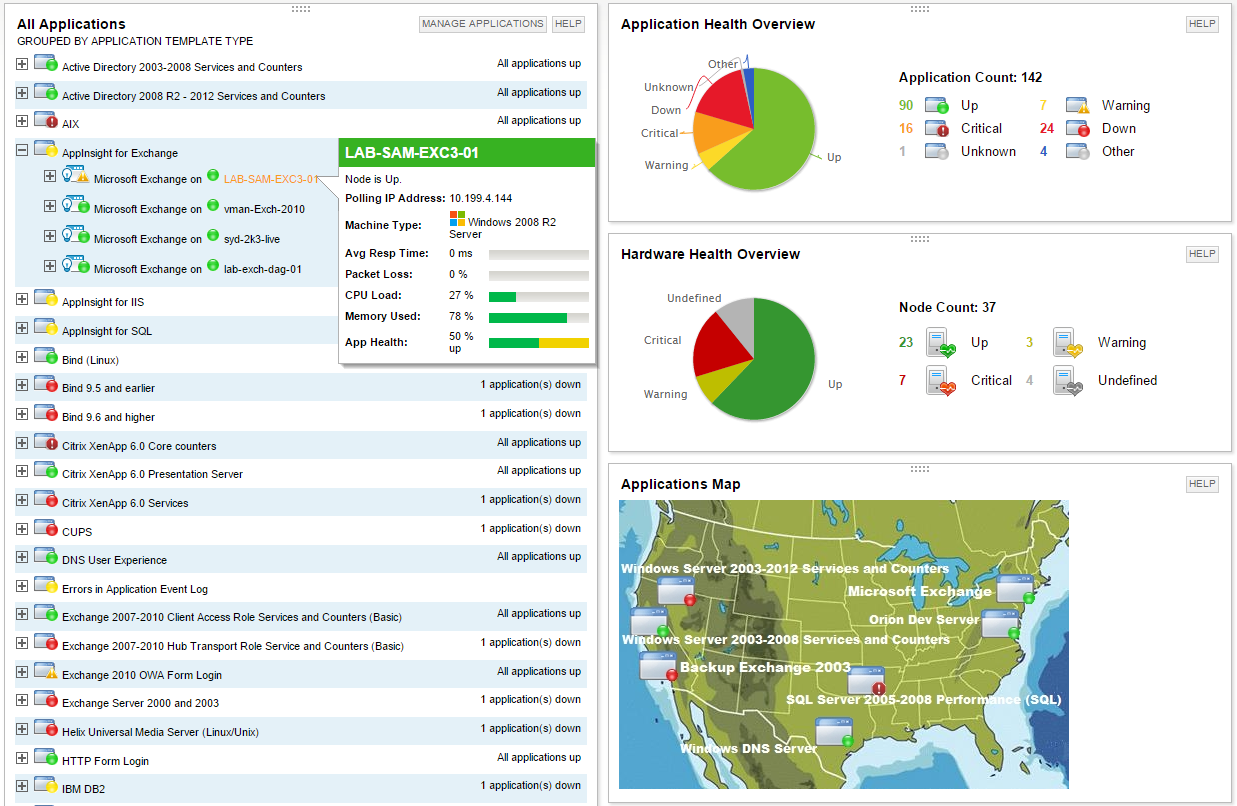      |