
Chose Adobe Workfront
Adobe Workfront vs. Asana vs. Wrike
Adobe Workfront vs. Asana vs. Wrike
| Product | Rating | Most Used By | Product Summary | Starting Price |
|---|---|---|---|---|
 Adobe Workfront | N/A | Adobe Workfront, acquired by Adobe in late 2020, is a web-based project-management tool. It is designed for both IT and marketing teams, but can be implemented for any kind of project. Workfront offers all the features standard to project management platforms, as well as resource allocation, automation, and agile workflow. | N/A | |
 Asana | N/A | Asana is a web and mobile project management app. With tasks, projects, conversations, and dashboards, Asana lets an entire team know who's doing what by when, enabling workload balancing. Users can also add integrations for GANTT charts, time tracking and more. | $13.49 per month per user | |
 Wrike | Mid-Size Companies (51-1,000 employees) | Wrike is a project management and collaboration software. This solution connects tasks, discussions, and emails to the user’s project plan. Wrike is optimized for agile workflows and aims to help resolve data silos, poor visibility into work status, and missed deadlines and project failures. | $240 per year 2 users (minimum) |
| Adobe Workfront | Asana | Wrike | ||||||||||||||||||||||
|---|---|---|---|---|---|---|---|---|---|---|---|---|---|---|---|---|---|---|---|---|---|---|---|---|
| Editions & Modules | No answers on this topic |
|
| |||||||||||||||||||||
| Offerings |
| |||||||||||||||||||||||
| Entry-level Setup Fee | Optional | Optional | No setup fee | |||||||||||||||||||||
| Additional Details | — | A discount is offered for annual billing. | Every premium plan begins with a 14-day trial period. | |||||||||||||||||||||
| More Pricing Information | ||||||||||||||||||||||||
| Adobe Workfront | Asana | Wrike | |
|---|---|---|---|
| Considered Multiple Products |  Adobe Workfront  Jen Aguirre Graphics Production Supervisor Chose Adobe Workfront This is apples and oranges. Wrike is an easy-to-use tool but now feels very basic compared to Workfront. It was too simplified for our needs, and did not allow us to break down large, high-level projects to the steps that we needed. Workfront allows for a lot more details and …  Casey Gold Associate Director, Digital Strategy Chose Adobe Workfront I would find that feature-to-feature comparisons and extensive features put Workfront at the same class level as Workamajig. It may come down to preferences and UX of the platform that would make for the ultimate decision on which to go with for project management needs. Asana …  Mitch Kocen Technical Writer Chose Adobe Workfront Workamajig is great specifically for marketing project management. Jira is great specifically for software development project management. However, if you want all of the company on the same PM software, you need something less purpose-built. Asana is good for both, but lacks …  Nishant Gauba RevOps Manager Chose Adobe Workfront It gave better structure for marketing/creative operations where intake, approvals and governance actually matter. Compared to Asana/Monday/Trello, it felt heavier but it handled standardised workflows, audit trails and stakeholder drived demand reliably.
We needed a single …  Pricillar Nyokabi Medical Practitioner Chose Adobe Workfront I love that Workfront is easy to configure and change as your organization grows. It's easy to stay up to speed with and make changes based on system changes and your organization changing. I also am in love with the reporting and custom data features. Custom forms and the …  Stephen Jonas Senior Manager Digital Communications Channels Chose Adobe Workfront Workfront has better integration into the tools we use, like Adobe Creative Suite, Outlook, Salesforce, and our CMS and DAM. We needed a solution that could work well with our MarCOMM Stack and didn't need a whole lot of support. Although we're a small shop (license-wise) …  Joshua Melder Process Optimization Analyst Chose Adobe Workfront Our team chose to implement Workfront for its detailed project reporting capabilities. Furthermore, Workfront's ability to perform complex virtual proofing is a huge benefit to our work team. Overall, my team's experience has been extremely positive as we continue to implement …  Adam Bain Sr. Creative Director Chose Adobe Workfront Since our team has over 5 separate divisions (each with different specialties), service dozens of clients and work with more than 40 different vendors - Workfront had the depth of features for project managers that we needed for this type of complexity.  Stacy Mutnick Project Management Consultant Chose Adobe Workfront Workfront is more flexible and robust  Rhonda Cancino Marketing Traffic & Workfront / ProofHQ Admin Chose Adobe Workfront Workfront is more customizable and has better prioritization and reporting  Jenna Horton Traffic Manager, JAX Creative Chose Adobe Workfront When shopping for a project management system, Workfront was the clear winner for our group. The proofing tool, mobile app and product features were far superior to all other products we reviewed and saw demos of.  Tamika Roberts Operation Compliance and Access Management Supervisor Chose Adobe Workfront I prefer workfront but Service Now has better reports |  Asana  Elizabeth Coppinger Senior Business Analyst Chose Asana Asana is a great balance of simplicity and robustness. JIRA is simply too robust for my team's needs - it is more appropriate for a software team. We did not need the capabilities to customize automated workflows. Our development process is waterfall, so a PM software centered …  Kenny Madison Junior Video Editor Chose Asana  Michael Anderson Audio Engineer/ Editor Chose Asana Asana is simpler and easier to manage than Teamwork Projects and Wrike for smaller teams, but still offers more features than Basecamp and requires a lot less customization than monday.com.  Jonathan Whetstone Manager, Customer Implementation Chose Asana We use Wrike more because the UI is easier and their account management has been stronger.  Jessica Sforza Senior Project Manager Chose Asana The other agency we were working with selected Asana as it's a tool with easy access. Other more broad project management tools require contracts and setup time, this is easy to create an account and login to. We used it for one project and it helped give a full picture of the …  Ben Flemming Director of Human Resources Chose Asana Asana hit our sweet spot of easy to try, appropriate pricing for our mid size non-profit team, flexibility, and features. Lots of other platforms have very similar features organized in other ways, but Asana made sense and was fun to work with right off the bat. there were …  Tyler Collum Corporate Director Of Human Resources Chose Asana We “beta” tested several softwares across our company. Asana was a great fit for our small corporate team. But when we rolled it out company wide, it didn’t stick. We eventually ended up using Airtable - which has worked out well for us.  Oleg Galimov Project manager Chose Asana Keyboard control. The ability to view and change the task without opening a new page.  Ray Smith Senior Software Engineer Chose Asana Asana is very simple and straight forward, other more expensive products offer more features but require you to do project management their way. Asana provides a nice interface for task management. |  Wrike  Eliel Yorobe Marketing Automation Specialist Chose Wrike  Noemi Del Castillo Business Analyst Chose Wrike  Nikos Taskos Head of SEO Chose Wrike Asana is easier to use compared to Wrike having a steeper learning curve. However, be not afraid, you will be getting that value in a couple of months.  Mnoneleli Mlobeli Contract administrator Chose Wrike Wrike had better package deals for a growing organisation.  José Francisco Laguna Technical Writer Chose Wrike Its scope is more focused and its implementation with email tools is what really puts it above the others. Sometimes softwares are too big for their own good and Wrike covered our main need of keeping track of tasks and having visibility across stakeholders much better than the …  Cody Eckman Product Marketing Manager Chose Wrike Wrike has better options for in-task review and approval than anything I've used in the past. The available customization for dashboards and reports is powerful and useful. It's easy to use Wrike at a low level—taking the time to learn its specialized and more powerful features …  Andrew Parrish Line Producer Chose Wrike Wrike is a stronger platform, faster, easier to use, and better suited for our needs. it checks almost all the boxes where as almost every other platform has significant holes in the product. |
| Adobe Workfront | Asana | Wrike | |||||||||||||||||||||||||||||||||||||||||||||||||||||||||||
|---|---|---|---|---|---|---|---|---|---|---|---|---|---|---|---|---|---|---|---|---|---|---|---|---|---|---|---|---|---|---|---|---|---|---|---|---|---|---|---|---|---|---|---|---|---|---|---|---|---|---|---|---|---|---|---|---|---|---|---|---|---|
| Project Management |
| ||||||||||||||||||||||||||||||||||||||||||||||||||||||||||||
| Professional Services Automation |
|
| Adobe Workfront | Asana | Wrike | |
|---|---|---|---|
| Small Businesses |  Stackby Score 9.0 out of 10 | Stackby Score 9.0 out of 10 | Stackby Score 9.0 out of 10 |
| Medium-sized Companies |  InEight Score 8.5 out of 10 | InEight Score 8.5 out of 10 | InEight Score 8.5 out of 10 |
| Enterprises | InEight Score 8.5 out of 10 | InEight Score 8.5 out of 10 | InEight Score 8.5 out of 10 |
| All Alternatives | View all alternatives | View all alternatives | View all alternatives |
| Adobe Workfront | Asana | Wrike | |
|---|---|---|---|
| Likelihood to Recommend | 8.3 (383 ratings) | 9.0 (208 ratings) | 8.5 (890 ratings) |
| Likelihood to Renew | 6.0 (61 ratings) | 9.6 (34 ratings) | 8.5 (103 ratings) |
| Usability | 6.4 (19 ratings) | 8.3 (36 ratings) | 8.2 (227 ratings) |
| Availability | 9.1 (9 ratings) | 8.4 (2 ratings) | 8.1 (24 ratings) |
| Performance | 9.1 (4 ratings) | - (0 ratings) | 6.8 (21 ratings) |
| Support Rating | 10.0 (12 ratings) | 5.0 (42 ratings) | 7.6 (90 ratings) |
| In-Person Training | 5.0 (1 ratings) | - (0 ratings) | 8.2 (5 ratings) |
| Online Training | 8.9 (4 ratings) | - (0 ratings) | 8.2 (13 ratings) |
| Implementation Rating | 8.3 (10 ratings) | - (0 ratings) | 7.7 (32 ratings) |
| Configurability | 5.0 (1 ratings) | - (0 ratings) | 8.3 (12 ratings) |
| Contract Terms and Pricing Model | 10.0 (1 ratings) | - (0 ratings) | 7.3 (4 ratings) |
| Ease of integration | 1.0 (1 ratings) | - (0 ratings) | 6.9 (7 ratings) |
| Product Scalability | 8.2 (3 ratings) | 8.2 (1 ratings) | 8.0 (15 ratings) |
| Professional Services | - (0 ratings) | - (0 ratings) | 6.8 (3 ratings) |
| Vendor post-sale | 1.0 (1 ratings) | - (0 ratings) | 9.0 (7 ratings) |
| Vendor pre-sale | 1.0 (1 ratings) | - (0 ratings) | 6.7 (8 ratings) |
| Adobe Workfront | Asana | Wrike | |
|---|---|---|---|
| Likelihood to Recommend | Adobe
| Asana
 Marina Torttoli Marketing Director | Wrike
|
| Pros | Adobe
| Asana
 Ammar Aboalrub Freelancer | Wrike
|
| Cons | Adobe
| Asana
| Wrike
 Alicia Stacy Account Executive |
| Likelihood to Renew | Adobe
 Adam Messano Senior Project Manager – Resource & Infrastructure Optimization. | Asana
 page V CEO (Chief Executive Officer) | Wrike
|
| Usability | Adobe
| Asana
| Wrike
 Alysen Boston Content marketing writer |
| Reliability and Availability | Adobe
| Asana
 Ronen Soreq Project Manager | Wrike
 Cristi Radulian Senior Design Engineer |
| Performance | Adobe
| Asana No answers on this topic | Wrike
 Mark Ferrer Senior Web Developer |
| Support Rating | Adobe
 Rob Gokee Composer | Asana
 Adam Lumley Director of Marketing & Communications | Wrike
|
| In-Person Training | Adobe
| Asana No answers on this topic | Wrike
 Ashley Pauls Assistant director of communications |
| Online Training | Adobe
 Maryland Tracy Web Traffic Manager | Asana No answers on this topic | Wrike
|
| Implementation Rating | Adobe
| Asana No answers on this topic | Wrike
|
| Alternatives Considered | Adobe
 Erik Viager Sr. Strategic Development Manager, B2D | Asana
 Rafiqul Islam Full-stack Software Engineer | Wrike
|
| Contract Terms and Pricing Model | Adobe
Rob Gokee Composer | Asana No answers on this topic | Wrike
 Nuha Abdi Learner engagement |
| Scalability | Adobe
Maryland Tracy Web Traffic Manager | Asana
Ronen Soreq Project Manager | Wrike
 Michael Fank Quality Manager |
| Professional Services | Adobe No answers on this topic | Asana No answers on this topic | Wrike
|
| Return on Investment | Adobe
| Asana
 Kristi Porter Chief Do-Gooder | Wrike
|
| ScreenShots | Adobe Workfront Screenshots    | Asana Screenshots 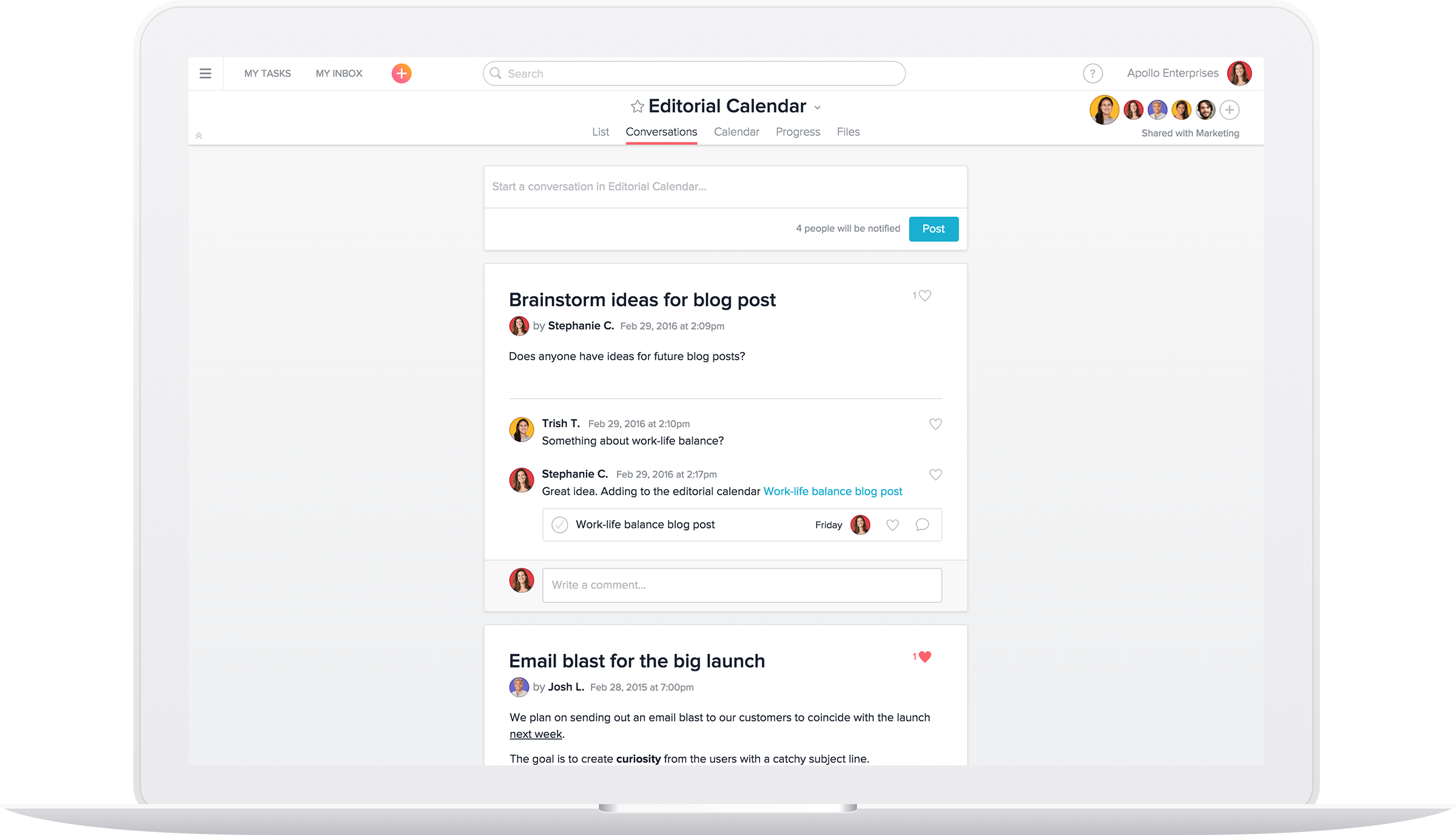     | Wrike Screenshots      |