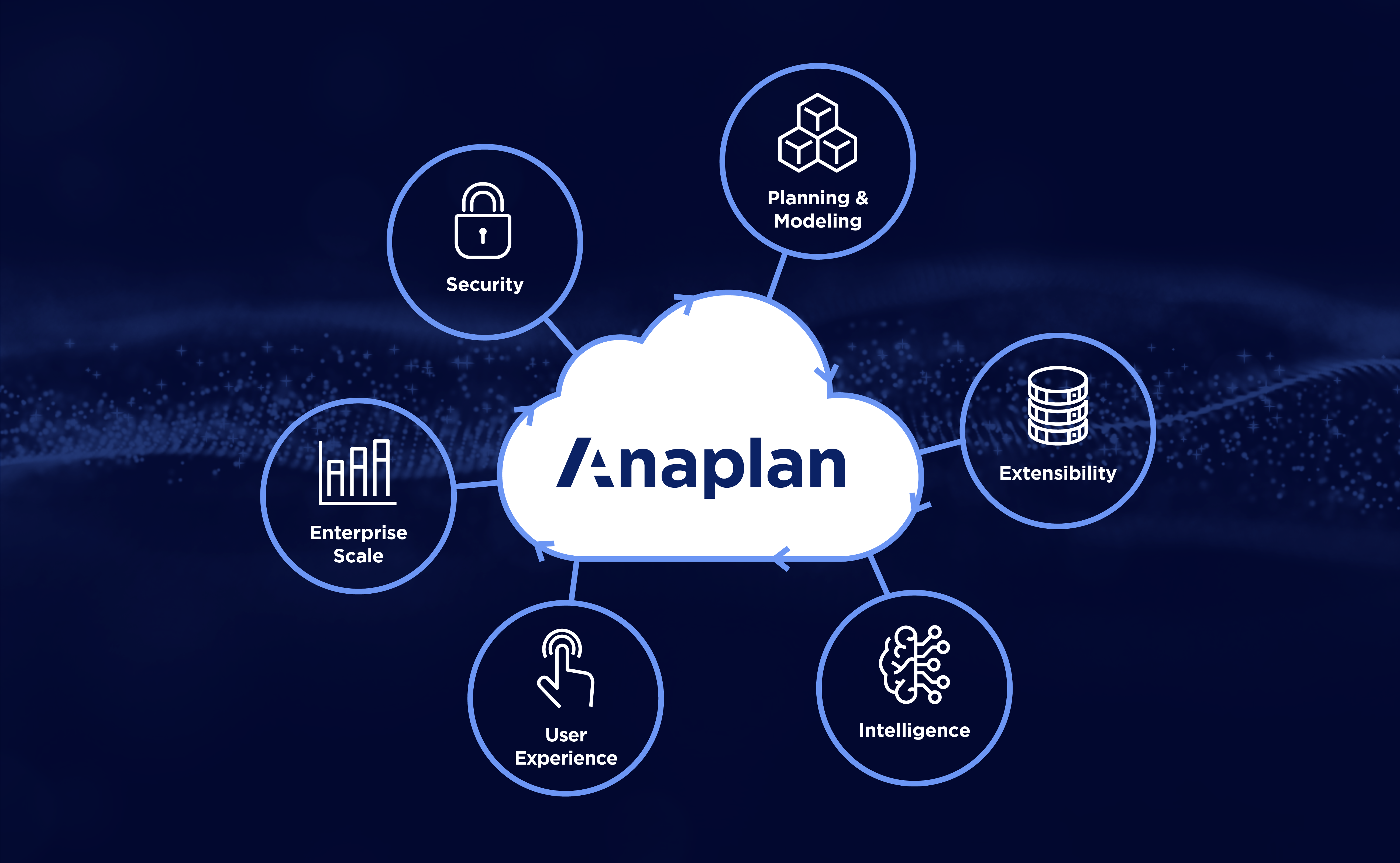
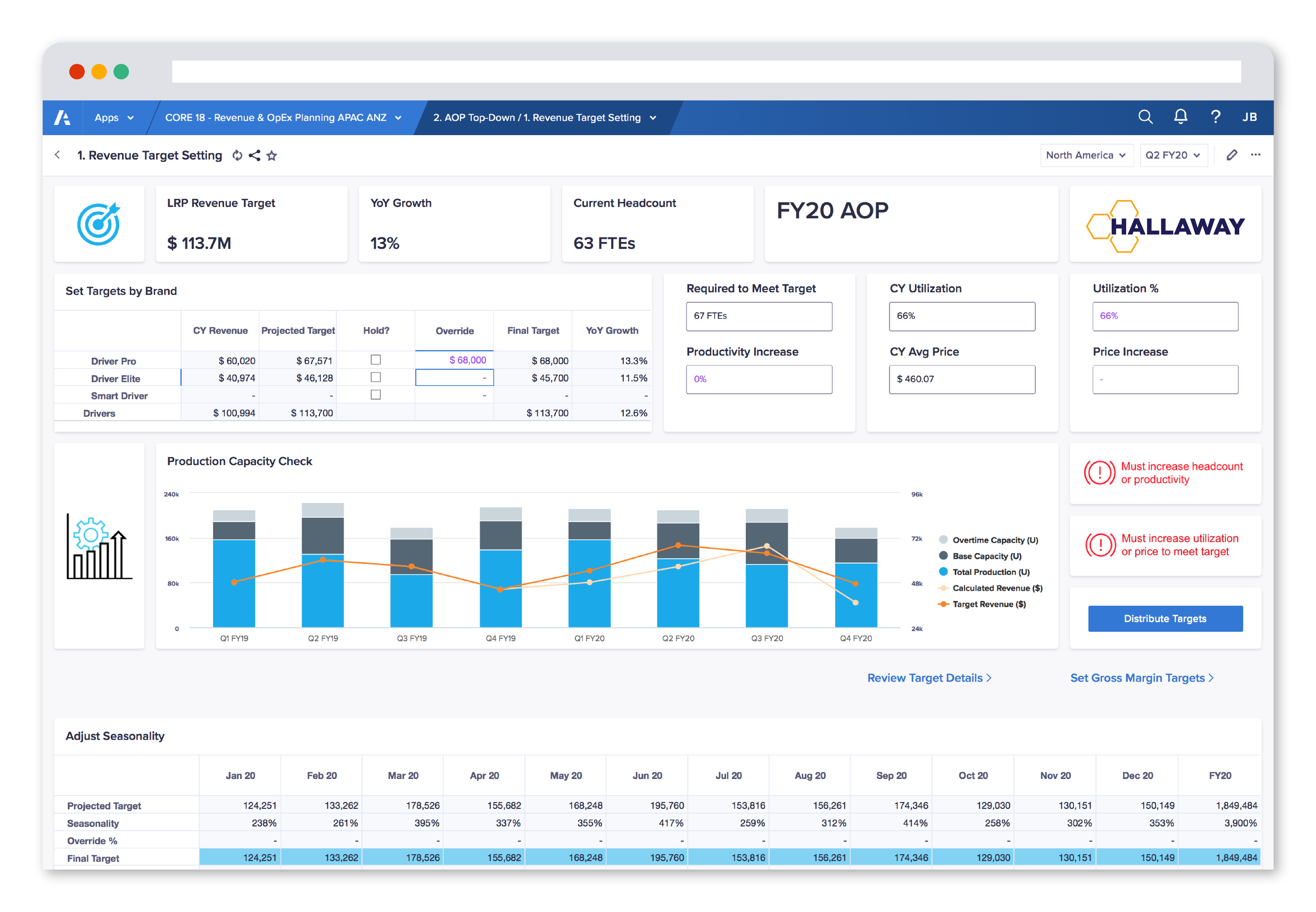
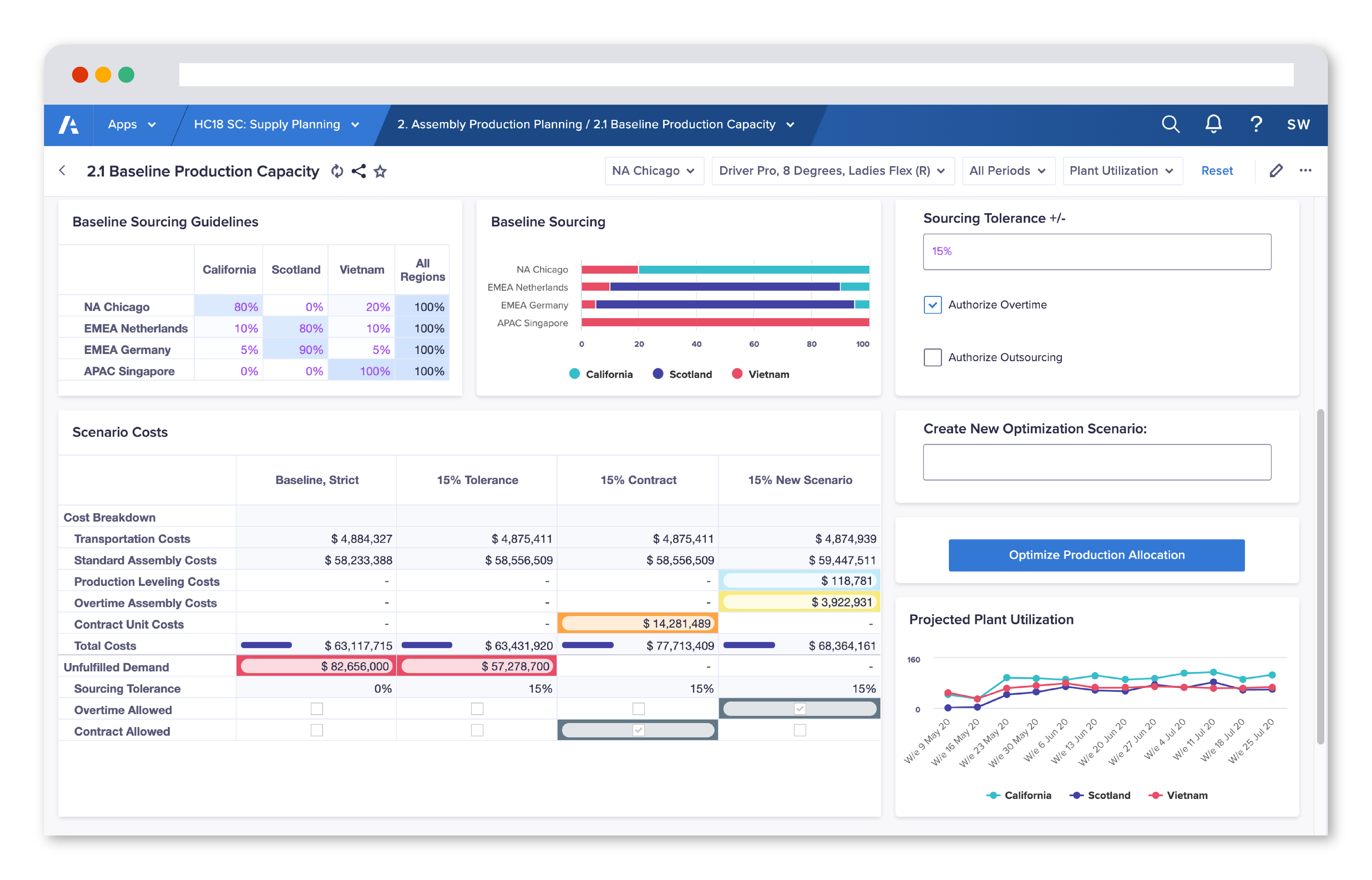
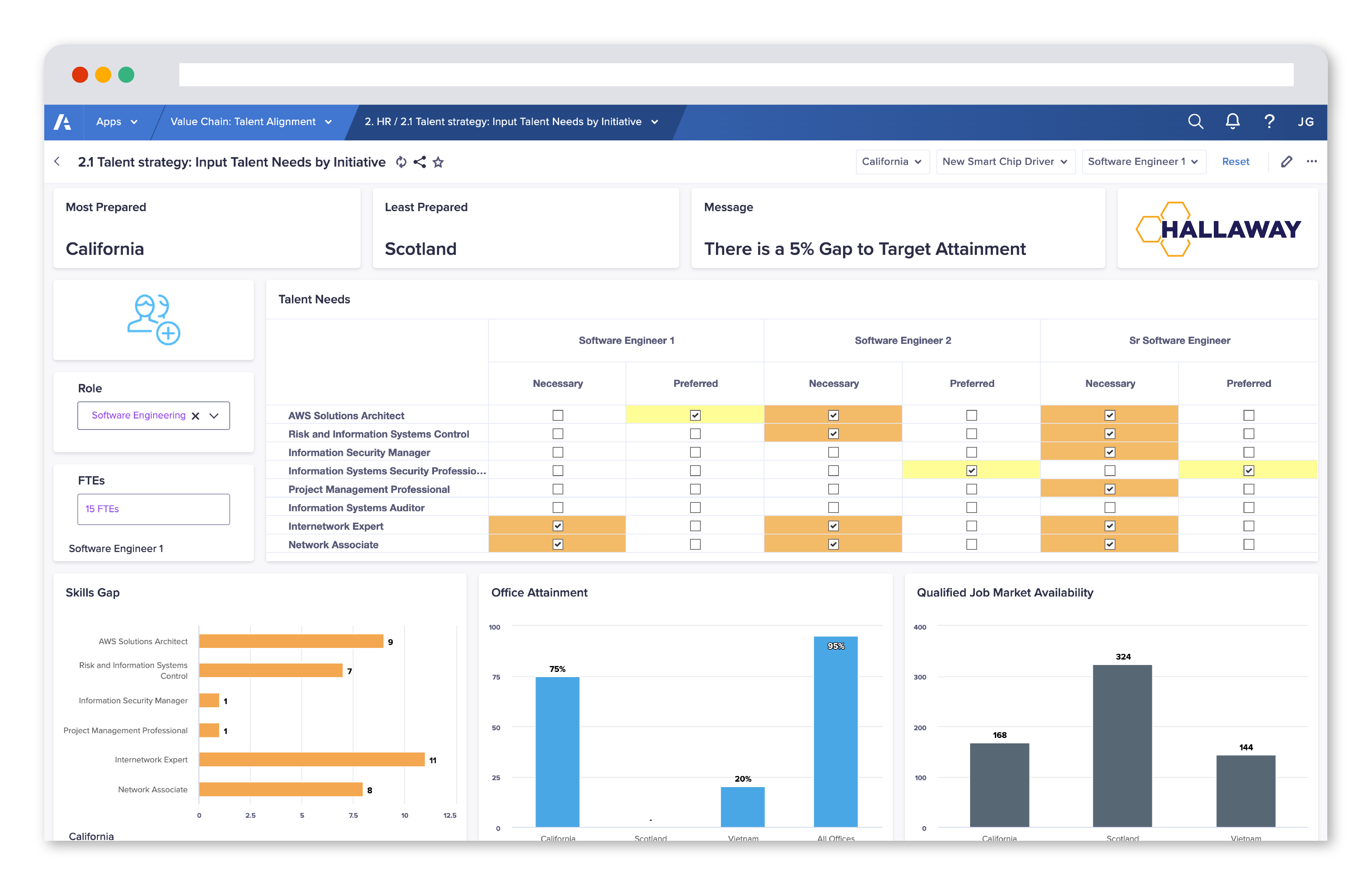
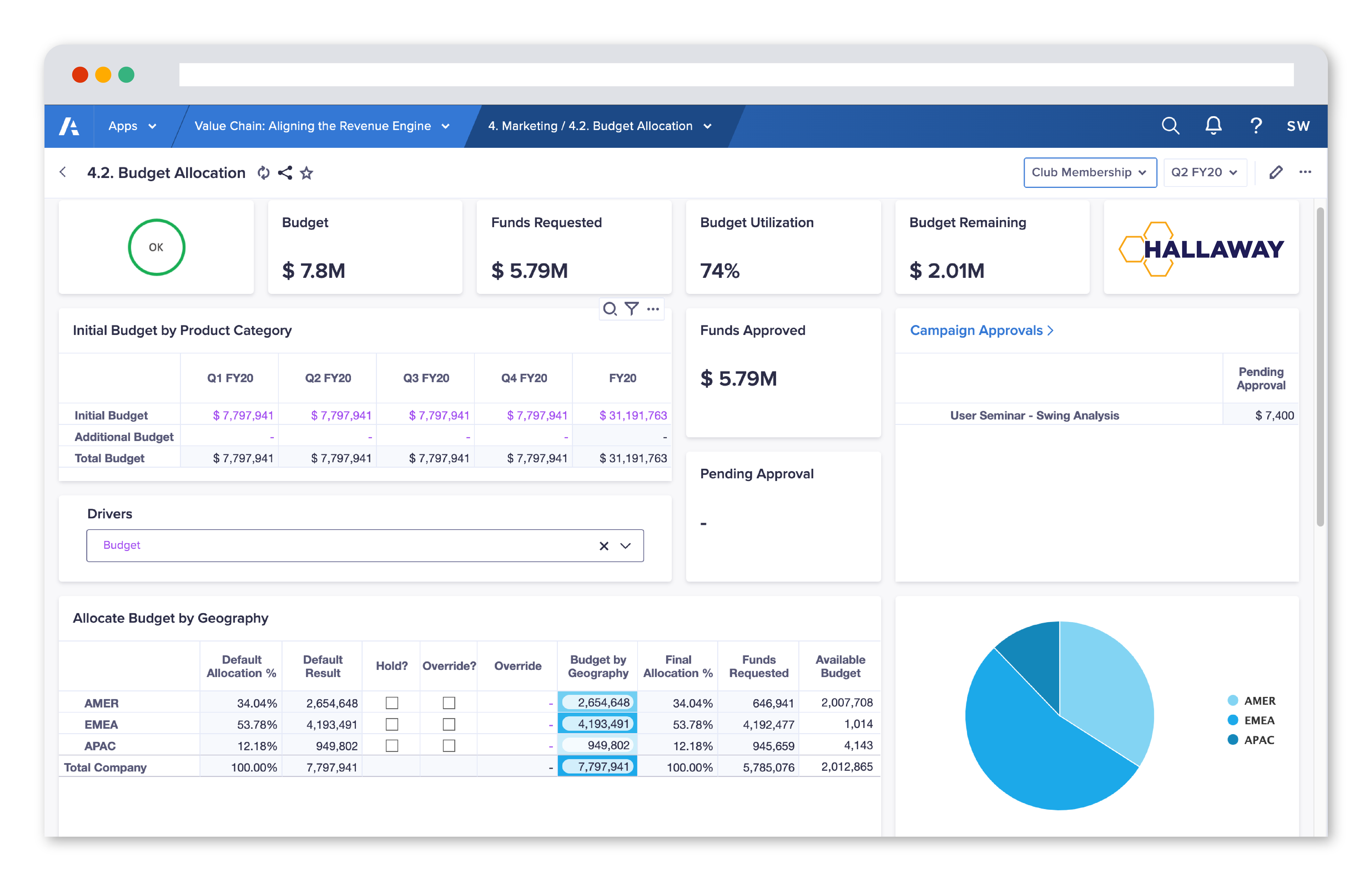
Anaplan is a transformative way to see, plan, and run your business. Using its proprietary Hyperblock™ technology, Anaplan lets you contextualize real-time performance, and forecast future outcomes for faster, confident decisions. Anaplan enables connected strategy and planning across your enterprise to move your business forward. Based in San Francisco, Anaplan has over 200 partners and more than 2,000 customers worldwide.
N/A
Oracle JD Edwards EnterpriseOne
Score 7.8 out of 10
N/A
An ERP primarily aimed at medium-sized companies that combines financial management capabilities contain the familiar general ledger along with expense management, accounts payable and receivable (AP/AR), advanced cost accounting, and fixed asset accounting.
Anaplan to me is far easier to understand, more intuitive to use, the interface is quite more appealing and the overall experience is more pleasant, so to say. With HFM I feel like using a tool that was created ~20 years ago, and no matter how easy it is to use in some aspects, …
I've previously used Hyperion in the past and it's not nearly as robust or flexible as a calculation engine. Anplan allows for a lot more flexibility than previous softwares. It's a great middle ground between having a super rigid system and the ultra flexibility (but at times, …
Anaplan revolutionizes the planning process by standardizing it, creating transparency in data, particularly in showcasing results to the management team. By replacing Excel-centric planning methods, Anaplan not only opens the door to handling larger datasets but also enables a more intricate level of data granularity at an accelerated pace. What sets it apart is its capacity to facilitate a seamless collaboration within a cross-functional model, accommodating diverse departments and business functions in a dynamic, real-time environment.
If there are lot of complicated systems this might not be the best system. If you have only some complexity Oracle JD Edwards EnterpriseOne is a product a technical or application person can wrap their hands around and understand the whole system.
The new versions (9.2) of JDE has so much open functionality and really gives the user control over the screens and what they want to see. Love that the layout of the screen is really up to the user and what they want to see it along with freezing columns and creating favorites for way access.
It is so flexible with the system platforms that it can run on and so easy to customize since it supports so many databases.
It is intuitive and does not need to have a lot of training on how to use the software.
It's just a great ERP software and one of the better ones I've seen.
Oracle is FINALLY starting to listen to the users and SIGs and putting enhancements into the system which makes life easier for us business users.
The "new" UX front-end offers a lot of modern and intuitive features, but it lacks the ability to view multiple "tabs" of dashboards and reports. The "classic" dashboard had this feature but now with the UX, you need to be really smart about how to design a single page where the users won't get "lost".
Lacks the ability to "wrap text" (similar to excel) and auto-size grid rows
The Configurable Network Language (CNC) is a proprietary protocol, and it can be difficult to source resources that understand this language well.
It has some inherent limitations with generating PDF or printable files. Most organizations use a third party platform like Creat!form or Bottomline to solve this.
No built in credit card processing solution, and no plug-and-play eCommerce or webstore capabilities available.
In any line of work, a tool that is flexible and would allow different departments of your company to easily interact and exchange valuable insights, is highly anticipated and needed. For me, what Anaplan provides to a business, be it a smaller one or an enterprise customer, is an easily scaling, agile planning and modeling platform that can meet almost any need and give a high-end solution to the problems any company faces on a daily basis.
There is a dependency in this rating - in that I find Anaplan extremely easy to use, but I've spent the necessary time developing a strong understanding of the platform. Once you understand how to use it, the platform is flexible, easy to use, and fun to use.
There are very few outages. Maintenance is scheduled on two or three Saturdays per month, so as not to affect businesses. When there is an outage, users are kept informed of progress to restore the platform and typically this takes no more than an hour. Anaplan customer support is very responsive if we ever have questions about platform issues
Everything is calculated in memory in the cloud. It's nearly instantaneous updates when you make changes. The only time things get a little slow is when you have a massive model with very intricate calculations...but "slow" for Anaplan is not what I would call "slow" for something like Hyperion. We used to have Hyperion calcs that ran for 60 mins before you could use data. The equivalent would be 60 seconds in Anaplan.
1. Anaplan has separate 24/7 customer support channel to help with queries, 2. Customer Partner from Anaplan to support vendor with their queries like license purchase, use case implementation support, customer advocacy 3. Anaplan Learning Platform to help learning new product features free of cost and Yearly Anaplan connect across globe to share success stories of various companies.
The in-person training is simply not worth the cost. After a few weeks of playing in Anaplan, I went to the basic training and knew more than the person teaching it. a year down the road, I was the first person to complete the advance training, and again could have been teaching the class better than the person running the session. Spend some time on your own trying out different things and you will get all the understanding you need to be successful.
Anaplan training materials are clear, simple, easy to understand and to follow. Visuals are excellent. The vendor is good at updating training materials in a timely manner and encouraging users and administrators to keep coming back to Academy site for refresher courses or new feature courses. I really like their interactive diagrams
Agile methodology and breaking the work down into sprints was very helpful. Implementation required a deeper dive into our data than expected for the consultants to be able to construct the data model. But once it was in place, the focus on knowledge transfer enabled us to be able to use the product effectively after the team rolled off.
Anaplan is what I would consider a modeling platform. It excels at taking a forecasting or planning process and systematizing it - and allowing for whatever nuances and granularity you need to perform that modeling. It is not positioned as "data collection" platform - which are typically designed to take data uploads from Excel to calculate basic opex and revenue models. It's much more customizable and flexible.
It is simple to use and implement as compared to complex softwares in the market that may take ample amount of time to implement. The budget is also slightly less to provide the same functionality that other softwares are providing. Also having Oracle database that comes with the system is much easier to handle and use and have much security.
We have managed to leverage Anaplan for financial planning and forecasting across the business. It is now used by almost every department, with more than 50 users (but I know of companies that have hundreds of users) and still the platform is quick and reliable. It is easy to make changes to divisions and departments or add users and apply different user settings - the core part of the model is not affected and end users can continue their work without any disruption
Speeding up the process of closing and updating the current month forecast
Reduced work on the preparation of reports and presentations. We used different Anaplan approaches with varying success, but the overall result was there.
It's hard to gauge, but the overall increase in process and algorithm transparency, along with data protection, has given an excellent platform for scaling up the company's processes.
Oracle JD Edwards EnterpriseOne's advantage is significant cost savings and operational improvements when you run Oracle JD Edwards EnterpriseOne in the Oracle Cloud. Oracle JD Edwards EnterpriseOne offers the only no-compromise enterprise cloud platform for moving Oracle JD Edwards EnterpriseOne, its associated database systems, an ecosystem of apps to the cloud. Oracle JD Edwards EnterpriseOne's One-Click Provisioning tool allows you to deploy Oracle JD Edwards EnterpriseOne on the Oracle Cloud in hours, not days while maintaining the integrity of existing customized apps.