Microsoft Power BI is a visualization and data discovery tool from Microsoft. It allows users to convert data into visuals and graphics, visually explore and analyze data, collaborate on interactive dashboards and reports, and scale across their organization with built-in governance and security.
$168
per year per user
Qlik Cloud Analytics (Qlik Sense)
Score8.1 out of 10
N/A
Qlik Sense® is a self-service BI platform for data discovery and visualization. It supports a full range of analytics use cases—data governance, pixel-perfect reporting, and collaboration. Its Associative Engine indexes and connects relationships between data points for creating actionable insights.
$200
per month
Pricing
Microsoft Power BI
Qlik Cloud Analytics (Qlik Sense)
Editions & Modules
Power BI Pro
$14
per month (billed annually) per user
Power BI Premium
$24
per month (billed annually) per user
Starter
$200
per month
Standard
$825
per month
Premium
$2750
per month
Qlik Sense (On-Premise)
Contact Sales
Offerings
Pricing Offerings
Microsoft Power BI
Qlik Cloud Analytics (Qlik Sense)
Free Trial
Yes
No
Free/Freemium Version
Yes
No
Premium Consulting/Integration Services
No
Yes
Entry-level Setup Fee
No setup fee
No setup fee
Additional Details
Power BI Desktop is the data exploration and report authoring experience for Power BI, and is available as a free download.
—
More Pricing Information
Community Pulse
Microsoft Power BI
Qlik Cloud Analytics (Qlik Sense)
Considered Both Products
Microsoft
Verified User
Chose Microsoft Power BI
Microsoft Power BI is more easy to use, easily understandable, it's User Interface is good. We can connect to More number of data sources. where as in Qlik Sense it is not providing Row level security like Microsoft Power BI and it is bit costly than Microsoft Power BI. Tableau …
A de minimis incentive was given to thank the reviewer for their time. The incentive was not used to bias or drive a particular response, nor was the incentive contingent on a positive endorsement. More Info
Verified User
Chose Microsoft Power BI
In the case of Tableau or Google Charts, thay have a lack on customization and on the options they have. For Qlik Sense, you need to spend too much time on the data model for doing quick tests or data validation when comparing it to Microsoft Power BI. Also, Microsoft Power BI …
A de minimis incentive was given to thank the reviewer for their time. The incentive was not used to bias or drive a particular response, nor was the incentive contingent on a positive endorsement. More Info
Verified User
Chose Microsoft Power BI
Qlik also builds dashboards upon your data. It's more expensive as Microsoft Power BI and needs as much training as Microsoft Power BI
A de minimis incentive was given to thank the reviewer for their time. The incentive was not used to bias or drive a particular response, nor was the incentive contingent on a positive endorsement. More Info
A de minimis incentive was given to thank the reviewer for their time. The incentive was not used to bias or drive a particular response, nor was the incentive contingent on a positive endorsement. More Info
Healthcare Architect in the Business Development/Medical Economics Dept in Corporate at University of Miami, Miller School of Medicine (Higher Education, 5001-10,000 employees)
Chose Microsoft Power BI
Both Qlik and Microsoft Power BI both stack up very well next to each other. I personally liked Qlik just a little bit more but the price difference for us is what really changed our minds.
A de minimis incentive was given to thank the reviewer for their time. The incentive was not used to bias or drive a particular response, nor was the incentive contingent on a positive endorsement. More Info
A de minimis incentive was given to thank the reviewer for their time. The incentive was not used to bias or drive a particular response, nor was the incentive contingent on a positive endorsement. More Info
Verified User
Chose Microsoft Power BI
Power BI does not have the feel of a fully independent and robust BI Solution. It tackles smaller functional or department-level analytic needs and can operate in a small or solo roll-out environment. But scaling up to enterprise would be better suited for Qlik or Tableau. Same …
A de minimis incentive was given to thank the reviewer for their time. The incentive was not used to bias or drive a particular response, nor was the incentive contingent on a positive endorsement. TR verified that a representative sample of customers was invited. More Info
A de minimis incentive was given to thank the reviewer for their time. The incentive was not used to bias or drive a particular response, nor was the incentive contingent on a positive endorsement. More Info
Tax Manager in Finance and Accounting at Ernst & Young (Accounting, 10,001+ employees)
Chose Microsoft Power BI
Based on the latest reviews from Magic Quadrant, Tableau is rated high among all the applications in this category with its rich features in terms of connectivity, visualizations, and various other features. But the cost of using the application is bit high from my personal …
A de minimis incentive was given to thank the reviewer for their time. The incentive was not used to bias or drive a particular response, nor was the incentive contingent on a positive endorsement. More Info
Data Analytics Intern in Information Technology at University of Florida (Higher Education, 10,001+ employees)
Chose Microsoft Power BI
Power BI performs quite well in comparison to it's competitor's products. We compared it mainly to GoodData and Tableau. Power BI has a great pricing. It's affordable and efficient with mid-sized datasets. Hence many companies go for it. Competitive products like Tableau are …
A de minimis incentive was given to thank the reviewer for their time. The incentive was not used to bias or drive a particular response, nor was the incentive contingent on a positive endorsement. More Info
Practice Lead - Corporate Performance Management in Information Technology at The Normandy Group (Information Technology and Services, 11-50 employees)
Chose Microsoft Power BI
Power BI is a lot easier to use. The designs are also much nicer. Costs to implement Power BI (minus the existing data infrastructure) is much lower than other tools commercially available. However, the tool is still relatively new and still lacks many common features that …
A de minimis incentive was given to thank the reviewer for their time. The incentive was not used to bias or drive a particular response, nor was the incentive contingent on a positive endorsement. More Info
Verified User
Chose Microsoft Power BI
As mentioned earlier it is free of cost and easy to learn as it is part of the Microsoft suite product. It blends well with ETL package tools such as SSRS and SSIS. It is also easy to distribute the dashboard to users of Office 365. It is a a complete Microsoft product which …
A de minimis incentive was given to thank the reviewer for their time. The incentive was not used to bias or drive a particular response, nor was the incentive contingent on a positive endorsement. More Info
BI Analyst and Automation in Corporate at GAM Distribuidora (Pharmaceuticals, 501-1000 employees)
Chose Qlik Cloud Analytics (Qlik Sense)
We use Microsoft Power BI too as a BI tool, in my point of view, Qlik Sense's ETL is much better than PowerBi. In another side, PowerBI learning curve is small than Qlik Sense, especially the PowerBI Desktop.
A de minimis incentive was given to thank the reviewer for their time. The incentive was not used to bias or drive a particular response, nor was the incentive contingent on a positive endorsement. More Info
Product Consultant in Product Management at Flipkart (Consumer Goods, 10,001+ employees)
Chose Qlik Cloud Analytics (Qlik Sense)
Qlik Sense cost of licensing is cheaper compared with other tools which always gives an upper edge in analytics industry with good functionality. More enhanced level of security with better user community group available to discuss about new updates. Understanding of Qlik Sense …
A de minimis incentive was given to thank the reviewer for their time. The incentive was not used to bias or drive a particular response, nor was the incentive contingent on a positive endorsement. More Info
Verified User
Chose Qlik Cloud Analytics (Qlik Sense)
Qlik Sense offers a broad variety of functions that are not easily achievable using PowerBi. However, I was not involved with the selection.
A de minimis incentive was given to thank the reviewer for their time. The incentive was not used to bias or drive a particular response, nor was the incentive contingent on a positive endorsement. More Info
Intelligence Data Manager in Information Technology at La Europea (Retail, 1001-5000 employees)
Chose Qlik Cloud Analytics (Qlik Sense)
Qlik Sense is a fast tool to implement; you can have a functional dashboard in a few days, and the ETL processes are quite easy to build it. You can have the ROI in a short period of time.
A de minimis incentive was given to thank the reviewer for their time. The incentive was not used to bias or drive a particular response, nor was the incentive contingent on a positive endorsement. More Info
Verified User
Chose Qlik Cloud Analytics (Qlik Sense)
Qlik Sense is relatively cheaper and more futuristic
A de minimis incentive was given to thank the reviewer for their time. The incentive was not used to bias or drive a particular response, nor was the incentive contingent on a positive endorsement. More Info
Manager in Information Technology at SDG Group Italy (Information Technology & Services, 201-500 employees)
Chose Qlik Cloud Analytics (Qlik Sense)
Qlik Sense is one of the best reporting systems. It is stronger than PBI and Tableau when speaking about complex KPIs. It is really similar to MicroStrategy Analytics when you speak about obtained results, but it is easier to use, especially as it is more code-based. But is it …
A de minimis incentive was given to thank the reviewer for their time. The incentive was not used to bias or drive a particular response, nor was the incentive contingent on a positive endorsement. TR verified that a representative sample of customers was invited. More Info
Information and Support Manager at Headway Ireland - Brain Injury Services and Support (Non-profit Organization Management, 51-200 employees)
Chose Qlik Cloud Analytics (Qlik Sense)
We originally went with Qlik Sense because the desktop version used to be free for single users and was a very good proposition for us (we are a non-profit with a limited budget). However, from what I see, the functionality is comparable, and Qlik Sense stacks up well.
A de minimis incentive was given to thank the reviewer for their time. The incentive was not used to bias or drive a particular response, nor was the incentive contingent on a positive endorsement. More Info
CIO (Chief Information Officer) in Information Technology at UVA Y MALTA (Food & Beverages, 1-10 employees)
Chose Qlik Cloud Analytics (Qlik Sense)
As soon as you want to pull data from two or more separate tables, Qlik Sense leaves the rest in the dust, since it does not require joins or complex transformations. Zoho CRM analytics are limited to the data located in the product itself. No external tables can be combined.
A de minimis incentive was given to thank the reviewer for their time. The incentive was not used to bias or drive a particular response, nor was the incentive contingent on a positive endorsement. More Info
Verified User
Chose Qlik Cloud Analytics (Qlik Sense)
Other tools were not able to handle complex business requirements and performance was not too good with very huge volume data. we were required to maintain history, time-based data backups, and snapshots. Also, some of the tools were too costly compare to Qlik [Sense] solutions.
A de minimis incentive was given to thank the reviewer for their time. The incentive was not used to bias or drive a particular response, nor was the incentive contingent on a positive endorsement. More Info
Verified User
Chose Qlik Cloud Analytics (Qlik Sense)
When it comes to working with large datasets out of the box, Qlik in my opinion is unrivaled amongst the competitor. However, the overall user experience and customization options available to developers require a lot of work. When compared to other options on the market, …
A de minimis incentive was given to thank the reviewer for their time. The incentive was not used to bias or drive a particular response, nor was the incentive contingent on a positive endorsement. TR verified that a representative sample of customers was invited. More Info
Verified User
Chose Qlik Cloud Analytics (Qlik Sense)
BI has some amazing features, but it requires a good understanding of DAX. It's not as user-friendly as Qlik Sense.
A de minimis incentive was given to thank the reviewer for their time. The incentive was not used to bias or drive a particular response, nor was the incentive contingent on a positive endorsement. TR verified that a representative sample of customers was invited. More Info
Verified User
Chose Qlik Cloud Analytics (Qlik Sense)
I prefer Qlik due to its ability to combine multiple data sources and flexibility offer by the data load editor, other tools lack this capability or they don't do as good of a job as Qlik
A de minimis incentive was given to thank the reviewer for their time. The incentive was not used to bias or drive a particular response, nor was the incentive contingent on a positive endorsement. TR verified that a representative sample of customers was invited. More Info
Verified User
Chose Qlik Cloud Analytics (Qlik Sense)
Previously, we used QlikView and it was difficult to modify something in a dashboard that was originally created by other colleagues. I think that QlikView it's a legacy and it will be decommissioned soon. Versus Power BI, I would say that Qlik Sense does a very nice figure in …
A de minimis incentive was given to thank the reviewer for their time. The incentive was not used to bias or drive a particular response, nor was the incentive contingent on a positive endorsement. More Info
Verified User
Chose Qlik Cloud Analytics (Qlik Sense)
Each product has its strengths/weaknesses, [but] Qlik Sense offered the best approach to leverage the investment in knowledge used in our earlier dashboards formed in Qlik View and transitioned many two step applications ie. extract/join data SQL and present in Microsoft …
A de minimis incentive was given to thank the reviewer for their time. The incentive was not used to bias or drive a particular response, nor was the incentive contingent on a positive endorsement. More Info
Verified User
Chose Qlik Cloud Analytics (Qlik Sense)
Other vendors products evaluated (in some cases used by other divisions within our corporation): ** SAP Analytics Cloud - stacks up quite well against Qlik Sense but the differences are subtle but important. Sometimes SAC has it over Qlik and sometimes Qlik has it over SAC so …
A de minimis incentive was given to thank the reviewer for their time. The incentive was not used to bias or drive a particular response, nor was the incentive contingent on a positive endorsement. More Info
A de minimis incentive was given to thank the reviewer for their time. The incentive was not used to bias or drive a particular response, nor was the incentive contingent on a positive endorsement. More Info
A de minimis incentive was given to thank the reviewer for their time. The incentive was not used to bias or drive a particular response, nor was the incentive contingent on a positive endorsement. More Info
Verified User
Chose Qlik Cloud Analytics (Qlik Sense)
QlikView has many more options for styling within charts and objects - this hurts our ability to style things to our needs within Qlik Sense. Qlik Sense looks more modern, responsive for browser size and visually more appealing.
A de minimis incentive was given to thank the reviewer for their time. The incentive was not used to bias or drive a particular response, nor was the incentive contingent on a positive endorsement. More Info
IT Analyst in Information Technology at Tata Consultancy Services (Information Technology & Services, 10,001+ employees)
Chose Qlik Cloud Analytics (Qlik Sense)
We have used different BI Reporting tools, but overall, Qlik Sense [has been used longer]. Customers are really happy with the dashboards we made through Qlik Sense.
A de minimis incentive was given to thank the reviewer for their time. The incentive was not used to bias or drive a particular response, nor was the incentive contingent on a positive endorsement. More Info
Account Manager in Information Technology at Channelplay Limited (Information Technology & Services, 10,001+ employees)
Chose Qlik Cloud Analytics (Qlik Sense)
Qlik Sense has the ability to handle huge data and the data loading and performing analytics on huge data [is] a plus as compared to other tools in the market. Qlik Sense ability to integrate open-source tools is the best compared to other tools in market.
A de minimis incentive was given to thank the reviewer for their time. The incentive was not used to bias or drive a particular response, nor was the incentive contingent on a positive endorsement. More Info
Director of HR Analytics and Artificial Intelligence in Human Resources at Aramark (Food & Beverages, 10,001+ employees)
Chose Qlik Cloud Analytics (Qlik Sense)
Qlik was selected before I arrived and I would not select it again in comparison to any of the alternatives I've worked with, unless that was the enterprise mandate.
A de minimis incentive was given to thank the reviewer for their time. The incentive was not used to bias or drive a particular response, nor was the incentive contingent on a positive endorsement. More Info
A de minimis incentive was given to thank the reviewer for their time. The incentive was not used to bias or drive a particular response, nor was the incentive contingent on a positive endorsement. More Info
A de minimis incentive was given to thank the reviewer for their time. The incentive was not used to bias or drive a particular response, nor was the incentive contingent on a positive endorsement. More Info
Microsoft Power BI and Qlik Sense are both Business Intelligence platforms. They are both prominent names in the BI space, although Microsoft is more well known. However, both Power BI and Sense are newer developments from Microsoft and Qlik, respectively.
Microsoft Power BI is the giant’s newest BI offering, which focuses on making BI more accessible to smaller organizations in the SMB space as well as enterprises. Qlik Sense, on the other hand, is more focused on delivering data analytics to enterprises. It also has users across company sizes, but is more common in larger organizations.
Features
Microsoft Power BI and Qlik Sense have different focuses on feature areas that differentiate their ideal use cases.
Power BI is designed to be more accessible and lighter weight for smaller organizations. It also maximizes on benefits from integrating smoothly with other Microsoft products, streamlining data importing and management for companies that already live in the Microsoft ecosystem. This also makes management and training easier for companies that are Microsoft-first. It is also more price-competitive than Qlik Sense.
However, Qlik Sense brings more enterprise-scale firepower along with the higher price tag. It provides more in-depth enterprise dashboarding and advanced visualizations. These dashboards and visualization are also more customizable than what Power BI can easily allow. Outside of Microsoft-first environments, Qlik Sense is also a leader in collaborative data reporting.
Limitations
There are also limitations to Microsoft Power BI and Qlik Sense worth considering.
Power BI’s greater accessibility comes at the cost of more advanced capabilities. For instance, it has more limited advanced visualization capabilities, and more specialized data management and modelling are more difficult, particularly at larger scales. This leads to a lower cap of what can be accomplished with Power BI, and adds a steeper learning curve for midlevel and higher modelling and visualizations.
On the other hand, Qlik’s higher range of capabilities comes with higher resource costs. For instance, once data is loaded into models any modifications to the data or the model becomes a much more intensive task, which makes Qlik require more active management from users or administrators. It is also not as user-friendly around certain customizations and visual aspects, such as color and font customization.
Pricing
Microsoft Power BI offers two pricing packages. Power BI Pro is a self-service BI offering managed by Microsoft, which costs $9.99/user/month. The Power BI Premium adds more big data analytics, cloud and on-premises reporting, and unlimited users. Premium costs $4,995/month per resource.
Qlik Sense also offers two pricing packages. Qlik Sense Business, at $30/user/month, offers the core Qlik Sense platform and can be trialed for free for 30 days. Qlik Sense Enterprise SaaS, priced at $70/Professional/month, $40/Analyzer/month, or $100/Analyzer Capacity/month, adds additional governance capabilities, managed spaces, and multiple user types.
Features
Microsoft Power BI
Qlik Cloud Analytics (Qlik Sense)
BI Standard Reporting
Comparison of BI Standard Reporting features of Microsoft Power BI and Qlik Cloud Analytics (Qlik Sense)
Feature
Microsoft Power BI
8.1
198 Ratings
1% below category average
Qlik Cloud Analytics (Qlik Sense)
7.8
315 Ratings
5% below category average
Pixel Perfect reports
8.1169 Ratings
8.3216 Ratings
Customizable dashboards
8.6197 Ratings
7.8313 Ratings
Report Formatting Templates
7.7180 Ratings
7.5228 Ratings
Ad-hoc Reporting
Comparison of Ad-hoc Reporting features of Microsoft Power BI and Qlik Cloud Analytics (Qlik Sense)
Feature
Microsoft Power BI
7.9
196 Ratings
1% below category average
Qlik Cloud Analytics (Qlik Sense)
7.0
326 Ratings
13% below category average
Drill-down analysis
8.4193 Ratings
8.0322 Ratings
Formatting capabilities
7.7193 Ratings
6.2315 Ratings
Integration with R or other statistical packages
7.4143 Ratings
6.3154 Ratings
Report sharing and collaboration
8.1191 Ratings
7.6299 Ratings
Report Output and Scheduling
Comparison of Report Output and Scheduling features of Microsoft Power BI and Qlik Cloud Analytics (Qlik Sense)
Feature
Microsoft Power BI
7.9
189 Ratings
4% below category average
Qlik Cloud Analytics (Qlik Sense)
7.5
278 Ratings
9% below category average
Publish to Web
8.1179 Ratings
5.9210 Ratings
Publish to PDF
7.7174 Ratings
6.9257 Ratings
Report Versioning
7.7145 Ratings
7.7176 Ratings
Report Delivery Scheduling
8.3148 Ratings
8.6183 Ratings
Delivery to Remote Servers
7.9111 Ratings
8.1108 Ratings
Data Discovery and Visualization
Comparison of Data Discovery and Visualization features of Microsoft Power BI and Qlik Cloud Analytics (Qlik Sense)
Has significantly improved collation of data and visualisation especially with business across Europe. Has given me the ability to see the Site availability at the click of a button to see which Site is in the "money" and seize opportunities based on Market data
A de minimis incentive was given to thank the reviewer for their time. The incentive was not used to bias or drive a particular response, nor was the incentive contingent on a positive endorsement. More Info
Qlik Sense is a program whose purpose is to greatly improve all your operations and use of all data in an organic way. The mission will always be to increase the economic and commercial processes of the company in a short time. I recommended it for its high technology, which was Created for this area, the results are successful. We have noticed how it has increased relationships with our clients thanks to the credibility and security that we provide.
A de minimis incentive was given to thank the reviewer for their time. The incentive was not used to bias or drive a particular response, nor was the incentive contingent on a positive endorsement. More Info
Options for data source connections are immense. Not just which sources, but your options for *how* the data is brought in.
Constant updates (this is both good and bad at times).
User friendliness. I can get the data connections set up and draft some quick visuals, then release to the target audience and let them expand on it how they want to.
A de minimis incentive was given to thank the reviewer for their time. The incentive was not used to bias or drive a particular response, nor was the incentive contingent on a positive endorsement. More Info
A de minimis incentive was given to thank the reviewer for their time. The incentive was not used to bias or drive a particular response, nor was the incentive contingent on a positive endorsement. More Info
A de minimis incentive was given to thank the reviewer for their time. The incentive was not used to bias or drive a particular response, nor was the incentive contingent on a positive endorsement. More Info
A de minimis incentive was given to thank the reviewer for their time. The incentive was not used to bias or drive a particular response, nor was the incentive contingent on a positive endorsement. More Info
Microsoft Power BI is an excellent and scalable tool. It has a learning curve, but once you get past that, the sky is the limit and you can build from the most simple to the most complex dashboards. I have built everything from simple reports with only a few data points to complex reports with many pages and advanced filtering.
Qlik Sense is a constantly improving it's software and working with its' users to make it better. They are great at keeping their users informed of progress and care about delivering a quality product
A de minimis incentive was given to thank the reviewer for their time. The incentive was not used to bias or drive a particular response, nor was the incentive contingent on a positive endorsement. TR verified that a representative sample of customers was invited. More Info
Automating reporting has reduced manual data processing by 50-70%, freeing up analysts for higher-value tasks. A finance team that previously spent 20+ hours per week on Excel-based reports now does it in minutes with Microsoft Power BI's automated Real-time dashboards have shortened decision cycles by 30-40%, enabling leadership to react quickly to sales trends, operational bottlenecks, and customer behavior.
A de minimis incentive was given to thank the reviewer for their time. The incentive was not used to bias or drive a particular response, nor was the incentive contingent on a positive endorsement. More Info
Qlik Sense has a better and easy to learn user interface compared with other analytics tool which always help us to create regular and adhoc reports within the stipulated time frame and can be easily refreshed at a scheduled time and sent to multiple stakeholders for timely update regarding the Key metrics indicator.
A de minimis incentive was given to thank the reviewer for their time. The incentive was not used to bias or drive a particular response, nor was the incentive contingent on a positive endorsement. More Info
It is a fantastic tool, you can do almost everything related with data and reports, it is a perfect substitutive of Power Point and Excel with a high evolution and flexibility, and also it is very friendly and easy to share. I think all companies should have Power BI (or other BI tool) in their software package and if they are in the MS Suite, for sure Power BI should be the one due to all the benefits of the MS ecosystem.
A de minimis incentive was given to thank the reviewer for their time. The incentive was not used to bias or drive a particular response, nor was the incentive contingent on a positive endorsement. TR verified that a representative sample of customers was invited. More Info
Qlik is great for companies with lots of business domains and departments because it scales well, especially if data that is reported is saved in SQL and similar structures. Its ease of use and good UI enables business units to create and manage their own reports. That removes a great burden of creating and managing/modifying these pages from the IT team. Overall, it's a win-win for both IT and business units.
A de minimis incentive was given to thank the reviewer for their time. The incentive was not used to bias or drive a particular response, nor was the incentive contingent on a positive endorsement. More Info
A de minimis incentive was given to thank the reviewer for their time. The incentive was not used to bias or drive a particular response, nor was the incentive contingent on a positive endorsement. More Info
A de minimis incentive was given to thank the reviewer for their time. The incentive was not used to bias or drive a particular response, nor was the incentive contingent on a positive endorsement. More Info
A de minimis incentive was given to thank the reviewer for their time. The incentive was not used to bias or drive a particular response, nor was the incentive contingent on a positive endorsement. More Info
A de minimis incentive was given to thank the reviewer for their time. The incentive was not used to bias or drive a particular response, nor was the incentive contingent on a positive endorsement. More Info
Microsoft Power BI is free. If I didn't want to create a custom platform (i.e. my organization insisted on an existing platform that I *had* to use), I'd use Microsoft Power BI. For any start-up or SMB, I'd just use Claude & Grok to build it quickly, also for free. Would not pay for Tableau or Sigma anymore. Not worth it at all.
A de minimis incentive was given to thank the reviewer for their time. The incentive was not used to bias or drive a particular response, nor was the incentive contingent on a positive endorsement. More Info
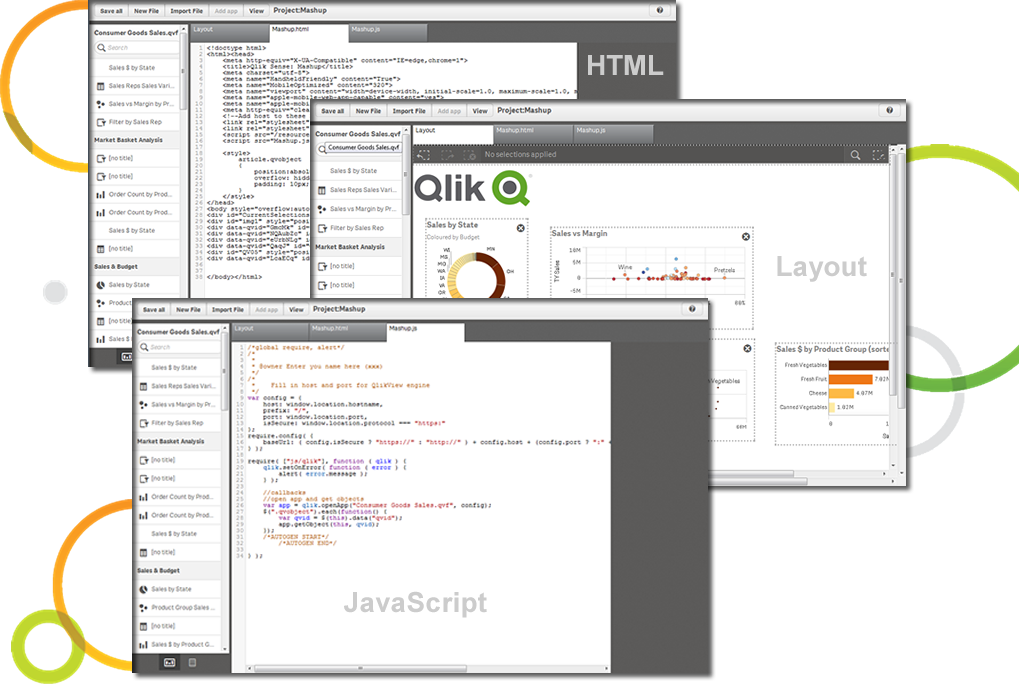
The customization of the platform opens up plenty of other options depending on the use cases. The API layer is incredibly rich and makes integration of Qlik based visualization into web pages a simple and effective pattern. It's been very easy to use with a great community made up of professionals. Qlik Sense has introduces artificial Intelligence into my data visualization and reporting activity.
A de minimis incentive was given to thank the reviewer for their time. The incentive was not used to bias or drive a particular response, nor was the incentive contingent on a positive endorsement. More Info
A de minimis incentive was given to thank the reviewer for their time. The incentive was not used to bias or drive a particular response, nor was the incentive contingent on a positive endorsement. TR verified that a representative sample of customers was invited. More Info