Adobe acquired Omniture in 2009 and re-branded the platform as SiteCatalyst. It is now part of Adobe Marketing Cloud along with other products such as social marketing, test and targeting, and tag management.
SiteCatalyst is one of the leading vendors in the web analytics category and is particularly strong in combining web analytics with other digital marketing capabilities like audience management and data management.
Adobe Analytics also includes predictive marketing capabilities that help…
N/A
Coveo Qubit
Score 6.0 out of 10
Enterprise companies (1,001+ employees)
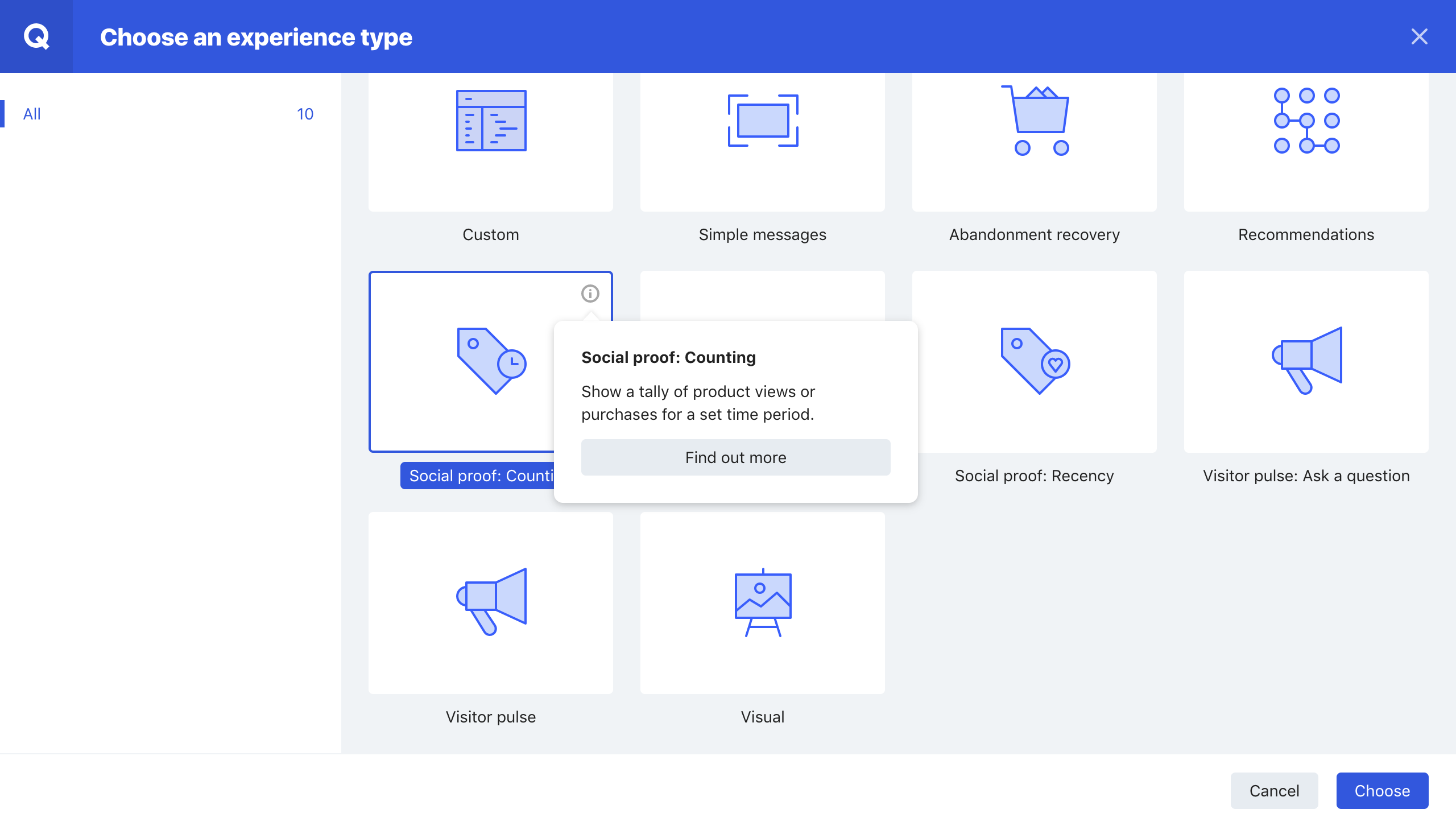
Qubit, now from Coveo (acquired October 2021) uses visitor history data to understand different user segments and serve personalized messages to segments using JavaScript. It is available as either a managed or self-service model. Data is collected using Qubit's own Universal Variable data model, or by integrating the user's existing model via our API. It combines quantitative data with qualitative visitor feedback to give Qubit users the ability to detect areas for optimization.
Using…
N/A
Google Analytics
Score 8.2 out of 10
N/A
Google Analytics is perhaps the best-known web analytics product and, as a free product, it has massive adoption. Although it lacks some enterprise-level features compared to its competitors in the space, the launch of the paid Google Analytics Premium edition seems likely to close the gap.
Sr. Marketing Manager of Web Analytics and Personalization
Chose Adobe Analytics
Adobe Analytics far surpasses Google Analytics in the following arenas: journey analysis. Adobe Analytics very clearly portrays user journey data unlike any other web analytics tool.
Verified User
Employee
Chose Adobe Analytics
Adobe Analytics is far better and customizable than the free version of Google Analytics.
I used Google Analytics extensively but Adobe Analytics triumphs. It provides an overall overview which is extremely helpful. Google is a great tool for advertisement and I suggest you not go into that venture to keep your exclusivity. This makes Adobe Analytics amazing and …
Many of our users come from a background of using Google Analytics. They like it, but Adobe Analytics gives them an ability for a more thorough analysis.
Historically I've looked at a lot of different products. More recently I'd say Mamo and Google Analytics. Those are probably the two big ones that I've seen around, so yeah.
It's more feature rich. It provides more dimensions, more breakdowns, and it also scales data better.
I believe Adobe is more suitable for complex website structures as its data visualization dashboard options gives multiple options to represent data in a dashboard which is easy to read and understand. Also, the setting up of CMPID and tracking of goals is much simpler along …
We felt Adobe Analytics was a much more robust platform and stacked that gave us much more depth into user behavior across our different channels. We needed a platform that had no sampling involved with a longer time. Period for analysis to ensure we were always able to pull …
Clients usually select Adobe Analytics because it suits them better than the alternatives and they want more customisation than GA4 offers. Also because they might be with Adobe Experience Cloud for a few other things like tag management, A/B testing, audience manager, campaign …
Adobe is more sophisticated and customizable but Google UI is a lot cleaner and nice that it connects with Gmail data so you can see demo of people going to your site/app.
As alternatives to Qubit, we considered: * Optimizely: more limited personalisation options, more expensive to be used across different sites. * Maxymiser: more expensive.
We chose to add Qubit to our suite of testing platforms based on their ability to reduce our reliance on internal resources. While other products provided professional services, Qubit's offering felt more strongly geared toward an organization that needed to produce many tests …
Having previously used Maxymiser around 3 years ago, I found their setup to be geared more away from faster moving retail. While tests would be thoroughly researched and built to a high standard, the length of time to turn around a single test was too long. Qubit has allowed us …
The decision to proceed with Qubit over other products was because of strengths on sample size and statistical significance of test results. The expertise, professionalism and enthusiam of their consultants and strategists was also a factor.
Key points that keep us close to Qubit are its knowledgeable resources, presentation and UI, ease of getting trained, ease of use, low time to market, analytics and reports.
Qubit is probably the most powerful tool that we reviewed. The challenge is that with the power comes a large responsibility to make sure you are doing it right and not having issues. With digital tools, power and complexity seem to go together so you have to make sure that you …
We're using Qubit as a fully managed testing platform, and their account management and level of service we've received from any other contact (technical, support, sales etc) was above any of their competitors. Integration and on-boarding was well done and we feel confident …
The decision to use Qubit was made based on the capacity to run a 3 month test before committing for a longer term and down to a recommendation from a sister company.
Yes - we chose this over other solutions. We chose it as it got the best balance between usability, functionality, capability and price. We also liked the people.
Primarily reference from companies I know who do A/B testing/CRO well. Speed of implementation was a factor, as was the excellent support of the on boarding/account management team.
I was not with the company during the original decision making process.
We are always are of other emerging solutions but it's Qubit's professional, can-do approach with their team of specialists that take time to understand our business and react empathetically that stops us …
Qubit's Decipher package was the difference maker. All the other Testing/Optimisation/Personalision packages offered very similar (but still excellent) proposals.
Whilst I wasn't directly involved in the decision to purchase Qubit instead of other point solutions, I am aware that one of the primary and main reasons was for the fact that it was one solution that combined functionalities such as A/B testing, optimisation and …
This was the first time that we had used a product such as this. Previously our processes had all been homegrown. Qubit was able to work with our unique situation and seamlessly integrate with our team.
The purchase decision pre-dates my time at the company but we used it extensively in my previous company and felt their offering of testing, personalization with the customer data they have allows us to offer richer experiences. They offer competitive pricing and a constant …
As a business we had not previously worked with a supplier offering a similar service and functionality to that of Qubit. We heard one of the Qubit founders speak at an event and were excited by the possibilities their technology and expertise could offer us to enhance the …
Basically, choosing Qubit prevented us from having different RFPs for personalization, A/B testing, customers surveys, dashboarding. Choosing Qubit made the whole scope integrated in 6 weeks with a totally acceptable workload on our side - where you would need several months to …
I didn't decide but did input my recommendation as I'd used Qubit in my previous job. In my experience they get closer to the client than other providers and it feels like a lot more is possible with their tool.
Google Analytics is free! And while Adobe Analytics is arguably more powerful, it's paid. Additionally, Google Analytics' integrations are vastly well known, thoroughly well (and more) documented, and used by more people. That means that it's also easy to find people that are …
Plain and simple - Google Analytics is a free solution with a robust amount of reporting capabilities. It only lacks as it provides a certain amount of reporting points out of the box compared to Adobe Analytics which is more of an enterprise type of reporting solutions. Adobe …
Google Analytics (free version) is typically my go-to recommendation for most companies. Small to medium size businesses, definitely. Larger organizations with need for a complex account structure / hierarchy and the need for highly customized analytics metrics, dimensions, …
We have been using Adobe Analytics for a while but the system seemed to be more complex when compared to super user friendly Google Analytics. Moreover, the option to add custom metrics and dimensions is lacking in Adobe Analytics. Google Analytics is good with transactional …
Adobe Analytics has been in the market for a long time; some people still know it as Omniture or SiteCatalyst. It seems that some great ideas from Google Analytics, such as Enhanced Ecommerce and the new way of measuring events with GA4, are adapted from the traditional Adobe …
Adobe Analytics and Google Analytics 360 are both paid/premium options for website tracking. Though there are certain use cases when these might make sense (you operate entirely in the Adobe suite, you're a massive company/site that doesn’t mind the price tag on Google …
I have not used Adobe Analytics as much, but I know they offer something called customer journey analytics, which we are evaluating now. I have used Semrush, and I find them much better than Google Analytics. I feel a fairly nontechnical person could learn Semrush in about a …
Ease of use: Google Analytics is known for its user-friendly interface and straightforward setup process, making it accessible for beginners. Adobe Analytics has a steeper learning curve and requires more technical expertise. Features: Adobe Analytics offers a more comprehensive …
Adobe Analytics is good but it is more suited to people who are fully and technically into reporting and the solutions it provides. Google Analytics on the other hand provides a much easier way of setting up the Analytics. Most of the data reporting, charts and visualisations …
Verified User
Account Manager
Chose Google Analytics
Google Analytics is free while Adobe Analytics is really expensive
Google Analytics is for me the default one to implement especially for business starting in analytics. The time (aka cost) of implementation is very low and it provides results in a matter of hours. The integration with the Google ecosystem is also a plus especially when …
Built-in reports are beneficial but you can create custom reports if you need more details with different dimensions and metrics it also provides insights which is just little data about your site traffic in sentence format its the best way to know which strategy you are on …
Google Analytics is a bit cheaper than its competitors and provides a slightly different role as it tracks all channels. It has a close relation to Google and this makes the data a bit more valuable than those programs that are not.
Google Analytics provides everything you need in terms of straight forward analytics needs. The tool is not very flexible compared to other software such as adobe, and if you want to upgrade to premium or add in a bunch of custom situations, that can be become very [tedious] …
[Google Analytics] provides a broader appeal, combining what would usually require several different platforms, and as such is a bit of a jack of all trades in comparison, although often to a "good enough" level. If there is a particular aspect that you then find you would like …
Google Analytics is the industry standard, integrates seamlessly with most site setups, and cannot even be compared on cost. While it falls short in some areas like individual user tracking and cross-device reporting, it provides 80-90% of the needed visibility for online …
Google Analytics is the web's gold standard. We also use StatCounter for redundancy sake and because its visitor tracking and basic reporting are spectacular. But Google is a must-have no matter what else you end up using.
The redundancy issues plays out in terms of data …
Google Analytics stacks up as some of the best among the competition, assuming you're using it for its intended purpose. It's been the easiest to integrate into our applications, as well as the easiest UI to use. We selected Google Analytics for security and budget reasons, but …
Both are great, just different. Most clients believe Google is the golden standard due to the strong presence of Google's brand everywhere, but Adobe seems to have stronger, drill down tracking at the expense of a harder to use interface.
We have been using Google Analytics for over 10 years. Over that time we have periodically reviewed our analytics platforms a number of times. For us, it made more sense to stay with google analytics primarily because if we migrated to another platform we would lose the …
Maybe for a small company with small products for their thing, Adobe may be bit of an implementation too much for them, but when it comes to companies like us, like a life sciences or large enterprises and even small enterprises, but with more products, more analysis that they need to make their marketing experience better, maybe Adobe product is the best suitable.
Coveo Qubit is a very helpful platform mainly for organizations that need to provide a solid business model before carrying out any implementation or new functionality. In addition, it is a very good tool to generate changes and show different content to different types of clients, with their personalization and segmentation criteria.It is ideal for simultaneous testing and customization, only one of these activities individually is not recommended.
Google Analytics is particularly well suited for tracking and analyzing customer behavior on a grocery e-commerce platform. It provides a wealth of information about customer behavior, including what products are most popular, what pages are visited the most, and where customers are coming from. This information can help the platform optimize its website for better customer engagement and conversion rates. However, Google Analytics may not be the best tool for more advanced, granular analysis of customer behavior, such as tracking individual customer journeys or understanding customer motivations. In these cases, it may be more appropriate to use additional tools or solutions that provide deeper insights into customer behavior.
It summarizes large complex data better than any other analytics solution I've dealt with without the need for sampling, gives the right level of detail, does the right level of breakdowns, aggregation. I consistently not only use Adobe Analytics, but I use other data sets and compare against Adobe Analytics. And as I go into Adobe Analytics and compare, as long as I've done the query right and the other systems, they're very, very close. And if anything, with a lot of Adobe's newer products, they've gotten more accurate over time. So that's basically, you asked me what I liked about it. I like that it's accurate. I like that I don't have to do a lot of explaining. There's enough explaining in the world of web analytics to have to go back and explain why data's problematic. And so like I said, provided that the implementation is correct, it's a very easy conversation. Even if people may not like the answer.
Qubit platform uses solid testing algorithms and delivers reliable reporting and analytics of testing campaigns. The dashboard section is easy to use and provides a good high level overview of the core campaign metric performances.
On-boarding and implementation of Qubit technology was painless and well handed throughout the entire process even with more complicated platforms.
Turn-around time for development and testing of campaigns is extremely fast. This enables the business to have a much higher throughput of tests and allows for quick validation of ideas rather than having to wait for months before a test is ready to go live on production site.
Support. I mentioned this earlier and we don't know what we don't know. Researching the massive amounts of documentation isn't realistic with bandwidth constraints, and our rep getting frustrated with us when we go through what we are seeing is disappointing.
Education. More please, and designed more towards the "business side". I get with the many many many different implementations (every company is different!), that it's tough, but even a basic of the basics would be nice for situations that everyone is looking at, like the engagement with the merchandising on the home page (or any certain page).
While they do work very closely with us, especially our success manager, more involvement on a technical level or a dedicated engineer, would be a great advantage. We develop a lot of experiences in house and, like all companies that dev in house, we have our own way of working. A dedicated engineer that got to know us better as well and understood how we work could only help. Sometimes, a few errors can get through QA due to this.
We've found multiple uses for Adobe Analytics in our organization. Each department analyzes the data they need and creates actionables based off of that data. For E-Commerce, we're constantly using data to analyze user engagement, website performance and evaluate ROI.
Qubit is currently providing resources and support we do not have internally. Our relationship managers are exceptional and I feel well informed and well supported by their team. The tool is nice, but our contacts from the company are the real reason to maintain our relationship. They work hard for clarity and continue to help us push for additional opportunities.
We will continue to use Google Analytics for several reasons. It is free, which is a huge selling point. It houses all of our ecommerce stores' data, and though it can't account for refunds or fraud orders, gives us and our clients directional, real time information on individual and group store performance.
Sometimes the processing times are very long. I have had reports or dashboards time out multiple times during presentations. It could be improved. It is understandable since there is a huge data set that the tool is processing before showing anything, however for a company that large they should invest in optimizing processing times.
Very simple user interface, built on top of advanced functionality, makes the platform easy to use. The team at Qubit are also very open to feedback and introduce new and useful features fairly often. On the reporting side, the inbuilt dashboard reports are good for a top-level view of test results, and Qubit have made a lot of their output data available should you wish to run your own analysis
Google Analytics provides a wealth of data, down to minute levels. That is it's greatest detriment: find the right information when you need it can be a cumbersome task. You are able to create shortcuts, however, so it can mitigate some of this problem. Google is continually refining Analytics, so I do not doubt there will be improvements
I do not ever recall a time when Adobe Analytics was unavailable to me to use in the 8 or so years I have been an end user of the product. My most-used day-to-day analytics tool Parse.ly however, generally has a multiple hours planned offline maintenance every two to four weeks, and sometimes has issues collecting realtime analytics that last anywhere between 15 minutes to an hour, and happen anywhere between 1 to 5 times a month.
I would say that the Qubit account managers are always available for any request. We have a lot of different promotions that could always do with last minute optimizing or changes and Qubit can be relied on to get this changes up and running in an impressive amount of time, so that we don't need to patch live or wait for the next IT sprint. Invaluable to our business.
We all know Google is at top when it comes to availability. We have never faced any such instances where I can suggest otherwise. All you need is a Google account, a device and internet connection to use this super powerful tool for reporting and visualising your site data, traffic, events, etc. that too in real time.
Again, no issues here. Performance within the day updates hourly. other reports are updated overnight and available to access by the next morning. Pages load quickly, the site navigates easily and the UX is quite straightforward to get command over. On this front, I give Adobe kudos for building a great experience to work within
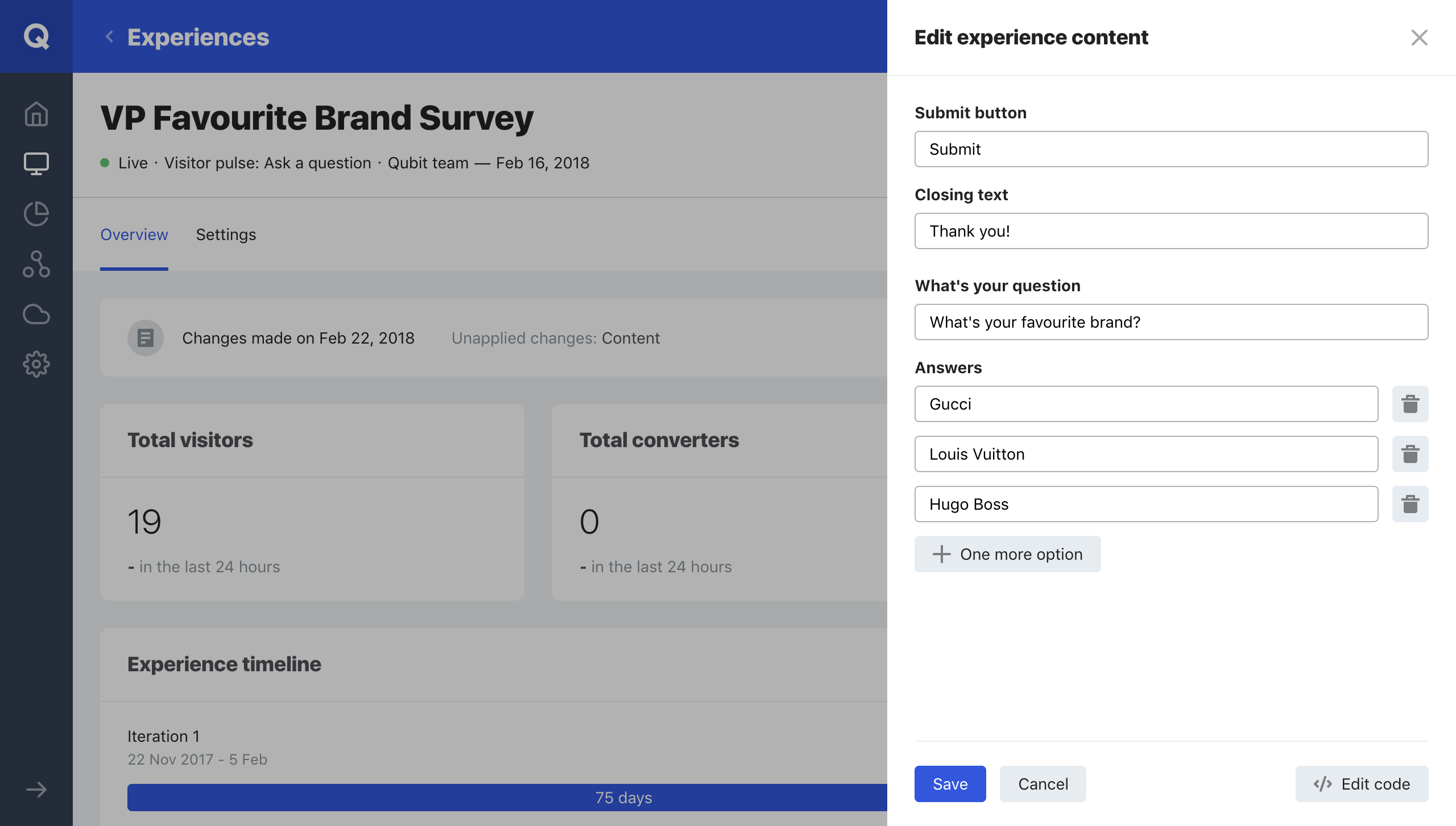
Technology is good for A/B testing and personalisation - allowing any team with a dedicated developer to create test relatively easily and to report/analyse them in a fair amount of details. Some advanced features, especially on the set up of test cells, are dearly missing. Unfortunately, new features are often not free of bugs... Also, support is sub-par, which means new features are realised without proper documentation, example or training (but of our Qubit counterparts and internally).
This has been a catalyst for improving our site's traffic handling capabilities. We were able to identify exit% from our sites through it and we used recommendations to handle and implement the same in our sites. We have been increasing the usage of Google Analytics in our sites and never had any performance related issues if we used Analytics
I barely see any communication from Adobe Analytics. The content on the web is also not that great or easy to read. I would recommend a better communication about the product and the new addons information to come to its user by a better mean.
Qubit are supportive and flexible in providing support. They are happy working out of usual hours, even on weekends and if I have any doubts about the set up of an experience they’re quick to respond and willing to check my work. On particularly big revenue days they monitor our account and they’re quick to identify and problem solve any issues.
The Google reps respond very quickly. However, sometimes they can overly call you to set up an apportionment. I'm very proficient and sometimes when I talk to reps, they give beginner tutorials and insights that are a waste of time. I wish Google would understand my level of expertise and assign me to a rep (long-term) that doesn't have to walk me through the basics.
It was a one-day training several years ago that cost the organization several thousand dollars. There were only about 10 people in the training class. Adobe tried to cram so much information into that one-day class that none of our users felt like they really learned anything helpful from the experience. Follow-up training is too expensive
The training was great, but would be great to have a script or PDF with some explanations of the qubit JS layer. Without the script you can just try to learn on your own, so the training is not as powerfull as it could be. On the other hand - would be great to have training related to reading statistics or personalisation.
The online training for Adobe SiteCatalyst consists of short product videos. These are ok, but only go so far. For a while Adobe charged a fee for this, but recently made these available for free. There are many great blog posts that help users learn how to apply the product as well.
love the product and training they provide for businesses of all sizes. The following list of links will help you get started with Google Analytics from setup to understanding what data is being presented by Google Analytics.
One of the benefits and obstacles to successfully using Adobe Analytics is a great / more accurate implementation, make sure your analytics group is intimate with the details of the implementation and that the requirements are driven by the business.
Implementation couldn't be easier. All we needed to do was insert the tag. (easy) and set up the data layer. (dev required) This was pretty smooth in comparison to some of the other tools we use on our site, and was done in less than a day. Note : Data needs to be collected for a set period of time before you can accurately rely on the data that you are receiving. This is normal though with everyone else that we have used
I think my biggest take away from the Google Analytics implementation was that there needs to be a clear understanding of what you want to achieve and how you want to achieve it before you start. Originally the analytics were added to track visitors, but as we became more savvy with the product, we began adding more and more functionality, and defining guidelines as we went along. While not detrimental to our success, this lack of an overarching goal resulted in some minor setbacks in implementation and the collection of some messy data that is unusable.
Google Analytics comes across more of a reporting tool whereas Adobe Analytics is more of an Enterprise level analytics tool. Contentsquare provides some traffic and flow capabilities but not to the same level as Adobe Analytics. However, Contentsquare's major advantage is its Zoning (Heatmapping), Impact Quantification and Find 'n' Fix modules; none of which are knowingly available in Adobe Analytics.
At the time of taking the product, we found no comparable alternatives. Since then, the product has only grown from strength to strength, so it still does not have any comparable competitors that offer both the technical product and business knowledge that Qubit can. Google appear to offering a competing product which may be one to watch in future, and something for Qubit to keep an eye on
I have not used Adobe Analytics as much, but I know they offer something called customer journey analytics, which we are evaluating now. I have used Semrush, and I find them much better than Google Analytics. I feel a fairly nontechnical person could learn Semrush in about a month. They also offer features like competitive analysis (on content, keywords, traffic, etc.), which is very useful. If you have to choose one among Semrush and Google Analytics, I would say go for Semrush.
Adobe Analytics is relatively affordable compared to other tools, given it provides a range of flexible variables to use that I have not found in any other tools so far. It is worth investing in if your company is medium or large-sized and brings a steady flow of revenue. For small companies, it can be overpriced.
My organization uses Adobe Analytics across a multitude of brand portfolios. Each brand has multiple websites, mobile apps and some even have connected TV apps/channels on Roku and similar devices. Adobe can handle the multitude of properties that have simple, small(ish) websites and the larger brand properties that include web, mobile and connected TVs/OTT devices.
Each of those larger brands has multiple categories and channels to keep track of. We can see the data by channel/device or aggregate all the data together. This gives our executive teams the full picture and the departmental teams the view they need to see their own performance.
Our requirements change throughout the year like most E Commerce retailers. At Christmas and Peak we're dealing with around ten times the usual traffic on the site. Qubit had no problems with this at all, tests continued to fire, and stats were still reported accurately. I don't think that it is the most server intensive .js anyway, but we have seen no issues at all.
Google Analytics is currently handling the reporting and tracking of near about 80 sites in our project. And I am not talking about the sites from different projects. They may have way more accounts than that. Never ever felt a performance issue from Google's end while generating or customising reports or tracking custom events or creating custom dimensions
The professional services team is one of the best teams for complex adobe analytics implementations, especially for clients having multiple website and mobile applications. However, the cost of professional services is a bit high which makes few clients opt out of it, but for large scale implementations they are very helpful
Adobe Analytics impacts nearly every aspect of a billion plus dollar revenue eCommerce business. From measuring the impact of new build features to marketing campaigns.
We are saving substantial money and resource effort by consolidating all of our properties to Adobe Analytics from alternative solutions, at which point we will finally be able to report on Total Digital, rather than disparate reports.
We support experimentation on every platform and the performance is only known through Adobe Analytics tagging.