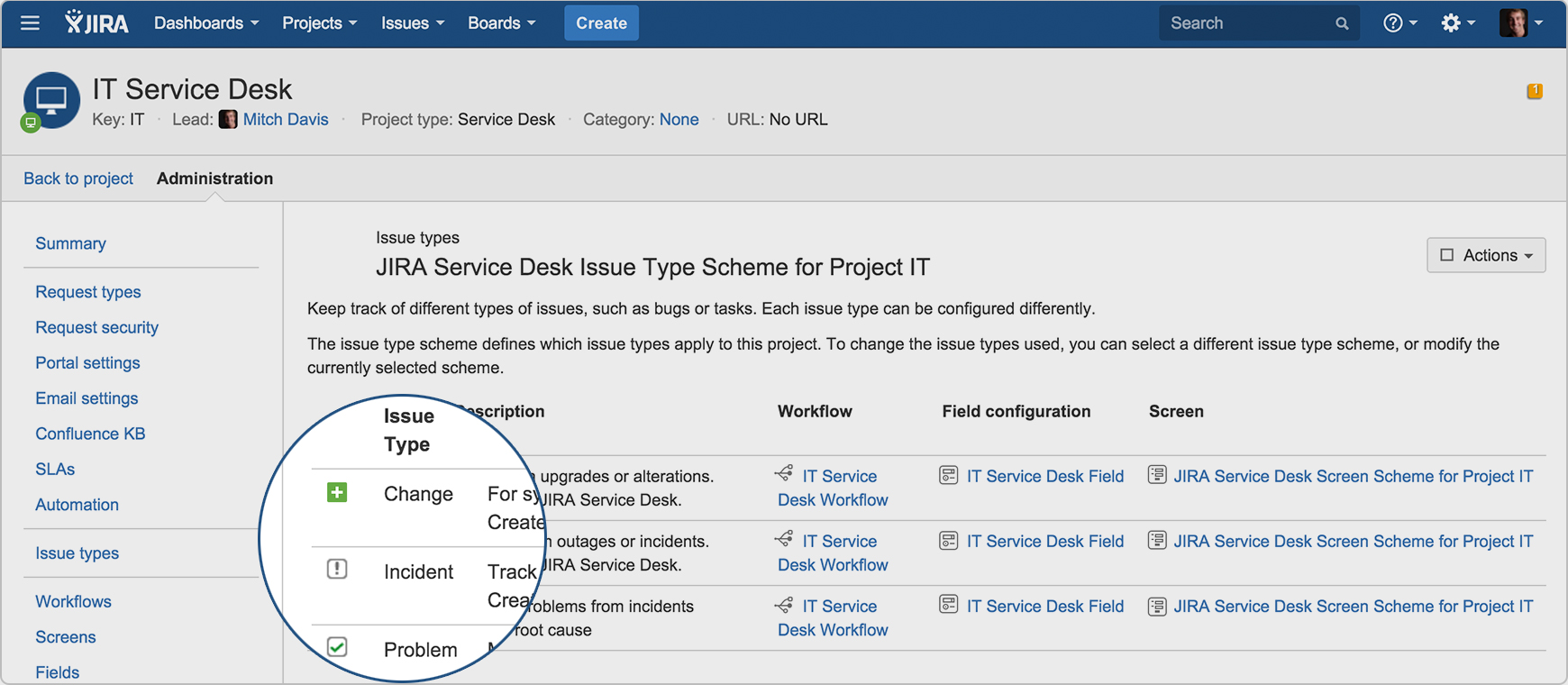
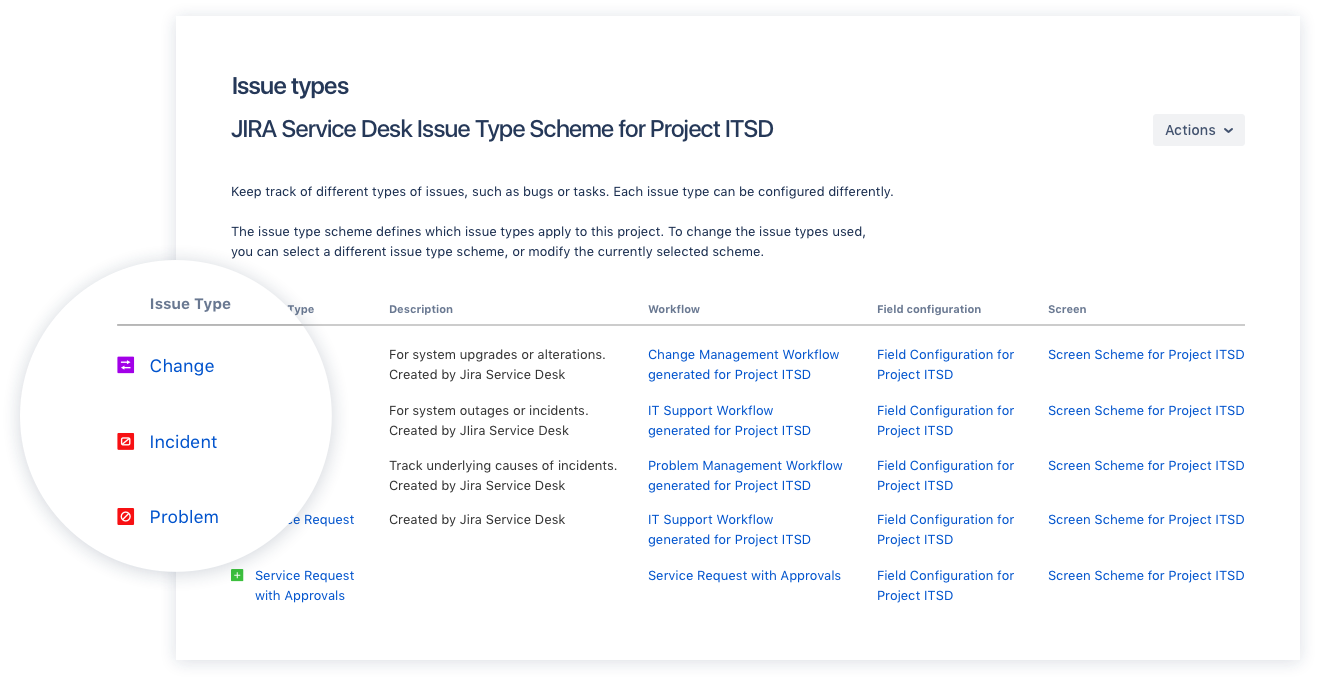
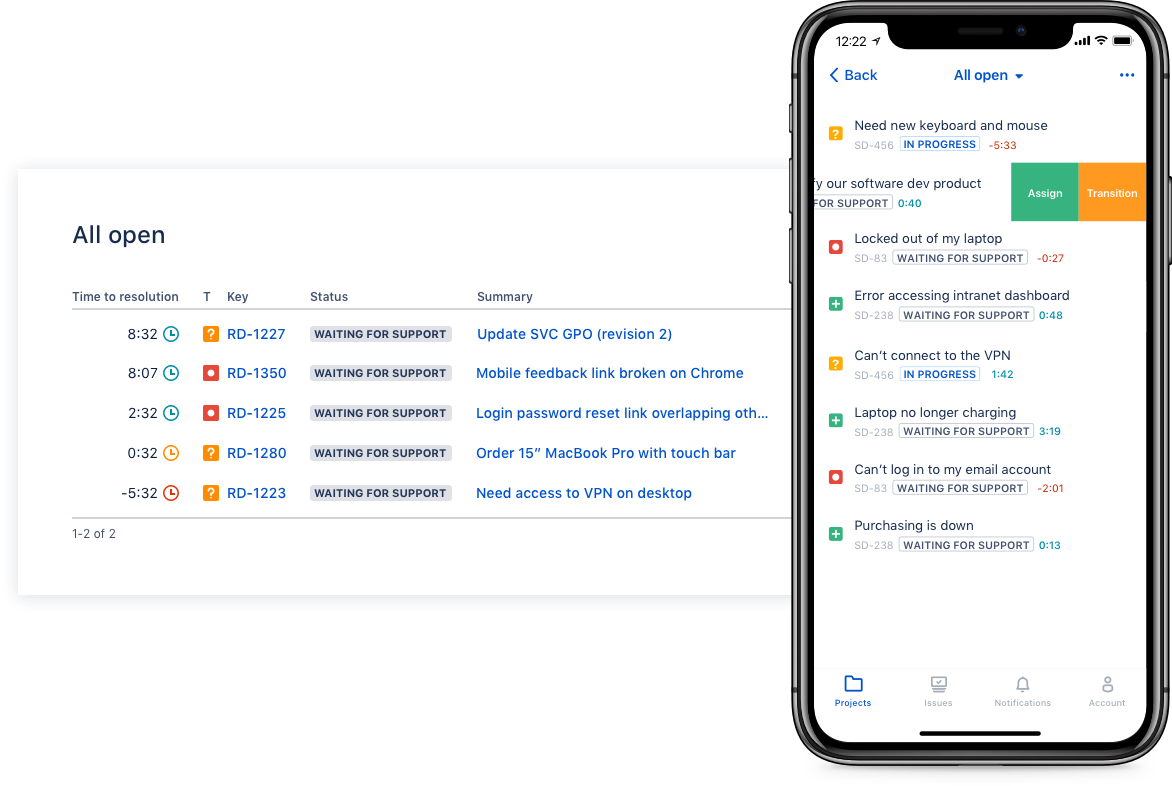
Jira Service Management (formerly Jira Service Desk, now including features from the former Mindville Insight, acquired by Atlassian in June 2020) is a service desk software that is purpose-built for IT, service, and support teams. The software provides everything IT and support teams need out-of-the-box for service request, incident, problem and change management. Jira Service Management integrates seamlessly with Jira Software so that IT and development teams can work better together. Users…
$0
per month
Zendesk Suite
Score 8.7 out of 10
N/A
Zendesk is a customer support solution with built-in ticketing, conversational messaging, and live chat, designed to help businesses of all sizes and industries deliver personalized service at scale. Zendesk's AI agents are trained in CX to help Service teams resolve customer issues faster and more accurately while still providing a human-centered experience. Zendesk ultimately aims to help businesses improve time to value, reduce effort per ticket, and keep costs low.
JSM is more purpose-built for internal support tickets and processes. It also provides a structure to support users, unlike generalist tools like Notion. We found that there isn't really an 'all-in-one' tool that can correctly handle internal and external requests. This isn't …
We chose Jira Service Management due to its easy integrations with the rest of the Atlassian tools, as we have also invested in those. For the price, the ability to add or remove agents, and the cost being reflected in that, it was an excellent medium for us. For the …
It was the most complete package, requiring the lesser adjustments compared to the others, had the most options to tailor to our specific needs, and the price for the Cloud hosted version was fair.
We selected Jira Service Desk because we were already Jira users, and the price point was easy to absorb. Our experience as Jira administrators made it easy to customize Jira Service Desk to our needs.
Unlike the 2 other alternatives, Jira is more complete. It is a bit harder to use, but because it has more customized and better functionalities. While other software can be used for almost everything, Jira works best for tech companies that need to work on agile methodologies …
We are now in the process of moving from Jira to Zendesk, however, I would assume that we would still be using Jira for the time being. Zendesk is a bit easier to understand and manage for the non-technical people, but Jira gave us the basics that we needed to have in order to …
Zendesk is a similar ticketing system that our organization used before JIRA Service Desk. The main drawback of Zendesk was that it can only be used as a cloud service. This means that our company data would be living on the internet at the hands of their security team. Another …
Sure there are other great service management products in the market. Since we use JIRA and Confluence heavily, Service Desk fits perfectly in the suite. As a brief example, after the customer creates a case, we can create an associated issue at JIRA for development team, after …
We have looked into other software and still use the others like Zendesk and Wrike in other departments but Jira Service desk made the most sense due to our Product development teams using Jira Software already. It was easy to keep it all under one umbrella giving us the ease …
Here are the explanations for my preference of analysis Zendesk Suite to this end:
Power + Usability: Zendesk Suite has abundant omnichannel coverage, acceptable automation, and decent reporting but does not go all in to full-custom dev mode, so hangs nicely in the space of …
Zendesk support is your one-stop shop for managing customers via the customer support portal that has a slew of products available for use via several channels, depending on your particular need may it be email messaging, chat messaging, or voice, and it is quite superior …
In comparison of tracking tickets, I found Jira to be more confusing than Zendesk. I have not used Jira in many years and I know that others in our organization use Jira in addition to Zendesk. Of all the support platforms, I think Zendesk is the best and most used, which is …
Zendesk is a customer support tool that offers the best features, is intuitive, dynamic and easy to use. Allows the use of macros to optimize messages to customers. This platform makes it possible to optimize and organize the services we offer to our customers, which are …
Zendesk is far superior because it can cater to any size company. Also, regardless of which package you purchase, you get to set up a multi-channel and extensive self-service support, which was very beneficial for us. Finally, the self-service portal hosts a rich knowledge base …
Zendesk is currently on par with both of these services in that they are great ticketing software programs but are light in Contact/Sales management. The autoresponder with Zendesk is much easier to implement and customize compared to the other options. The option of the mobile …
JIRA Service Desk is better suited if you need to connect with company's JIRA and internal WIKI (or Confluence). If you do use JIRA (which many companies do), JIRA Service Desk is a better choice. I didn't select Zendesk, but rather got it when joine dthe company.
We used Kayako and it was pretty basic in terms of workflows and ticket management. It wasn't multichannel and it didn't have a mobile app. Ticket categorization wasn't as robust and effective, but it was easy to learn. JIRA is as robust as Zendesk, but it is also not easy to …
Salesforce is a more robust tool with back-end SQL reporting functionality and numerous plugins, but with this comes cost. Most startup organizations do not want the expense, at least not at the beginning of the product life cycle.
Features
Jira Service Management
Zendesk Suite
Incident and problem management
Comparison of Incident and problem management features of Product A and Product B
Jira Service Management
8.6
84 Ratings
5% above category average
Zendesk Suite
8.8
172 Ratings
7% above category average
Organize and prioritize service tickets
8.883 Ratings
9.3171 Ratings
Expert directory
9.02 Ratings
8.2118 Ratings
Service restoration
9.52 Ratings
00 Ratings
Self-service tools
8.275 Ratings
00 Ratings
Subscription-based notifications
10.01 Ratings
8.7119 Ratings
ITSM collaboration and documentation
7.870 Ratings
8.2122 Ratings
ITSM reports and dashboards
6.871 Ratings
00 Ratings
Ticket creation and submission
00 Ratings
9.4172 Ratings
Ticket response
00 Ratings
9.3171 Ratings
ITSM asset management
Comparison of ITSM asset management features of Product A and Product B
Jira Service Management
10.0
1 Ratings
19% above category average
Zendesk Suite
-
Ratings
Configuration mangement
10.01 Ratings
00 Ratings
Asset management dashboard
10.01 Ratings
00 Ratings
Policy and contract enforcement
10.01 Ratings
00 Ratings
Change management
Comparison of Change management features of Product A and Product B
Jira Service Management
7.6
78 Ratings
11% below category average
Zendesk Suite
-
Ratings
Change requests repository
8.571 Ratings
00 Ratings
Change calendar
6.52 Ratings
00 Ratings
Service-level management
7.876 Ratings
00 Ratings
Self Help Community
Comparison of Self Help Community features of Product A and Product B
Jira Service Management
-
Ratings
Zendesk Suite
8.4
156 Ratings
5% above category average
External knowledge base
00 Ratings
8.3150 Ratings
Internal knowledge base
00 Ratings
8.5143 Ratings
Multi-Channel Help
Comparison of Multi-Channel Help features of Product A and Product B
I think using a ticketing system is very easy to use and allows multiple teams to create help desks in the same portal. In terms of internal usage, I think this is a great option. However, suppose you're trying to keep internal items and external helpdesks in the same instance. In that case, this is not ideal, as there is no effective way to separate the two instances to protect internal data better.
Being a customer support agent, I found it very good when it comes to send an email or call or chat- with the user. I can do all that from the one single platform which is so easy and time saving for you. It does not take much time to use this, We can chat- with the user and at the same time we can send an email to them as well.
Integration with many of the most common tools companies are using (Slack, MS Teams, Salesforce, ... etc)
Natural workflow with Jira (as product development / project management tool) which makes the full fix and follow up of the tickets / issues very easy to follow
Allow multiple different entry points and work flows for as many different needs your teams / company have
Is there a way for AEs and CSMs to be informed in a weekly summary of all their accounts and any tickets? Example: Disney submitted a ticket on XYZ. Google has an urgent issue on X still unresolved.
Is there a way for CSMs or AEs to have a Dashboard that's specific to their accounts instead of seeing all the tickets in the queue that are not relevant to them?
Zendesk is an amazing tool for communicating with your customers easily. The communication tickets from sellers to us or from us to sellers are stored, and there are statuses used to make communication easy. We have internal conversations between departments, linked with useful software such as Zingtree, Talkdesk, and Webs.
If you're used to other tools in the Atlassian ecosystem, you'll feel right at home with JSM. It's also a platform that technical folk can easily pick up. However, I wouldn't recommend using JSM as a company's first jumping off point into Atlassian. There are a lot of other 'newer' tools that provide sleeker ITSM systems at a similar cost.
Pros: The agent interface is sleek, contemporary, and relatively easy to learn compared to many other enterprise tools. For common tasks, admins are given point-and-click options- adding fields, modifying workflows, constructing macros. The knowledge base (Guide) editor is easy to use for non-developers. Drawbacks: Once you move past the initial things - complex automations, reporting/analytics in Explore, and/or customizations integrating the API, it requires much more advanced training to use successfully. Navigating between the different modules (Support, Explore, Chat, Guide) can feel very disconnected; often you are reminded that it really is a "suite" of products brought together -not really one unified platform. If you're using multiple brands managing simultaneous support tickets, or heavily customizing workflows to meet your brand, you may run into a bit of struggle with usability. So: it's a lot more user friendly than the palaces (Salesforce Service Cloud, ServiceNow), but is not used as quickly or with as much streamlined flow as a product made for a small shop. So if you are looking for a great balance, this is a good option if you are a net new organization or an organization on their way to scaling from 15 - 50 employee. Expect some elbow grease from the admin team once learning, adapting, and working efficiently once you move past the basics with your support tickets and initial customizations.
I gave JIRA a 9 rating since for me JIRA works according to its purpose. Since there is a customer portal, our clients can leave a comment or communicate with us using the PR ticket that way it is easier for us to also request any additional information we need for our investigation.
We rarely need to contact their support team, but when we do they are responsive. However there have been notable times when communication between myself and the support rep was challenging despite me providing clear explanation of the issue, screenshots, and a thorough explanation of the goal we hope to achieve. It took several back and forth attempt, on a few occasions, to get resolution on an otherwise simple request
Zendesk has tons of available material for training - videos, webinars, articles, etc. The only reason this is not a 10 is because it can be hard to figure out how to navigate to these things and find what you are looking for.
I was very satisfied. They have a free trial for 30 days and I recommend you do that and use it. It is very easy to get started with the basics and the build on over time.
The only thing technically complex was single sign-on and integration to Salesforce.com required some tweaks – otherwise setting up system was very easy
Zendesk is a similar ticketing system that our organization used before JIRA Service Desk. The main drawback of Zendesk was that it can only be used as a cloud service. This means that our company data would be living on the internet at the hands of their security team. Another drawback of this is the price is significantly more expensive rather than hosting it yourself. Zendesk does have some additional features such as commenting on multiple tickets at once that JSD does lack. However, switching to JSD was significantly more cost effective because we have the ability and the infrastructure to host our own ticketing system, something that Zendesk could not provide. Ultimatley switching to JSD saved us money and allows the ability for integration with all of the other Atlassian Suite products that we use on a day to day basis.
The customisable reporting every time. Our leadership reply on me to run my team and want to know what customers are telling us so they can elevate our products. We have extensive custom reports that tie up all aspects of our product and customer journeys. I've not found another product that allows me as much freedom as Zendesk Suite explore does, so far.
Integrating other AI solutions for an organization with high volumes can cost about USD5000 monthly. With Zendesk AI and by building onto the same with AI powered apps built for Zendesk Suite we save a projected USD4000 monthly.
Robust Zendesk APIs have enabled us to integrate our internal system with a customized app saving us hundreds of hours every quarter spent loading customer profiles that are not loaded instantly from the app.
Plug and play apps like Round robin save us weeks of sprint delay timelines as they do not require additional coding or developer support to install and start using.