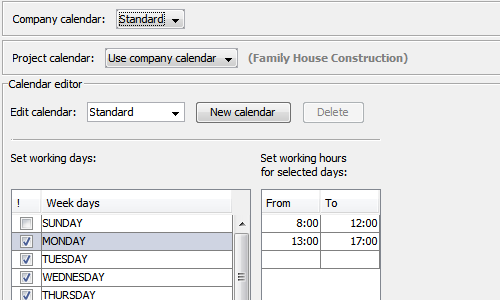
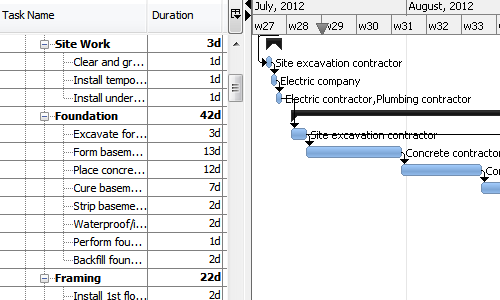
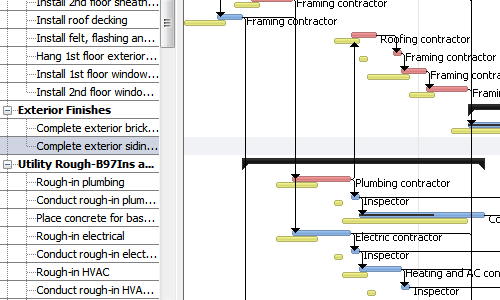
RationalPlan is project management software that has been designed to help project managers keep their projects on time and within budget. The main goal of this software is to make the process of planning projects as short and as straightforward as possible and to guide novice project managers through each step but offer enough tools to those who are more experienced.
$0
per month per user
Wrike
Score 8.6 out of 10
Mid-Size Companies (51-1,000 employees)
Wrike is a project management and collaboration software. This solution connects tasks, discussions, and emails to the user’s project plan. Wrike is optimized for agile workflows and aims to help resolve data silos, poor visibility into work status, and missed deadlines and project failures.
$240
per year 2 users (minimum)
Pricing
RationalPlan
Wrike
Editions & Modules
Free
$0
Beginner
$4
per user
Master
$12
per user
Production
$19
per user
Stakeholder
$64 USD
Lifetime License per Seat
Single
$145 USD
Lifetime License per Seat
Multi
$288 USD
Lifetime License per Seat
Server
$668 USD
Lifetime License per Seat
Wrike Free
$0
per month per user
Wrike Team
$10
per month (billed annually) per user (2-15 users)
Wrike Business
$25
per month (billed annually) per user (5-200 users)
Apex
Request a quote
per month per user
Pinnacle
Request a quote
per month per user
Offerings
Pricing Offerings
RationalPlan
Wrike
Free Trial
Yes
Yes
Free/Freemium Version
Yes
Yes
Premium Consulting/Integration Services
Yes
Yes
Entry-level Setup Fee
Optional
No setup fee
Additional Details
—
Every premium plan begins with a 14-day trial period.
I use Multi which is the standalone platform. While there is no team collaboration it does have an email feature built in. Rational Plan does have the Server option but it all comes at a price the same as Wrike.
I have used many free and commercial platforms and rationalplan …
Wrike
No answer on this topic
Features
RationalPlan
Wrike
Project Management
Comparison of Project Management features of Product A and Product B
RationalPlan
6.6
4 Ratings
15% below category average
Wrike
7.9
959 Ratings
3% above category average
Task Management
7.34 Ratings
9.1953 Ratings
Resource Management
6.84 Ratings
7.6823 Ratings
Gantt Charts
7.34 Ratings
7.4676 Ratings
Scheduling
6.44 Ratings
8.3835 Ratings
Team Collaboration
7.31 Ratings
8.7953 Ratings
Support for Waterfall Methodology
7.32 Ratings
7.9486 Ratings
Document Management
3.63 Ratings
7.6807 Ratings
Email integration
6.43 Ratings
7.8724 Ratings
Mobile Access
9.11 Ratings
7.7697 Ratings
Timesheet Tracking
4.51 Ratings
7.6455 Ratings
Budget and Expense Management
6.43 Ratings
7.0351 Ratings
Workflow Automation
00 Ratings
8.1827 Ratings
Support for Agile Methodology
00 Ratings
7.9537 Ratings
Change request and Case Management
00 Ratings
7.723 Ratings
Professional Services Automation
Comparison of Professional Services Automation features of Product A and Product B
Appropriate as a great alternative to MS Project. RationalPlan provides most of the features needed to develop and maintain mid-level complex schedules. Less Appropriate for large complex schedules of long duration. These can be a challenge due to Duration at top-level. It is also a challenge to generate reports for management - reporting feature is limited.
Wrike helped us stitch PMO-related activities under one umbrella. The easy collaboration with multiple access types, combined with security access definitions, helped users across the organization contribute according to their roles. This helped provide the organization with multiple items to be reviewed in a single tool. This saved time in weekly review meetings by avoiding switching between multiple tools & files.
Portfolio view is great to get a feel for how your programme is running at a glance and which areas possibly might require attention. The fact that you can customise your view by adding your own columns is another plus.
All project information in one tool is a big plus for me considering the amount of projects we run with. This really improves efficiency and saves me time. You have the ability to add documents to tasks, manage risks, email resources tasks due for projects they are assigned to(might need some refinement depending on your requirements), material db with costing etc.
I wish that Wrike had more drag and drop functionality that would be connected to assignee and also I wish that the finish date of a task would update to the date where you checked completed. It does not do that. Also finishing a task doesn't move the start date of the next task it "protects your time in that way", but our management team wants us to quickly see what we have down the pipeline rather than having to scroll down the list of upcoming tasks.
We have project templates set up based on what job type is selected in our work request form. This helps save time by having specific tasks already on each job as it is opened. Then it's just a matter of scheduling the tasks based on the job request and current workload. As long as a due date is flexible, it's easy to shift specific due dates as needed.
Over two years of (almost) daily usage without outages. Don't remember any errors. I give it 9 only because some Wrike plugins (for online document edit) are based on NPAPI architecture. These types of plugins are being phased out in new browsers, and NPAPI plugins are disabled by default in recent versions of Chrome so you have to do some browser adjustments when you switch browsers or move to another computer.
Wrike tasks loads fine, but I hate clicking files and wait for a bit of time since it is powerpoint or word, Wrike assumes I want to open those on Wrike. My suggestion is to link it to office 365 so we do not need Wrike based decoder for PPTX and DOCX
During my learning phase with Wrike, I initially struggled with setting up automation rules and request forms. However, Wrike support was always my go-to, resolving issues within seconds or minutes. Their assistance made the learning process much easier. My best experience was receiving step-by-step screenshots to follow, with the support team on standby until I was completely satisfied.
I love the Wrike training options. Wrike Discover has tons of courses, learning plans, certifications, etc. This is an area where Wrike definitely shines! I wish these resources were more in your face for new people, because it seems like a lot of coworkers didn't know all of this training was available to them.
There are a lot of bells and whistles in Wrike, and not all of it is easy or intuitive to understand once it's plopped in your lap. It's easier when there are a few choice people who understand Wrike as a platform and articulate it in such a way where it makes it easy to pass it along to others in the group
RationalPlan is cost-effective and allows most users to prepare and manage their schedule. The software lacks comprehensive reporting and duration changes at the top level of a project.
Jira did not at all help us get our work done as content creators. I think that was because Jira wasn't quite right for our uses. Wrike fits our needs so much better. I can't tell you enough the relief I felt when we adopted Wrike and I never had to use Jira again.
The sky is the limit for what can be done in Wrike. We started with 1 use case and within 5 months we migrated several key business practices over to Wrike because they were easier to manage. Use cases so far: process improvement, management review, corrective actions, maintenance requests, month-end financial closing, and document management. As we grow, it's easy to imagine putting even more into Wrike where it becomes a cornerstone for how we do business
Different teams (e.g., contracting, compliance, provider relations) can view updates in real time, comment directly on tasks, and escalate items when needed.
Wrike allows us to template the contracting process (from intake to signature) to ensure consistency across payers and reduce administrative overhead.
Leadership can see the status of negotiations at a glance, identify bottlenecks, and prioritize resources accordingly.