Adobe Test and Target is an A/B, multi-variate testing platform which Adobe acquired as part of the Omniture platform in 2009. It is now part of the Adobe Marketing Cloud. It offers tight integration with Adobe analytics and content management products.
N/A
Optimizely Web Experimentation
Score 8.7 out of 10
N/A
Whether launching a first test or scaling a sophisticated experimentation program, Optimizely Web Experimentation aims to deliver the insights needed to craft high-performing digital experiences that drive engagement, increase conversions, and accelerate growth.
N/A
Quantum Metric
Score 7.8 out of 10
Enterprise companies (1,001+ employees)
Quantum Metric is designed to help organizations build better digital products faster. Their platform for Continuous Product Design gives business and IT teams a single version of truth which the vendor describes as fast, quantified, and grounded on what customers actually experience. The solution ultimately aims to help teams agree on priorities, build products customers love, and innovate with speed and confidence.
For us, the decision was very straightforward. We chose to invest in the Adobe stack and utilize tools that are developed to integrate together and complement each other. Ex: Adobe Target 'A4T' integration within Adobe Analytics. Optimizely appears to be a great tool, but …
In my personal opinion, Optimizely is a clear choice here while Google Optimize is for the low-budget minded decision-makers and Evergage for the COE more geared toward personalization; however, in our case we were already locked into using Target prior to my arrival. I don't …
Previously, we had the opportunity to work with some similar services and to be honest we had a disastrous experience because they were not what we were looking for, but since Adobe Target was implemented it has proven to be a highly professional service for our company.
I have used Optimizely for A/B testing. Optimizely makes it easier to set up almost any type of testing experiment. Optimizely is also strongly recommended for a limited number of users and when you want to optimize the cost. Optimizely was selected over Adobe Target since the …
We seriously considered another software but because we use so many other Adobe products this made the most sense for us. If you are not dependent on other Adobe software and are a smaller company, in my opinion, Target may not be the best fit.
We have looked at Optimizely but at this point are sticking with Test & Target. We like the integration it has with our Analytics tools such as Ad Hoc and SiteCatalyst. Also, we feel that Adobe has some interesting products that we would like to dig into in the future such as …
Verified User
Employee
Chose Adobe Target
While my organization has been using Adobe Test & Target, I have had the chance to evaluate Optimizely, another tool that allows for multivariate testing with a smooth interface. The reason I like to stick with Adobe Test & Target is its ability to interface and interact with …
We were a former Adobe Test and Target client and felt that the tool was not keeping up with the competition. Optimizely greatly streamlined the process of setting up and running A/B tests, making results easy to understand, and provided superior customer service. I understand T…
Maxymiser - The statistical significance engine used by Optimizely helps to reduce the detection of false positives. These were noticed on many occasions within the maxymiser tool.
Adobe Target, VWO and Google Optimize are often the three that come up against Optimizely from an agency recommendation perspective. The first, because Adobe Target is a comparable enterprise optimization platform; the second, because it's a paid but has a much more achievable …
I have used tools in various spaces that have all the flashy bells and whistles, and is, but lacks some basic features - Optimizely isn't this. While other tools, such as Adobe Target, Evergage, Dynamic Yield, Google Optimize, or even Taplytics may make more sense for your …
Optimizely Web Experimentation and Adobe Target are both powerful tools for website optimization and experimentation, but they differ in some key ways. Here's a comparison of some of the most important features of each platform:A/B testing: Both Optimizely and Adobe Target …
Optimizely Web Experimentation stacks up favorably against Adobe Target, Kameleoon, and Oracle CX Marketing in terms of ease of use, customer service, and features. It is easy to set up and execute experiments, the customer service team is always quick to respond to any …
Google Optimize was much less flexible for our program needs and requires Google Analytics for analysis and metrics tracking. Optimizely Web Experimentation lets you build any number of metrics which can be much more complex than standard GA goals. Optimizely Web …
We use AEM so Adobe Target would be a natural choice, it integrates naturally with the Experience Fragments and all the content we already hold there. However - with extensions - we've been able to unlock a similar workflow to be able to seamlessly test. Optimizely has the …
Optimizely is more user-friendly and cost-effective, ideal for experimentation-focused teams, while Adobe Target excels in advanced personalization and seamless integration within the Adobe ecosystem, making it better suited for large enterprises.
It's a lot more, well, site stacked, it's way better than that. Adobe Target. I think the UI is easier to use on Optimizely. The one thing that I would say comparatively is our analytics talking to each other. Obviously Adobe, we use Adobe Analytics and Adobe Target, so they …
I think that Optimizely Web Experimentation is much easier to implement and use, but the entire Adobe Experience Cloud provides a ton of value if you have multiple products.
Optimizely is my favorite due to its ease of use and exceptional testing capabilities. It is not the cheapest tool, but the other tools that could be compared are not cheap—you get what you pay for. Some of the smaller tools are making gains, though!
> Adobe's pretty cool for its recomentation / AI / ML engine > VWO's wysiwyg is pretty solid and the heatmapping is nice > abtasty's consent features are pretty cool to launch patch and AB Test Consent Rate > Monetate & Dynamic Yield's pre-built personalization features help …
Analytics are vastly superior, platform UI is by far the easiest to use, and capabilities are best in class. If your organization has any budget for a web experimentation tool, it should be using Optimizely Web Experimentation.
unbounce's Visual Editor is what I'd expect out of Optimizely Web Experimentation, but I believe it's missing. Otherwise, Optimizely Web Experimentation is better.
I think that Optimizely is more user-friendly than Adobe and Monetate, for example - Adobe is really suited for people with deep pockets and a distinct technical acumen that may not be suitable for a small business. Montetate is not user-friendly - even for seasoned marketers. …
Optimizely's community is definitely more active, and resourceful. The platform is also more user-friendly so that members of other departments can review collected data, or results. Optimizely was chosen due to its efficiency, simplicity, and pricing. It was also great to read …
Quantum Metric
Verified User
Analyst
Chose Quantum Metric
Quantum Metric is a huge leap up from Mouseflow, which is very basic. Quantum offers more filters so I'm not sifting through thousands of recordings to find one or two. My organization uses Adobe for our everyday analytics and not Quantum. They do different things and I don't …
If you're using the Adobe stack and tools to power your website, Target is a great solution to implement. I've utilized Target within two organizations, one running on Adobe Experience Manager (AEM), and the other on Adobe Magento. I don't see how companies could harness the full capacity of Target without also having Adobe Analytics integrated. This is their 'secret sauce' and might not be a good solution for companies who are invested in Google Analytics 360. Integration was straightforward but did require support from the Adobe team to implement successfully. While Target is a great tool for digital teams to support, you'll need your tech team aligned and available to support implementation.
I think it can serve the whole spectrum of experiences from people who are just getting used to web experimentation. It's really easy to pick up and use. If you're more experienced then it works well because it just gets out of the way and lets you really focus on the experimentation side of things. So yeah, strongly recommend. I think it is well suited both to small businesses and large enterprises as well. I think it's got a really low barrier to entry. It's very easy to integrate on your website and get results quickly. Likewise, if you are a big business, it's incrementally adoptable, so you can start out with one component of optimizing and you can build there and start to build in things like data CMS to augment experimentation as well. So it's got a really strong a pathway to grow your MarTech platform if you're a small company or a big company.
Quantum Metric is a true professional, and I love the level of insight and industry knowledge they bring to the table. We use it at the departmental level, including marketing, customer service, and IT. Session replay allows our data consumers to derive insights faster and easier than digging through data. It lets us see or understand how users feel and work to enhance those feelings. The quality of support and the time to respond are also noteworthy. They have great coverage, but the learning curve is very steep and requires a lot of technical support and hand-holding.
This application gives us an incredible integration with Adobe Analytics that allows its operation to be the best and determine the performance of our website.
It offers us an analysis based on user behavior and a web page customization option to adapt and meet the needs of those users.
The Platform contains drag-and-drop editor options for creating variations, which ease the A/B tests process, as it does not require any coding or development resources.
Establishing it is so simple that even a non-technical person can do it perfectly.
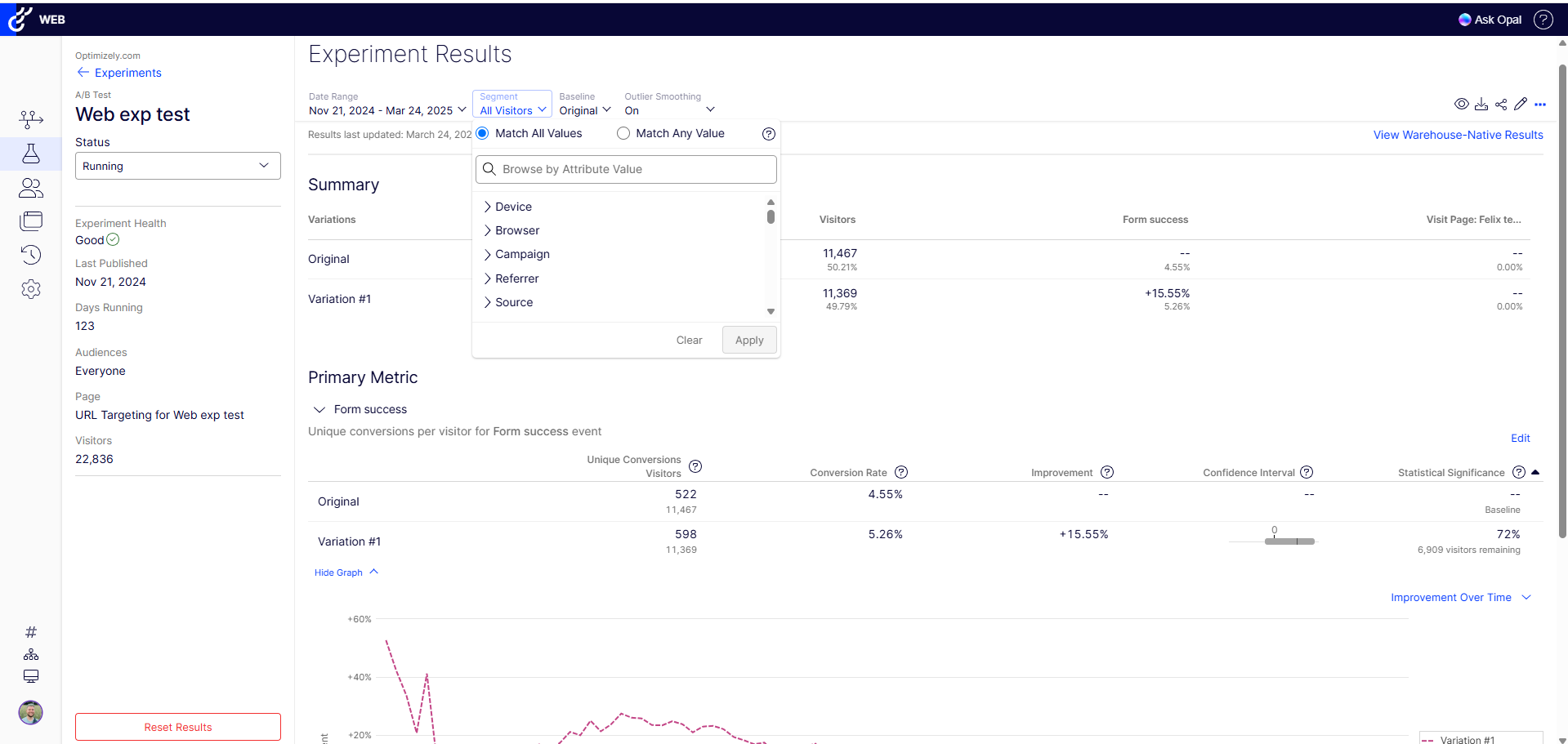
It provides real-time results and analytics with robust dashboard access through which you can quickly analyze how different variations perform. With this, your team can easily make data-driven decisions Fastly.
Identifying user pain points and frustrations. Quantum Metrics has a data point called Rage Click which shows when a customer has clicked multiple times back to back on a particular section of the website.
Replaying a session to see everything that is loading on the front end to the customer, as well as the backed end of the website, has been critical in troubleshooting the experience.
Heatmaps are a awesome tool we have found very useful in showing engagement with different content on the page, how far user scroll & drop off and to see a split side by side view of the same page in an a/b test.
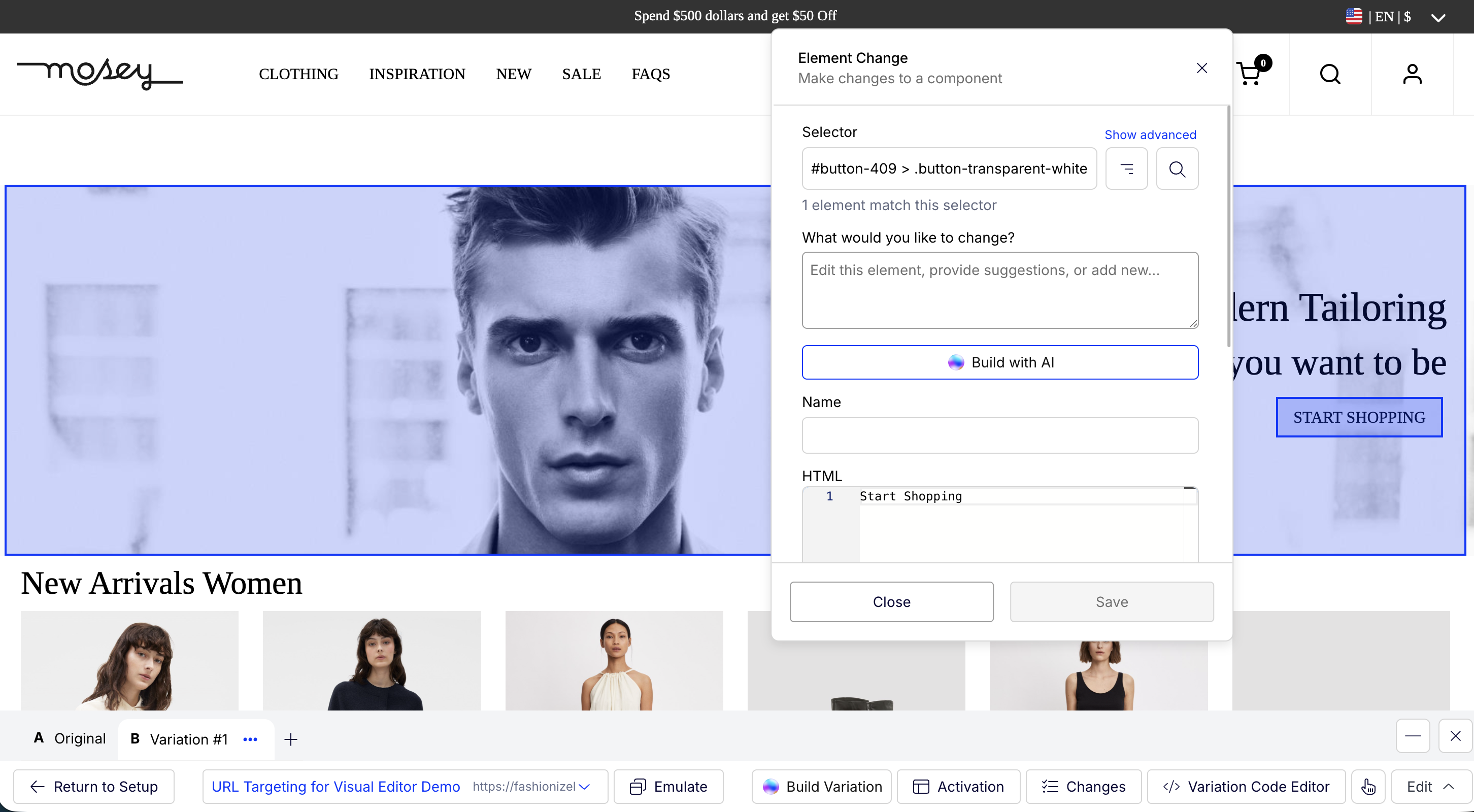
This is something a lot of testing tools struggle with, but I think the WYSIWYG ("What you see is what you get") editor - or Visual Experience Composer (VEC) in Adobe terminology - could definitely use some work. It's a struggle to execute many tests beyond simple copy, color, placement changes, and even the features that do exist are often clunky if not altogether broken.
The interface itself can be a bit counterintuitive in certain parts. If you are familiar with other tools, it's likely middle of the road in this respect; think much easier to understand than Monetate for instance, but a far cry from the simplicity of an Optimizely.
It can be a bit buggy from time to time. The worst example is the frequency at which the tool will fail to save due to an error, but not inform you of this until you try to save, at which point your only option is to log out, log back in, and make all of your updates once again. It can become an extreme pain point at times, and I personally have just gotten into the habit of saving every couple of minutes to avoid a massive loss of productivity.
We have a team of people trained on how to use the application and it integrates well with the other Adobe products we use. Our future roadmap of testing will require some complex scenarios which we hope Target will be able to accomplish
I rated this question because at this stage, Optimizely does most everything we need so I don't foresee a need to migrate to a new tool. We have the infrastructure already in place and it is a sizeable lift to pivot to another tool with no guarantee that it will work as good or even better than Optimizely
Quantum is a nice tool and is user friendly however I believe there always room for improvement. We have experienced minor issues with a few sessions which were solved by Quantum support reps in a timely manner and some of the dashboards are not as robust as other tools we use
The recent UI update is a complete mess. It is difficult to navigate and find features that previously existed. The reactiveness of the page depending on window size is also ridiculous and it is absurd that depending on how large your window is, entire columns of functions will disappear with no indication that they are missing. The usability of the tool has fallen off a cliff.
Optimizely Web Experimentation's visual editor is handy for non-technical or quick iterative testing. When it comes to content changes it's as easy as going into wordpress, clicking around, and then seeing your changes live--what you see is what you get. The preview and approval process for sharing built experiments is also handy for sharing experiments across teams for QA purposes or otherwise.
For a new user, it's pretty intuitive to onboard and start doing the basic functionalities. But QM has a lot of functionalities which can be leveraged by more team members (especially when you don't have analysts dedicatedly using this) if further enhancements to usability are made.
I would rate Optimizely Web Experimentation's availability as a 10 out of 10. The software is reliable and does not experience any application errors or unplanned outages. Additionally, the customer service and technical support teams are always available to help with any issues or questions.
I would rate Optimizely Web Experimentation's performance as a 9 out of 10. Pages load quickly, reports are complete in a reasonable time frame, and the software does not slow down any other software or systems that it integrates with. Additionally, the customer service and technical support teams are always available to help with any issues or questions.
On several occasions, we have had the need to ask for help from the Adobe Target support team, and I must say that they have provided us with an excellent experience, as they take care of solving the problems quickly and with high precision
They always are quick to respond, and are so friendly and helpful. They always answer the phone right away. And [they are] always willing to not only help you with your problem, but if you need ideas they have suggestions as well.
I've been very impressed with the support Quantum Metric has provided. Our amazing Customer Success team has provided excellent service and has gone above and beyond in helping us use and understand the tool. We hold weekly calls with multiple teams and QM has been proactive in bringing things to our team's attention and making suggestions. The support has been one of the most important aspects of having QM and has allowed us to make great strides in improving how we use data and user research in our work.
The instructor that came to train us was awesome and this training was very useful. I would recommend it for anyone who is going to be using this software. I only mark it lower because it is an added expense to an already expensive product, and a lot of the training covered the "Target" portion of the software (which again, we didn't use)
The training was very easy to understand, however it would have been more useful to my development team than me. It was also primarily over-the-phone, which is never as easy to follow as in-person. We ended up scheduling and paying for an in-person training session to supplement the online/phone training because it wasn't helpful enough.
The tool itself is not very difficult to use so training was not very useful in my opinion. It did not also account for success events more complex than a click (which my company being ecommerce is looking to examine more than a mere click).
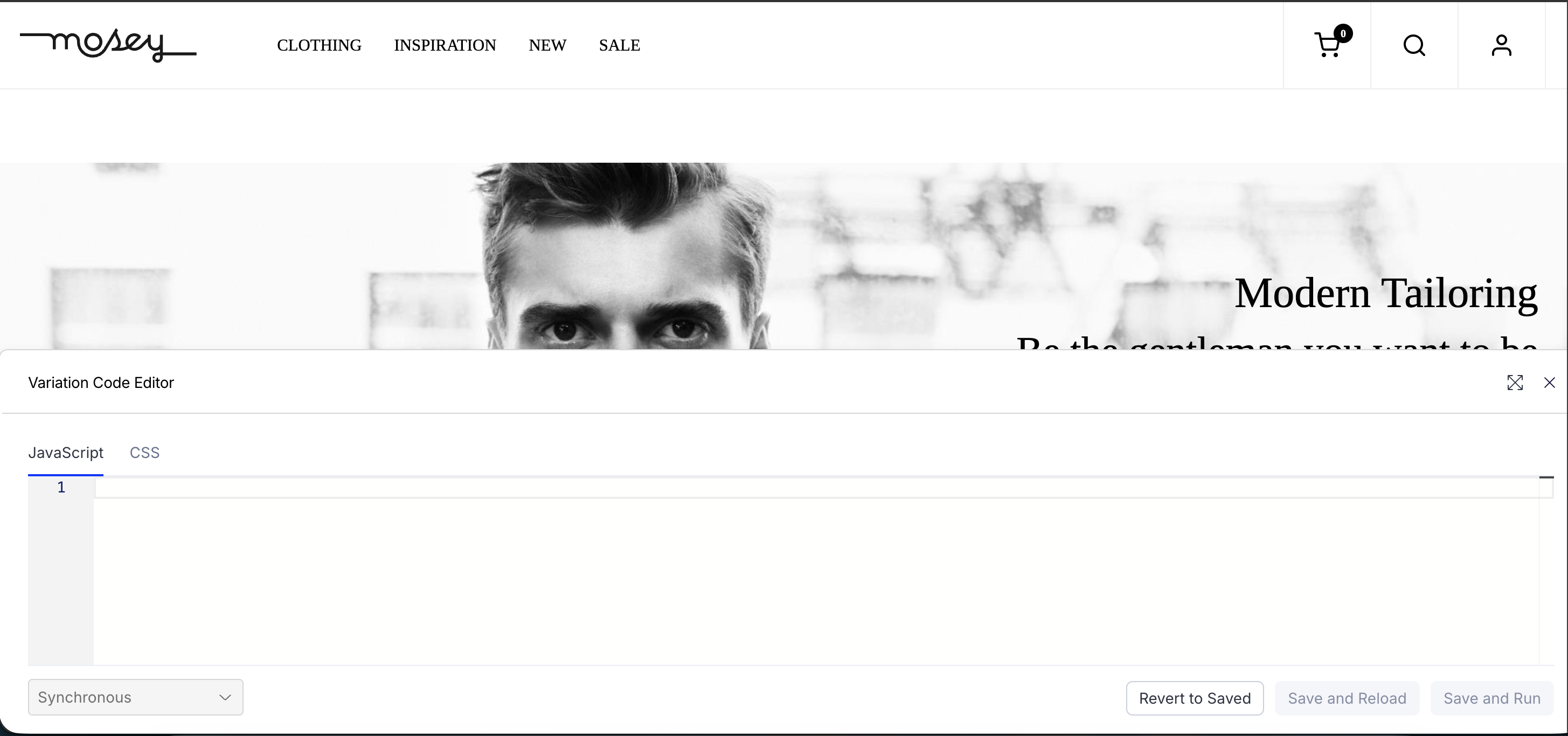
Implement using a global mBox on the page so you can change any and everything over the traditional method. Traditional method is good if you do not have technical web dev resources, do not know Javascript/jQuery, or you have money to blow on mBox calls. Global deployment reduces mBox calls and allows you to touch many parts of the page easily. A lot more customizable
In retrospect: - I think I should have stressed more demo's / workshopping with the Optimizely team at the start. I felt too confident during demo stages, and when came time to actually start, I was a bit lost. (The answer is likely I should have had them on-hand for our first install.. they offered but I thought I was OK.) - Really getting an understanding / asking them prior to install of how to make it really work for checkout pages / one that uses dynamic content or user interaction to determine what the UI does. Could have saved some time by addressing this at the beginning, as some things we needed to create on our site for Optimizely to "use" as a trigger for the variation test. - Having a number of planned/hoped-for tests already in-hand before working with Optimizely team. Sharing those thoughts with them would likely have started conversations on additional things we needed to do to make them work (rather than figuring that out during the actual builds). Since I had development time available, I could have added more things to the baseline installation since my developers were already "looking under the hood" of the site.
We seriously considered another software but because we use so many other Adobe products this made the most sense for us. If you are not dependent on other Adobe software and are a smaller company, in my opinion, Target may not be the best fit.
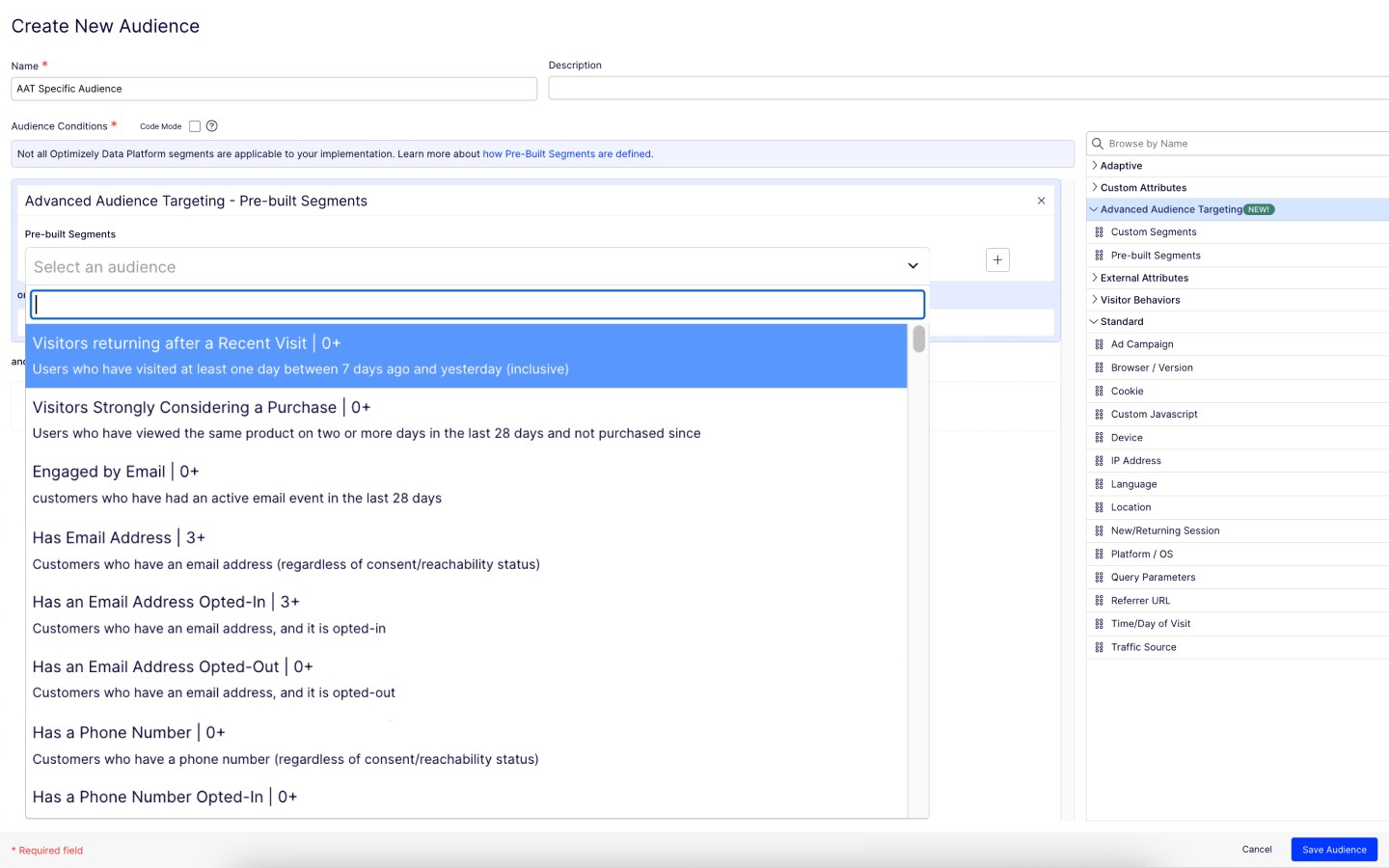
The ability to do A/B testing in Optimizely along with the associated statistical modelling and audience segmentation means it is a much better solution than using something like Google Analytics were a lot more effort is required to identify and isolate the specific data you need to confidently make changes
We have used - as an organization - multiple products that each fill a roll or task Quantum Metric provides...however I think there are very few tools or SaaS solutions out there that bundle so much into one solution. QM was better than the replay tool another group was utilizing (Mouseflow) because with our contract we could capture and review way more replays as well as have those replays married to actual, quantifiable data. From an analytics point, is so much easier to install event tracking as opposed to our basic Google Analytics implementation. However, I would still use GA as a primary record for measuring overall site performance since QM doesn't have robust product sales tracking. At one point we did review a competitor called Content Square. They seemed very focused on heat mapping.
We can use it flexibly across lines of business and have it in use across two departments. We have different use cases and slightly different outcomes, but can unify our results based on impact to the bottom line. Finally, we can generate value from anywhere in the org for any stakeholders as needed.
We have been able to run specific A/B tests that have shown an increase in conversion, which in turn has led to very large banked sales numbers for the year.
We have been able to prove that using and automated Merchandising process did not decrease conversion. This allowed us to greatly increase efficiency by opening up resource time.
We're able to share definitive annualized revenue projections with our team, showing what would happen if we put a test into Production
Showing the results of a test on a new page or feature prior to full implementation on a site saves developer time (if a test proves the new element doesn't deliver a significant improvement.
Making a change via the WYSIWYG interface allows us to see multiple changes without developer intervention.