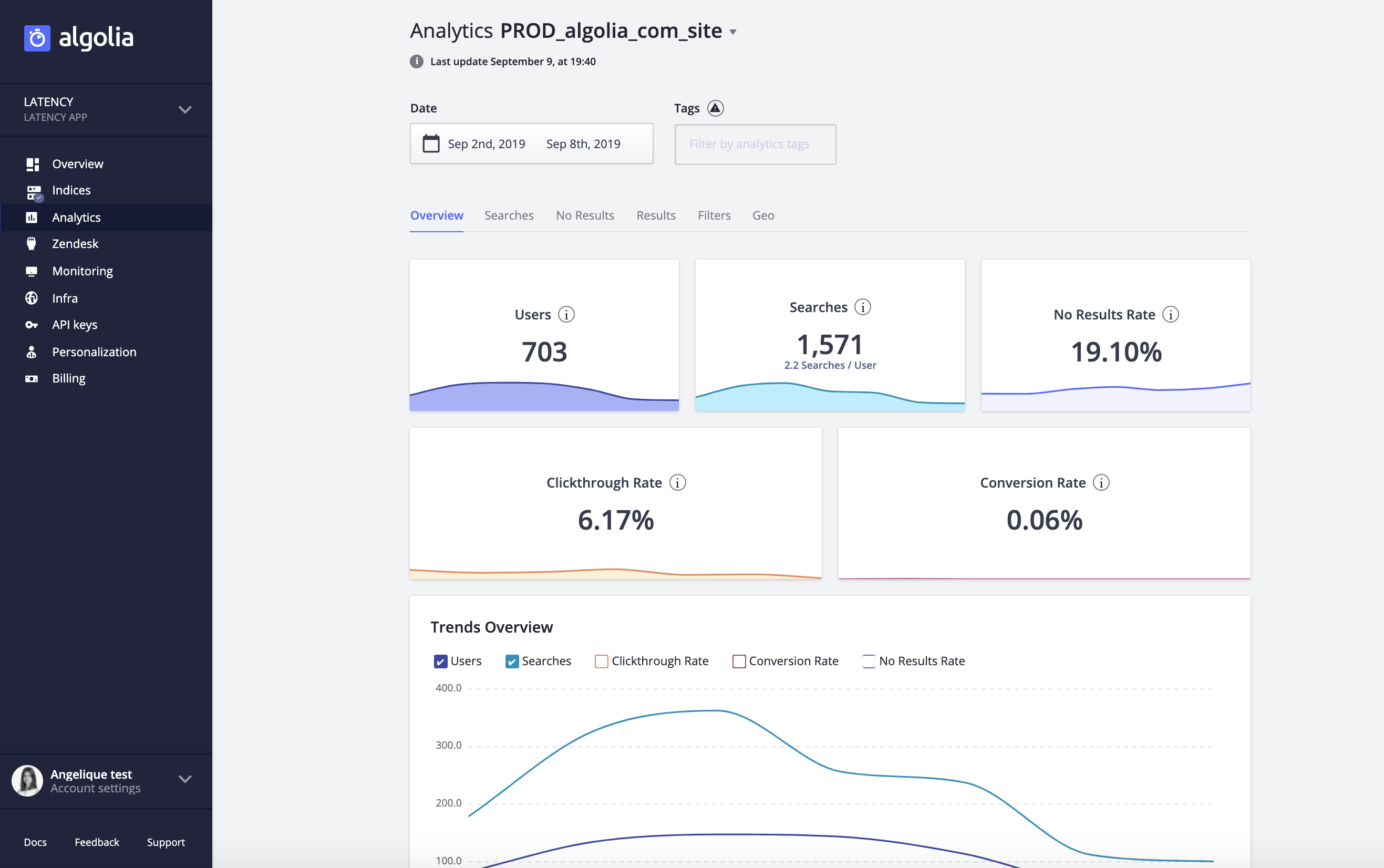
Algolia offers AI-powered solutions to improve online search and discovery experiences, with tools for business teams and APIs for developers that help to improve user engagement and conversions across websites, apps, and e-commerce platforms.
$0
for 10k search requests + 100k records per month
Coveo Qubit
Score6 out of 10
Enterprise companies (1,001+ employees)
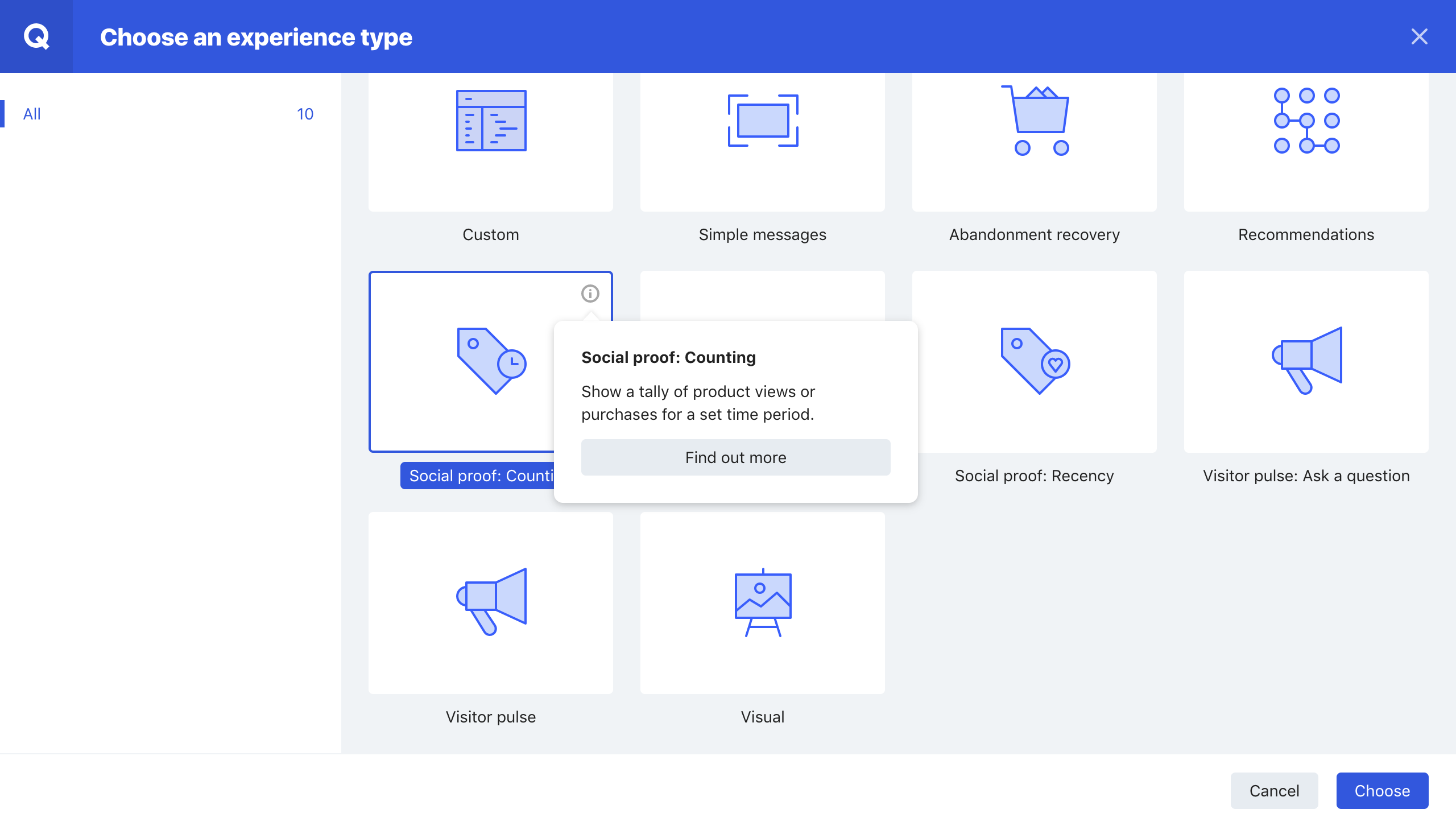
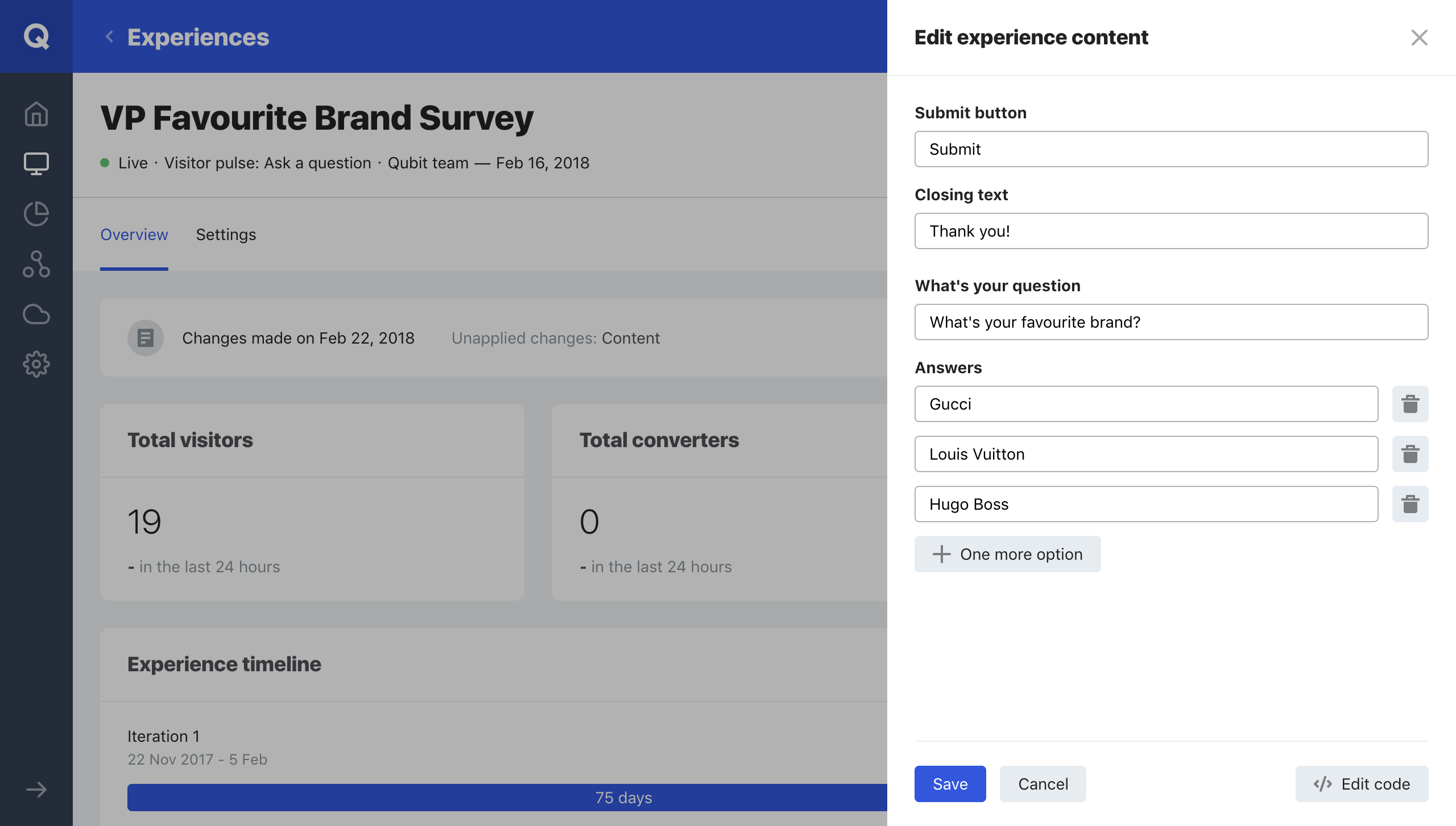
Qubit, now from Coveo (acquired October 2021) uses visitor history data to understand different user segments and serve personalized messages to segments using JavaScript. It is available as either a managed or self-service model. Data is collected using Qubit's own Universal Variable data model, or by integrating the user's existing model via our API. It combines quantitative data with qualitative visitor feedback to give Qubit users the ability to detect areas for optimization.
Using…
N/A
Pricing
Algolia
Coveo Qubit
Editions & Modules
Build
Free
Up to 10,000 search requests + 1 Million records
Grow Plus
Free to start, then pay-as-you-go
10,000 search requests/month and 100,000 records included; $1.75 per additional 1K search requests and $0.40 per additional 1K records
Grow
Free to start, then pay-as-you-go
10,000 search requests/month and 100,000 records included; $0.50 per additional 1K search requests and $0.40 per additional 1K records
Elevate
custom
per year
Elevate
Custom
Custom Custom search requests and records; volume-based discounts available
No answers on this topic
Offerings
Pricing Offerings
Algolia
Coveo Qubit
Free Trial
Yes
No
Free/Freemium Version
Yes
No
Premium Consulting/Integration Services
Yes
No
Entry-level Setup Fee
Optional
No setup fee
Additional Details
Pay as you go, scale instantly, or upgrade anytime for advanced features and capabilities.
Algolia is perfect if you need an excellent search engine and want to transfer your PLP management (browsing) to a third party. Algolia is good at mixing products, user behavior, interests, and business rules. Maybe it's less appropriate if you are using an all-in-one e-commerce platform where you get a good search engine or a marketing platform that also connects other features like a client database, first-party data, recommendation services, etc., all included in the same bill/integration.
A de minimis incentive was given to thank the reviewer for their time. The incentive was not used to bias or drive a particular response, nor was the incentive contingent on a positive endorsement. TR verified that a representative sample of customers was invited. More Info
Coveo Qubit is a very helpful platform mainly for organizations that need to provide a solid business model before carrying out any implementation or new functionality. In addition, it is a very good tool to generate changes and show different content to different types of clients, with their personalization and segmentation criteria.It is ideal for simultaneous testing and customization, only one of these activities individually is not recommended.
A de minimis incentive was given to thank the reviewer for their time. The incentive was not used to bias or drive a particular response, nor was the incentive contingent on a positive endorsement. More Info
Users get instant feedback as they type, even with complex filters like brand, model, price range, and financing eligibility. This speed significantly improves engagement and reduces bounce.
A user searching for “Camry 2020” or even “Camary 20” still sees relevant Toyota Camry listings from 2020. This reduces friction, especially on mobile where spelling errors are common.
Algolia handles multi-faceted filters efficiently. For example, a user can filter by location, transmission type, color, or inspection status without any lag.
We fine-tune the ranking of search results based on what matters to our business—like prioritizing cars with higher margins or better availability in key cities.
We can experiment with different ranking formulas or UI variations to improve KPIs like lead conversion or time-to-first-interaction.
A de minimis incentive was given to thank the reviewer for their time. The incentive was not used to bias or drive a particular response, nor was the incentive contingent on a positive endorsement. More Info
Qubit platform uses solid testing algorithms and delivers reliable reporting and analytics of testing campaigns. The dashboard section is easy to use and provides a good high level overview of the core campaign metric performances.
On-boarding and implementation of Qubit technology was painless and well handed throughout the entire process even with more complicated platforms.
Turn-around time for development and testing of campaigns is extremely fast. This enables the business to have a much higher throughput of tests and allows for quick validation of ideas rather than having to wait for months before a test is ready to go live on production site.
A de minimis incentive was given to thank the reviewer for their time. The incentive was not used to bias or drive a particular response, nor was the incentive contingent on a positive endorsement. More Info
Better integration of features (ex. synonyms feature is great but isn't respected by their re-ranking product)
Tooling to reduce spam search queries being triaged by system/logged to analytics panels
More automated summaries of analytics (ie. recommend synonyms to add, trends noticed in search volume in specific areas of site, easier ways to leverage API vs using website UI)
A de minimis incentive was given to thank the reviewer for their time. The incentive was not used to bias or drive a particular response, nor was the incentive contingent on a positive endorsement. More Info
While they do work very closely with us, especially our success manager, more involvement on a technical level or a dedicated engineer, would be a great advantage. We develop a lot of experiences in house and, like all companies that dev in house, we have our own way of working. A dedicated engineer that got to know us better as well and understood how we work could only help. Sometimes, a few errors can get through QA due to this.
A de minimis incentive was given to thank the reviewer for their time. The incentive was not used to bias or drive a particular response, nor was the incentive contingent on a positive endorsement. More Info
After working 8 years and through 100+ implementations on international sites, Algolia beats the alternatives on several grounds. It offers a fair price that brings a ROI ; It has the financial backbones and the interest in investing in R&D more than any other competitors. It is a true specialized and not an add-on, and thus benefits from a very strong engineering and innovative approach. The tool is very reliable and fast
A de minimis incentive was given to thank the reviewer for their time. The incentive was not used to bias or drive a particular response, nor was the incentive contingent on a positive endorsement. TR verified that a representative sample of customers was invited. More Info
Qubit is currently providing resources and support we do not have internally. Our relationship managers are exceptional and I feel well informed and well supported by their team. The tool is nice, but our contacts from the company are the real reason to maintain our relationship. They work hard for clarity and continue to help us push for additional opportunities.
A de minimis incentive was given to thank the reviewer for their time. The incentive was not used to bias or drive a particular response, nor was the incentive contingent on a positive endorsement. More Info
Most of the setup is easy enough if you have some technical/web dev/IT background, but once it's set up, you can have end/power users maintain some settings, like adding search terms. Algolia is a powerful search tool and integrates easily with Shopify.
A de minimis incentive was given to thank the reviewer for their time. The incentive was not used to bias or drive a particular response, nor was the incentive contingent on a positive endorsement. TR verified that a representative sample of customers was invited. More Info
Very simple user interface, built on top of advanced functionality, makes the platform easy to use. The team at Qubit are also very open to feedback and introduce new and useful features fairly often. On the reporting side, the inbuilt dashboard reports are good for a top-level view of test results, and Qubit have made a lot of their output data available should you wish to run your own analysis
A de minimis incentive was given to thank the reviewer for their time. The incentive was not used to bias or drive a particular response, nor was the incentive contingent on a positive endorsement. More Info
A de minimis incentive was given to thank the reviewer for their time. The incentive was not used to bias or drive a particular response, nor was the incentive contingent on a positive endorsement. TR verified that a representative sample of customers was invited. More Info
I would say that the Qubit account managers are always available for any request. We have a lot of different promotions that could always do with last minute optimizing or changes and Qubit can be relied on to get this changes up and running in an impressive amount of time, so that we don't need to patch live or wait for the next IT sprint. Invaluable to our business.
Performance is always a major concern when integrating services with our client's websites. Our tests and real-world experience show that Algolia is highly performant. We have more extremely satisfied with the speed of both the search service APIs and the backend administrative and analytic interface.
A de minimis incentive was given to thank the reviewer for their time. The incentive was not used to bias or drive a particular response, nor was the incentive contingent on a positive endorsement. More Info
Technology is good for A/B testing and personalisation - allowing any team with a dedicated developer to create test relatively easily and to report/analyse them in a fair amount of details. Some advanced features, especially on the set up of test cells, are dearly missing. Unfortunately, new features are often not free of bugs... Also, support is sub-par, which means new features are realised without proper documentation, example or training (but of our Qubit counterparts and internally).
A de minimis incentive was given to thank the reviewer for their time. The incentive was not used to bias or drive a particular response, nor was the incentive contingent on a positive endorsement. More Info
It’s non existent. No tech support and no customer service… my application was blocked and is currently inactive causing huge business disruption, and I’m still waiting days later for a response to an issue which could be resolved very very quickly if only they would respond. Very poor from a company of that size
Qubit are supportive and flexible in providing support. They are happy working out of usual hours, even on weekends and if I have any doubts about the set up of an experience they’re quick to respond and willing to check my work. On particularly big revenue days they monitor our account and they’re quick to identify and problem solve any issues.
A de minimis incentive was given to thank the reviewer for their time. The incentive was not used to bias or drive a particular response, nor was the incentive contingent on a positive endorsement. More Info
The training was great, but would be great to have a script or PDF with some explanations of the qubit JS layer. Without the script you can just try to learn on your own, so the training is not as powerfull as it could be. On the other hand - would be great to have training related to reading statistics or personalisation.
A de minimis incentive was given to thank the reviewer for their time. The incentive was not used to bias or drive a particular response, nor was the incentive contingent on a positive endorsement. More Info
Implementation couldn't be easier. All we needed to do was insert the tag. (easy) and set up the data layer. (dev required) This was pretty smooth in comparison to some of the other tools we use on our site, and was done in less than a day. Note : Data needs to be collected for a set period of time before you can accurately rely on the data that you are receiving. This is normal though with everyone else that we have used
A de minimis incentive was given to thank the reviewer for their time. The incentive was not used to bias or drive a particular response, nor was the incentive contingent on a positive endorsement. More Info
Algolia gives way more control for a non-developer than AWS Elasticsearch Service. Previously we'd have to have our developers make adjustments to site search relevancy, typos, prioritizing certain attributes over others, etc. but now the marketing and website team can do that themselves in the Algolia dashboard
A de minimis incentive was given to thank the reviewer for their time. The incentive was not used to bias or drive a particular response, nor was the incentive contingent on a positive endorsement. More Info
At the time of taking the product, we found no comparable alternatives. Since then, the product has only grown from strength to strength, so it still does not have any comparable competitors that offer both the technical product and business knowledge that Qubit can. Google appear to offering a competing product which may be one to watch in future, and something for Qubit to keep an eye on
A de minimis incentive was given to thank the reviewer for their time. The incentive was not used to bias or drive a particular response, nor was the incentive contingent on a positive endorsement. More Info
Algolia has been a consistent product that works flawless with very few errors or downtime. With the plan options it’s very easy for us to scale especially with this usage pricing. We have 100% gotten our ROI on this product.
A de minimis incentive was given to thank the reviewer for their time. The incentive was not used to bias or drive a particular response, nor was the incentive contingent on a positive endorsement. TR verified that a representative sample of customers was invited. More Info
Our requirements change throughout the year like most E Commerce retailers. At Christmas and Peak we're dealing with around ten times the usual traffic on the site. Qubit had no problems with this at all, tests continued to fire, and stats were still reported accurately. I don't think that it is the most server intensive .js anyway, but we have seen no issues at all.
A de minimis incentive was given to thank the reviewer for their time. The incentive was not used to bias or drive a particular response, nor was the incentive contingent on a positive endorsement. More Info
Users who had abandoned our product (attributing slow search speeds as the reason) returned to us thanks to Algolia
We used Algolia as our product's backbone to relaunch it, making it the center of all search on our platform which paid off massively.
Considering we relaunched our product, with Aloglia functioning as its engine, we got a lot of press coverage for our highly improved search speeds.
One negative would be how important it is to read the fine print when it comes to the technical documentation. As pricing is done on the basis of records and indexes, it is not made apparent that there is a size limit for your records or how quickly these numbers can increase for any particular use case. Be very wary of these as they can quite easily exceed your allotted budget for the product.
A de minimis incentive was given to thank the reviewer for their time. The incentive was not used to bias or drive a particular response, nor was the incentive contingent on a positive endorsement. More Info