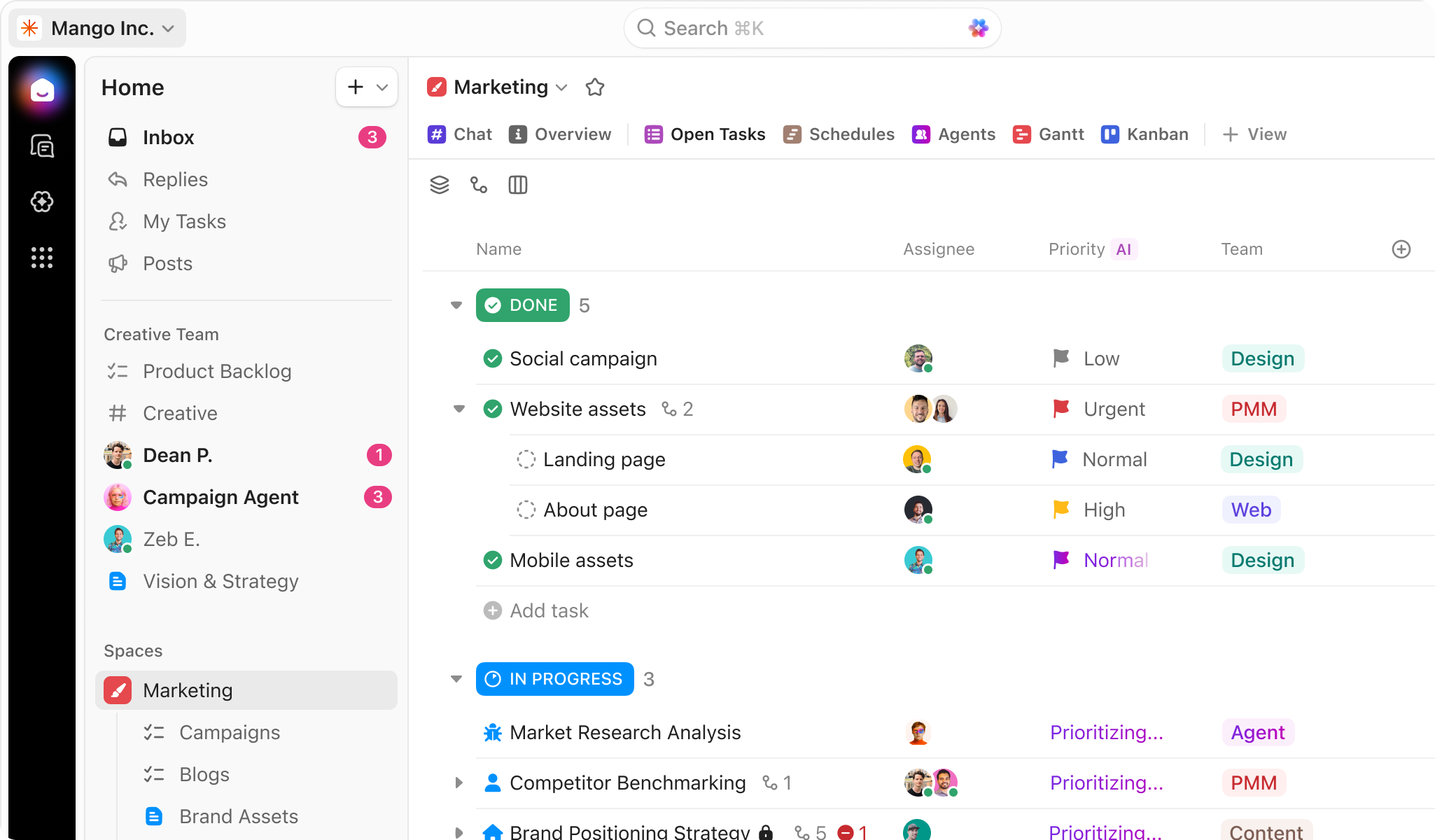
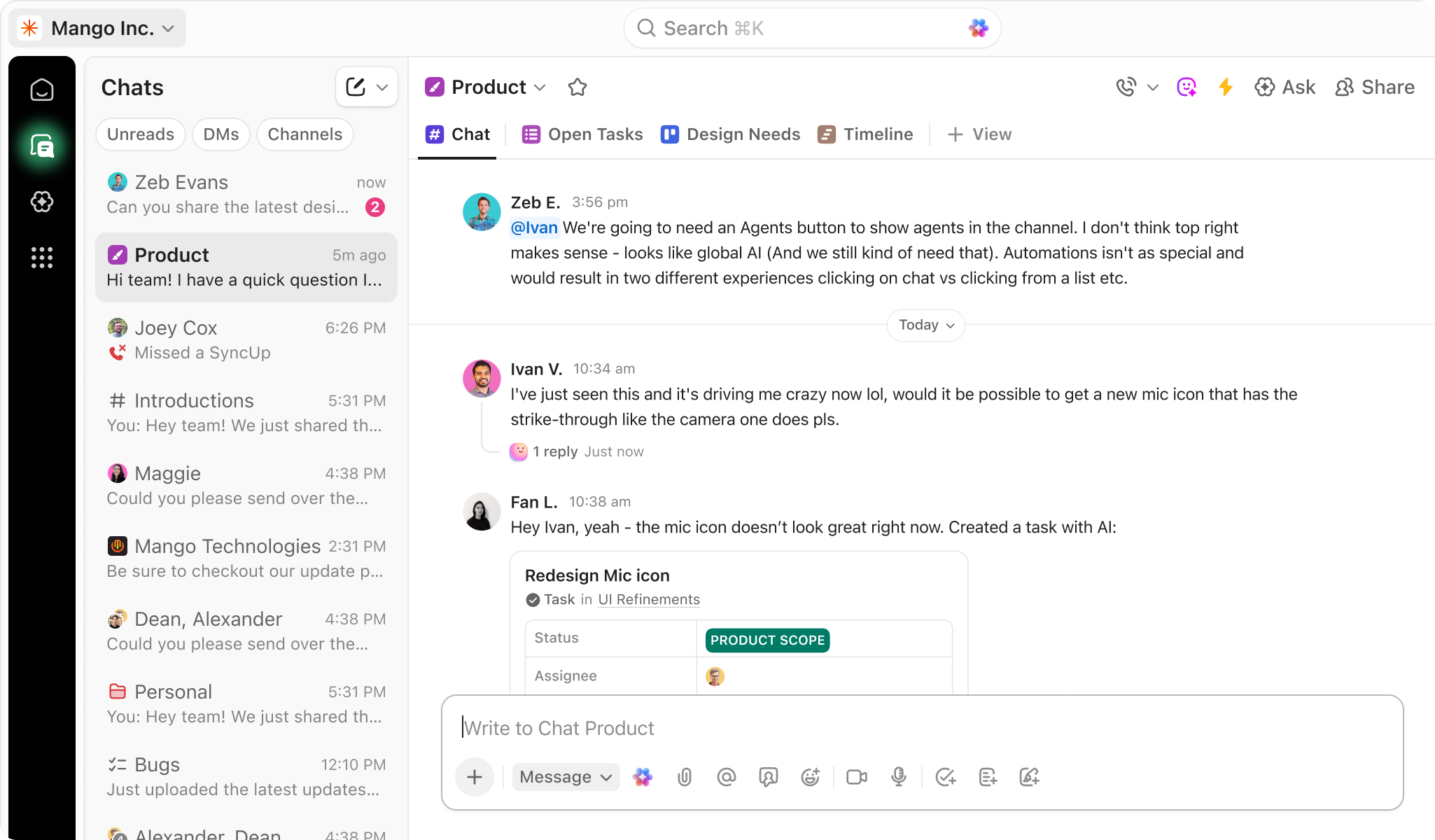
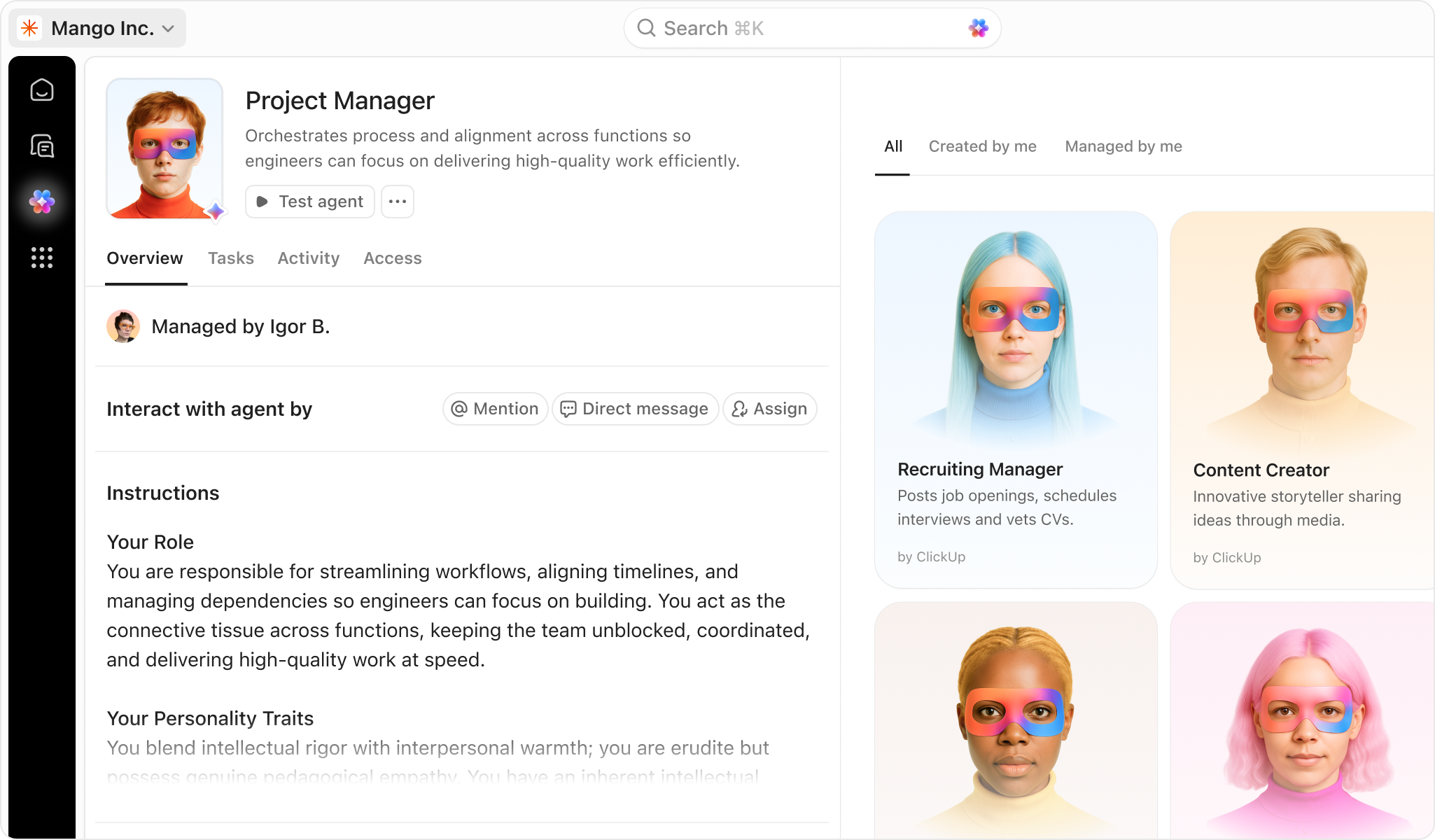
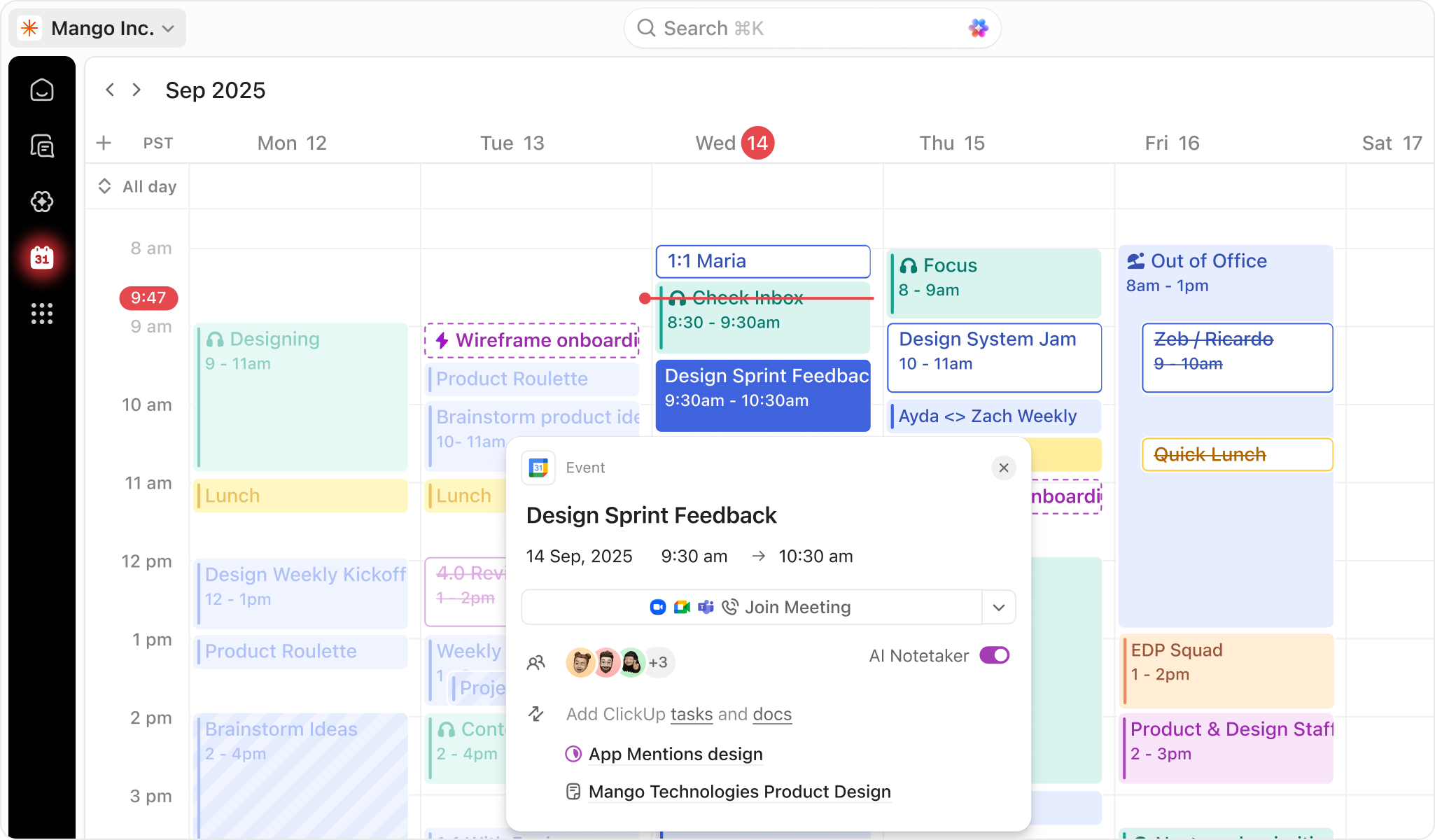
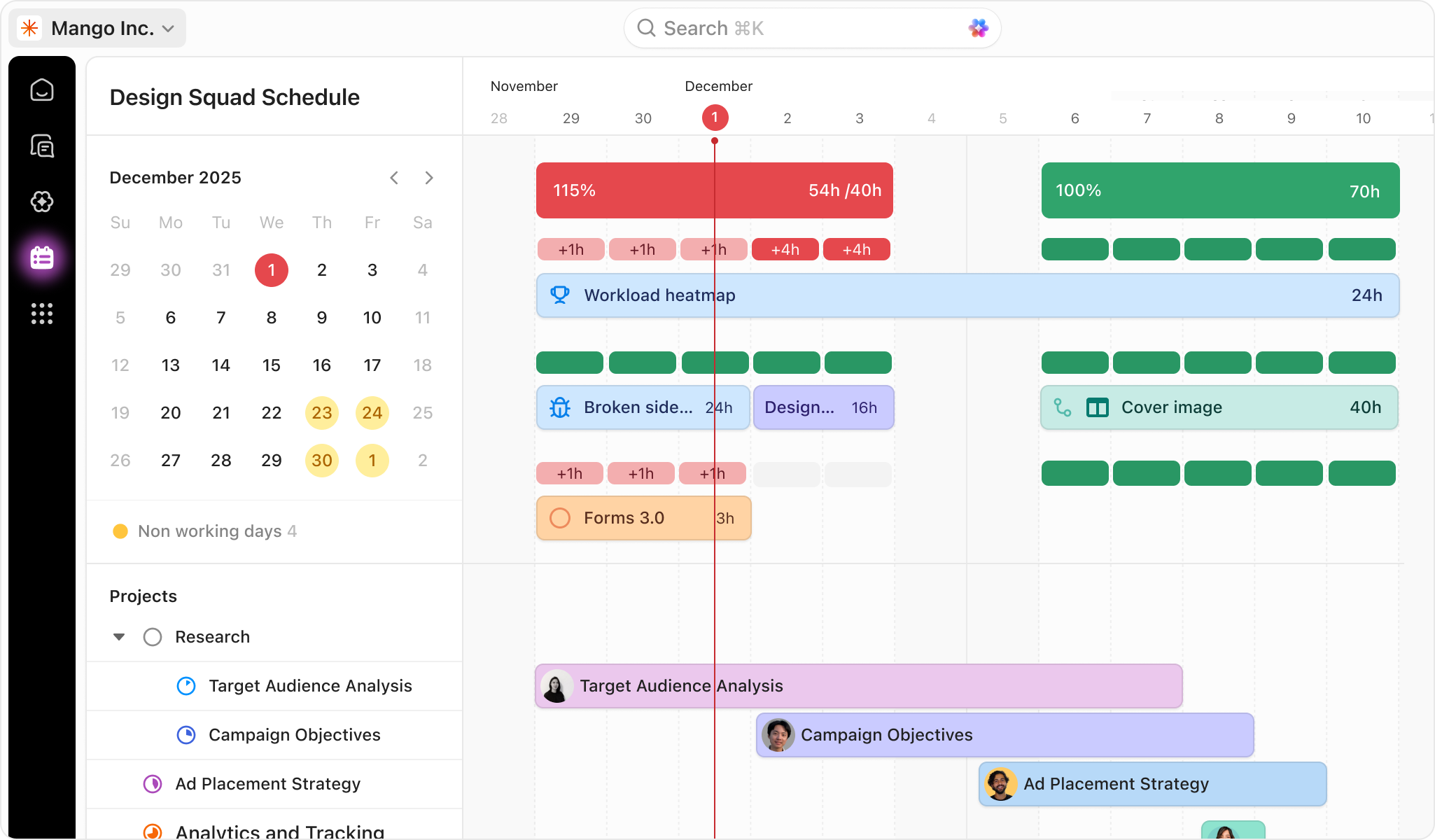
ClickUp is a productivity platform that brings together work apps, data, and workflows. Also presented as a Converged AI Workspace, ClickUp eliminates work sprawl to provide context and a single place for humans and agents to work together. The platform currently boasts over 20 million users worldwide. ClickUp Brain² is deeply embedded into the workspace, offering conversational intake for project scoping and autonomous task generation. It can transform brainstorming docs…
$0
per month per seat
Microsoft To Do
Score 8.0 out of 10
N/A
Microsoft To Do replaces the former Wunderlist task management tool.
ClickUp has a much more customizable product and they put out new features/fixes more rapidly than any of their competitors. Their API is well documented and supports many features and their support team is top-notch for thinking outside the box to find creative solutions when …
After testing lots of project/task management and productivity apps, I think ClickUp provides the best combination of functions found in other apps on the market, and has lots of useful integrations with other services.
We chose ClickUp over the above for two reasons. The first is that ClickUp could do so much more for a lot cheaper. The other is that ClickUp has pretty much the same functionality. Even if it takes a bit longer to set up the fact that ClickUp can pretty much do anything has …
I spent a LONG time researching and evaluating different apps and online for organizing my personal and professional tasks and to-do's. I was delighted when I finally found ClickUp! I found that ClickUp is far more beautifully and usefully designed than other products, and it …
Especially, the integration, lists, subtasks, and time tracking are way above par and led me to exclusively use ClickUp for all my task management and project progress management.
ClickUp is a great mix between Todoist / Microsoft Todo, Asana, Notion, XMind and a bit of Google Docs kind of software. If you want an all-in-one that could replace most of your project management / todolist / notes app, it would be the software that I would choose.
None are as comprehensive in their layout. ClickUp is the best for managing many clients, projects and team members. The others are effective but rather simple and ClickUp integrates with other tools organisations use such as google drive giving it an extra edge. This kind of …
Microsoft To-Do simply put just does to-do lists very well. I don't want the visual components of software like Trello or ClickUp, and I had used Asana in previous roles and just found it to have too much going on. I also didn't like the notification system of Asana, constantly …
Verified User
Engineer
Chose Microsoft To Do
I choose Microsoft to do because is easier and is on the job email, but ClickUp is more handful and Google Tasks its in my personal email, so its more convenient.
I prefer Microsoft To Do because of it's amazing app. It seamlessly integrates with mobile so if you're on the go or need to set a reminder, you can very easily take care of it.
I think it is great for task management and project management. It allows for much easier cross-team collaboration. Personally, I found it useful as a project and team manager to better keep track of all the deliverables that have been assigned to various members of the team. It is less appropriate to use as a CRM even though the website mentions it can be used as one, it still lacks many features which a full-fledged CRM would provide.
I think Microsoft To Do is helpful for people who don't need a lot of customization in a task manager. I prefer using 3rd party task managers that allow me to create projects with tasks and subtasks. But for a team that already uses Microsoft products and doesn't want to learn or invest capital in another task manager, Microsoft To Do covers the basics and syncs with your calendar.
Task Management - you can easily track details and notes of the tasks, deadlines and important dates, and notes and key links for the task. This has really leveled up how we manage projects and tasks.
Operational efficiency - by tracking where time goes the most or which tasks go the most, it enables you to identify areas where the most time is being spent and if that process needs to be improved or changed to streamline workflow.
SOP/Document storage - it is easy to create documents for standard operating procedures and processes and have a file to easily locate and reference them.
Files for projects or clients - ClickUp allows you to create separate files, folders, and subfolders to easily store and locate any corresponding tasks, projects, or important documents for that specific project or client.
AI overview - for tasks or documents with longer note sections or that have spanned more time and have more notes involved, ClickUp has an AI overview tool that helps with summarizing.
Wunderlist is what you need for your to do lists. It's really simple to use.
Allows you to set due date to your lists, share them with your team and/or create a folder to divide and organize all your list set
Also, Wunderlist is compatible with all platform and devices. So you can always be updated on your list or work on them from wherever you are and with all the devices you have.
It has been a game-changer in terms of project tracking, as animation is a demanding product that requires multiple layers of analysis, revisions, tracking, scheduling, etc. ClickUp simplifies many approvals as anyone can easily add items, and you can tag the people who need to look at them.
ClickUp is generally very usable once the workspace is properly organized. The flexibility of views, custom fields, task structure, dashboards, and automations makes it easy to adapt the platform to different teams and workflows. The main reason I would no rate it a 10 is that the amount of functionality can make the interface overwhelming, specially for new users. large workspaces with many custom fields, notifications, views, and hierarchy levels can also require some training and ongoing governance.
User friendly, easy to configure, and VERY simplistic. I particularly use heavily the phone app feature. While others in the room are on social media, I am reviewing my tasks and this triggers other tasks I know I need to get done. I like the sense of accomplishment of moving things to the completed pile as well.
For over a year ClickUp was unavailable to us just twice for a couple of hours. I would say for a system this big and working globally that was a minor issue. They managed to fix all the issues within a couple hours and then it was back up and running perfectly fine.
The speed of ClickUp is average to be honest. This is one of the biggest flaws of the system, sometimes it's also lagging a little bit but we also have a lot of documents, lists etc. on our workspace. However, with the next version of ClickUp I've seen they are planning to increase the speed by almost 500%, probably by changing the technology, so I am more than looking forward to it.
I started using ClickUp when it was what most would consider a baby company. There were the occasional bugs that made working in ClickUp a little bit of a headache, but the support feature allowed me to chat with a real persona and communicate my issues. I would always get prompt support and someone willing to really help me, not just point me to FAQ pages. Not feeling like a number really makes a difference.
I have not had an issue where I needed to reach out to Wunderlist, but I know their contact and online chat is easy to access and feel confident that they would be helpful. My only worry is Wunderlist is becoming Microsoft to-do in May 2020, and I believe the app will become worse after that.
There are multiple guides on literally all of the functions you can find within the system, therefore it's easy to learn anything you'd really like to use, starting from project and people management, down to Gantts, mind maps, time tracking, inviting Clients as guests to work with you on the projects and so much more.
Start small. Don’t try to build the most elaborate plans first. Resist the urge to get into Gantt charts if no one is used to them. Just get work written, add dates and assignees, and start getting used to it. If you did not use a work management tool before, you need to be gracious with yourself about the fact that you likely do not have the muscle memory for working this way yet. But you will get there.
And leverage people who know it if possible. Look for ClickUp experts and vendors. They can really supercharge your effectiveness at building the tool out and speed up the process.
ClickUp is more robust and customizable than the ones we tried. I like Notion's user interface but seems more powerful to track progress. We didn't need the timetracker part of Monday and Asana seemed a little too cumbersome. So ultimately we went with ClickUp because it had the most potential... potential that we still have yet to harness.
It's a small tool compared to bigger project management software, but we found that they work perfectly together. It helps you declutter the larger PM tools, keep your smaller tasks in-line and make sure they get completed. When you're working in a creative agency, ideas and tasks are flying around, so having a tool like this that keeps you accountable and reminds you of your tasks is a must!
Scaling with ClickUp is superb. If you create a workflow best suited for your organization then it's all about creating new accounts and teaching the new employees the workflow you're using. It's that simple. There is no black magic when it comes to Clickup.