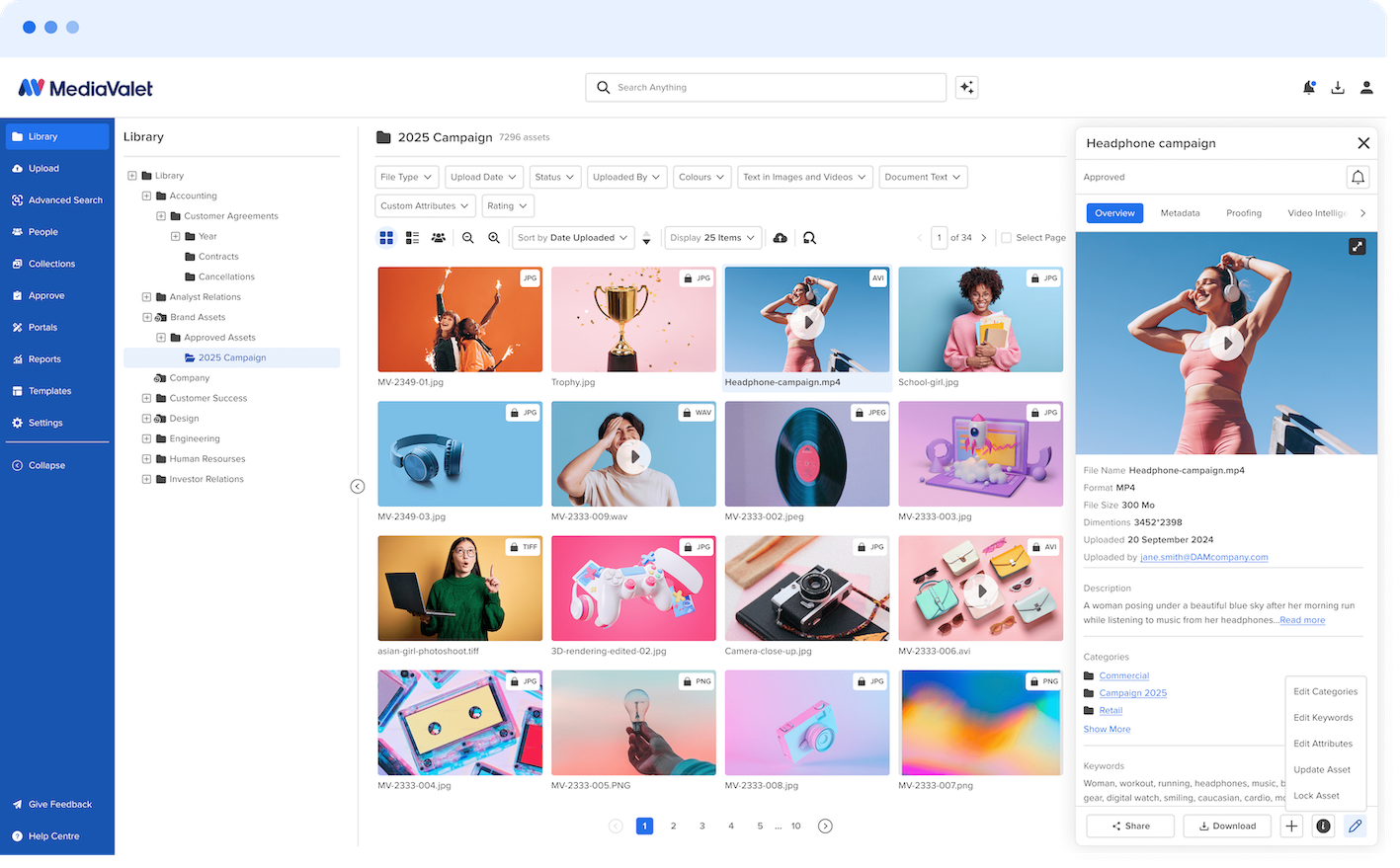
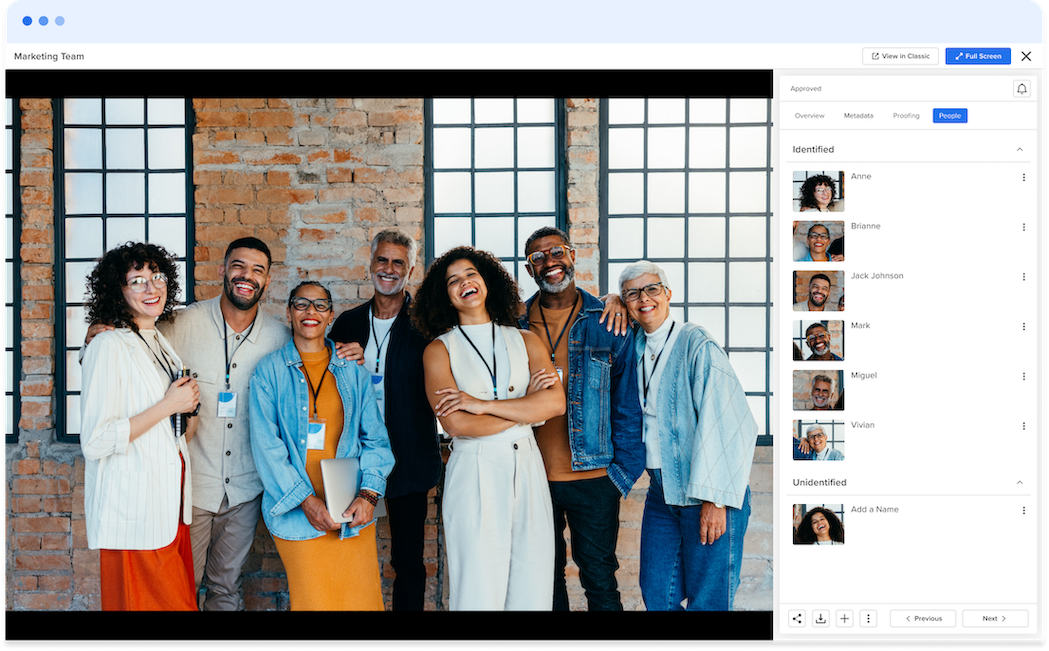
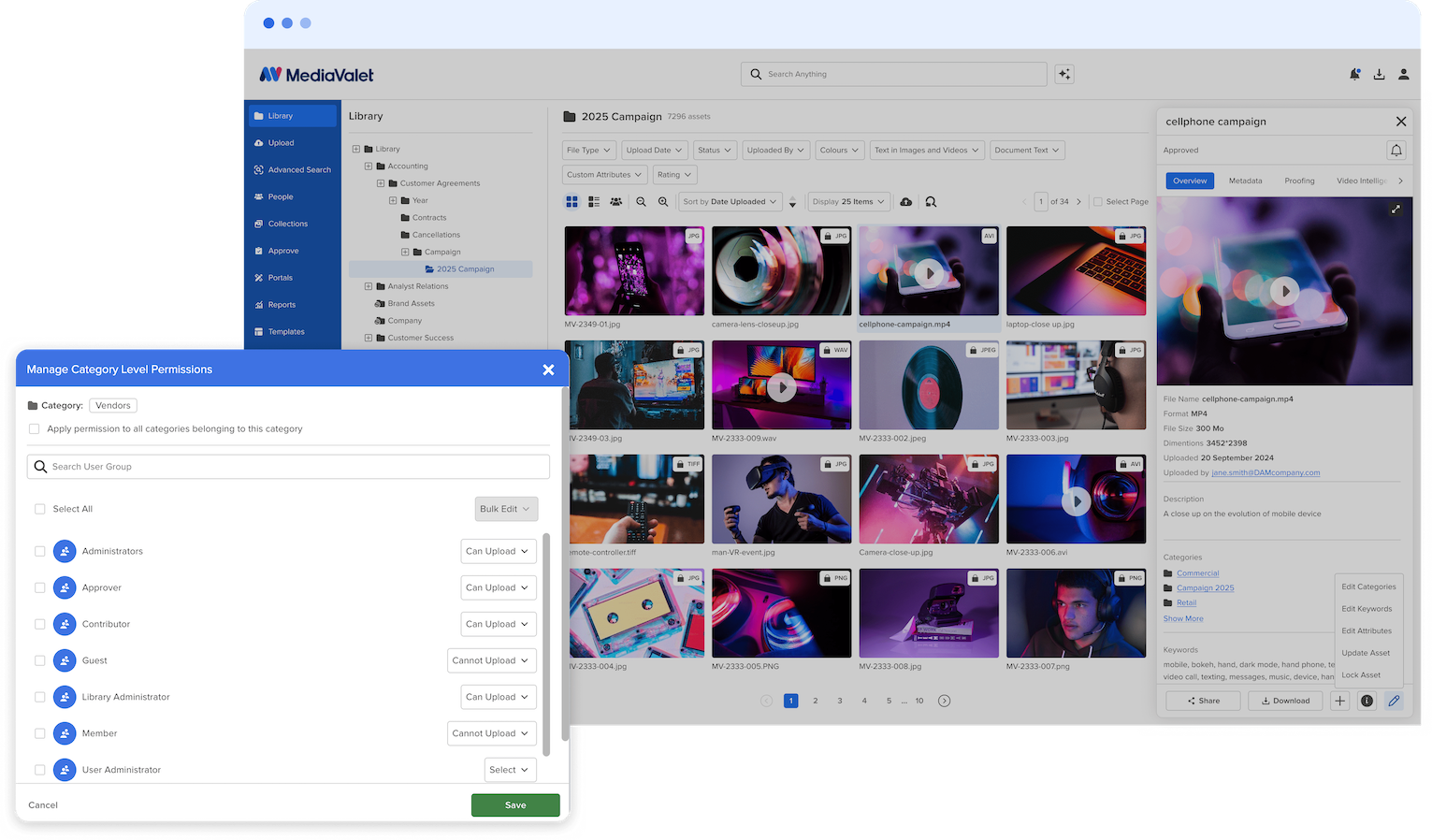
MediaValet’s Digital Asset Management platform makes enterprise digital libraries accessible, discoverable, and shareable to the organization's entire ecosystem – globally.
N/A
OpenText Documentum
Score 9.0 out of 10
N/A
OpenText acquired Documentum from Dell EMC in 2017, and now supports the enterprise content management (ECM) system. The vendor says users can build content-centric applications and solutions from collaborating on business documents to delivering case-based applications to managing highly precise processes in the most regulated business environments.
N/A
Pricing
MediaValet
OpenText Documentum
Editions & Modules
No answers on this topic
No answers on this topic
Offerings
Pricing Offerings
MediaValet
OpenText Documentum
Free Trial
Yes
No
Free/Freemium Version
No
No
Premium Consulting/Integration Services
No
Yes
Entry-level Setup Fee
No setup fee
Optional
Additional Details
—
—
More Pricing Information
Community Pulse
MediaValet
OpenText Documentum
Features
MediaValet
OpenText Documentum
Reporting & Analytics
Comparison of Reporting & Analytics features of Product A and Product B
MediaValet
7.2
12 Ratings
1% above category average
OpenText Documentum
-
Ratings
Dashboards
7.211 Ratings
00 Ratings
Standard reports
7.79 Ratings
00 Ratings
Custom reports
6.88 Ratings
00 Ratings
Data exportability
7.710 Ratings
00 Ratings
Content analytics
6.710 Ratings
00 Ratings
DAM Features
Comparison of DAM Features features of Product A and Product B
MediaValet
7.7
22 Ratings
6% below category average
OpenText Documentum
-
Ratings
Uploading assets
8.321 Ratings
00 Ratings
Downloading assets
8.322 Ratings
00 Ratings
Categories
8.721 Ratings
00 Ratings
Asset storage
9.120 Ratings
00 Ratings
Asset sharing
8.121 Ratings
00 Ratings
Asset search
8.321 Ratings
00 Ratings
Tagging system
8.520 Ratings
00 Ratings
Content editing
6.615 Ratings
00 Ratings
Metadata
7.012 Ratings
00 Ratings
Collections
8.315 Ratings
00 Ratings
User access
8.519 Ratings
00 Ratings
DAM Integrations
7.910 Ratings
00 Ratings
DAM API
6.48 Ratings
00 Ratings
Workflow automations
5.610 Ratings
00 Ratings
Related asset discovery
6.713 Ratings
00 Ratings
Enterprise Content Management
Comparison of Enterprise Content Management features of Product A and Product B
MediaValet
-
Ratings
OpenText Documentum
9.2
7 Ratings
13% above category average
Content capture & imaging
00 Ratings
10.07 Ratings
File sync, storage & archiving
00 Ratings
9.07 Ratings
Document management
00 Ratings
9.07 Ratings
Records management
00 Ratings
9.07 Ratings
Content search & retrieval
00 Ratings
9.07 Ratings
Enterprise content collaboration
00 Ratings
9.07 Ratings
Content publishing & creation
00 Ratings
9.07 Ratings
Security, risk management & information governance
MediaValet is well suited for DAM specific use cases, it provides robust features and functionality for sorting, segmenting and searching data so team members can easily access what they are looking for without knowing the platform. We find our Sales and Marketing teams both love this software for keeping marketing assets properly organized and available on demand whenever it's needed. This DAM solution is one of the most advanced out there and well suited for large teams looking to break silos.
Documentum is best used in medium to large institutions that can afford it, have alternate solutions for web publishing, and who have either in-house developers or can hire good Documentum developers (not the ones who know Java but do not understand ECM). It is, in my opinion, the best heavy duty ECM solution out there, assuming OT is not gutting it as we speak. That is my only hesitation to not giving it a 10, OpenText is an unknown quantity in this and I worry that they will only support Documentum until they have figured out how to fill the gap between Documentum and OT and then offer a migration path to OT with a Documentum sunsetting as an incentive.
Records management: Compared to other content management systems, this provides a efficient and scalable solution. It gives lot of flexibility in managing the content as Records or Legal holds.
Workflow system has external plugins to connect with FAX, Mail, Database and FTP servers etc. which gives an option to integrate with any system with documentum.
Creation of websites and maintenance is easy. Content authors can create the pages with effective mechanism.
I would love to have an improved MediaValet app. People send me pictures to my phone that need to go into the DAM, and it would be easier for me to upload from my phone rather than email to myself and then upload on the computer.
I would love to see upload dates displayed when searching for photos to add to the Portals I create.
I wish the delete feature didn't delete ALL of the pictures, even when they're in different categories.
It would be cool to somehow integrate MediaValet as a folder on the computer like dropbox.
WDK framework has been the biggest drawbacks from the application speed point of view, as well as client complexity and not so natural look and feel. Yes, with the latest releases much of these features are improved.
EMC is very expensive to buy, own and support, where some products require many dependent Docuemntum products to be installed to work at its best.
It is not only likely, but we have been doing it for more than 6 years. We have even had the service since before I joined the company. The service works well for me and I hope that this service will continue to be renewed next year, as not having it would make my job more complicated.
Stability is a key factor as well as its flexibility. Also, any organization that deploys Documentum will have made a significant investment in terms of time and money, so not renewing its commitment can come with a significant cost. That said, the decision to deploy Documentum initially should come only after extensive evaluation, knowing that once deployed it will likely remain the platform of choice.
I gave MediaValet a 7 for overall usability because it is reliable and effective once you’re familiar with it, but it has a learning curve. The platform is powerful and well suited for managing large volumes of assets, but the interface can feel complex at times and some common actions take more steps than expected. With simpler navigation and a smoother onboarding experience for new users, usability could be even stronger.
I mainly use MediValet to send special medical images to our partners. Collaboration with other companies is very simplified through MediaValet. The qualitatively uploaded images can be excactly assigned and organised through various filters. It is much clearer and easier for our partners to understand when the images have been accurately labelled and assigned beforehand.
MediaValet is much better and easier to use than File Explorer. MediaValet lets us search for photos, control who can access them, and not worry about our assets being deleted at random. This is critical for a government organization that oftentimes needs to search for assets from the distant past. MediaValet makes it much easier to tag our photos, add post dates, and set usage rights for each photo.
While we have had MediaValet only for a short period, we are already seeing improvements in how quickly certain projects can be completed.
I recently created an Annual Report which had a lot of big image files and data tables and using a Lightbox with our design agency to share these files saved us a huge amount of time.
As we roll out MediaValet to the teams, staff are becoming more aware of the quality, amount, and value of our best assets.
After this product, the client is able to manage content security and due to it, the client is able to use the business process, and this really reduces effort and increases the profit in business.
It provides integration with SAP easily which really helps the client to manage this effectively and with minimum effort system is ready to use.
Also searching, automated flows also create a bigger impact and reduce a lot manual effort.