Salesforce Sales Cloud is a platform for sales with a community of Sellers, Sales Leaders, and Sales Operations, who use the solution to grow sales and increase productivity. The AI CRM for Sales features data built right in, so that companies can sell faster, sell smarter and sell efficiently. Salesforce Sales Cloud is used for, and supports: Buyer Engagement Sales Engagement Enablement Sales AI Sales Analytics Team…
$25
per month
Wrike
Score 8.3 out of 10
Mid-Size Companies (51-1,000 employees)
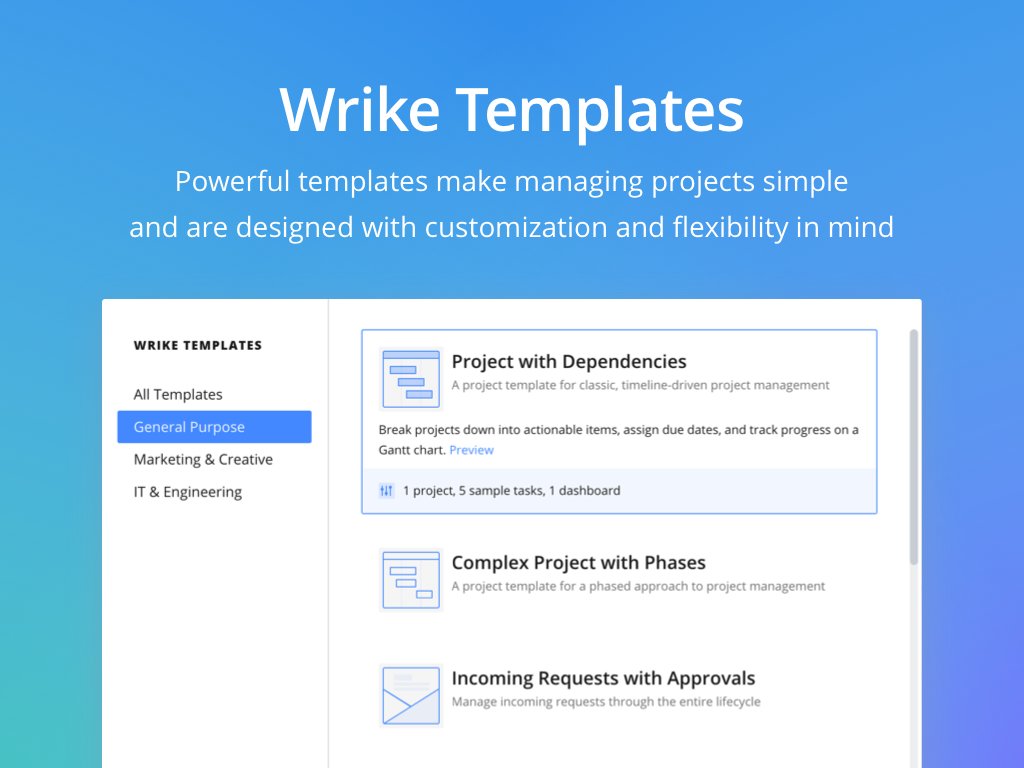
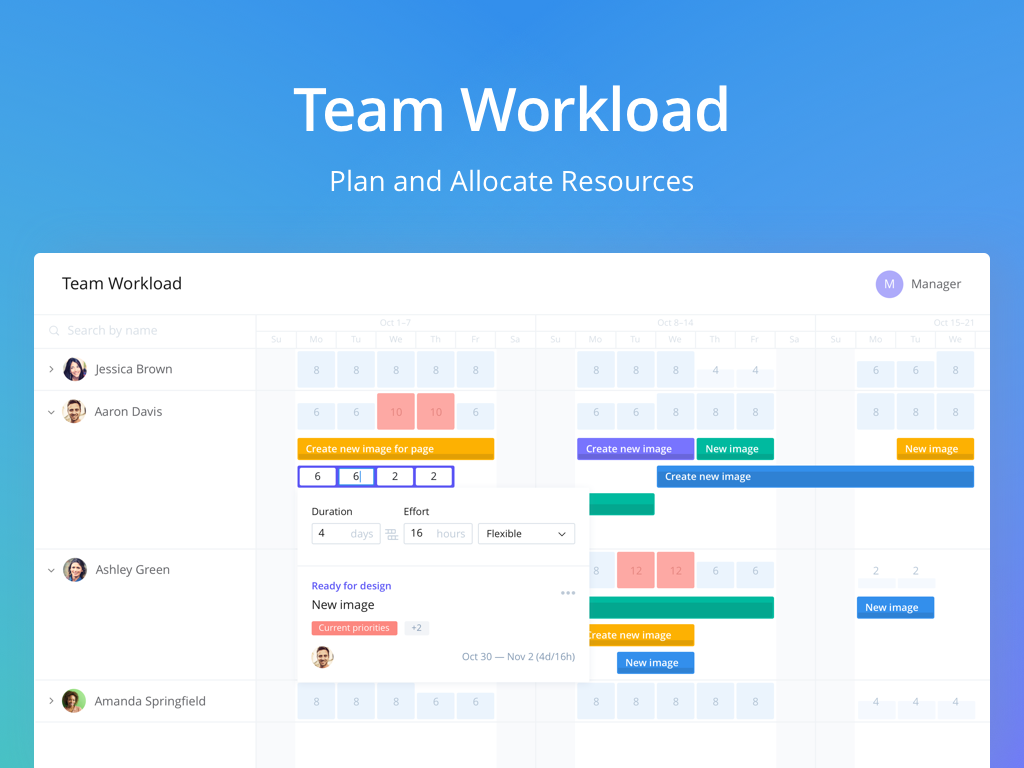
Wrike is a project management and collaboration software. This solution connects tasks, discussions, and emails to the user’s project plan. Wrike is optimized for agile workflows and aims to help resolve data silos, poor visibility into work status, and missed deadlines and project failures.
$9.80
per month per user
Pricing
Salesforce Sales Cloud
Wrike
Editions & Modules
Starter
$25.00
Per User/Per Month
Professional
$80.00
Per User/Per Month
Enterprise
$165.00
Per User/Per Month
Unlimited
$330.00
Per user/Per month
Wrike Free
$0
per month per user
Wrike Team
$9.8
per month per user
Wrike Business
$24.8
per month per user
Wrike Enterprise
Request a quote
per month per user
Pinnacle
Request a quote
per month per user
Offerings
Pricing Offerings
Salesforce Sales Cloud
Wrike
Free Trial
Yes
Yes
Free/Freemium Version
No
Yes
Premium Consulting/Integration Services
No
Yes
Entry-level Setup Fee
Optional
No setup fee
Additional Details
—
Every premium plan begins with a 14-day trial period.
We actually first utilized SalesForce and then integrated Hubspot as part of our process. The Sales Team really loved SalesForce, but mostly because they came to know how to utilize it. However, within the marketing team, we found that Hubspot met our more direct marketing …
Wrike has items like approval process and templates that are available for use that make it a great tool to work with, however setting up the actual spaces and automations takes more time than other project management tools I have worked with
Wrike seems more professional than other competitors; it also has more intricate features like the aforementioned approval tool. While there seems to be more setup work with this platform, it pays off in the long run. We really have had little to no trouble with using Wrike in …
I feel like Wrike is more intuitive to use and train people on. Jira may have more out of the box integration capabilities which could be convenient. Overall Wrike seemed to be more complete and upfront for adoption and successful launch for the team. The terminology obviously …
I think Wrike is a very user-friendly platform that is convenient for all team members, not only people who know more about the technical side of project management. It is easy to understand and learn. Jira I believe is for more complex scenarios as it has more sections and …
Wrike is a great platform for making your day-to-day more efficient plus it offers so many tools which I don't use but every time I discover more that I can see are helpful for the team.
We have used a number of different forms to help align internal departments with project communication, internal feedback, and scheduling of tasks. In the past we have used 3-4 different platforms to achieve all of these tasks, and Wrike helps us put everything in one place as …
Wrike is eons better than Advantage, and would be my preference over Basecamp as well. However, I did enjoy Salesforce in that it had many automations in place, was used as our CRM, and had the ability to make project trees - yet it did not have as much customization at the …
They all had things I liked, but they individually did not have all features that I needed within a single tool. Another huge feature that sets Wrike apart is the ability to not only integrate with several internal systems that already exist, but the offer the ability to use …
Over the last 7 years we have utilized several project management solutions and yet none of them could compare to the ease of implementation and the speed with which resources could ramp up as we found with Wrike. Our PMO credits the extreme simplicity yet fully functioned UI …
Sales Cloud is very well suited for the daily leads and opportunity pipeline management as well as user management. Sales process automation are very helpful for repetitive tasks. It integrates well with other platforms. It's easy to customize and report on data. Sales Cloud can be pricey so is only open to larger org's that need complex CRM. User adoption is slow to any new users that have no prior experience.
My organization used Google Sheets to work with subbies, but we've since switched to Wrike. It is user friendly, has formulas and customizable fields. Wrike has been a lifesaver because instead of sharing Google Sheets with external customers and typically they messing up - deleting formulas, users can simply fill out a request form without logging into Wrike . All details are displayed in a table view, making management much easier.
Logging notes: SF makes it easy to log notes in the timeline or static notes that live in an easy-to-see spot for longevity.
Logging activities: It's easy to post a call, text, email, etc.
API data: Once connected, SF is critical to automation, such as website activity, login activity, pages visited, etc., which saves the Customer Success side time in understanding account activity.
Custom fields: you can add custom fields to really personalize your experience. We use quite a few and it's brilliant.
I have hard-coded the auto-update of the phone number format and state format from some codes shared by the community, but I do not know where to do it. I cannot reset it either.
It is unclear what functionalities each version has. We use the enterprise version, and it seems we can only have one design of the pipeline. But different business segments would have very different sales cycles, and hence, pipeline tracking would be different. It would be nice to have this available in our version.
It seems I cannot create a report to pull notes logged at the account levels.
The email notifications that are automatically sent from Wrike when something is done are easy for users to miss or ignore.
Reporting can be limited. You have to create workarounds for collecting/storing the name of the person submitting the form in instances where they do not have their own Wrike license.
A more user-friendly interface, especially for those less familiar with project management software, would enhance overall accessibility.
There are days when I wish we hadn't switched, but I know that if we put in the time, we will get to where we want to be with the software and that it has many more capabilities than anything else we looked at. However, the amount of time and onboarding we need to do is also far greater than we realized/were told when we originally bought the product. They told us we should hire onboarding support, but at the end, after we had already reached our budget maximum for this, so it's been slower than we had hoped.
I wish that Wrike had more drag and drop functionality that would be connected to assignee and also I wish that the finish date of a task would update to the date where you checked completed. It does not do that. Also finishing a task doesn't move the start date of the next task it "protects your time in that way", but our management team wants us to quickly see what we have down the pipeline rather than having to scroll down the list of upcoming tasks.
Salesforce has been designed on the basis of "Clicks, not code". So anyone willing to learn the Salesforce user interface (which is quite good as far as management software platforms go) is able to become a Salesforce user or even a Salesforce administrator. You don't have to know coding language to work in the Salesforce environment. Also, Salesforce has one of the best software training resources (Trailhead) that I have ever encountered. It is free to all, easy to use, and most importantly it is interactive. No scrolling through endless text in a user manual. There are hands-on modules and related videos interlaced and through it all you earn points and badges to display your level of learning.
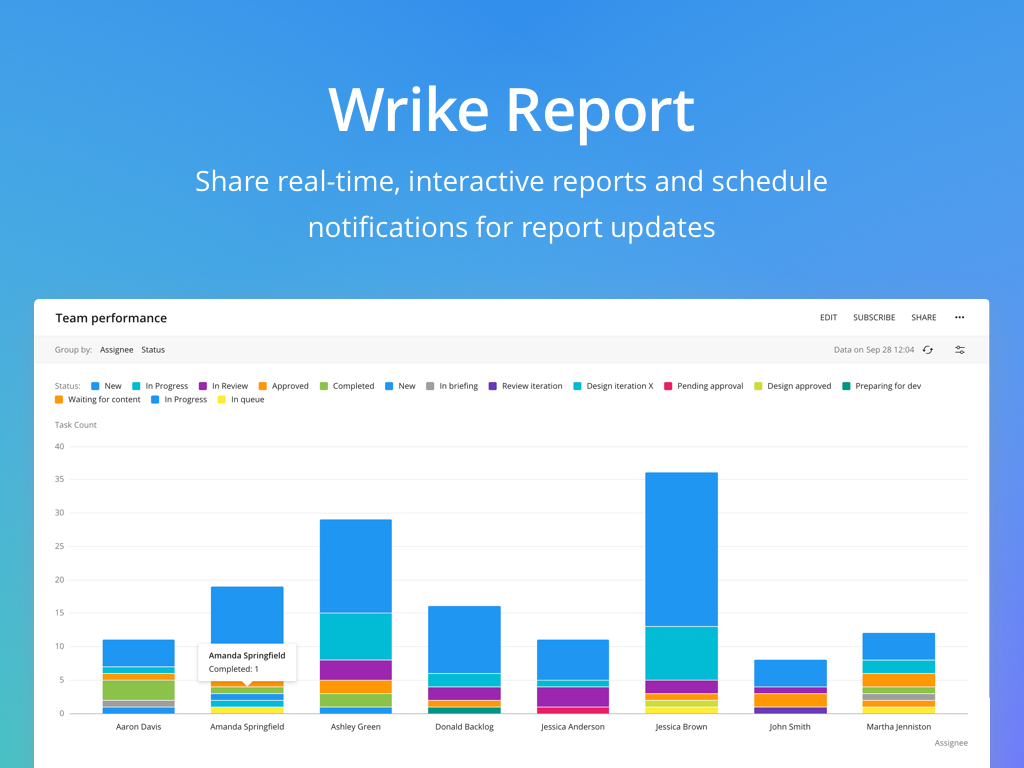
Wrike, overall, is pretty easy to setup and use. I still find challenges in changing milestone dates but our programs / date changes are different than industry standard so that is partly the issue. We love the Excel look along with the dashboards! There are also built in analytics that really assist in seeing where the projects are!
Salesforce is always available securely from any internet-capable device anywhere in the world, UNLESS you choose to set security measures so that ONLY trusted IP ranges may access the system at certain times of the day. It's all about choice and flexibility with Salesforce products.
Over two years of (almost) daily usage without outages. Don't remember any errors. I give it 9 only because some Wrike plugins (for online document edit) are based on NPAPI architecture. These types of plugins are being phased out in new browsers, and NPAPI plugins are disabled by default in recent versions of Chrome so you have to do some browser adjustments when you switch browsers or move to another computer.
Salesforce performance in general is excellent. "The cloud infrastructure beneath Force.com has been fine-tuned over the past 10 years. It powers nearly 100,000+ businesses running more than 185,000 applications that 3 million users count on every day." Points per Salesforce - 1) Multitenant kernel - With a multitenant platform, each business that uses the app doesn’t have its own copy. Instead, all businesses share a single copy and then customize it for their specific needs. 2) ISO 27001 certified security - You can’t compromise when it comes to enterprise-level security. Force.com is road-tested and trusted by nearly 100,000+ companies, including many of the world’s most security-conscious organizations, such as banks and health care providers. 3) Proven reliability - All Force.com apps run on world-class data centers with backup, failover, and disaster-recovery facilities. Force.com has had a proven 99.9 percent uptime record for years. 4) Proven, real-time scalability - Force.com is used by many of the world's largest enterprises, including Cisco, Japan Post Network, and Symantec. Applications can automatically scale from a few users to millions of page views, as needed. 5) Real-time query optimizer - You need fast access to your data. The Force.com query optimizer delivers under 300ms response time, at a massive scale. 6) Real-time transparent system status - You can always see real-time system performance, availability, and security information at trust.salesforce.com. 7) Real-time upgrades - Unlike traditional software platforms, our upgrades never break your customizations, code, or integrations. We upgrade the platform for you 3 to 4 times each year. As a result, you’re always on the latest version, with access to the latest features, performance, and security enhancements. 8) Real-time sandbox environments - With a single click, you can create copies of your applications, configuration, and data in separate environments for development, testing, and training. 9) Three global production data centers and disaster recovery - Force.com runs on three geographically dispersed, mirrored data centers with built-in replication, disaster recovery, a redundant network backbone, and no single points of failure
Wrike tasks loads fine, but I hate clicking files and wait for a bit of time since it is powerpoint or word, Wrike assumes I want to open those on Wrike. My suggestion is to link it to office 365 so we do not need Wrike based decoder for PPTX and DOCX
The overall support has been good. More and more features are being released quite frequently. Very small features are also making big difference in how the tool can be adapted and used better. If there is anything we need or are stuck, the support team sets up a call and helps in resolving the issue/provides workarounds.
Support is very quickly and they want to solve problems actively. When I need additional info I can use community forum, when I've an issue I can use support form to get help. The support is of excellent quality from the first level, to grow when you talk to the engineers it becomes even more important
I attended two training sessions. I would rate them a 4 as an advanced user. It was very basic – great for someone new – would give 8+ for new person.
I had 3 years of experience at the time. I skipped basic and went onto advanced and still not helpful. A lot of it was best practices that didn’t feel relevant for our business
I have gone through multiple. The content that’s delivered is quite basic – I wish they had more advanced training.
We are grandfathered into premium support plus training. We get unlimited access to instructor led and online training for free. We have taken advantage of this
I love the Wrike training options. Wrike Discover has tons of courses, learning plans, certifications, etc. This is an area where Wrike definitely shines! I wish these resources were more in your face for new people, because it seems like a lot of coworkers didn't know all of this training was available to them.
Just from an organizational standpoint - we standardized our data prior to moving to Salesforce. But we essentially standardized it wrong. That's created a big disgusting mess for us know that I'll have to deal with as the Admin. Be sure you think through use cases prior to doing something like that - seek outside opinions on how the data will work best, especially depending on what else you're going to integrate with Salesforce.
There are a lot of bells and whistles in Wrike, and not all of it is easy or intuitive to understand once it's plopped in your lap. It's easier when there are a few choice people who understand Wrike as a platform and articulate it in such a way where it makes it easy to pass it along to others in the group
Salesforce Sales cloud is well integrated with a lot of other marketing and sales technology SAAS products that we use within our business, which is a big part of why I enjoy using it. Compared to NetSuite, it is a lot more user friendly, a modern platform that provides better visual understanding of sales pipeline and contains more useful data across the customer journey.
I have not used other products except Microsoft Teams channels with file sharing and standard sharing from Adobe, text and email messaging, and Zoom/gotomeeting sharing. This is the first product that I have used that had the functionality and platform where the sharing is simplistic. It is better than standard sharing through email or other simple forms because everything stays together.
Salesforce is the most widely used CRM system. Professionalism tends to increase when things go wrong for market leaders. Salesforce considers us as users because they own the market. Having all of our data in one place and all of our teams working within Salesforce. Anyone who uses Salesforce is impacted by it, even if they don't.
I don't think there is a limit to Sales Cloud's scalability; at least, I haven't encountered one or heard of one. My data is not enormous, so perhaps some companies might encounter lags, but nothing from my end. I think I'll be able to use Sales Cloud from now until infinity.
The sky is the limit for what can be done in Wrike. We started with 1 use case and within 5 months we migrated several key business practices over to Wrike because they were easier to manage. Use cases so far: process improvement, management review, corrective actions, maintenance requests, month-end financial closing, and document management. As we grow, it's easy to imagine putting even more into Wrike where it becomes a cornerstone for how we do business
Using Salesforce.com has made my daily routines more efficient and simplified the manual tasks I had to perform independently. I can now access data from any device, online or offline, and provide better guidance to my team about the forecasts provided by the built-in artificial intelligence (AI). A chat with a Salesforce support specialist would be great. The knowledge base has a community forum where Salesforce users can ask questions and learn more about the product.
All tools we've implemented with Salesforce had a pretty quick positive ROI with the exception of CPQ & Billing. That was a very large project that I would only suggest for businesses with many SKUs that tend to be packaged together.
Adding versions of a document streamlines our editing process, preventing us from reviewing outdated versions of a document. This feature saves time, especially when working with external contributors who may not know Wrike well.
Blueprints save time because we do not have to manually enter all the details when scheduling a recurring project.